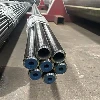
API Casing refers to the oil well tubulars manufactured in compliance with the standards set by the American Petroleum Institute (API). These casings play a pivotal role in the exploration and development of oil and gas resources. Their primary functions include:
Preventing Well Collapse – Stabilizing borehole walls to maintain well integrity.
Protecting Well Structure – Shielding underground formations from external pressures.
Ensuring Efficient Production – Facilitating smooth extraction of hydrocarbons from reservoirs.
To ensure the safety of API casing during operation, the following quality inspections are required:
Chemical composition analysis
Chemical composition analysis is a method for determining the chemical composition of metallic materials, used to identify the content and purity of specific elemental components contained in the material, providing a basis for material R&D, production, and applications. It typically employs chemical analytical methods and instrumental techniques (such as spectroscopic analysis, chromatographic analysis, and mass spectrometry analysis)
Tensile Test:
Mechanical performance tensile testing is an experimental method used to determine the mechanical properties of materials under tensile loading, including strength indicators, ductility metrics, and elastic characteristics. It evaluates a material's resistance to external damage, its capacity for plastic deformation, and the relationship between stress and strain within the elastic range. This test provides critical data for material development, quality control, and engineering design.
Charpy Impact Test:
The Charpy impact test is a method used to evaluate the notch sensitivity (toughness) of metallic materials, primarily assessing their ability to withstand sudden impact loads and absorb energy. It serves as a standard procedure to determine the safety, reliability, and effectiveness of products under external impact or force. Applications include material toughness assessment, safety performance prediction, quality control, and the research/development of new materials.
Drop-Weight Tear Test (DWTT):
The Drop-Weight Tear Test (DWTT) is an experimental method used to assess the toughness of metallic materials, particularly pipeline steels, by evaluating their resistance to fracture under impact loading. The primary objective is to establish the relationship between fracture morphology and temperature. In this test, a specimen in a simply supported beam configuration is fractured by a falling weight or pendulum hammer from a predetermined height, and the resulting fracture properties are analyzed.
Metallographic Testing:
Metallographic testing is a method for evaluating material performance and quality by observing and analyzing the microstructure of metallic materials, serving as a critical technique in metal material research. Through metallographic testing, the microstructure, inclusions, and grain size of materials can be examined, providing essential insights for material selection, quality assessment, and process development/optimization.
Vickers Hardness Test:
The Vickers hardness test is a commonly used method for evaluating localized microhardness in pipeline pipes. By measuring the microhardness of the pipe body, weld seam, and heat-affected zone, it assesses the welding and heat treatment processes of steel pipes, providing a basis for quality control and process optimization.