




API 5L Line Pipe
Your Professional API 5L Line Pipe Supplier
As a professional API 5L Line Pipe manufacturer and supplier, GNEE delivers integrated piping solutions to the global energy sector. We are more than just a distributor; our integrated manufacturing-to-supply model ensures superior quality control and cost-effectiveness for our API 5L carbon steel pipe and OCTG inventory. With strategically located production facilities across China, GNEE offers seamless logistics and certified piping equipment. Trust GNEE for full Material Traceability (MTC) and high-quality steel products that meet rigorous international specifications.


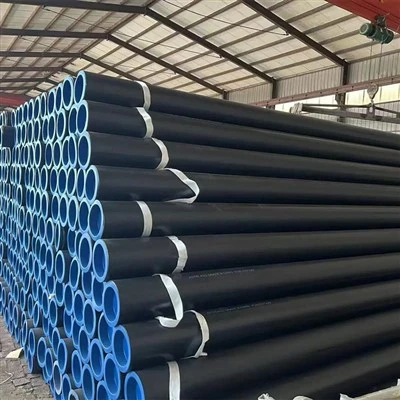
What Is API 5L Line Pipe?
API 5L line pipe is manufactured from carbon steel or high-strength low-alloy (HSLA) steel grades used for the transportation of oil, natural gas, and other fluids. They include pipes manufactured in seamless and welded (ERW, SAW). API 5L is the specification for steel line pipe used in pipeline transportation systems.
Common Steel Grades: From Grade B to X80
API 5L pipes are categorized by their yield strength, denoted by the "X" followed by the minimum yield strength in kilopounds per square inch (ksi).
API 5L Grade B
The most common grade for standard pressure applications.
API 5L X42 / X52
Balanced strength and weldability for mid-range pipelines.
API 5L X80
Elite grade for specialized ultra-high-pressure projects
PSL 1 vs. PSL 2: Which One Do You Need?
| Feature | PSL 1 | PSL 2 |
| Grade Range | A25 to X70 | Grade B to X80 |
| Chemical Content | Standardized | Strict limits (C, P, S) |
| Impact Testing | Not required | Mandatory (Charpy V-notch) |
| Traceability | Traceable until tests passed | Full traceability required |
| Welding | Standard ERW, SAW, SMLS | High-frequency welding restricted |
Pro Tip: PSL 2 is mandatory for offshore and sour service (H2S) environments due to its superior fracture toughness.
API 5L Pipe Schedule Chart (Metric Units: mm)
| NPS (Inch) | Outside Diameter (mm) | SCH 10 | SCH 20 | SCH 30 | STD (Standard) | SCH 40 | SCH 80 | XS (Extra Strong) | SCH 160 | XXS |
| 1/2" | 21.3 | 2.11 | - | - | 2.77 | 2.77 | 3.73 | 3.73 | 4.78 | 7.47 |
| 3/4" | 26.7 | 2.11 | - | - | 2.87 | 2.87 | 3.91 | 3.91 | 5.56 | 7.82 |
| 1" | 33.4 | 2.77 | - | - | 3.38 | 3.38 | 4.55 | 4.55 | 6.35 | 9.09 |
| 1-1/2" | 48.3 | 2.77 | - | - | 3.68 | 3.68 | 5.08 | 5.08 | 7.14 | 10.16 |
| 2" | 60.3 | 2.77 | - | - | 3.91 | 3.91 | 5.54 | 5.54 | 8.74 | 11.07 |
| 3" | 88.9 | 3.05 | - | - | 5.49 | 5.49 | 7.62 | 7.62 | 11.13 | 15.24 |
| 4" | 114.3 | 3.05 | - | - | 6.02 | 6.02 | 8.56 | 8.56 | 13.49 | 17.12 |
| 6" | 168.3 | 3.40 | - | - | 7.11 | 7.11 | 10.97 | 10.97 | 15.88 | 21.95 |
| 8" | 219.1 | 3.76 | 6.35 | 7.04 | 8.18 | 8.18 | 12.70 | 12.70 | 23.01 | 22.23 |
| 10" | 273.1 | 4.19 | 6.35 | 7.80 | 9.27 | 9.27 | 15.09 | 12.70 | 28.58 | 25.40 |
| 12" | 323.8 | 4.57 | 6.35 | 8.38 | 9.53 | 10.31 | 17.48 | 12.70 | 33.32 | 25.40 |
| 14" | 355.6 | 6.35 | 7.92 | 9.53 | 9.53 | 11.13 | 19.05 | 12.70 | 35.71 | - |
| 16" | 406.4 | 6.35 | 7.92 | 9.53 | 9.53 | 12.70 | 21.44 | 12.70 | 40.49 | - |
| 18" | 457.0 | 6.35 | 7.92 | 11.13 | 9.53 | 14.27 | 23.83 | 12.70 | 45.24 | - |
| 20" | 508.0 | 6.35 | 9.53 | 12.70 | 9.53 | 15.09 | 26.19 | 12.70 | 50.01 | - |
| 24" | 610.0 | 6.35 | 9.53 | 14.27 | 9.53 | 17.48 | 30.96 | 12.70 | 59.54 | - |
What are Advantages of GNEE API 5L Pipeline For Oil And Gas?
High Strength-to-Weight Ratio (X-Grades)
API 5L covers a wide range of grades from Grade B to X100. High-strength grades like X65 and X70 allow engineers to design pipelines with thinner wall thicknesses while maintaining high internal pressure ratings.
The Benefit: This significantly reduces the total tonnage of steel required for long-distance pipelines, leading to lower material costs and reduced transportation/handling expenses.
Enhanced Fracture Toughness (PSL2 Compliance)
Unlike basic structural steel, API 5L PSL2 (Product Specification Level 2) pipes undergo mandatory Charpy V-Notch (CVN) impact testing.
The Benefit: This ensures the material remains ductile and can absorb energy at low temperatures, preventing "brittle fracture" or catastrophic crack propagation. This is critical for pipelines running through cold climates or subsea environments where the risk of crack expansion is a major safety concern.
Specialized Resistance to "Sour Service" (H2S Environments)
In oil and gas extraction, "sour" environments contain high levels of Hydrogen Sulfide (H2S). API 5L pipes can be manufactured to comply with NACE MR0175/ISO 15156 standards.
The Benefit: These pipes are treated to resist Hydrogen-Induced Cracking (HIC) and Sulfide Stress Cracking (SSC). This specialized metallurgy prevents internal corrosion failures that would otherwise lead to leaks and environmental disasters in sour gas fields.
Superior Field Weldability (Controlled Carbon Equivalent)
The chemical composition of API 5L pipe is strictly regulated, specifically the Carbon Equivalent (CEV) value.
The Benefit: A lower CEV ensures excellent weldability during field installation. This reduces the need for expensive pre-heating treatments and minimizes the risk of cold cracking in the Heat Affected Zone (HAZ), allowing pipeline contractors to complete girth welds faster and with fewer repairs.
High Dimensional Precision for Alignment
API 5L specifications enforce tight tolerances on pipe diameter, wall thickness, and straightness.
The Benefit: When laying miles of pipeline, consistency is key. Accurate dimensions ensure that pipe ends align perfectly during fit-up for orbital or manual welding. This reduces "hi-lo" (misalignment) issues, which are the primary cause of stress concentrations and premature weld failure in high-pressure lines.
Manufacturing Versatility (SMLS vs. Welded)
API 5L provides a unified standard for both Seamless (SMLS) and Welded (ERW, LSAW, SSAW) processes.
The Benefit: This allow engineers to choose the most cost-effective manufacturing method based on the project’s specific scale.
Seamless is used for ultra-high-pressure small-diameter lines.
LSAW is used for large-diameter, thick-walled high-pressure transmission.
SSAW offers a budget-friendly solution for large-diameter, lower-pressure water or gas transport.
Manufacturing Process of API 5L pipeline for oil and gas
Seamless Type
Process: Hot steel billet is heated and pierced to form a hollow tube, then rolled and stretched to size.
Characteristics:
No welded seams
Can handle higher pressure
Smooth internal surface
Typical Use: High-pressure pipelines, deepwater applications
Standards: API 5L SMLS grades (e.g., X52, X65, X70)
ERW Welded Type
Process: Steel strip or plate is formed into a cylindrical shape, edges are welded by electric resistance.
Characteristics:
Economical
Suitable for medium and low-pressure pipelines
Straight-seam weld
Typical Use: Oil, gas, and water transmission
Standards: ERW can meet both PSL1 and PSL2 requirements
LSAW Type
Process: Plate is rolled into a cylinder; welds are made along the longitudinal seam using submerged arc welding.
Characteristics:
Stronger than ERW for large diameters
Used for pipelines requiring higher mechanical strength
Welded seam is buried inside and strong
Typical Use: Onshore and offshore pipelines
Variants: Single-sided (SSA), double-sided (DSAW)
SSAW/HSAW Type
Process: Steel strip is formed into a spiral, and the seam is welded using submerged arc welding.
Characteristics:
Can produce very large diameter pipes
Weld seam at an angle (spiral)
Cost-effective for large pipelines
Typical Use: Long-distance pipelines, water, oil, and gas transmission
Variants: HSAW (Helical SAW)
Manufacturing Types of API 5L Line pipe Comparison Table
| Manufacturing Type | Seam | Typical Diameter | Typical Pressure | Cost |
|---|---|---|---|---|
| Seamless (SMLS) | None | 21 mm – 914 mm | High | High |
| ERW | Straight seam | 20 mm – 914 mm | Medium | Low |
| LSAW | Longitudinal | 406 mm – 1524 mm | High | Medium |
| SSAW | Spiral | 406 mm – 3000 mm+ | Medium | Medium-Low |
Chemical requirements
Chemical Composition for PSL 1 pipe with t ≤ 0.984”
| Steel Grade | Mass fraction, % based on heat and product analyses a,g | ||||||
|---|---|---|---|---|---|---|---|
| C | Mn | P | S | V | Nb | Ti | |
| max b | max b | max | max | max | max | max | |
| Seamless Pipe | |||||||
| A | 0.22 | 0.90 | 0.03 | 0.03 | – | – | – |
| B | 0.28 | 1.20 | 0.03 | 0.03 | c,d | c,d | d |
| X42 | 0.28 | 1.30 | 0.03 | 0.03 | d | d | d |
| X46 | 0.28 | 1.40 | 0.03 | 0.03 | d | d | d |
| X52 | 0.28 | 1.40 | 0.03 | 0.03 | d | d | d |
| X56 | 0.28 | 1.40 | 0.03 | 0.03 | d | d | d |
| X60 | 0.28 e | 1.40 e | 0.03 | 0.03 | f | f | f |
| X65 | 0.28 e | 1.40 e | 0.03 | 0.03 | f | f | f |
| X70 | 0.28 e | 1.40 e | 0.03 | 0.03 | f | f | f |
| Welded Pipe | |||||||
| A | 0.22 | 0.90 | 0.03 | 0.03 | – | – | – |
| B | 0.26 | 1.20 | 0.03 | 0.03 | c,d | c,d | d |
| X42 | 0.26 | 1.30 | 0.03 | 0.03 | d | d | d |
| X46 | 0.26 | 1.40 | 0.03 | 0.03 | d | d | d |
| X52 | 0.26 | 1.40 | 0.03 | 0.03 | d | d | d |
| X56 | 0.26 | 1.40 | 0.03 | 0.03 | d | d | d |
| X60 | 0.26 e | 1.40 e | 0.03 | 0.03 | f | f | f |
| X65 | 0.26 e | 1.45 e | 0.03 | 0.03 | f | f | f |
| X70 | 0.26e | 1.65 e | 0.03 | 0.03 | f | f | f |
| a. Cu ≤ = 0.50% Ni; ≤ 0.50%; Cr ≤ 0.50%; and Mo ≤ 0.15%, b. For each reduction of 0.01% below the specified maximum concentration for carbon, an increase of 0.05% above the specified maximum concentration for Mn is permissible, up to a maximum of 1.65% for grades ≥ L245 or B, but ≤ L360 or X52; up to a maximum of 1.75% for grades > L360 or X52, but < L485 or X70; and up to a maximum of 2.00% for grade L485 or X70., c. Unless otherwise agreed NB + V ≤ 0.06%, d. Nb + V + TI ≤ 0.15%, e. Unless otherwise agreed., f. Unless otherwise agreed, NB + V = Ti ≤ 0.15%, g. No deliberate addition of B is permitted and the residual B ≤ 0.001% |
|||||||
Chemical Composition for PSL 2 pipe with t ≤ 0.984”
| Steel Grade | Mass fraction, % based on heat and product analyses | Carbon Equiv a | |||||||||||||||||||
|---|---|---|---|---|---|---|---|---|---|---|---|---|---|---|---|---|---|---|---|---|---|
| C | Si | Mn | P | S | V | Nb | Ti | Other | CE IIW | CE Pcm | |||||||||||
| max b | max | max b | max | max | max | max | max | max | max | ||||||||||||
| Seamless and Welded Pipe | |||||||||||||||||||||
| BR | 0.24 | 0.40 | 1.20 | 0.025 | 0.015 | c | c | 0.04 | e,l | 0.43 | 0.25 | ||||||||||
| X42R | 0.24 | 0.40 | 1.20 | 0.025 | 0.015 | 0.06 | 0.05 | 0.04 | e,l | 0.43 | 0.25 | ||||||||||
| BN | 0.24 | 0.40 | 1.20 | 0.025 | 0.015 | c | c | 0.04 | e,l | 0.43 | 0.25 | ||||||||||
| X42N | 0.24 | 0.40 | 1.20 | 0.025 | 0.015 | 0.06 | 0.05 | 0.04 | e,l | 0.43 | 0.25 | ||||||||||
| X46N | 0.24 | 0.40 | 1.40 | 0.025 | 0.015 | 0.07 | 0.05 | 0.04 | d,e,l | 0.43 | 0.25 | ||||||||||
| X52N | 0.24 | 0.45 | 1.40 | 0.025 | 0.015 | 0.10 | 0.05 | 0.04 | d,e,l | 0.43 | 0.25 | ||||||||||
| X56N | 0.24 | 0.45 | 1.40 | 0.025 | 0.015 | 0.10f | 0.05 | 0.04 | d,e,l | 0.43 | 0.25 | ||||||||||
| X60N | 0.24f | 0.45f | 1.40f | 0.025 | 0.015 | 0.10f | 0.05f | 0.04f | g,h,l | As agreed | |||||||||||
| BQ | 0.18 | 0.45 | 1.40 | 0.025 | 0.015 | 0.05 | 0.05 | 0.04 | e,l | 0.43 | 0.25 | ||||||||||
| X42Q | 0.18 | 0.45 | 1.40 | 0.025 | 0.015 | 0.05 | 0.05 | 0.04 | e,l | 0.43 | 0.25 | ||||||||||
| X46Q | 0.18 | 0.45 | 1.40 | 0.025 | 0.015 | 0.05 | 0.05 | 0.04 | e,l | 0.43 | 0.25 | ||||||||||
| X52Q | 0.18 | 0.45 | 1.50 | 0.025 | 0.015 | 0.05 | 0.05 | 0.04 | e,l | 0.43 | 0.25 | ||||||||||
| X56Q | 0.18 | 0.45f | 1.50 | 0.025 | 0.015 | 0.07 | 0.05 | 0.04 | e,l | 0.43 | 0.25 | ||||||||||
| X60Q | 0.18f | 0.45f | 1.70f | 0.025 | 0.015 | g | g | g | h,l | 0.43 | 0.25 | ||||||||||
| X65Q | 0.18f | 0.45f | 1.70f | 0.025 | 0.015 | g | g | g | h,l | 0.43 | 0.25 | ||||||||||
| X70Q | 0.18f | 0.45f | 1.80f | 0.025 | 0.015 | g | g | g | h,l | 0.43 | 0.25 | ||||||||||
| X80Q | 0.18f | 0.45f | 1.90f | 0.025 | 0.015 | g | g | g | i,j | As agreed | |||||||||||
| X90Q | 0.16f | 0.45f | 1.90 | 0.020 | 0.010 | g | g | g | j,k | As agreed | |||||||||||
| X100Q | 0.16f | 0.45f | 1.90 | 0.020 | 0.010 | g | g | g | j,k | As agreed | |||||||||||
| Welded Pipe | |||||||||||||||||||||
| BM | 0.22 | 0.45 | 1.20 | 0.025 | 0.015 | 0.05 | 0.05 | 0.04 | e,l | 0.43 | 0.25 | ||||||||||
| X42M | 0.22 | 0.45 | 1.30 | 0.025 | 0.015 | 0.05 | 0.05 | 0.04 | e,l | 0.43 | 0.25 | ||||||||||
| X46M | 0.22 | 0.45 | 1.30 | 0.025 | 0.015 | 0.05 | 0.05 | 0.04 | e,l | 0.43 | 0.25 | ||||||||||
| X52M | 0.22 | 0.45 | 1.40 | 0.025 | 0.015 | d | d | d | e,l | 0.43 | 0.25 | ||||||||||
| X56M | 0.22 | 0.45f | 1.40 | 0.025 | 0.015 | d | d | d | e,l | 0.43 | 0.25 | ||||||||||
| X60M | 0.12f | 0.45f | 1.60f | 0.025 | 0.015 | g | g | g | h,l | 0.43 | 0.25 | ||||||||||
| X65M | 0.12f | 0.45f | 1.60f | 0.025 | 0.015 | g | g | g | h,l | 0.43 | 0.25 | ||||||||||
| X70M | 0.12f | 0.45f | 1.70f | 0.025 | 0.015 | g | g | g | h,l | 0.43 | 0.25 | ||||||||||
| X80M | 0.12f | 0.45f | 1.85f | 0.025 | 0.015 | g | g | g | i,j | .043f | 0.25 | ||||||||||
| X90M | 0.1 | 0.55f | 2.10f | 0.02 | 0.01 | g | g | g | i,j | – | 0.25 | ||||||||||
| X100M | 0.1 | 0.55f | 2.10f | 0.02 | 0.01 | g | g | g | i,j | – | 0.25 | ||||||||||
| a. SMLS t>0.787”, CE limits shall be as agreed. The CEIIW limits applied fi C > 0.12% and the CEPcm limits apply if C ≤ 0.12%, b. For each reduction of 0.01% below the specified maximum for C, an increase of 0.05% above the specified maximum for Mn is permissible, up to a maximum of 1.65% for grades ≥ L245 or B, but ≤ L360 or X52; up to a maximum of 1.75% for grades > L360 or X52, but < L485 or X70; up to a maximum of 2.00% for grades ≥ L485 or X70, but ≤ L555 or X80; and up to a maximum of 2.20% for grades > L555 or X80., c. Unless otherwise agreed Nb = V ≤ 0.06%, d. Nb = V = Ti ≤ 0.15%, e. Unless otherwise agreed, Cu ≤ 0.50%; Ni ≤ 0.30% Cr ≤ 0.30% and Mo ≤ 0.15%, f. Unless otherwise agreed, g. Unless otherwise agreed, Nb + V + Ti ≤ 0.15%, h. Unless otherwise agreed, Cu ≤ 0.50% Ni ≤ 0.50% Cr ≤ 0.50% and MO ≤ 0.50%, i. Unless otherwise agreed, Cu ≤ 0.50% Ni ≤ 1.00% Cr ≤ 0.50% and MO ≤ 0.50%, j. B ≤ 0.004%, k. Unless otherwise agreed, Cu ≤ 0.50% Ni ≤ 1.00% Cr ≤ 0.55% and MO ≤ 0.80%, l. For all PSL 2 pipe grades except those grades with footnotes j noted, the following applies. Unless otherwise agreed no intentional addition of B is permitted and residual B ≤ 0.001%. |
|||||||||||||||||||||
Mechanical properties of API 5L SMLS and Welded Pipes PSL 1
| Pipe Grade | Tensile Properties – Pipe Body of SMLS and Welded Pipes PSL 1 | Seam of Welded Pipe | ||
|---|---|---|---|---|
| Yield Strength a | Tensile Strength a | Elongation | Tensile Strength b | |
| Rt0,5 PSI Min | Rm PSI Min | (in 2in Af % min) | Rm PSI Min | |
| A | 30,500 | 48,600 | c | 48,600 |
| B | 35,500 | 60,200 | c | 60,200 |
| X42 | 42,100 | 60,200 | c | 60,200 |
| X46 | 46,400 | 63,100 | c | 63,100 |
| X52 | 52,200 | 66,700 | c | 66,700 |
| X56 | 56,600 | 71,100 | c | 71,100 |
| X60 | 60,200 | 75,400 | c | 75,400 |
| X65 | 65,300 | 77,500 | c | 77,500 |
| X70 | 70,300 | 82,700 | c | 82,700 |
| a. For intermediate grade, the difference between the specified minimum tensile strength and the specified minimum yield for the pipe body shall be as given for the next higher grade. | ||||
| b. For the intermediate grades, the specified minimum tensile strength for the weld seam shall be the same as determined for the body using foot note a. | ||||
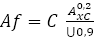
| c. The specified minimum elongation, Af, expressed in percent and rounded to the nearest percent, shall be determined using the following equation: | ||||
 |
||||
| Where C is 1 940 for calculation using Si units and 625 000 for calculation using USC units | ||||
| Axc is the applicable tensile test piece cross-sectional area, expressed in square millimeters (square inches) , as follows | ||||
| – For circular cross-section test pieces, 130mm2 (0.20 in2) for 12.7 mm (0.500 in) and 8.9 mm (.350 in) diameter test pieces; and 65 mm2 (0.10 in2) for 6.4 mm (0.250in) diameter test pieces. | ||||
| – For full-section test pieces, the lesser of a) 485 mm2 (0.75 in2) and b) the cross-sectional area of the test piece, derived using the specified outside diameter and the specified wall thickness of the pipe, rounded to the nearest 10 mm2 (0.10in2) | ||||
| – For strip test pieces, the lesser of a) 485 mm2 (0.75 in2) and b) the cross-sectional area of the test piece, derived using the specified width of the test piece and the specified wall thickness of the pipe, rounded to the nearest 10 mm2 (0.10in2) | ||||
| U is the specified minimum tensile strength, expressed in megapascals (pounds per square inch) | ||||
Mechanical properties of API 5L SMLS and Welded Pipes PSL 2
| Pipe Grade | Tensile Properties – Pipe Body of SMLS and Welded Pipes PSL 2 | Seam of Welded Pipe | |||||
|---|---|---|---|---|---|---|---|
| Yield Strength a | Tensile Strength a | Ratio a,c | Elongation | Tensile Strength d | |||
| Rt0,5 PSI Min | Rm PSI Min | R10,5IRm | (in 2in) | Rm (psi) | |||
| Af % | |||||||
| Minimum | Maximum | Minimum | Maximum | Maximum | Minimum | Minimum | |
| BR, BN,BQ,BM | 35,500 | 65,300 | 60,200 | 95,000 | 0.93 | f | 60,200 |
| X42,X42R,X2Q,X42M | 42,100 | 71,800 | 60,200 | 95,000 | 0.93 | f | 60,200 |
| X46N,X46Q,X46M | 46,400 | 76,100 | 63,100 | 95,000 | 0.93 | f | 63,100 |
| X52N,X52Q,X52M | 52,200 | 76,900 | 66,700 | 110,200 | 0.93 | f | 66,700 |
| X56N,X56Q,X56M | 56,600 | 79,000 | 71,100 | 110,200 | 0.93 | f | 71,100 |
| X60N,X60Q,S60M | 60,200 | 81,900 | 75,400 | 110,200 | 0.93 | f | 75,400 |
| X65Q,X65M | 65,300 | 87,000 | 77,600 | 110,200 | 0.93 | f | 76,600 |
| X70Q,X65M | 70,300 | 92,100 | 82,700 | 110,200 | 0.93 | f | 82,700 |
| X80Q,X80M | 80,.500 | 102,300 | 90,600 | 119,700 | 0.93 | f | 90,600 |
| a. For intermediate grade, refer to the full API5L specification. | |||||||
| b. for grades > X90 refer to the full API5L specification. | |||||||
| c. This limit applies for pies with D> 12.750 in | |||||||
| d. For intermediate grades, the specified minimum tensile strength for the weld seam shall be the same value as was determined for the pipe body using foot a. | |||||||
| e. for pipe requiring longitudinal testing, the maximum yield strength shall be ≤ 71,800 psi | |||||||
| f. The specified minimum elongation, Af, expressed in percent and rounded to the nearest percent, shall be determined using the following equation: | |||||||
|
|||||||
| Where C is 1 940 for calculation using Si units and 625 000 for calculation using USC units | |||||||
| Axc is the applicable tensile test piece cross-sectional area, expressed in square millimeters (square inches) , as follows | |||||||
| – For circular cross-section test pieces, 130mm2 (0.20 in2) for 12.7 mm (0.500 in) and 8.9 mm (.350 in) diameter test pieces; and 65 mm2 (0.10 in2) for 6.4 mm (0.250in) diameter test pieces. | |||||||
| – For full-section test pieces, the lesser of a) 485 mm2 (0.75 in2) and b) the cross-sectional area of the test piece, derived using the specified outside diameter and the specified wall thickness of the pipe, rounded to the nearest 10 mm2 (0.10in2) | |||||||
| – For strip test pieces, the lesser of a) 485 mm2 (0.75 in2) and b) the cross-sectional area of the test piece, derived using the specified width of the test piece and the specified wall thickness of the pipe, rounded to the nearest 10 mm2 (0.10in2) | |||||||
| U is the specified minimum tensile strength, expressed in megapascals (pounds per square inch | |||||||
| g. Lower values fo R10,5IRm may be specified by agreement | |||||||
| h. for grades > x90 refer to the full API5L specification. | |||||||
API 5L Line pipe Selection Guide
| Service / Application | Typical Steel Grade | Manufacturing Type | Delivery Condition | Notes |
|---|---|---|---|---|
| Water Transmission, Low Pressure | Grade B, X42 | ERW, SSAW | As-Rolled (R) | Economical, easy installation |
| Oil Gathering Line (Medium Pressure) | X42, X52 | ERW, Seamless | R / N | Moderate pressure pipelines |
| Natural Gas Distribution | X52, X60 | ERW | R / N | Requires good toughness, city gas networks |
| Long-Distance Crude Oil Pipeline | X60, X65 | LSAW, Seamless | N / M | High pressure, onshore pipelines |
| Long-Distance Gas Transmission | X65, X70 | LSAW, Seamless | N / M | Medium-high pressure, cross-country |
| Offshore Oil & Gas Pipeline | X65, X70 | Seamless, LSAW | Q / M | High-pressure, deepwater service |
| Deepwater Pipeline | X70, X80 | Seamless, LSAW | Q | Ultra-high-pressure, subsea pipelines |
| Arctic Pipeline (Low Temp) | X65M, X70M, X80M | LSAW, Seamless | M | High toughness at sub-zero temperatures |
| Sour Service (H₂S / CO₂) | X52, X60, X65, X70 | LSAW, Seamless | N / M / Q | Must meet NACE MR0175 / ISO 15156 |
| Slurry / Mining Pipeline | X42, X52, X60 | SSAW, ERW | R / N | Abrasion resistance may require special lining |
| High-Pressure Gas Line | X70, X80 | LSAW | Q | Long-distance transmission, high strength |
| Ultra-High Pressure Transmission | X80, X90 | LSAW | Q | Deepwater, cross-country, highest strength requirements |
API 5L ISO3183 line steel pipe Production Line

What Tests are Required for API 5L Line Pipe?
Hydrostatic Test
A hydrostatic test is a type of pressure test that is commonly used during the production of line pipes. The test is used to check for leaks in the weld seam or pipe body. To conduct the test, water is pumped into the pipe until it reaches a predetermined pressure. The pipe is then monitored for any leaks. If a leak is detected, the pipe will need to be repaired or replaced. The hydrostatic test is an important quality control measure that helps to ensure the safety and integrity of pipes.
Bending Test
A bending test is a type of quality control test that is performed during steel pipe production. The purpose of the test is to check for cracks in the welds, as well as to assess the strength of the steel. To perform the test, a sample piece of pipe is bent into a U-shape. The steel is then examined for cracks or other signs of weakness. If any are found, the entire batch of steel pipes will be scrapped and a new batch will be made. However, if the bending test proves successful, the steel pipes will be approved for use.
Flattening Test
A flattening test is a steel line pipe production test that assesses a steel tube’s resistance to deformation and cracking under stress. It is an important quality control measure that helps ensure the steel used in line pipe products is of the highest possible quality. The test involves applying pressure to a steel tube until it deforms or cracks. The flattening test will reveal the pipe’s resistance to longitudinal and circumferential cracking. The results of the test help determine the steel’s strength and ductility, two important properties for steel used in line pipe applications. Flattening tests are just one of many quality control measures that are used during steel line pipe production, but they play an important role in ensuring the safety and integrity of the final product.
CVN Impact Test
The CVN impact test is a temperature test that is conducted during pipe production in order to ensure the mechanical properties of the pipe. The test is conducted on three different positions on the pipe: the body, the welding seam, and the heat-affected zone. The results of the test are used to determine the Charpy V-notch impact strength of the pipe. The CVN impact test is an important quality control measure for pipe production, and it is required by the American Petroleum Institute (API) in order to meet its standards.
DWTT
The DWTT test, or drop-weight tear tests, are specified in the API 5L pipeline production specification. In this test, a large weight is dropped onto a pre-weakened point on a sample of pipe. The resulting fracture is examined to ensure that it meets the requirements for ductile fracture behavior. This test is important because it helps to ensure that pipes will be able to withstand the stress of being transported and installed without breaking. As a result, the DWTT test is an essential part of the quality control process for large diameter line pipes.

External Coating Processes of API 5L Oil and gas pipe lines
3LPE (3-Layer Polyethylene) — The Global Standard
Structure:
Layer 1 (FBE): Fusion Bonded Epoxy (100μm+). Provides excellent adhesion and resistance to cathodic disbondment.
Layer 2 (AD): Adhesive layer. Bonds the epoxy powder to the polyethylene.
Layer 3 (PE): High-Density Polyethylene (1.8–3.7mm). Provides superior waterproofing, electrical insulation, and impact protection.
Advantages: Excellent insulation, resistance to soil stress, and low moisture permeability.
FBE (Fusion Bonded Epoxy)
Process: The steel pipe is heated to over 200°C, and epoxy powder is applied via electrostatic spraying, which melts and cures on the pipe wall.
Advantages: Exceptional bonding to steel and high chemical stability. It can withstand higher temperatures (up to 100°C+).
Disadvantages: Relatively thin and brittle; susceptible to mechanical scratches during transport and installation.
3LPP (3-Layer Polypropylene)
Applications: Primarily used for high-temperature transport (up to 110–140°C) or deep-sea pipelines.
Advantages: Harder than PE with better scratch resistance and superior resistance to high-temperature creep.

The Considerations for Buying
Size and Dimensions
The first factor to consider when selecting an API 5L line pipe is its size and dimensions. The pipe’s size and dimensions should align with your project’s specifications. Consider the pipe’s diameter, wall thickness, and length to ensure it meets your project needs.
Weight
Weight is another important factor to consider when selecting an API 5L line pipe. The weight of the pipe can significantly impact the transportation and installation costs of the project. In addition, the weight of the pipe can influence the type of equipment needed for installation. Be sure to choose a pipe that meets your project’s weight requirements.
Material Grade
The material grade of the API 5L line pipe is also an important consideration. The material grade determines the quality and strength of the pipe, which can impact its durability and performance over time. Different grades of API 5L line pipes are available, ranging from Grade B to X70, each with its own properties and characteristics. Choose a material grade that aligns with the requirements of your project.
Coating and Surface Treatment
The API 5L line pipe’s coating and surface treatment can also impact its performance. Different coatings and treatments can protect against corrosion, abrasion, and other external factors affecting the pipe’s durability. Some common coatings and surface treatments include epoxy, zinc, and polyethene. Choose a coating or treatment that provides the level of protection your project requires.
Certification
Finally, selecting an API 5L line pipe that is certified and meets the necessary industry and regulatory standards is important. Look for tested and inspected pipes to ensure they meet the required standards. This way, you can be confident that your pipe is safe and reliable.
Our Factory
GNEE Pipe is China's professional one-stop supply chain enterprise for steel products.


Our Certificate

Contact Us
Frequently Asked Questions
Q: Can GNEE provide API 5L pipes for Sour Service?
Q: What is the difference between API 5L and A106 piping?
API 5L and ASTM A106 are both widely used carbon steel pipe specifications, but they are intended for different applications.
API 5L is a specification published by the American Petroleum Institute (API) for seamless and welded line pipe used in pipeline transportation systems. It is commonly used for transporting oil, natural gas, water, and other fluids over long distances in the petroleum and natural gas industries.
ASTM A106 is a specification published by ASTM International for seamless carbon steel pipe intended for pressure piping and elevated-temperature service. It is widely used in refineries, power plants, petrochemical facilities, and industrial process piping systems.
Key Differences
| Item | API 5L | ASTM A106 |
|---|---|---|
| Primary Application | Pipeline Transportation | Process Piping |
| Pipe Type | Seamless & Welded | Seamless Only |
| Typical Industries | Oil & Gas Transmission | Refining, Power Generation |
| PSL Requirements | PSL1 / PSL2 | Not Applicable |
| Sour Service Options | Available | Not Specified |
| High-Temperature Service | Limited | Designed For It |
In some projects, seamless pipes may be dual certified to both API 5L Grade B and ASTM A106 Grade B, allowing them to satisfy both pipeline and pressure-piping requirements.
Q: What is the difference between API 5L and A53 pipe?
API 5L and ASTM A53 are two widely used carbon steel pipe specifications, but they are intended for different applications and service conditions.
1. Primary Application
API 5L: Primarily designed for oil, gas, and water pipeline transportation systems, capable of handling high-pressure conditions over long distances.
ASTM A53: Intended for low- to medium-pressure service, including air, steam, water, and gas transport, and also for structural purposes such as handrails or scaffolding.
2. Specification Levels & Quality
API 5L: Includes two specification levels, PSL1 and PSL2. PSL2 pipes are manufactured to stricter chemical and mechanical requirements, including mandatory impact testing, for high-pressure and sour service applications.
ASTM A53: A more basic standard with fewer testing requirements. It does not include PSL levels and is generally not intended for high-pressure energy transmission.
3. Steel Grades & Pipe Types
API 5L: Available in Grade B through X80, both seamless and welded (ERW, LSAW, SSAW). Some grades can be certified for sour service (NACE MR0175).
ASTM A53: Available in Grade A and B, including seamless and welded (Type F, Type E), but does not have PSL levels or sour service certification.
Key Difference Summary
| Feature | API 5L | ASTM A53 |
|---|---|---|
| Typical Application | Oil & gas pipelines, water pipelines | Low/medium-pressure pipelines, structural |
| Pipe Type | Seamless & Welded (ERW, LSAW, SSAW) | Seamless & Welded (ERW, F), Type E, Type S |
| Grades | B to X80 | A, B |
| PSL | PSL1 / PSL2 | Not applicable |
| Sour Service | Optional (NACE MR0175) | Not specified |
| High-Pressure Use | Yes | Generally No |
Note: In some cases, seamless pipes may be dual-certified to meet both API 5L and ASTM A53 requirements, depending on project specifications.
Q: What inspections are performed on API 5L line pipes?
A: Inspection requirements vary according to grade, manufacturing method, and project specifications.
Typical inspections include:
Chemical Composition Analysis
Tensile Testing
Yield Strength Testing
Flattening Test
Bend Test
Impact Test (PSL2)
Hydrostatic Test
Ultrasonic Testing (UT)
Radiographic Testing (RT)
Magnetic Particle Inspection (MPI)
Visual and Dimensional Inspection
Additional third-party inspections can also be arranged upon request.
Q: Can API 5L pipes be dual certified?
A: Yes. Certain seamless pipes can be supplied with dual certification, such as:
API 5L Grade B / ASTM A106 Grade B
API 5L Grade B / ASTM A53 Grade B
Dual-certified pipes allow you to meet multiple project specifications while simplifying inventory management.
Q: What information should buyers provide when requesting a quotation?
A: To receive an accurate quotation, buyers should provide:
Pipe Standard (API 5L PSL1 or PSL2)
Grade (e.g., X52, X65, X70)
Manufacturing Type (SMLS, ERW, LSAW, SSAW)
Outside Diameter (OD)
Wall Thickness (WT)
Length
Quantity
Coating Requirements
Delivery Condition
Inspection Requirements
Destination Port
Providing complete technical specifications helps ensure accurate pricing and shorter lead times.