




OCTG
Your Professional OCTG Supplier
As a leading provider of integrated oil and gas piping solutions in China, GNEE leverages its two major manufacturing hubs in the North and South to efficiently supply high-quality products, including OCTG casing, OCTG Tubing, drill pipes, screen pipe, and OCTG fittings. We integrate production, trade, and service, ensuring all products are strictly certified with full-process quality traceability, making us a trusted partner in the global oil and gas industry.

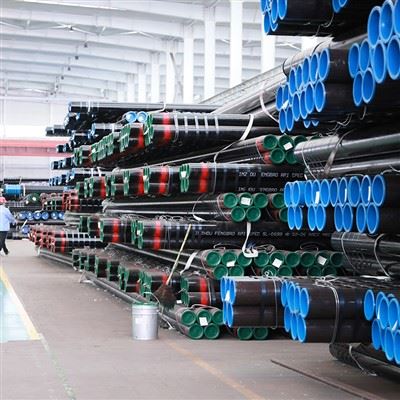


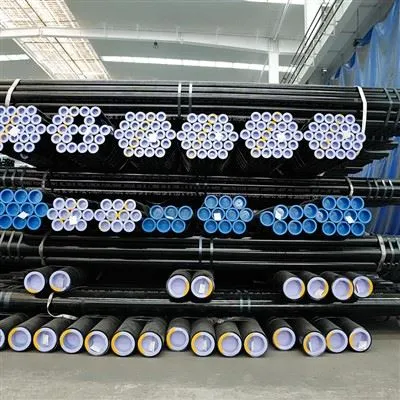


Brief Introduction to OCTG
OCTG, full name Oil Country Tubular Goods, oil special pipe. Refers to a type of steel pipe specially used for oil and gas extraction, most of which are seamless pipes, but welded pipes also account for a considerable proportion. Oil pipes are mainly used for oil and gas well drilling and oil and gas transportation. It includes oil drilling pipe, oil casing, oil extraction pipe.
OCTG Casing
OCTG casing consists of structural steel pipes deeply embedded underground; it serves as the lifeline for ensuring the safety and stability of oil and gas wells, preventing formation collapse, and protecting the environment.
OCTG Casing specification
| Item | Specification |
| Standard | API Spec 5CT (Latest Edition) |
| Manufacturing Process | Seamless (SMLS) or Electric Resistance Welding (ERW) |
| Outer Diameter (OD) | 4-1/2" — 20" (114.3mm — 508mm) |
| Wall Thickness (WT) | 0.205" — 0.635" (5.21mm — 16.13mm) |
| Length Range | R1 (4.88-7.62m), R2 (7.62-10.36m), R3 (>10.36m) |
| Surface Treatment | Bare, External Black Varnish, Phosphating |
| Protection | Steel or Plastic Thread Protectors |
API 5CT Casing Steel Grade Classification
| Group | Grades | Application / Service Environment |
| Group 1 | H40, J55, K55, N80-1/Q | Standard shallow to medium wells; non-corrosive environments. |
| Group 2 | L80, C90, T95, C110 | Sour Service (H2S Resistance); controlled hardness for crack resistance. |
| Group 3 | P110 | High-Strength Wells; deep wells with high-pressure requirements. |
| Group 4 | Q125 | Critical Service; deep wells with extreme pressure and stress. |
API 5CT Casing Thread and Ends

Casing joints are connected via threaded couplings. The choice of connection depends on the load and seal requirements:
| Abbreviation | Full Name | Features and Applications |
| STC | Short Round Thread | Lower joint strength; suitable for shallow/low-pressure wells. |
| LTC | Long Round Thread | Longer threads for higher joint strength; most common connection. |
| BTC | Buttress Thread | Trapezoidal thread; extremely high tensile strength for long, heavy strings. |
| Premium | Premium Connection | Metal-to-metal seal; gas-tight for high pressure, deep wells, and HPHT service. |
| PE | Plain End | Non-threaded; used for specialized welding or further machining. |
Color Ring On API 5CT Casing&Tubing

OCTG Tubing
OCTG Tubing refers to small-diameter pipes installed inside the casing that serve as the primary conduit for transporting oil and gas from underground reservoirs to the surface.
API 5CT OCTG Tubing Specifications
| Item | Specification |
| Standard | API Spec 5CT (Latest Edition) |
| Manufacturing Process | Seamless (SMLS) - Standard for high-pressure tubing |
| Outer Diameter (OD) | 1.050", 1.315", 1.660", 1.900", 2-3/8", 2-7/8", 3-1/2", 4", 4-1/2" |
| Common Wall Thickness | 0.113" to 0.430" (Varies by weight and OD) |
| Length Range | Range 1 (6.10–8.53m), Range 2 (8.53–9.75m), Range 3 (>9.75m) |
| Surface Treatment | Bare, External Black Varnish, Internal Coating (for corrosion/flow) |
| Internal Drift | Standard or Special Drift (ensures passage of downhole tools) |
OCTG Tubing Steel Grades
| Grade | Group | Service Environment | Typical Application |
| H40 | Group 1 | General / Shallow Wells | Low pressure, shallow water wells, or oil wells. Now less commonly used. |
| J55 | Group 1 | General / Standard | The most common grade. Used for shallow to medium-depth wells with no corrosive gases and low pressure. Most cost-effective. |
| N80-1 / N80-Q | Group 1 | Medium-Deep / Standard | Used for deeper wells than J55. N80-Q is quenched and tempered for better toughness in complex stress conditions. |
| L80 (Type 1) | Group 2 | Sour Service (H2S) | The industry standard for H2S environments. Hardness is strictly controlled (≤ 23 HRC) to prevent Sulfide Stress Cracking (SSC). |
| L80 (9Cr) | Group 2 | Mild CO2 Corrosion | Environments with moderate Carbon Dioxide (CO2); provides better pitting resistance than standard carbon steel. |
| L80 (13Cr) | Group 2 | Severe CO2 Corrosion | Martensitic Stainless Steel tubing. Designed for high CO2 and brine environments. Widely used in offshore and high-production gas wells. |
| C90 | Group 2 | Critical Sour Service | Higher strength than L80, suitable for deeper wells with significant H2S concentrations. |
| T95 | Group 2 | Critical Sour / High Pressure | High strength combined with SSC resistance. Used for deep, high-pressure, and acidic (sour) conditions. |
| P110 | Group 3 | High Pressure / Deep Wells | High-strength grade. Used for ultra-deep and high-pressure reservoirs. Generally not recommended for H2S service. |
Tubing Threads and End Connections

Tubing connections are different from casing because they must handle high internal pressures and frequent pulling in/out of the well.
| Abbreviation | Full Name | Description & Application |
| EUE | External Upset End | Most Common. The pipe ends are thickened (upset) before threading. This makes the joint stronger than the pipe body. (8-round thread). |
| NUE | Non-Upset End | The pipe ends are not thickened. The joint is weaker than EUE; used for low-cost, shallow wells. (10-round thread). |
| IJ | Integral Joint | One end has a female thread (box) and the other a male thread (pin) directly on the pipe. No coupling is used. Used for slim-hole wells. |
| Premium | Premium Connection | Uses metal-to-metal seals instead of just thread interference. Gas-tight for high-pressure, high-temperature (HPHT) and sour service. |
Differences: Casing vs. Tubing
| Feature | Casing | Tubing |
| Primary Goal | Protect wellbore, prevent collapse. | Transport oil/gas to surface. |
| Size (OD) | Large (up to 20"). | Small (usually up to 4-1/2"). |
| Common Thread | BTC (Buttress), LTC. | EUE (External Upset). |
| Installation | Permanent (Cemented in place). | Removable (for maintenance/workover). |
OCTG Couplings
OCTG Coupling is a short, internally threaded pipe fitting used to connect two joints of casing or tubing; it must strictly match the pipe body in steel grade and thread type to ensure joint strength and sealing reliability under high pressure, heavy loads, and corrosive downhole environments.
Classification of OCTG Couplings

Couplings are primarily classified based on the type of pipe they connect and the specific thread form:
A. Tubing Couplings
- EUE (External Upset End): External upset couplings. These are the most widely used tubing connections, featuring a larger Outer Diameter (OD) and high joint strength.
- NUE (Non-Upset End): Non-upset couplings. Typically used for low-pressure or shallow wells, featuring a smaller OD compared to EUE.
B. Casing Couplings
- STC (Short Round Thread): Short round thread couplings. Generally used for shallow wells with lower load requirements.
- LTC (Long Round Thread): Long round thread couplings. These offer superior sealing performance and higher strength compared to STC.
- BTC (Buttress Thread): Buttress thread couplings. Featuring trapezoidal threads, they provide extremely high tensile strength, capable of supporting the weight of very heavy casing strings.
C. Special Purpose Couplings
- Special Clearance Couplings: Also known as slim-hole couplings. These are specifically designed for narrow wellbores, with a smaller OD than standard API couplings to provide extra clearance.
- Seal Ring Couplings: These couplings feature internal grooves fitted with PTFE (Polytetrafluoroethylene) seal rings to enhance gas-tight sealing performance.
Dill pipe
OCTG drill pipe is a high-strength, heavy-duty seamless steel pipe used in oil and gas drill strings to transmit torque to the drill bit and circulate drilling fluid. It is specifically engineered to withstand extreme torque, massive tensile stress, and high-pressure conditions during deep-well drilling operations.
Size: 2-3/8"--6-5/8"
Standard: API 5DP
Length: Range 1, Range 2, Range 3
Drill Pipe Steel Grades & Mechanical Properties (API 5DP)
Steel grades indicate the yield and tensile strength of the material, selected based on well depth, torque, and environmental stress.
| Grade | Min. Yield Strength (psi) | Min. Yield Strength (MPa) | Tensile Strength (psi) | Tensile Strength (MPa) | Application |
| E-75 | 75,000 | 517 | 100,000 | 689 | General purpose; for medium-to-shallow wells and routine operations. |
| X-95 | 95,000 | 655 | 105,000 | 724 | High-strength grade for deeper wells or environments with higher stress. |
| G-105 | 105,000 | 724 | 115,000 | 793 | High-performance grade for deep wells and complex geological formations. |
| S-135 | 135,000 | 931 | 145,000 | 1,000 | Highest strength grade for ultra-deep and extended-reach (ERD) wells. |
Tool Joints & Connections
Drill pipes feature a Pin (male) and a Box (female) connector at either end. Common connection standards include:
NC (Numbered Connection): Such as NC31, NC38, NC50 (The modern industry standard).
IF (Internal Flush): Offers minimal fluid resistance; often interchangeable with NC (e.g., NC50 = 4-1/2" IF).
FH (Full Hole): Features a large internal bore.
REG (Regular): Standard for bit connections.
Upset Types (Pipe End Thickening)
Since the joints are welded, the pipe ends are "upset" to compensate for strength loss in the heat-affected zone:
IU (Internal Upset): Thicker on the inside.
EU (External Upset): Thicker on the outside.
IEU (Internal & External Upset): Thicker on both sides (Highest strength; most common).
Classification of Drill Pipes & String Components
| Type | Design Features | Key Functions | Standards / Grades | Best Applications |
| Standard Drill Pipe | Seamless steel pipe with relatively thin walls and welded tool joints at both ends. | Transmits torque and drilling power; facilitates drilling mud circulation. | API 5DP: Grade E, X, G, S | Routine onshore and offshore drilling operations. |
| Heavy Weight Drill Pipe (HWDP) | Wall thickness between standard pipe and collars; features a center upset (protector). | 1. Provides a stiffness transition to prevent fatigue; 2. Provides Weight on Bit (WOB) in directional wells. | API 7-1 / Proprietary high-strength grades | Directional wells, horizontal wells, and transition zones above the BHA. |
| Drill Collars | Extremely thick-walled, heavy-duty pipe; often with spiral grooves to prevent differential sticking. | Located at the bottom of the string; provides direct gravity for Weight on Bit (WOB); maintains stability. | API 7-1: 4145H Modified Steel | Bottom Hole Assembly (BHA) requiring high rigidity and weight. |
| Sour Service Drill Pipe | Controlled chemical composition with specialized tempering for controlled hardness (HRC ≤ 26). | Prevents Sulfide Stress Cracking (SSC) in high H2S (sour) environments. | NACE MR0175 / ISO 15156; High-toughness grades | Acidic oil and gas fields containing Hydrogen Sulfide (H2S). |
| Aluminum Alloy Drill Pipe | Made of high-strength aluminum alloy; weighs only 40%-50% of steel drill pipe. | Significantly reduces rig hook load; lowers frictional resistance in ultra-deep wells. | 7000 Series High-Strength Aluminum | Extended Reach Drilling (ERD), deepwater drilling, and corrosive environments. |
| Non-Magnetic Drill Pipe | Forged from austenitic stainless steel or specialized non-magnetic alloys. | Prevents magnetic interference with downhole survey tools (MWD/LWD) for accurate data. | Non-magnetic Austenitic Steels (e.g., Monel alloys) | Directional survey sections and instrument protection zones. |
| Ultra-High Strength Drill Pipe | Engineered beyond API limits with extreme tensile and torque load capacities. | Supports the massive self-weight of ultra-long strings in deep wells; prevents pipe parting. | V-150, Z-160 (Proprietary non-API grades) | Ultra-deep wells (>10,000m) and large-bore deep drilling. |
What are Advantages of GNEE OCTG?
Strength and Durability
OCTG pipes are designed and manufactured with high-quality materials that provide high strength and durability. These pipes can withstand high pressures and external loads, as well as harsh operational conditions such as high pressure, extreme temperatures, and corrosive environments. Strength and durability are crucial in oil and gas drilling and production operations.
Corrosion Resistance
OCTG pipes are often equipped with protective layers such as anti-corrosion coatings or galvanized coatings to protect them from corrosion. These coatings help extend the lifespan of the pipes and maintain their structural integrity in corrosive environments. Good corrosion resistance is essential for ensuring the reliability and safety of piping installations.
Diverse Availability
OCTG pipes are available in various sizes, shapes, and specifications to meet diverse needs in the oil and gas industry. These pipes can be produced in various diameters, wall thicknesses, and lengths according to specific project requirements. This diverse availability allows for adaptability and flexibility in the design and implementation of piping systems.
Easy Welding and Connection
OCTG pipes are typically designed with welded ends and can be easily connected with welded joints. This facilitates the installation and connection of pipes in piping systems. Additionally, advanced OCTG connections such as premium connections or non-upset steel connections can provide additional strength and security in heavy-duty operations.
Technological Support
OCTG pipes benefit from advanced testing and inspection technologies to ensure their quality and reliability. These pipes undergo various types of testing, including pressure testing, hardness testing, non-destructive testing, and more. Technological support instills confidence that these pipes meet the standards and specifications required in the oil and gas industry.
Process of OCTG
Steel Production
Welded or seamless steel pipes are essential to the OCTG manufacturing process. Steel is made by melting iron and adding various alloying chemicals to alter its properties.
Pipe Formation
Pipes are made by creating a hollow tube from solid steel. Manufacturers use rotational piercing or extrusion. They create welded pipes by welding either a coiled strip of steel or two bent steel plates lengthwise.
Heat Treatment
Quenching and tempering are two types of heat treatment used on pipes to improve their mechanical properties and eliminate internal tensions.
Threading
OCTG pipes include threaded connections that make installation and coupling simple in the well. Manufacturers use tools to prevent leaks.
OCTG Pipe Factory

OCTG Test equipments

GNEE Certificate
GNEE's OCTG pipe production technology has reached the world's average technical level. It has been recognized by dozens of project companies and has become a star enterprise in Asia.

Contact Us
Frequently Asked Questions
Q: What are the types of OCTG?
A: In the industry, OCTG is categorized into three primary types based on their function in the well: Drill Pipe, Casing, and Tubing.
Drill Pipes
Drill pipe is the heavy-duty, seamless tube that rotates the drill bit and circulates drilling fluid. It is the "engine room" of the drilling string.
Function: Transmits torque from the surface rig to the drill bit and carries drilling mud down to the bit and back up the annulus.
Key Features: High strength to withstand extreme tension, torque, and internal pressure.
Standard: API Spec 5DP.
Grades: E-75, X-95, G-105, S-135.
Casing
Casing is the large-diameter pipe that is inserted into a recently drilled section of a borehole and cemented in place. It forms the structural retainer for the walls of the oil and gas well.
Function:
Prevents the wellbore from collapsing.
Protects fresh-water sands (groundwater) from contamination.
Prevents different formations from "communicating" with each other.
Types of Casing (by Stage):
Conductor Casing: The first string (prevents top-hole washout).
Surface Casing: Protects groundwater and supports the BOP (Blowout Preventer).
Intermediate Casing: Isolates high-pressure zones or lost circulation zones.
Production Casing: The final string through which the oil/gas is produced.
Standard: API Spec 5CT.
Grades: J55, K55, N80, L80, P110, Q125.
Tubing
Tubing is the pipe through which the oil or gas is transported from the wellbore to the surface after the drilling is complete.
Function: Acts as the main conduit for the production fluids. It is placed inside the production casing.
Key Features: It is designed to be removable; if the tubing is damaged or corroded, it can be replaced (unlike casing, which is cemented in place).
Standard: API Spec 5CT.
Connections: Often uses "Premium Connections" (gas-tight) for high-pressure or corrosive gas wells.
Q: What is the difference between line pipe and Octg?
A: OCTG is for drilling and production; Line Pipe is for transportation.
OCTG (Oil Country Tubular Goods): Used inside the well (downhole).
These pipes (Drill Pipe, Casing, and Tubing) are used to drill the well and extract the oil/gas to the surface.
Standard: API 5CT, API 5DP.
Line Pipe: Used outside the well (transportation).
These pipes are used for pipelines to transport oil, gas, or water over long distances from the wellhead to refineries or storage tanks.
Standard: API 5L.
Q: What size is Octg tubing?
A: OCTG tubing sizes typically range from 1.050 inches to 4-1/2 inches in outside diameter (OD).
The most common sizes used in the field are:
2-3/8" (60.3 mm)
2-7/8" (73.0 mm)
3-1/2" (88.9 mm)
4-1/2" (114.3 mm)
Q: What are the uses of Octg pipe?
A: OCTG (Oil Country Tubular Goods) pipes are used for the exploration and production of oil and gas. Their three main uses are:
Drilling (Drill Pipe): Used to rotate the drill bit, transmit power to the bottom of the well, and circulate drilling mud.
Structural Support (Casing): Used to line the borehole to prevent the well from collapsing and protect groundwater from contamination.
Production (Tubing): Used as the "conduit" to transport oil and gas from the underground reservoir up to the surface.
Q: What is the difference between Casing and Tubing?
A: Casing is a permanent structure cemented into the well to provide structural integrity. It is usually larger in diameter (up to 20").
Tubing is the production conduit placed inside the casing. It is removable and replaceable if damaged or corroded. Tubing sizes generally range from 1.050" to 4-1/2".
Q: What is "Sour Service" (SSC) and which grades are required?
A: "Sour Service" refers to environments containing Hydrogen Sulfide (H2S), which causes Sulfide Stress Cracking (SSC).
For these conditions, specialized grades like L80-1, C90, T95, and C110 are used. These materials have controlled hardness (typically ≤ 22-26 HRC) and specific heat treatments to ensure toughness.
Q: What is annular volume between casing and tubing used for?
A: The annular volume (the space between the outer casing and the inner tubing) serves several critical functions:
Fluid Circulation: It provides a path to circulate fluids (like mud or kill fluids) up or down the well during maintenance or well-control operations.
Artificial Lift (Gas Lift): In many wells, gas is injected into the annulus to enter the tubing through valves, helping to lift heavy oil to the surface.
Chemical Injection: It is used to pump chemical inhibitors (to prevent corrosion, scale, or wax) into the production stream.
Well Integrity Monitoring: By monitoring the pressure in the annulus, operators can detect leaks in the tubing or packer, ensuring the well's structural safety.
Q: What are the common connection methods for OCTG?
A: OCTG pipes are threaded on both ends for simple installation and connection. The two most common types of pipe connections are:
API Connections: These connections are API-compliant and widely used in the industry. API Regular, API External-Upset, and API Integral-Joint connections are among them.
Premium Connections: Premium connections offer improved sealing, pressure resistance, and fatigue strength. These connections are intended for use in harsh environments and critical applications.
Q: What is the OCTG Pipe Inspection Process?
A: Visual & Dimensional Inspection (The Basics)
Visual Surface Inspection (VSI): Technicians check the external and internal surfaces for defects such as laps, seams, scabs, pits, or mechanical damage (dents and gouges).
Dimensional Verification:
Outside Diameter (OD) & Wall Thickness (WT): Measured using calipers and ultrasonic gauges to ensure they meet API 5CT/5DP tolerances.
Length Measurement: Pipes are categorized into Range 1, 2, or 3.
Straightness Check: Ensuring the pipe body is not bowed or bent beyond standard limits (typically 0.2% of the total length).
Drift Testing (Internal Clearance)
Full-Length Drift (FLD): A cylindrical mandrel (the "Drift") is passed through the entire bore of the pipe.
Purpose: This guarantees that the internal diameter (ID) is clear and that downhole tools, pumps, or smaller strings can pass through without getting stuck.
Thread & Connection Inspection
Visual Thread Inspection: Checking for galling, torn threads, or corrosion on the pin and box ends.
API 5B Gauging: Using specialized gauges to measure:
Lead: The distance between thread peaks.
Taper: The change in diameter along the thread.
Thread Height/Depth: Ensuring the thread profile is correct.
Premium Connection Inspection: For gas-tight seals, technicians use specialized procedures to inspect metal-to-metal seal surfaces and torque shoulders.
Non-Destructive Testing (NDT / EMI)
NDT is the heart of OCTG quality control, used to find subsurface flaws that the eye cannot see.
Electromagnetic Inspection (EMI): Uses magnetic fields to detect longitudinal and transverse flaws in the pipe body.
Ultrasonic Testing (UT): High-frequency sound waves measure wall thickness and detect internal laminations or cracks.
Magnetic Particle Inspection (MPI): Used primarily on pipe ends (the "End Area") and tool joints to find surface and near-surface cracks.
Eddy Current Testing: Used for surface-breaking defects and material sorting.
Mechanical & Pressure Testing
Hydrostatic Testing: Every pipe is filled with water and pressurized to a specific level (calculated per API formulas) for at least 5 seconds. This proves the pipe’s "burst strength" and ensures the connection is leak-proof.
Hardness Testing: Specifically for Sour Service grades (e.g., L80, C90, T95). Technicians use Rockwell or Brinell testers to ensure the steel is not too hard, which would make it susceptible to Sulfide Stress Cracking (H2S corrosion).
Traceability & Stenciling
Marking/Stenciling: Once passed, the pipe is stenciled with its size, grade, weight, standard, and Heat Number.
Color Coding: Different grades are painted with specific color bands (e.g., a bright red band for N80, or a purple band for P110) for easy identification on the rig site.
MTR (Material Test Report): All inspection data is compiled into a document that provides full traceability from the steel mill to the wellbore.