




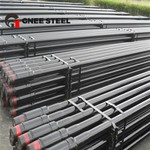
Galvanized Steel pipe
Your Professional Galvanized Steel pipe Supplier
Gnee Steel Group is a supply chain-integrated enterprise. Products include: API 5L Line Pipe, Seamless Steel Pipe, Welded Steel Pipe, OCTG, Stainless Steel Pipe, Coated Steel Pipe, Galvanized Steel Pipe, Pipe Fittings.
Why Choose Us?
Rich Experience
Gnee Steel Group was founded in 2008, has 18 years of experience in steel manufacturing.
Wide Product Range
The company's main products include: stainless steel pipes, stainless steel plates, stainless steel pipe fittings, duplex stainless steel, nickel-based alloys, etc.
Broad Market
The company's products are exported to more than 160 countries around the world, with a total of more than 800 global cooperative enterprises, including 15 shipbuilding companies, 143 engineering project companies, and 23 boiler machinery manufacturers.
Quality Guaranteed
Gnee has a strict procurement and quality inspection team carefully selects high-quality raw materials; an advanced science and technology team improves production and reduces costs for customers; an excellent design and processing team strives for excellence.

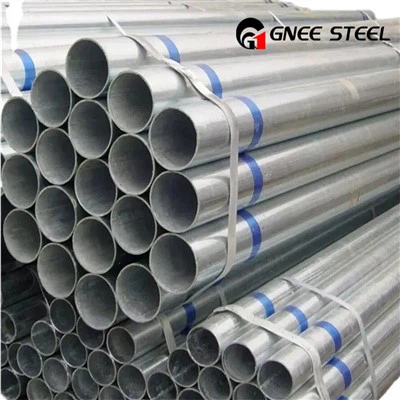

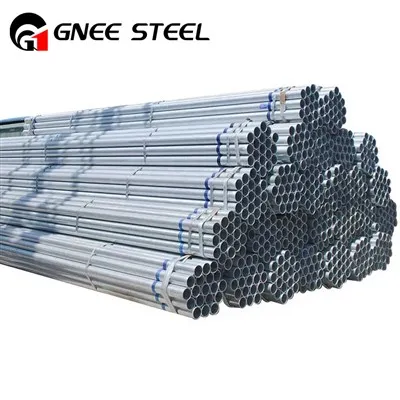
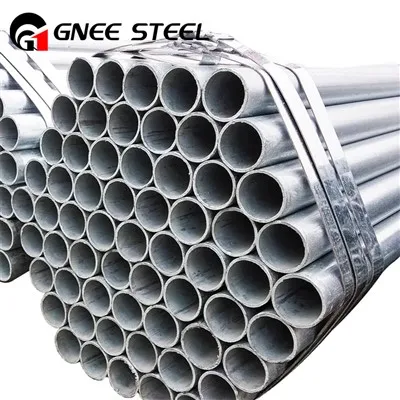
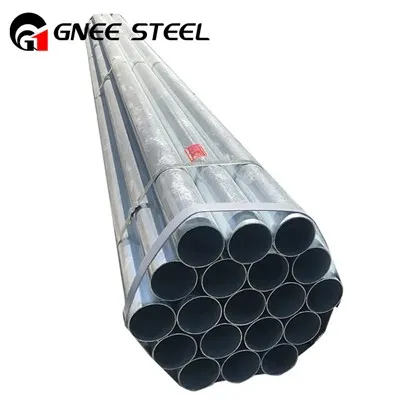

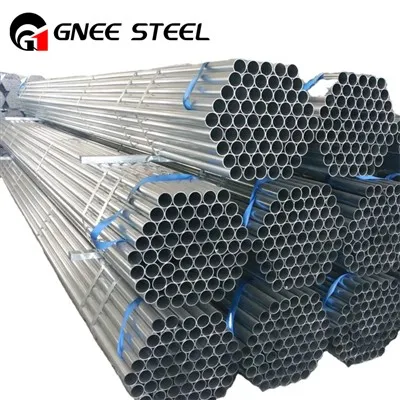


Brief Introduction to Galvanized Steel pipe
Galvanized steel pipes are steel pipes that have undergone a specialized coating process to prevent corrosion and increase their longevity. These pipes are typically made from carbon steel and are coated with a layer of zinc, forming a protective barrier between the steel and the surrounding environment. The zinc coating not only provides exceptional resistance against rust and corrosion but also enhances the overall strength of the pipe.
What are Advantages of Galvanized Steel pipe?
Exceptional Durability
Galvanized steel pipes are known for their remarkable durability. The zinc coating acts as a sacrificial layer, protecting the underlying steel from corrosion and extending the lifespan of the pipes.
Corrosion Resistance
The primary benefit of galvanized steel pipes is their superior resistance to corrosion. They can withstand harsh environmental conditions, including moisture, chemicals, and even underground exposure.
Longevity
Due to their excellent corrosion resistance, galvanized steel pipes have a significantly longer lifespan compared to regular steel pipes. They can last up to 50 years or more, reducing the need for frequent replacements.
Low Maintenance
Galvanized steel pipes require minimal maintenance over their lifespan. The zinc coating acts as a self-healing barrier, ensuring that minor scratches or abrasions do not compromise the integrity of the pipe.
Versatility
Galvanized steel pipes are suitable for a wide range of applications, including water supply systems, plumbing, gas pipelines, outdoor structures, fencing, and more. They are compatible with various fittings and connectors, providing flexibility in installation.
Cost-Effective
Although galvanized steel pipes may have a higher initial cost compared to some other materials, their long lifespan and low maintenance requirements make them a cost-effective choice in the long run.
Types of Galvanized Steel pipe
Hot-dip galvanization is the most common method of galvanizing steel pipes. It involves dipping the steel pipes into a molten zinc bath, which creates a thick, durable layer of zinc coating that protects the steel from corrosion and rust. Hot-dip galvanized steel pipes are known for their high-quality and long-lasting performance. They are often used in outdoor and industrial locations where durability is crucial, such as bridges, power plants, and water treatment facilities.
Electro-galvanization is another method of galvanizing steel pipes, but it uses an electric current to deposit zinc onto the steel surface rather than a molten zinc bath. The resulting zinc coating is thinner and less durable than hot-dip galvanization, but it still provides some protection against rust and corrosion. Electro-galvanized steel pipes are typically used in indoor settings and non-critical applications where cost and aesthetics are more important than durability.
Pre-galvanized steel pipes are made with steel that has already been coated with zinc before manufacturing. This process involves passing the steel strips through a zinc coating machine before they are formed into pipes. Pre-galvanized steel pipes are less durable than hot-dip galvanized steel pipes but are still effective against corrosion and rust. They are commonly used in indoor and outdoor construction projects, such as fences, handrails, and roof structures.
Galvannealed steel pipes are made by annealing hot-dipped galvanized steel, which causes the zinc coating to react with the steel to form a zinc-iron alloy. This process creates a matte, non-reflective finish that is highly resistant to scratching and corrosion. Galvannealed steel pipes are commonly used in automotive and appliance manufacturing, as well as in the construction of buildings and bridges.

Applications of Galvanized Steel pipe
Plumbing and Water Distribution
Galvanized steel pipes are commonly used in plumbing and water distribution systems, as the zinc coating on the pipes provides an additional layer of protection against corrosion and rust. They are often used in homes, commercial buildings, and industrial facilities for the transportation of potable water.
Gas Supply
Galvanized steel pipes are also used in gas supply lines, as they can withstand high pressure and are resistant to corrosion. They are commonly used in industrial applications and in residential gas lines.
Irrigation Systems
Galvanized steel pipes are often used in irrigation systems for the transportation of water to crops and other vegetation. The zinc coating on the pipes helps to prevent rust and corrosion, which can help extend the lifespan of the pipes.
Construction
Galvanized steel pipes are widely used in construction projects for structural support, such as in scaffolding, handrails, and fencing. They are also used in the construction of bridges and other infrastructure projects.
Automotive Industry
Galvanized steel pipes are used in the automotive industry for the manufacture of exhaust systems, as the pipes are resistant to corrosion and can withstand high temperatures.
Process of Galvanized Steel pipe
Preparation
The pipes are first cleaned to remove any rust, scale, or other impurities that could interfere with the galvanizing process.
Acid Pickling
The cleaned steel is then immersed in a solution of diluted hydrochloric or sulfuric acid to remove any remaining contaminants and prepare the surface for galvanizing.
Fluxing
After pickling, the steel is rinsed with water and then dipped in a flux solution to prevent oxidation and ensure that the zinc coating adheres properly. The flux solution typically contains a mixture of zinc ammonium chloride and other additives.
Galvanizing
The steel is then immersed in a bath of molten zinc at a temperature of around 450-460°C. The zinc reacts with the surface of the steel to form a metallurgically-bonded coating of zinc-iron alloy layers, which are covered by a layer of pure zinc.
Inspection
After galvanizing, the steel is inspected to ensure that the coating is uniform and free of defects, such as bubbles or bare spots.
Finishing
Once the galvanized steel has cooled, it can be cut, threaded, or otherwise processed as needed for its intended use.
How Do You Maintain Galvanized Steel pipe?
● Avoid long periods of exposure of your galvanized steel product to environments where the pH is below 6 and above 12. Outside the range of pH 6-12 the galvanized coating can suffer greater corrosion than normal.
● Avoid direct contact of your galvanized steel product with dissimilar metals, such as brass and copper, particularly in corrosive environments. Where dissimilar metals are to be used together ensure that there is an insulator between the dissimilar metal and the galvanized product.
● Do not constantly abrade clean your galvanized product and, where possible, avoid abrasive washing of your galvanized product altogether. One of the ways in which galvanizing protects steel from corrosion is by the development of a thin barrier film of insoluble zinc corrosion products (known as a patina) on the outer surface of the galvanized steel through exposure to the atmosphere. Abrasive cleaning will wash away this protective patina and the galvanized article will have to build up this barrier protection again, consuming more of the zinc. Constant abrasive cleaning will consume the zinc more quickly and therefore may reduce the life of your galvanized steel product.
● Galvanizing may be cleaned using a water-based emulsifier, alkaline-based cleaners with a pH of 12 or lower or organic solvents. Then rinse the area with fresh water and simply wipe clean with a soft cloth.
● For galvanizing product situated in a highly corrosive environment. coastal, heavy industrial, etc it is recommended the product be rinsed with potable water on a regular basis, particularly under sheltered conditions (i.e. not exposed to rain and sun).
● Avoid long term storage of any galvanized product in damp and poorly ventilated conditions. Ensure the storage location is dry and there is effective ventilation.
● If there is physical damage to the galvanized coating of the product (e.g. coating is chipped or fabrication after galvanizing has taken place), it is recommended that the damaged area be repaired in accordance with AS/NZS 4680.
Our Factory
GNEE Steel Group is China's professional one-stop supply chain enterprise for steel products.


Our Certificate
Its stainless steel pipe production technology has reached the world's average technical level. It has been recognized by dozens of project companies and has become a star enterprise in Asia.

Contact Us
Frequently Asked Questions
Q: What are the requirements for Galvanized Steel pipe during construction?
Galvanizing in order to preserve corrosion, in the long-distance transportation, the pole protection testing station is generally set up at several tens of kilometers to 100 kilometers. The instrument in the station generates cathode electrons to fill the pipeline, and the galvanized surface is conducive to conductive rust. The pipe is charged uniformly.
In order to prevent the loss of cathode electrons in the pipeline, the galvanized pipe is filled with electric tannin (mixture of bitumen and quartz powder) and kraft paper, second oil two paper or three oil three papers before installation. After head welding, it should be treated equally. The insulation resistance should be not less than 0.5 Mn, and check if the pipe is punctured with low voltage 380V/220V.
On the side of the gas transmission pipeline, a distance of 50cm, a tens of meters of grounded galvanized l” pipe grounding tape shall be embedded in the same trench, and a galvanized iron tape shall be introduced into the testing station.
If the gas or natural gas leaks and breaks through the insulating layer under pressure, the electrons enter the land, return to the grounding zone and enter the detection instrument, and immediately reflect it from the instrument. The leak distance and the position of the pipe fault can be organized to repair the manpower.
Q: What are the advantages of Galvanized Steel pipe?
Secondly, galvanized pipes exhibit excellent impact resistance and anti-wear properties after galvanization. The hardness of the zinc coating exceeds that of steel, enhancing the pipe's ability to withstand impacts and abrasion. Additionally, the zinc layer tends to be thicker and possess superior toughness and abrasion resistance, particularly at corners, compared to other coatings. Other coatings often suffer from thinning, especially at corners, making them susceptible to damage.
Thirdly, a significant advantage of hot-dip galvanizing is its sacrificial protection mechanism. In the event of mechanical damage or other causes leading to minor portions of the zinc layer being removed, the exposed iron-based surface still benefits from the sacrificial protection of the surrounding zinc layer, effectively shielding the steel from corrosion.
Finally, hot-dip galvanizing enhances both the longevity and aesthetic appeal of the steel. The lifespan of galvanized steel largely depends on the thickness of the coating, which, in turn, is influenced by the thickness of the galvanized pipe. Thicker galvanized pipes typically offer greater coating durability. Additionally, in highly corrosive environments, applying paint over the galvanized layer further enhances corrosion resistance. With the appropriate paint system, achieving effective anti-corrosion protection is easily achievable.
Q: What are Difference between Black Steel Pipe and Galvanized Steel Pipe?
Black steel pipe and galvanized pipe are both made of steel, but galvanized pipe has a zinc coating, whereas black pipe does not. Consequently, galvanized pipe is more expensive and more durable. In terms of transportation, black steel pipe tends to erode more easily than galvanized pipe. Therefore, black steel pipe is more suitable for transporting gas, whereas galvanized pipe is better suited for carrying water.
Galvanized pipe is covered with a layer of zinc, which enhances its corrosion protection and helps prevent mineral deposits that could block the pipe. It is primarily used for supplying water to homes and commercial buildings and also serves as scaffolding frames due to its rust prevention properties. On the other hand, black steel pipe is manufactured as seamless, making it a better choice for gas transportation. It can also be used for fire sprinkler systems as it provides better fire prevention than galvanized pipe. The dark color of black steel pipe is due to the formation of iron oxide during the manufacturing process.
One significant drawback of galvanized pipe is that as time passes, the zinc coating may flake off, leading to pipe blockages and potential bursts. Consequently, galvanized pipes are not recommended for transporting gas and are more commonly used for carrying water. Conversely, black steel pipe is prone to corroding in water, and the mineral content of the pipe may dissolve and clog the line.
In general, black steel pipe is cheaper than galvanized pipe due to the added cost of the zinc coating and the manufacturing process. Additionally, black steel pipe requires lower maintenance and fitting costs.
To differentiate between black steel pipe and galvanized steel pipe, there are three main methods: examining the color of the pipe (black steel pipe is darker, while galvanized pipe is silver-gray), identifying the type of material they carry (galvanized pipe for water, black steel pipe for gas), and considering their applications and properties.
Q: How to Cut Galvanized Steel Pipe?
To cut with a hacksaw
Secure the pipe in a vise or clamp, and support the longer end if necessary. Start cutting. Since you have no motor, you’ll need a lot of time and energy to cut this way, but it can be done. That said, don’t use too much pressure. Once the steel separates, file down the cut ends.
To cut with a tube-cutting tool
When you start cutting, you’ll need to rotate your cutter around the pipe several times. Once the cut is made, ream the pipe to avoid leaving burred ends. To do this, you’ll need a tool called a reamer.
To cut with a reciprocating saw
This motorized cutting tool gets the job done fast. Put on your PPE, mark your cut, clamp your pipe down, and let that wheel do its work. Just make sure you don’t start with the wheel pressed directly against the pipe as this can cause it to snag on the pipe and damage the blade.
Q: How to Weld Galvanized Steel Pipes?
Safety Precautions:
Wear appropriate personal protective equipment (PPE), including welding gloves, a welding helmet with a proper filter, protective clothing, and respiratory protection.
Work in a well-ventilated area or use exhaust ventilation to minimize exposure to zinc fumes.
Avoid welding galvanized steel pipes near flammable materials to prevent the risk of fire.
Preparation:
Clean the galvanized steel pipe thoroughly before welding to remove any dirt, grease, or zinc coating residue. Use a wire brush or a dedicated cleaning solution to ensure a clean surface.
Be aware that welding galvanized steel produces toxic fumes, so make sure the workspace is properly ventilated and use respiratory protection.
Selection of Welding Method:
There are several welding methods suitable for galvanized steel pipes, including stick welding (SMAW), MIG welding (GMAW), and TIG welding (GTAW).
Choose the appropriate welding method based on the thickness of the galvanized steel pipe and the desired welding technique.
Welding Techniques:
Ensure a proper fit-up of the pipes, maintaining the desired joint configuration.
Set the welding machine to the appropriate settings based on the welding method, pipe thickness, and joint configuration.
Start welding from the root of the joint and maintain a steady travel speed to achieve a uniform and strong weld.
If using the MIG welding method, adjust the voltage, wire feed speed, and shielding gas flow rate according to the manufacturer’s recommendations.
For TIG welding, use a filler rod suitable for galvanized steel and employ proper techniques to control heat input and achieve a clean and precise weld.
Post-Welding:
Allow the welded joint to cool naturally and avoid quenching it with water, as this can lead to rapid zinc corrosion.
Inspect the weld for any defects or imperfections and address them if necessary.
If required, remove any excess zinc around the weld bead using a wire brush or grinder.
It’s crucial to note that welding galvanized steel produces toxic zinc fumes that can cause health hazards. Ensure proper ventilation, use respiratory protection, and follow safety guidelines to minimize exposure. Additionally, consulting welding professionals or seeking guidance from experienced welders can provide valuable insights and techniques specific to your welding project.
Q: What are the common applications of Galvanized Steel pipe?
Water Supply Systems: Galvanized steel pipes are widely used for transporting potable water in residential and commercial buildings. Their corrosion resistance ensures the delivery of clean and safe water.
Plumbing Systems: These pipes are commonly employed for plumbing installations due to their durability and reliability.
Gas Pipelines: Galvanized steel pipes are ideal for gas pipelines, as they can withstand pressure and provide a secure conduit for natural gas distribution.
Outdoor Structures: The corrosion resistance of galvanized steel makes it a popular choice for outdoor structures such as handrails, fences, guardrails, and signposts.
Irrigation Systems: Galvanized steel pipes are suitable for irrigation systems due to their ability to withstand exposure to moisture and soil conditions.
Q: What are the manufacturing processes of Galvanized Steel pipe?
Cleaning: The steel pipes are thoroughly cleaned to remove any impurities or residues, ensuring proper adhesion of the zinc coating.
Pickling: The pipes are then immersed in an acidic solution to remove any mill scale or oxides present on the surface. This step further prepares the steel for the galvanizing process.
Galvanizing: The cleaned and pickled pipes are submerged in a bath of molten zinc. Through a metallurgical reaction known as hot-dip galvanizing, the zinc forms a tightly bonded coating on the steel surface.
Cooling and Inspection: After galvanization, the pipes are cooled and inspected for quality control. This step ensures that the zinc coating is uniform and free from any defects.
Q: What are the differences between carbon steel pipes and galvanized steel pipes?
Carbon steel pipes are made of steel ingots or solid round steels that are perforated to form capillary tubes, and then made by hot and cold rolling and cold drawing. Carbon steel pipe has a key position in the domestic steel pipe field.
Galvanized steel pipes use hot-dip galvanizing. The galvanized steel pipe should be tested for the balance of the galvanized layer.
Different materials
Carbon steel pipe is an alloy material mainly containing carbon and iron. It has excellent mechanical properties and processing properties, but poor corrosion resistance. It is often used in pipelines for conveying fluids or gases.
Galvanized steel pipe is a kind of pipe that has been electrochemically treated and coated with a layer of zinc on the surface of the steel pipe, which mainly increases the corrosion resistance of the pipe. Therefore, the material of the galvanized pipe is carbon steel, stainless steel and other metal materials.
Surface treatment
Carbon steel pipes are not surface treated or only coated with grease, and are susceptible to external oxidation and corrosion, so their service life is limited.
Galvanized steel pipe is coated with a layer of zinc on the surface of the steel pipe, and the galvanized layer is formed by electroplating and other technologies. This method can not only prevent oxidation and corrosion, but also improve the wear resistance and aesthetics of the pipe.
Performance characteristics
Corrosion resistance:
The corrosion resistance of carbon steel pipe is relatively weak. If it is used as a pipeline for transporting corrosive substances, it is easy to be corroded and cracks will appear, which will affect the service life of the pipeline.
As a kind of anti-corrosion pipe, galvanized steel pipe has excellent corrosion resistance, especially in humid and corrosive areas, it is more suitable for use.
Strength:
Carbon steel pipes have high strength, so they are often used in places with high pressure, such as oil production pipelines in oil fields, support structures for high-rise buildings and bridges, etc.
The strength of galvanized steel pipe is relatively poor, but because of its advantages of corrosion resistance and rust resistance, it is suitable for some occasions with low demand.
Scope of application:
Both carbon steel pipes and galvanized pipes are commonly used metal pipes, but due to their different properties and uses, the scope of application is also different.
Carbon steel pipes are suitable for transporting gases or fluids and are subject to high pressure; while galvanized pipes are mainly used for damp and corrosive places, such as petrochemical, chemical, shipbuilding and marine development, etc. .
Q: What are the process types of Galvanized Steel pipe?
Electroplating is another popular way to galvanize steel tubes due to its high-quality finish and relatively cheap cost compared to other methods such as hot-dip galvanization. Electroplating uses electrical currents in order to deposit a thin layer of chromium, nickel or zinc on top of an already existing metal surface.
Mechanical plating, also called mechanical polishing, is a low-cost alternative that involves adding a thin layer of zinc using an abrasive blasting (shot peening) method. This type of galvanizing process is not as popular due to its lower quality finish and tendency to flake or peel off.
Plastic coating is the least-used method for galvanizing steel tubes since it has limited functionality and poor corrosion resistance.
Q: What are The Difference Between Galvanised And Non-Galvanised Steel Pipes?
Galvanised steel has a coating of zinc on its surface that resists corrosion. This helps prevent rusting, which can be a problem because it weakens the metal. Non-galvanized steel doesn't have this coating and may need more frequent maintenance to avoid corrosion.
Both types of metal can be used in construction projects or other applications. However, each has distinct advantages and disadvantages that make them better suited for certain situations than others.
Industry Application
While non-galvanised steel can withstand salt water, it deteriorates rapidly in chlorinated water, making galvanised steel the superior choice. For this reason, galvanised steel is preferable to stainless steel when two components produce friction and fuse.
Non-galvanised steel, in contrast to galvanised steel, is both stronger and more corrosion-resistant, making it ideal for usage in industries like aerospace, where durability is of the utmost importance. Stainless steel's high strength and resistance to corrosion from seawater make it a popular choice for constructing bridges and other structures, sculptures, train lines, and automobiles that rely on a sturdy foundation.
Cost
The cost of galvanised pipes is lower than that of non-galvanized pipes in the long run. This is because galvanised pipes are more durable than non-galvanised ones and do not corrode easily.
Strength
The strength of galvanised pipes depends on the thickness of the coating. The thicker the coating, the better it will be able to withstand corrosion from chemicals in the water or other substances that may come in contact with it. That is why galvanised steel pipes are stronger than non-galvanised steel pipes.
Corrosion resistance
Because galvanised pipes have a protective coating that prevents rusting, they are much more resistant to corrosion than non-galvanised ones. This makes them ideal for use in areas with high humidity or exposure to saltwater or other corrosive substances like acids or alkalis.
Temperature Resistance
To avoid the production of toxic zinc fumes when heated, galvanised steel is not suitable for use in high-temperature applications. Galvanised metal should not be used with utensils or equipment related to food contact surfaces. This is because the zinc coating, which turns into zinc salt when exposed to acids, corrodes far more quickly when consumed alongside acidic foods and beverages.
Q: What are the general types of Galvanized Steel pipe?
Electro-galvanized steel pipes: These pipes are made by applying a thin layer of zinc to the surface of the steel through electrolysis. This process is less expensive than hot-dip galvanizing, but it produces a thinner coating of zinc that provides less protection against corrosion.
Pre-galvanized steel pipes: These pipes are made by coating the steel with zinc before it is formed into pipes. This process produces a coating that is thinner than hot-dip galvanizing but thicker than electro-galvanizing.
Galvanized seamless steel pipes: These pipes are made without any seams, which makes them stronger and more durable than welded pipes. They are usually made using the hot-dip galvanizing process.
Galvanized welded steel pipes: These pipes are made by welding the steel sheets or plates together and then galvanizing them. They are commonly used for water and gas pipelines.
Q: Why Does Galvanized Pipe Corrode?
Zinc Coating Breakdown
While the zinc coating provides initial protection, it can break down over time due to exposure to various environmental factors such as moisture, oxygen, and chemicals. As the zinc coating deteriorates, the underlying steel is exposed to these corrosive agents, leading to corrosion.
Mechanical Damage
Physical damage to the galvanized coating, such as scratches, dents, or abrasions, can expose the steel underneath. These damaged areas become vulnerable to corrosion as the protective zinc layer is compromised.
Localized Corrosion
Galvanized pipes can experience localized corrosion, such as pitting corrosion, in areas where the zinc coating is thin or damaged. This type of corrosion can create small pits or holes on the pipe’s surface, eventually leading to leaks and structural weakening.
Chemical Exposure
Galvanized pipes may come into contact with chemicals or substances that can accelerate the breakdown of the zinc coating. For instance, exposure to certain acids or alkalis can compromise the protective layer and contribute to corrosion.
Water Composition
The composition of the water flowing through galvanized pipes can also play a role in corrosion. If the water is highly acidic or contains other corrosive elements, it can react with the zinc coating and accelerate its degradation.