




API 5L X52 PSL2 Pipe
API 5L X52 PSL2 pipe is a high-integrity carbon steel line pipe defined by the American Petroleum Institute (API) Specification 5L (46th Edition, 2022), the globally recognized standard for steel pipelines used in oil, gas and water transmission. As the enhanced Product Specification Level 2 of X52 grade, it imposes stricter controls on chemical purity, mechanical toughness, dimensional accuracy and non-destructive testing compared to the basic PSL1 grade. It is technically equivalent to ISO 3183 Grade L360 PSL2, the international equivalent standard, and is widely specified for critical, high-consequence service applications.
Get certified PSL2 pipes with complete MTC, NDT reports, competitive pricing, and fast global delivery. Send your project requirements today for a quotation within 24 hours.
What is API 5L X52 PSL2 Pipe?
The grade designation follows the official API 5L naming convention:
The letter X denotes a high-strength line pipe grade, with yield strength expressed in thousands of pounds per square inch (ksi).
The number 52 indicates a minimum specified yield strength of 52,000 psi (360 MPa).
PSL2 (Product Specification Level 2) is the higher quality tier, with mandatory additional testing, tighter chemical limits and verified fracture toughness for service in demanding service conditions.
This grade is classified as a medium-high strength pipeline steel, delivering an optimal balance of strength, ductility, weldability and cost-effectiveness for mid-to-high pressure transmission systems.
Applicable Standards and International Grade Equivalents
This pipe grade complies with multiple global standards and has direct equivalent grades across major standard systems:
Primary standard: API Specification 5L, 47th Edition (2026) – Line Pipe
International standard: ISO 3183:2019 – Grade L360 PSL2
European standard: EN 10208-2 – Grade L360MB
Chinese standard: GB/T 9711 – Grade L360 PSL2
Canadian standard: CSA Z245.1 – Grade 359
Russian standard: GOST 20295 – Grade K52
Note: Per API 5L requirements, higher grades such as X60 shall not be used as a substitute for X52 without prior written approval from the purchaser.
Chemical Composition of API 5L X52 PSL2 Pipes with t ≤ 0.984"
|
Steel Grade |
Mass fraction, % based on heat and product analyses |
Carbon Equiv a |
|||||||||||||||
|
C |
Si |
Mn |
P |
S |
V |
Nb |
Ti |
Other |
CE IIW |
CE Pcm |
|||||||
|
max b |
max |
max b |
max |
max |
max |
max |
max |
max |
max |
||||||||
|
Seamless and Welded Pipe |
|||||||||||||||||
|
X52N |
0.24 |
0.45 |
1.4 |
0.025 |
0.015 |
0.1 |
0.05 |
0.04 |
d,e,l |
0.43 |
0.25 |
||||||
|
X52Q |
0.18 |
0.45 |
1.5 |
0.025 |
0.015 |
0.05 |
0.05 |
0.04 |
e,l |
0.43 |
0.25 |
||||||
|
Welded Pipe |
|||||||||||||||||
|
X52M |
0.22 |
0.45 |
1.4 |
0.025 |
0.015 |
d |
d |
d |
e,l |
0.43 |
0.25 |
||||||
Mechanical Properties Tensile and Yield of API 5L X52 PSL2 Line Pipe
|
Pipe Grade |
Tensile Properties – Pipe Body of SMLS and Welded Pipes PSL 2 |
Seam of Welded Pipe |
|||||
|
Yield Strength a |
Tensile Strength a |
Ratio a,c |
Elongation |
Tensile Strength d |
|||
|
Rt0,5 PSI Min |
Rm PSI Min |
R10,5IRm |
(in 2in) |
Rm (psi) |
|||
|
Af % |
|||||||
|
Minimum |
Maximum |
Minimum |
Maximum |
Maximum |
Minimum |
Minimum |
|
|
X52N,X52Q,X52M |
52,200 |
76,900 |
66,700 |
110,200 |
0.93 |
f |
66,700 |
Differences: API 5L X52 PSL1 vs PSL2
The table below summarizes the core distinctions between the two product specification levels:
| Parameter | X52 PSL1 | X52 PSL2 |
|---|---|---|
| Chemical Purity | Loose limits: P ≤ 0.030%, S ≤ 0.030% | Tight limits: P ≤ 0.025%, S ≤ 0.015% |
| Mechanical Strength | Only minimum values specified | Controlled strength range + max yield-to-tensile ratio of 0.93 |
| Impact Toughness Test | Not mandatory | Mandatory CVN + DWT test |
| Non-Destructive Testing | Visual and dimensional inspection only | Mandatory full-length UT/RT NDT |
| Documentation | Basic Type 2.2 MTC | Full Type 3.1/3.2 MTC with complete test records |
| Typical Applications | Low-pressure, non-critical onshore lines | High-pressure, subsea, low-temperature, sour service and high-consequence pipelines |
Manufacturing Types and Dimensional Specifications
X52 PSL2 pipe is available in seamless and multiple welded manufacturing processes, covering a wide size range to suit different project requirements.
Available Pipe Types
Seamless Pipe (SMLS): Produced via hot rolling or cold drawing. No weld seam, uniform metal structure, ideal for high-pressure small-to-medium diameter lines. Outer diameter: 1/2" – 24" (21.3 mm – 610 mm).
HFW/ERW Pipe: High frequency electric resistance welded. Cost-effective for medium-diameter onshore distribution networks. Outer diameter: 1/2" – 24".
LSAW Pipe: Longitudinal submerged arc welded (JCOE/UOE process). For large-diameter thick-wall trunk lines and subsea pipelines. Outer diameter: 16" – 56".
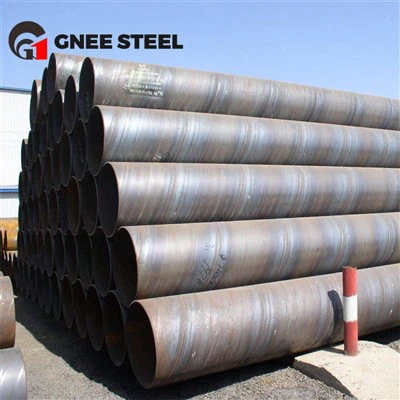
SSAW/SAWH Pipe: Spiral submerged arc welded. Flexible production for large-diameter low-to-medium pressure lines and pipe piles. Outer diameter: 16" – 100" (406 mm – 2540 mm).
Additional Specifications
Wall thickness: 2.11 mm – 60 mm, covering standard schedules: SCH 10, SCH 20, STD, SCH 40, SCH 80, XS, SCH 160, XXS
Length options: SRL (Single Random Length), DRL (Double Random Length), fixed lengths of 20ft (6m) or 40ft (12m)
End finishes: Plain ends, beveled ends, threaded ends
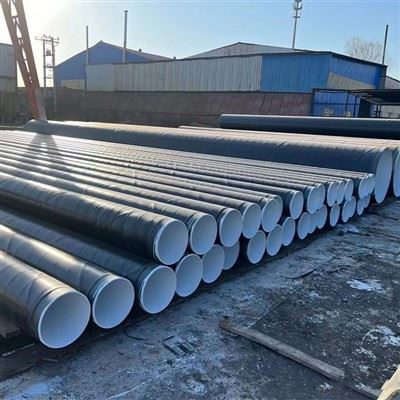
Coating options: Black paint, varnish, anti-rust oil, FBE, 3LPE, 3PP, galvanized, CRA clad/lined
API 5L X52 PSL2 Seamless Pipe

Industrial Applications
API 5L X52 PSL2 pipe is specified for applications where pipeline failure would carry significant safety, environmental or economic consequences. Common use cases include:
Onshore high-pressure oil and gas transmission trunk lines and gathering networks
Offshore and subsea oil and gas flowlines, risers and jumper pipes
Sour service pipelines carrying H₂S-containing crude oil or natural gas (with S suffix grade)
Cold-region pipelines operating at low ambient temperatures
Urban high-pressure natural gas distribution networks in high-consequence areas
Petrochemical, chemical and nuclear power plant auxiliary pipeline systems
Water transmission pipelines for high-pressure long-distance projects
Testing Requirements
PSL2 grade requires a comprehensive testing regime to verify integrity, beyond the basic tests required for PSL1.
General Mandatory Tests (All X52 Pipe)
Hydrostatic Test: 100% of pipes are tested at specified pressure, with zero leakage allowed on the pipe body and weld seam.
Bend / Guided Bend Test: Verifies ductility of weld and base metal; cracks longer than 3.2 mm are considered failure.
Flattening Test: Required for ERW pipes with OD above 12.75", to verify resistance to longitudinal and circumferential cracking.
PSL2 Exclusive Mandatory Tests
Charpy V-Notch (CVN) Impact Test: Charpy V-notch testing is performed at the specified test temperature agreed between purchaser and manufacturer.
Drop Weight Tear Test (DWT): Evaluates resistance to brittle fracture propagation, critical for long-distance and low-temperature pipelines.
Comprehensive Non-Destructive Testing (NDT): Full-length ultrasonic testing (UT), radiographic testing (RT), magnetic particle testing (MT) or dye penetrant testing (PT) to detect internal and surface defects.
Full Material Traceability: Complete traceability from raw steel melt to finished pipe, with documented heat treatment records.
GNEE provides shipping packaging for API 5L X52 PSL2 carbon steel seamless pipes:
Place seamless pipes individually in plastic bags to protect pipe surfaces from scratches or contamination.
Segments are wrapped with waterproof material to prevent moisture from penetrating the pipe surface and causing corrosion or damage.
Use nylon rope to tie the pipes to ensure that the pipes do not move or fall apart during transportation.
Clearly labeled on the outside of the package to enable quick identification of tube quantity and product ID.
To the greatest extent possible, the product will not be damaged during transportation.
API 5L X52 PSL2 line pipe certificate

API 5L X52 Carbon Steel Pipe supplier

Gnee participated in the NECC exhibition

API 5L line pipe Customer

API 5L Line Pipe Factory

API 5L Steel pipe Packaging and shipping

FAQ
Q1: Is API 5L X52 the same as L360?
Yes, they refer to the same steel grade with different naming conventions. X52 is the imperial designation under API 5L, representing 52 ksi minimum yield strength; L360 is the metric designation under ISO 3183 and GB/T 9711, representing 360 MPa minimum yield strength. The two grades are functionally equivalent and interchangeable per standard specifications.
Q2: Can standard X52 PSL2 pipe be used in sour service environments?
No, standard X52 PSL2 is not automatically rated for sour service. For pipelines containing hydrogen sulfide (H₂S), you must specify the sour service suffix (e.g., X52NS, X52QS), which imposes additional controls on hardness, sulfur content and manganese sulfide morphology to resist sulfide stress cracking (SSC).
Q3: What is the minimum yield strength of X52 PSL2 pipe?
The minimum specified yield strength of API 5L X52 PSL2 pipe is 360 MPa, or 52,200 psi. Unlike PSL1, PSL2 also sets a maximum yield strength of 530 MPa to ensure consistent ductility and avoid overly brittle material behavior.
Q4: What type of test certificate is required for X52 PSL2?
X52 PSL2 pipe requires a Type 3.1 or Type 3.2 Mill Test Certificate (MTC) per ISO 10474 / EN 10204, including full records of chemical composition, mechanical properties, impact test results and NDT reports. PSL1 only requires a basic Type 2.2 certificate.
Q5: Is X52 PSL2 pipe weldable for field construction?
Yes, X52 PSL2 has a controlled carbon equivalent (max 0.43 per IIW formula) designed for good field weldability. Proper preheating and qualified welding procedure specifications (WPS) should be followed based on wall thickness and ambient temperature to avoid cold cracking.
Q6: Can X60 pipe replace X52 PSL2 in a pipeline project?
No, per API 5L requirements, higher strength grades such as X60 shall not be used as a substitute for X52 without the prior written consent of the purchaser. Substitution can alter pipeline stress behavior, weldability and fracture toughness performance, and may violate project design specifications.
Hot Tags: api 5l x52 psl2 pipe, China api 5l x52 psl2 pipe manufacturers, suppliers, factory, api 5l grade x65 pipe, api 5l pipe certified by relevant authorities, api 5l grade x70 pipe, api 5l pipe for offshore projects, api 5l line pipe for construction, api 5l line pipe for harsh environments
Previous
API 5L Gr B PipeYou Might Also Like


Send Inquiry