Spray and Blast Rust Removal
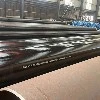
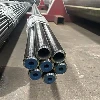
Spray and blast rust removal uses a high-power motor to drive blasting wheels at high speed, throwing steel sand, steel shot, wire segments, or minerals by centrifugal force onto the pipe surface. This method not only completely removes rust, oxides, and dirt, but also gives the steel pipe the required uniform surface roughness under the strong impact and friction of the abrasive. The anchor pattern created is essential for plastic coating adhesion.
Tool Rust Removal
Tool rust removal mainly uses tools such as wire brushes to polish the surface, removing loose or lifted oxide scale, rust, and welding slag. Hand tool cleaning can reach the Sa2 level, and power tool cleaning can reach the Sa3 level in the classification of surface preparation grades. If the steel surface has strongly adherent iron oxide scale, tool cleaning is not effective and cannot produce the anchor pattern depth required for anti-corrosion construction.
Pickling
Chemical and electrolytic methods are used for pickling treatment, and only chemical pickling is used for pipeline anti-corrosion. Pickling removes scale, rust, and old coatings and can serve as a reprocessing step after blast cleaning. Although chemical cleaning achieves a certain degree of cleanliness and roughness, its anchor pattern is shallow and it can cause environmental pollution, so it is often followed by blasting for coated pipe service.
Solvent Cleaning
Solvents and emulsions clean the steel surface to remove oil, grease, dust, lubricants, and similar organic matter. However, they cannot remove rust, oxide scale, or welding flux, so solvent cleaning is not suitable as the sole treatment for anti-corrosion and is used only as an auxiliary method during production.
Selection by Coating System
For plastic-coated steel pipe, abrasive blasting to Sa2.5 or Sa3 with the specified anchor pattern is the standard preparation, followed by solvent cleaning of residual dust and oil. The selected preparation grade must match the coating manufacturer's requirements, and cleanliness and roughness are verified before coating application.
Frequently Asked Questions
Q: What is the best cleaning method for plastic-coated pipe?
A: Abrasive blasting to Sa2.5 or Sa3, producing the anchor pattern required for coating adhesion.
Q: What levels do hand and power tools achieve?
A: Hand tools reach Sa2 and power tools Sa3 in surface preparation classification.
Q: Why is solvent cleaning insufficient?
A: It removes oil and grease but not rust, scale, or welding flux.
Q: What is the role of pickling?
A: It removes scale, rust, and old coatings, often as a pre-step to blasting.
Q: Why is surface roughness important?
A: The anchor pattern mechanically locks the coating to the steel surface.
Q: What is verified before coating?
A: Surface cleanliness grade and roughness profile.
For plastic-coated and anti-corrosion steel pipe quotations, contact our sales team.