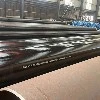
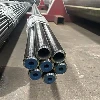
Background of L360 Line Pipe
L360 is the designation used in the Chinese equivalent system for API 5L Grade X52 line pipe, with a specified minimum yield strength of 360 MPa. It is manufactured as seamless or welded pipe and used for oil, gas and water transmission lines. Wall thickness is one of the most important design variables because it directly determines how much internal pressure the pipe can contain and how the pipe behaves under external loads.
Effect on Pressure Containment
For a given pipe diameter and grade, the maximum allowable operating pressure is proportional to the wall thickness, according to the Barlow formula used in pipeline design codes. Doubling the wall thickness doubles the pressure capacity of the pipe when all other factors are equal. This is why high pressure transmission lines specify thicker walls even when the diameter remains the same.
Effect on Stiffness and Bending
Wall thickness also controls the moment of inertia of the pipe cross section. A thicker wall makes the pipe stiffer in bending, which reduces deflection under its own weight and under soil or traffic loads for buried lines. However, a stiffer pipe also generates higher bending stresses for a given curvature, so the thickness must be balanced against the need to accommodate ground movement and thermal expansion.
Effect on Collapse Resistance
For submarine pipelines and deep water risers, external hydrostatic pressure creates a collapse risk that is strongly governed by wall thickness. The collapse pressure of a pipe increases with the ratio of wall thickness to diameter. Thick wall pipes are therefore specified for deep water service, where the external pressure can be very high even though the internal pressure is moderate.
Effect on Welding and Handling
Thicker walls require more weld passes, higher heat input and longer construction times, which increases cost and the risk of weld defects. Heavy wall pipe is also harder to bend on site and requires larger bending machines. Designers therefore select the minimum thickness that satisfies pressure, buckling and installation requirements rather than over-specifying.
Practical Selection Guidance
The wall thickness of L360 pipe is chosen from standard schedules that combine nominal diameter with a series of wall thickness values. The designer calculates the required thickness from the design pressure and adds corrosion allowance and mill tolerance before selecting the next standard thickness. For sour service or high strain applications, additional thickness or tougher pipe body requirements may apply.
Frequently Asked Questions
The applicable standard depends on the product and service: API 5L for line pipe, ASTM A53 and A106 for carbon steel pipe, ASTM A312 and A213 for stainless steel, and ASME B16 series for dimensions and fittings; the order should name the standard and its edition.
Sizes range from small bore to large diameter per the product standard, with wall thickness expressed in schedule numbers from SCH10 to XXS or in millimetres; the order states the outer diameter, wall thickness and length.
Carbon steel grades such as API 5L B through X70 and ASTM A106 B, alloy steels, and stainless grades such as 304/304L, 316/316L and duplex are available, each delivered with certified chemistry and mechanical properties.
Each lot is tested for chemical composition, mechanical properties, dimensions and pressure integrity, with hydrostatic testing and non-destructive examination per the standard, and the certificate documents the results.
Black painted, varnished, oiled, galvanized or coated surfaces are available, with plain, beveled or threaded ends; plastic caps and steel end protectors protect the pipe during transport.
Store on skids off the ground with the ends protected, keep it dry and away from dissimilar metals, and lift bundles with slings at the specified lift points to avoid damage.