




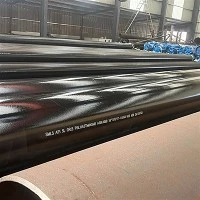
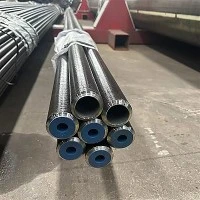
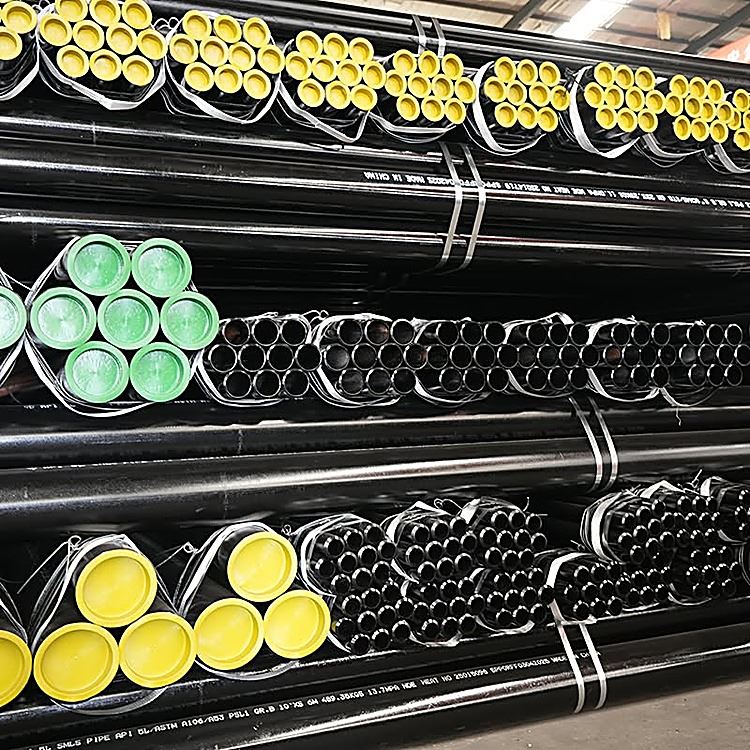


API 5L GR B PSL1 Steel Conduit Pipe With External Coating
API 5L GR B PSL1 steel conduit pipe with external coating is an API 5L Grade B (L245) PSL1 carbon steel pipe supplied as a protective conduit or casing for buried utility lines, finished with an external coating chosen for the soil. The pipe body is not the pressure boundary - it is the duct that shields the power cable, fiber-optic cable, telecom cable or small carrier pipe running inside it from mechanical damage, soil load and corrosion. This page covers the conduit-and-coating product: the Grade B PSL1 substrate, the coating options (FBE, coal tar enamel, 3LPE and loose HDPE sleeving), the standards that govern them, cathodic-protection compatibility, the dimensions and how to order. It is a different angle from the line-pipe and the HDD-coated pages - here the duty is buried cable protection, not pressure transmission.
Why Grade B PSL1 for conduit: A conduit is a structural protective duct, so the steel only needs to be sound, straight, weldable and cheap - not high-yield. Grade B (245 MPa minimum yield, 415 MPa minimum tensile) is the lowest-cost, widest-availability API 5L grade and PSL1 keeps testing light (no mandatory impact, simpler NDE), which suits non-critical, non-sour buried service. The money is spent on the external coating and on keeping the duct straight and round so the cable or carrier pipe pulls through cleanly - not on grade.
Specification - API 5L GR B PSL1 base pipe
The base pipe is API 5L / ISO 3183 Grade B (L245), PSL1, supplied seamless or welded (ERW, LSAW or SSAW). PSL1 is the normal choice for non-critical, non-sour conduit duty; where the same run must also carry pressure or the project demands PSL2 controls, Grade B is available as BN (PSL2) or the grade is raised.
Grade B (L245) chemistry (PSL1, max unless noted)
| Element | Grade B (L245), PSL1 |
|---|---|
| Carbon (C) | 0.28 (seamless route 0.22 in some editions; confirm invoked edition) |
| Manganese (Mn) | 1.20 |
| Phosphorus (P) | 0.030 |
| Sulfur (S) | 0.030 |
| Silicon (Si) | 0.45 |
| Carbon equivalent (CEIIW) | 0.43 max (seamless; as agreed for welded) |
Grade B (L245) mechanical properties (PSL1)
| Property | Requirement |
|---|---|
| Yield strength | 245 MPa (35,500 psi) min |
| Tensile strength | 415 MPa (60,200 psi) min |
| Elongation | ≥21% (per the applicable table; varies with wall and test piece) |
| Charpy V-notch impact | not mandatory under PSL1; specify PSL2 if required |
| Body NDE | per order; full-length volumetric UT commonly added for welded routes |
PSL1 Grade B is not controlled for sour (H2S) service - it does not impose the carbon, phosphorus and sulfur limits, nor the testing, needed for sulfide-stress-cracking resistance. For H2S-exposed conduit, specify the appropriate PSL2 / sour-service grade and confirm NACE MR0175 / ISO 15156 applicability with the materials engineer.
Dimensions and weight (selected SCH 40 sizes)
| NPS | OD (mm) | Wall (mm) | Mass (kg/m) |
|---|---|---|---|
| NPS 2 | 60.3 | 3.91 | 5.44 |
| NPS 3 | 88.9 | 5.49 | 11.29 |
| NPS 4 | 114.3 | 6.02 | 16.08 |
| NPS 6 | 168.3 | 7.11 | 28.26 |
| NPS 8 | 219.1 | 8.18 | 42.55 |
| NPS 10 | 273.1 | 9.27 | 60.31 |
| NPS 12 | 323.9 | 10.31 | 79.73 |
| NPS 16 | 406.4 | 12.70 | 123.31 |
| NPS 20 | 508.0 | 14.27 | 173.75 |
| NPS 24 | 609.6 | 17.48 | 255.25 |
Theoretical mass uses W = 0.0246615 x (OD - t) x t kg/m and is for the bare steel only; an external coating adds a small, thickness-dependent mass. Other diameters, walls and NPS/schedule equivalents are available - state the required outside diameter and wall or the NPS and schedule on the order.
Conduit, casing and encasement use
A steel conduit pipe in the utility sense is pipe used to encase one or many lines so they survive in the ground. The protected services are mounted and spaced inside the duct with casing spacers and the run is sealed at the ends with casing end seals. Typical applications:
Buried cable conduit for power distribution, fiber-optic backhaul and telecom in utility corridors and street trenches.
Underground utility duct for street-lighting and traffic-signal wiring, kept clear of excavation damage.
Steel casing pipe protecting a carrier pipe or cable where it bores under a road, railway, airport or water crossing (augered, jacked or directionally pulled through).
Encasement of an existing line during road or structure works, or as a future duct for later cable pulls.
This is distinct from electrical rigid steel conduit (RMC) governed by UL 6 / ANSI C80.1 and typically made to ASTM A53; those are threaded, fittings-based products for building wiring. The API 5L conduit here is a plain or bevelled steel duct for buried utility protection, ordered to a line-pipe standard and finished with an external coating for the soil.
External coating options
The external coating is selected from the project's corrosion-control plan. Each system below is a separate specification from the API 5L base pipe.
| System | Typical thickness | Governing standard | Best suited to |
|---|---|---|---|
| Fusion-bonded epoxy (FBE) | ~300 to 600 µm | AWWA C213 / ISO 21809-2 | normal soil; CP-compatible; conduit staple |
| Coal tar enamel (CTE) | ~2 to 4 mm (multi-coat) | AWWA C203 | aggressive, wet or high-moisture soil |
| Three-layer polyethylene (3LPE) | ~2 to 4 mm | ISO 21809-1 / DIN 30670 | corrosive or rocky soil; thick barrier |
| Bituminous / asphaltic paint | shop primer film | project / AWWA C203 family | mild, dry, low-corrosivity service |
| Loose HDPE sleeving | sleeve, not bonded | polyethylene encasement (AWWA C105 style) | aggressive soil; extra passive barrier |
The coating is a separate purchase item from the pipe. State the standard and edition, the thickness, the colour, the bare cutback at each end and the test plan; the values below are typical references, not a substitute for the invoked edition.
Coating comparison at a glance
| System | Typical thickness | Continuous temperature | CP compatibility | Mechanical barrier |
|---|---|---|---|---|
| FBE | 300 to 600 µm | ~95 to 100°C | excellent (low cathodic disbondment) | thin film; good against soil, less against point impact |
| Coal tar enamel | 2 to 4 mm | limited (brittle when hot) | good where specified | thick, impermeable; brittle, repair-intensive |
| 3LPE | 2 to 4 mm | about -40 to 85°C | good where specified | best combined moisture + mechanical barrier |
HDPE sleeving and corrosion-control plan
For aggressive soil (low resistivity, chlorides, sulfates, stray current or microbially influenced corrosion) a loose HDPE sleeve is often supplied around the conduit as a passive second barrier, separately from any bonded coating. Whether the buried conduit also needs cathodic protection is decided from the soil corrosivity survey and the asset owner's standards - FBE is the most CP-friendly of the bonded systems because of its very low cathodic disbondment, so a holiday or cutback will not let CP current strip the coating over a wide area. The final decision (coating only, coating plus CP, or sleeve plus CP) is a specification call, not a grade property.
Governing standards
The line pipe and the coating are ordered to different documents; the project names both.
| Document | Role | Scope |
|---|---|---|
| API 5L / ISO 3183 | Line pipe | Grade B (L245), PSL1 base pipe |
| AWWA C213 | Coating (water) | Fusion-bonded epoxy for steel pipe and fittings |
| AWWA C203 | Coating (water) | Coal tar enamel systems |
| ISO 21809-1 | Coating (oil & gas) | Three-layer polyethylene (3LPE) |
| ISO 21809-2 | Coating (oil & gas) | Fusion-bonded epoxy, single and dual layer |
| DIN 30670 | Coating | Polyethylene and epoxy coatings (3LPE basis) |
| CSA Z245.20 / Z245.21 | Coating (Canada) | FBE and polyolefin external coatings |
| SY/T 0315 / GB/T 23257 | Coating (China) | External FBE / polyolefin for buried steel pipelines |
Mill coating and inspection
A bonded external coating is applied on a continuous line; the sequence gives the coating its adhesion.
Surface preparation. Abrasive-blast clean to Sa 2½ per ISO 8501-1 with the specified anchor profile; keep the steel above the dew point before blasting.
Preheat. Heat the pipe (commonly about 200 to 250°C for FBE) so the powder fuses.
Apply. Electrostatic FBE powder (or the multilayer FBE / adhesive / PE sequence for 3LPE, or hot-applied coal tar enamel) is laid onto the heated steel.
Cool and cut back. Quench to set the coating, then strip a bare cutback at each end for field welding or for the cable pull.
Inspect. 100 percent holiday (continuity) detection, thickness measurement and visual check before marking and packing.
Ordering the conduit and coating items
State the base pipe and the protection scope as two parts. Base pipe: API 5L / ISO 3183, Grade B (L245), PSL1, seamless or welded (ERW / LSAW / SSAW), outside diameter and wall or NPS and schedule, length basis, end condition and quantity. Protection scope: external system (FBE per AWWA C213 / ISO 21809-2, coal tar enamel per AWWA C203, 3LPE per ISO 21809-1 / DIN 30670, bituminous paint, or loose HDPE sleeving), thickness, colour, bare cutback length, holiday-test voltage, adhesion and cathodic-disbondment test plan, and whether casing spacers or end seals are supplied. Also state the certificate (EN 10204 3.1; 3.2 with SGS / BV / DNV / TUV or other TPI on request) and the transit packing.
test and inspection
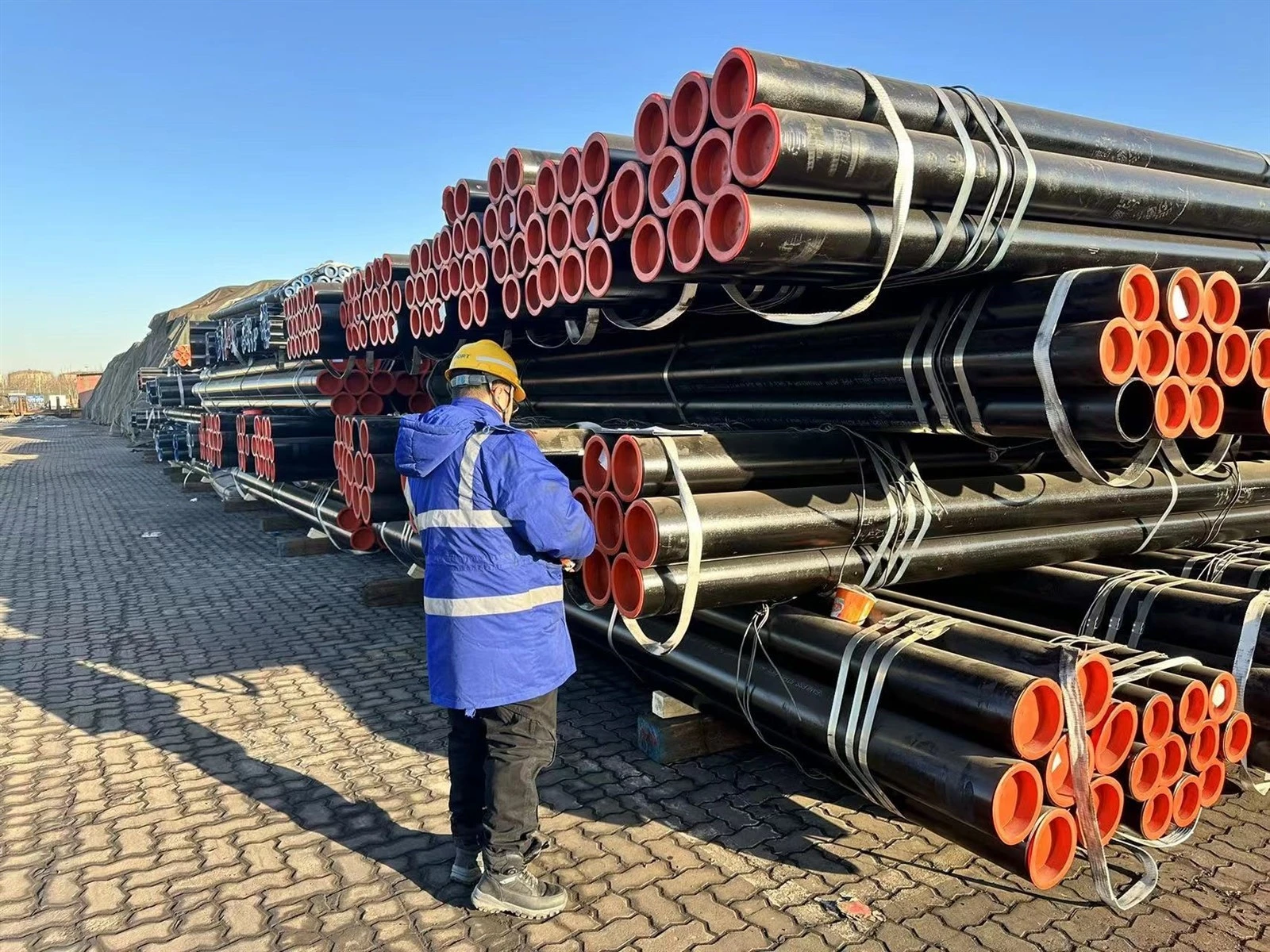
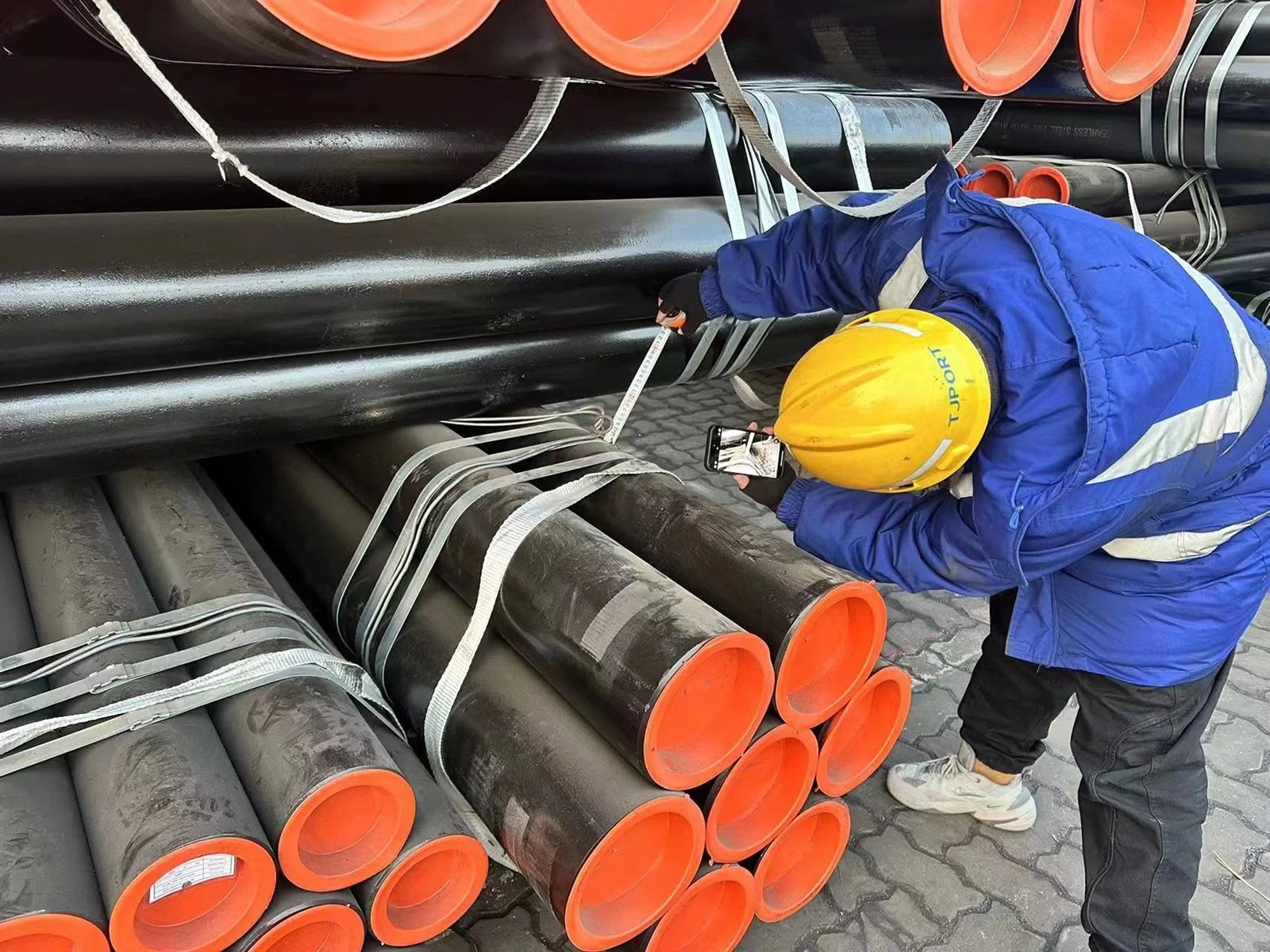
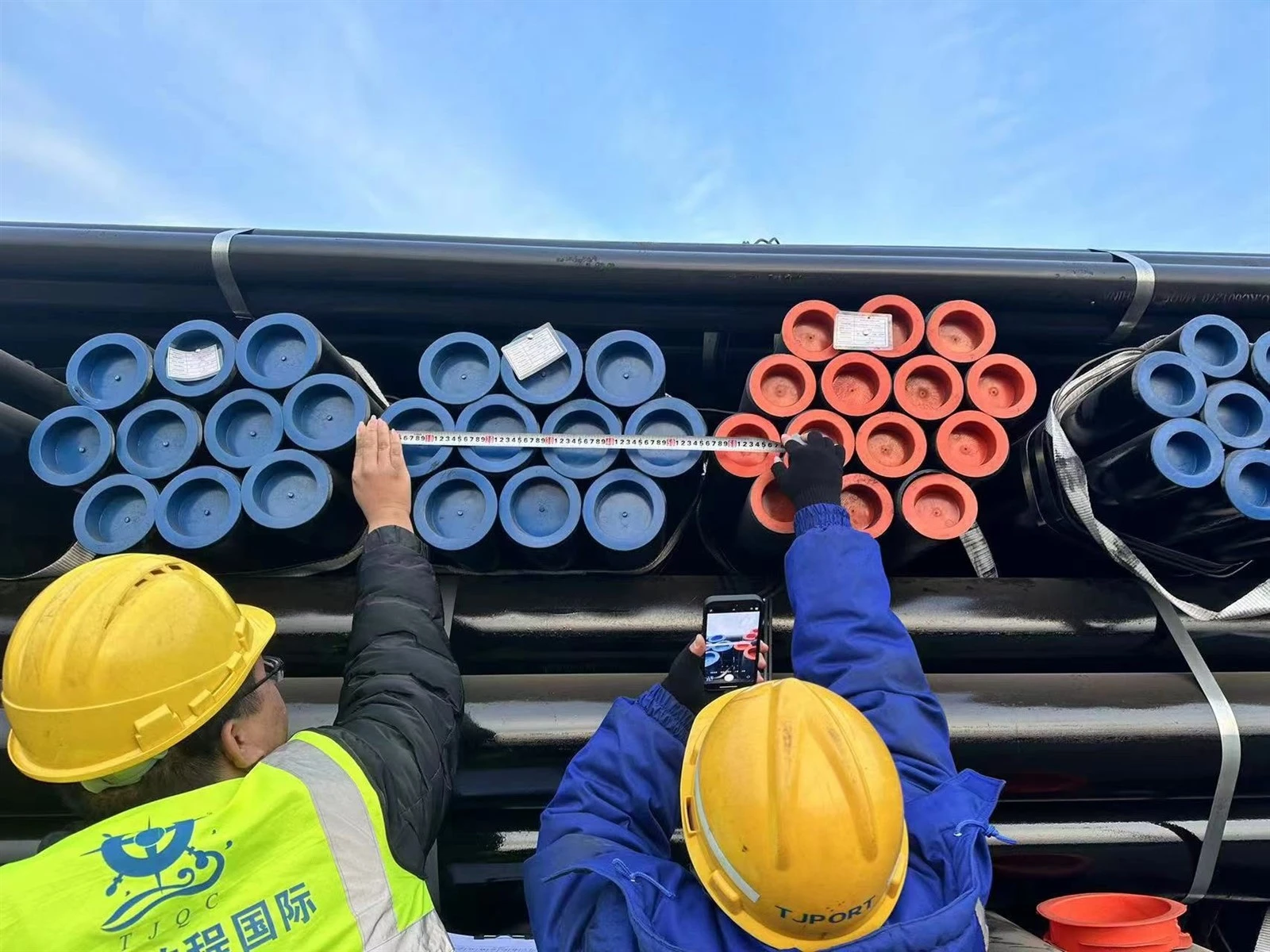
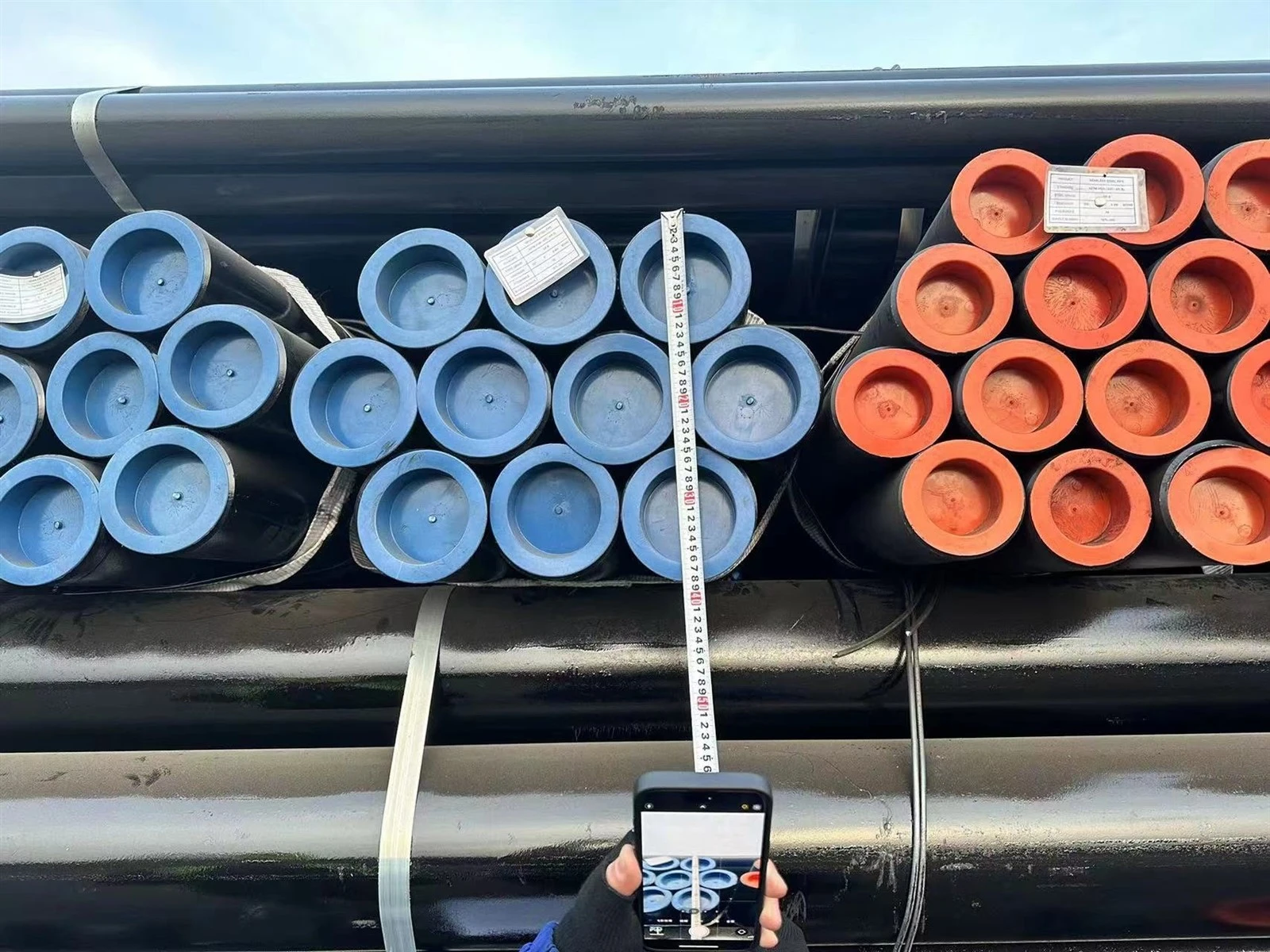
Send your requirement as two parts - the base pipe (API 5L / ISO 3183 Grade B (L245), PSL1, seamless or welded, outside diameter and wall or NPS and schedule, length basis, ends, quantity, EN 10204 3.1 / 3.2) and the protection scope (external system and standard, thickness, colour, cutback, holiday voltage, adhesion and cathodic-disbondment test plan, and whether casing spacers or end seals are needed). We will return a quote covering steel, coating class and the test file, with lead time against the specific enquiry.
FAQ
What is a steel conduit pipe used for, and how is it different from a pressurized line pipe?
A steel conduit pipe is pipe used as a protective duct or casing for buried utility lines rather than to carry pressure itself. The pipe body carries no internal pressure in service; it shields the cable or small carrier pipe running inside it from mechanical damage, soil load, excavation impact and corrosion. Typical uses are encasing power cables, fiber-optic and telecom cables, street-lighting and traffic-signal wiring, and protecting a carrier pipe or cable where it crosses a road, railway, river or other obstacle. A pressurized line pipe, by contrast, is the pressure boundary for oil, gas or water. API 5L Grade B PSL1 is a common, economical substrate for this conduit and casing role because the duty is structural protection rather than pressure containment.
What external coatings are used on steel conduit pipe for buried service?
Several external coating systems are used on steel conduit pipe, chosen by soil aggressiveness and project spec. Fusion-bonded epoxy (FBE, AWWA C213 / ISO 21809-2) is a thin, chemically bonded, cathodic-protection-compatible film common for conduit. Coal tar enamel (AWWA C203) is a thick, traditional, highly impermeable system for aggressive or wet soil. Three-layer polyethylene (3LPE, ISO 21809-1 / DIN 30670) gives a thick polyolefin moisture and mechanical barrier where the soil is corrosive or the conduit may be handled roughly. Bituminous or asphaltic paint is an economical shop primer for mild, dry service. Loose HDPE sleeving (polyethylene encasement, AWWA C105 style) is a sleeve slipped over the pipe rather than a bonded coating, used for extra corrosion allowance in aggressive soil. The selection is stated in the coating specification, not left to the installer.
Why specify API 5L Grade B PSL1 for conduit rather than a higher grade such as X52 or X65?
Because the conduit pipe is a protective duct, not a pressure boundary, the governing need is a sound, weldable, economical carbon steel of adequate strength and straightness - not high yield. Grade B (L245, 245 MPa minimum yield, 415 MPa minimum tensile) meets that with the lowest material cost and the widest mill availability among API 5L grades, and PSL1 keeps testing simple (no mandatory Charpy impact, simpler NDE), which suits non-critical, non-sour buried service. Higher grades such as X52 or X65 are specified only when the same run also carries pressure or when the project's quality plan demands PSL2 controls. PSL1 Grade B must not be used where hydrogen-sulfide (H2S / sour) exposure is expected, because PSL1 does not impose the chemistry and testing controls for sulfide-stress-cracking resistance.
How do FBE, coal tar enamel and 3LPE compare for a buried cable conduit?
FBE is thin (roughly 300 to 600 micrometres), bonds chemically, is cathodic-protection-compatible and is quick to apply, but it is less resistant to point impact than a thick system. Coal tar enamel is thick and extremely impermeable, historically the default for aggressive wet soil, but it is brittle and temperature-limited and handling-damage repair is more involved. 3LPE is a thick (about 2 to 4 mm) polyethylene system giving the best combined moisture and mechanical barrier for corrosive or rocky soil, at higher cost and with a lower continuous-temperature ceiling than FBE. For a standard buried cable conduit in normal soil, FBE or a loose HDPE sleeve is usually enough; for corrosive or high-handling soil, coal tar enamel or 3LPE is chosen. The choice follows the coating specification and the soil corrosivity survey.
What is HDPE sleeving, and when is it used instead of a bonded external coating on conduit pipe?
HDPE sleeving (polyethylene encasement) is a loose, unfused polyethylene sleeve placed around the steel conduit pipe rather than a coating bonded to the steel surface. It is specified where the soil is aggressive (high resistivity-low, chlorides, sulfates, stray current or bacterially influenced corrosion) and the project wants an extra corrosion allowance without a full fusion-bonded system - common practice for ductile-iron and steel pipe in such soils. The sleeve is typically supplied loose or pre-installed, sealed at the ends, and the annular space may be left or filled per the spec. It protects by isolating the steel from the soil and by providing a second barrier; it is not a substitute for cathodic protection design where that is required, and it is selected in the coating-or-protection specification.
Does a coated steel conduit pipe need cathodic protection, and is the coating compatible with CP?
Whether cathodic protection (CP) is required depends on the soil corrosivity, the coating system and the project's corrosion-control plan, not on the pipe grade alone. FBE is well suited to CP because it has very low cathodic disbondment (commonly 8 mm radius or less at 65 degC over 48 hours, per the invoked standard), so a holiday or cutback does not let CP current strip the coating over a wide area. Thick systems such as 3LPE and coal tar enamel also carry CP designs where specified. A loose HDPE sleeve is a passive barrier and is not itself a CP component. The corrosion-control decision - coating only, coating plus CP, or sleeve plus CP - is made from the soil survey and the asset-owner's standards, and stated in the specification.
What standards govern the external coating of API 5L GR B PSL1 steel conduit pipe?
The line pipe itself is ordered to API 5L / ISO 3183 Grade B PSL1, and the external coating is ordered to a separate coating standard chosen by the project. The common ones are AWWA C213 (fusion-bonded epoxy for steel water pipe and fittings), AWWA C203 (coal tar enamel), ISO 21809-1 (three-layer polyethylene, 3LPE), ISO 21809-2 (fusion-bonded epoxy, single and dual layer), DIN 30670 (polyethylene and epoxy coatings, the basis for 3LPE), CSA Z245.20 / Z245.21 (Canada, FBE and polyolefin), and SY/T 0315 / GB/T 23257 for China. Loose HDPE sleeving follows polyethylene-encasement practice such as AWWA C105. The coating house applies and tests to the invoked document; the project states the standard, the edition and any add-on requirements.
What should the purchase order specify for API 5L GR B PSL1 steel conduit pipe with external coating?
State the base pipe and the protection scope separately. For the base pipe: API 5L / ISO 3183, Grade B (L245), PSL1, seamless or welded (ERW, LSAW or SSAW as needed), outside diameter and wall or NPS and schedule, length basis, end condition and quantity. For the protection scope: external system - FBE (AWWA C213 / ISO 21809-2), coal tar enamel (AWWA C203), 3LPE (ISO 21809-1 / DIN 30670), bituminous paint or loose HDPE sleeving - plus thickness, colour, bare cutback at ends, holiday-test voltage, adhesion and cathodic-disbondment test plan, and whether casing spacers or end seals are supplied. Also state the certificate (EN 10204 3.1; 3.2 with SGS / BV / DNV / TUV or other TPI on request) and the packing for transit.
Hot Tags: api 5l gr b psl1 steel conduit pipe with external coating, China api 5l gr b psl1 steel conduit pipe with external coating manufacturers, suppliers, factory, abrasion resistant api 5l line pipe, api 5l line pipe for above ground installation, api 5l line pipe for irrigation, api 5l pipe for bent pipes, api 5l pipe for flange pipes, seamless api 5l line pipe
You Might Also Like


Send Inquiry