


42CrMo4 precision cold drawn honed tubes are chromium-molybdenum alloy steel cylinder barrels supplied in the quenched and tempered (+QT) condition, with the bore finished by honing to ISO H8 tolerance and a surface roughness of Ra 0.4 µm or better. In the +QT state the minimum yield strength reaches 900 MPa (130 ksi) for walls up to 16 mm, giving roughly 1.9 times the pressure capacity of an E355 honed tube at the same geometry. Before you specify one, settle three things - the delivery condition, the wall thickness and the bore diameter - because all three move the number you actually design to.
42CrMo4 is a European chromium-molybdenum alloy steel: material number 1.7225 in EN 10083-3, and the commercial equivalent of AISI 4140, JIS SCM440, GB 42CrMo and BS EN19. The "42" is the carbon level (about 0.42 %), "CrMo" flags chromium and molybdenum, and "4" is the grade index. As a quenching-and-tempering steel it is built for high strength with toughness, which is exactly what a high-pressure hydraulic cylinder barrel demands.
A 42CrMo4 precision cold drawn tube starts as a seamless tube, is cold drawn to tight outside-diameter tolerances, then has its inner surface finished by honing (or skiving and roller burnishing) so the bore is ready to receive a piston seal without further machining. We supply it in the quenched and tempered condition for maximum strength, or stress-relieved for easier welding and machining. Typical supply is OD 20-520 mm, ID 12-510 mm, wall 2-40 mm and lengths up to 16 m, with EN 10204 3.1 certification.
Supply Range
| Parameter | Capability |
|---|---|
| Material / standard | 42CrMo4 (1.7225), EN 10083-3 |
| Outside diameter (OD) | 20-520 mm (0.8-20.5 in) |
| Inside diameter (ID / bore) | 12-510 mm (0.5-20.1 in) |
| Wall thickness | 2-40 mm (0.08-1.57 in) |
| Length | Up to 16 m (52 ft), cut to order |
| Delivery condition | +QT (quenched and tempered) or +SR (stress relieved) |
| Tube standard | EN 10305-1 / DIN 2391 |
| Certification | EN 10204 3.1; third-party inspection available |
Dimensions above are the typical mill range; confirm the exact OD/ID/wall window and maximum length against current production when you order.
Material Grade and Standards
A grade name is only half a purchase order. The table below separates what EN 10083-3 fixes from what you must still state on the order - the first source of "it arrived but it is not what I drew."
| Fixed by EN 10083-3 / tube standard | Stated on your order |
|---|---|
| Chemical composition limits (C, Cr, Mo, Mn, P, S) | Outside diameter, bore (ID) and wall thickness, or bore and wall |
| Mechanical properties in the named delivery condition and thickness | ID tolerance grade (H8 default) and Ra |
| Material number 1.7225 and grade identity | Delivery condition (+QT or +SR) |
| Inspection and certificate basis (when 3.1 is ordered) | Tube standard (EN 10305-1 or DIN 2391) and certificate type |
How it is identified. By grade "42CrMo4," material number 1.7225, and parent material standard EN 10083-3 - never as "EN 10305-1 42CrMo4," which does not exist. EN 10305-1 is the seamless cold drawn precision tube standard that sets dimensional tolerances; its listed grades are E235, E355 and similar, not 42CrMo4. A 42CrMo4 honed tube is ordered by agreement from 42CrMo4 material to EN 10305-1 or DIN 2391 tolerances.
Mechanical Properties
The 42CrMo4 mechanical properties you design to are not a single figure. The yield strength varies with delivery condition and wall thickness; catalogue pages print "900 MPa" and stop, but that value is the +QT minimum for walls up to 16 mm. Two things move it, and both matter for a cylinder barrel: the delivery condition and the wall thickness.
Yield Strength by Wall Thickness and Heat Treatment
The table below is the quenched-and-tempered (+QT) envelope from EN 10083-3. Yield falls as the section grows because hardenability is finite - this is the number that decides your design, not the headline 900 MPa.
| Wall / section t (mm) | Yield Rp0.2 min (MPa) | Tensile Rm (MPa) | Elong. A5 min (%) | Red. of area Z min (%) | Impact ISO-V min (J) |
|---|---|---|---|---|---|
| ≤16 | 900 (130 ksi) | 1100-1300 | 10 | 40 | 30 |
| >16-40 | 750 (109 ksi) | 1000-1200 | 11 | 45 | 35 |
| >40-100 | 650 (94 ksi) | 900-1100 | 12 | 50 | 35 |
| >100-160 | 550 (80 ksi) | 800-950 | 13 | 50 | 35 |
| >160-250 | 500 (73 ksi) | 750-900 | 14 | 55 | 35 |
Why two strengths appear for one grade. The 660 MPa minimum you see on some supplier tables is the cold drawn and stress-relieved condition (+BKS / +SR), not +QT. If your drawing calls for 900 MPa yield, you must order +QT; a stress-relieved tube will certificate at roughly 660 MPa and fail a 900 MPa design. Designing to the correct value rather than the catalogue headline is the difference between a safe barrel and one that is 25-30 % overstressed.
Tensile Strength and Hardness
In the +QT condition tensile strength runs 1100-1300 MPa for thin walls down to 750-900 MPa for the thickest sections, paired with the yield values above. After quenching and tempering, bulk hardness is about 28-36 HRC (approximately 270-340 HBW) depending on tempering temperature; the figure is declared per heat on the certificate, not as a fixed grade value. (A "53 HRC" figure quoted elsewhere refers to surface flame or induction hardening, not the bulk tube.)
Chemical Composition
The table below is the ladle-analysis envelope from EN 10083-3. A mill's internal control range is often tighter; accept against the ceiling plus the product-analysis tolerance, and read the actual values from the 3.1 certificate.
| Element | Content | What it controls |
|---|---|---|
| Carbon (C) | 0.38-0.45 % | Strength and hardenability; sets the quench response |
| Silicon (Si) | ≤0.40 % | Deoxidation |
| Manganese (Mn) | 0.60-0.90 % | Hardenability and toughness (note 4140 allows 0.75-1.00 %) |
| Phosphorus (P) | ≤0.025 % | Brittleness control |
| Sulfur (S) | ≤0.035 % | Inclusion control |
| Chromium (Cr) | 0.90-1.20 % | Hardenability, wear and corrosion resistance |
| Molybdenum (Mo) | 0.15-0.30 % | Temper resistance and high-temperature strength |
EN 10083-3 includes an Option clause; where it applies, the product-analysis tolerance is added to the ladle limits. The certificate must show the actual heat analysis so your weld procedure and design check use real numbers.
Heat Treatment and Delivery Conditions
42CrMo4 is almost always used in a heat-treated condition, and the condition is what sets the strength you design to. The options below are the ones cylinder-tube buyers actually order.
| Condition | Symbol | Min. yield (MPa, ≤16 mm) | When to choose it |
|---|---|---|---|
| Quenched and tempered | +QT | 900 | Maximum strength and pressure capacity; high-pressure barrels |
| Cold drawn, stress relieved | +SR / +BKS | ~660 | Easier welding and machining, moderate pressure |
| Cold finished (hard) | +BK | highest as-drawn | Where the tube is later machined and heat treated by the user |
| Normalized | +N | lower | Rare for 42CrMo4 barrels; chosen for uniform softness |
Choosing the Delivery Condition
Welded cylinder barrel. Order +QT for strength, but plan preheat and post-weld stress relief (see weldability) - or accept +SR if the design permits the lower yield.
Honed after heavy machining. +QT holds dimensions best after finish machining; specify final heat treatment before honing.
Non-pressure structural sleeve. +SR or +BK is enough and cheaper to process.
Pressure Rating by Wall Thickness
A cylinder barrel carries pressure at the bore, and the safe pressure depends on the bore diameter as much as the yield. The screening table below uses the thick-cylinder (Lamé) relation for a closed-end tube at yield, with a 4:1 design factor on the +QT yield of 900 MPa. It is a screening calculation, not a substitute for project design.
| Bore ID (mm) | Wall (mm) | Yield at bore (MPa) | Allowable pressure (MPa) | Allowable pressure (bar) |
|---|---|---|---|---|
| 100 | 8 | 115 | 28.9 | 289 |
| 100 | 10 | 138 | 34.4 | 344 |
| 100 | 12 | 157 | 39.4 | 394 |
| 100 | 15 | 184 | 45.9 | 459 |
Read this before quoting a pressure. The same 10 mm wall carries about 344 bar at a 100 mm bore but far less at a 200 mm bore - pressure capacity falls as the bore grows. And if your wall exceeds 16 mm, the design yield drops to 750 MPa (16-40 mm) or 650 MPa (40-100 mm), lowering the rating again. A pressure number stated without the bore diameter cannot be checked, so always specify both.
Dimensional Tolerances and Surface Finish
The finished bore is what the cylinder sees, so the tolerance and roughness grades are specified, not assumed. The table below is the standard supply.
| Parameter | Capability |
|---|---|
| ID tolerance | ISO H7, H8, H9, H10 (H8 standard) |
| Surface roughness (Ra) | ≤0.4 µm (Ra 0.3 µm typical for H8) |
| Straightness | ≤0.5 mm per metre |
| OD tolerance | Per EN 10305-1 / DIN 2391 cold drawn limits |
| Length | Up to 16 m, cut to order |
ID Tolerance Selection
The ID tolerance H8 is our standard bore grade. Choose the tolerance grade from the piston seal the barrel must accept, not from habit. H8 suits most standard seals and keeps cost reasonable; H7 is for tight-clearance or high-speed cylinders; H9/H10 are acceptable where the seal design tolerates more bore spread. Specifying H8 by default and upgrading only when the seal demands it avoids paying for a grade you do not need.
Material Grade Comparison
42CrMo4 sits at the top of the honed-tube strength ladder. The table below places it against the grades buyers weigh it against; all carry the same finished bore, so the difference is the barrel's strength and weight.
| Grade | Standard | +QT/min. yield (≤16 mm, MPa) | Use |
|---|---|---|---|
| 42CrMo4 | EN 10083-3 (1.7225) | 900 | High-pressure, fatigue-critical barrels |
| 20MnV6 | EN 10297-1 (1.5228) | 470 (+N) | Medium-pressure barrels, better weldability |
| E355 | EN 10305-1 (1.0580) | 470 (+N) | General hydraulic cylinders, cost-driven |
| 4140 | ASTM A29 (equivalent) | 900 | Same as 42CrMo4 in inch-system projects |
Pick 42CrMo4 when wall weight, pressure or fatigue life force a stronger barrel; drop to E355 or 20MnV6 when the duty is moderate and weldability or cost leads. Note that 42CrMo4 equivalent to 4140 is the same alloy - only the manganese limit differs - so they are interchangeable once the certificate chemistry is confirmed.
Carbon Equivalent and Weldability
EN 10083-3 sets no carbon-equivalent limit, so we calculate it by the IIW formula: CEV = C + Mn/6 + (Cr+Mo+V)/5 + (Ni+Cu)/15. For a typical heat (C 0.42, Mn 0.75, Cr 1.05, Mo 0.20) that is about 0.80. As a rule of thumb: a CEV near 0.80 means 42CrMo4 must not be welded like mild steel. Preheat to 150-250 °C, hold interpass temperature around 200-300 °C, and apply post-weld stress relief. The certificate does not print CEV automatically - request it on the order so your weld procedure has real numbers, not a grade name.
Manufacturing Process
Seamless tube making. A pierced and rolled seamless parent tube in 42CrMo4, usually already in the +QT condition.
Cold drawing. The tube is drawn through a die to tighten the outside diameter and improve surface and straightness - the "precision cold drawn" step.
Straightening. The drawn tube is straightened to ≤0.5 mm/m so the barrel runs true in the cylinder.
Bore machining (skiving). For tight grades the bore is skived to near-final size and geometry.
Honing. An abrasive stone finishes the bore to ISO H8 and Ra ≤0.4 µm, leaving the cross-hatch a seal needs.
Inspection and certification. Dimensions, roughness, straightness and chemistry are checked and the EN 10204 3.1 certificate issued.
End finishing and packing. Ends are cut square, protected, and the tube is bundled and preserved for shipment.
Quality Control and Inspection
| Check | What it proves |
|---|---|
| Chemical analysis | Grade is 42CrMo4, not a substituted alloy |
| Tensile and yield test | Strength matches the +QT / +SR condition ordered |
| Bore roughness (Ra) | Seal will bed in without scoring |
| ID gauge and tolerance | Bore accepts the piston and seal |
| Straightness | Barrel runs true in the cylinder |
| Visual and end finish | No scoring, corrosion or damaged ends |
| EN 10204 3.1 certificate | Each heat is traceable to tested values |
Hardness and impact are confirmed by the mill where specified; weldability data (CEV) is a separate request, not automatic on the certificate.
Why Source 42CrMo4 Honed Tubes from GNEE Pipe
Material traceability. Every tube ships with an EN 10204 3.1 certificate linking chemistry and strength to the heat.
Condition control. We supply +QT or +SR to your drawing and confirm the yield on the certificate, not just a grade name.
Dimensional capability. H7-H10 bores, Ra ≤0.4 µm and straightness ≤0.5 mm/m, with third-party inspection available.
Commercial backing. ISO 9001 and CE, competitive mill-direct pricing, and a technical team that returns a confirmed specification and lead time within 24 hours.
Test and inspection
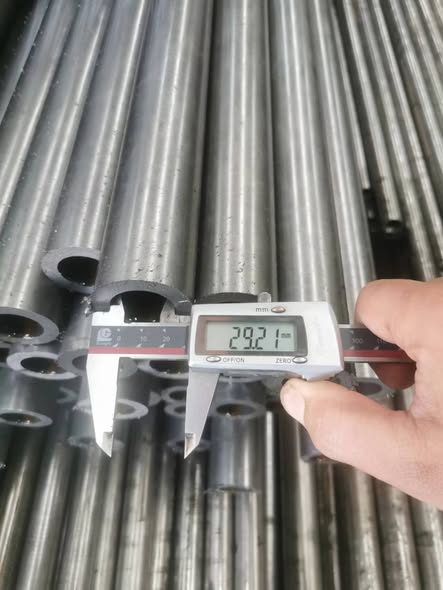
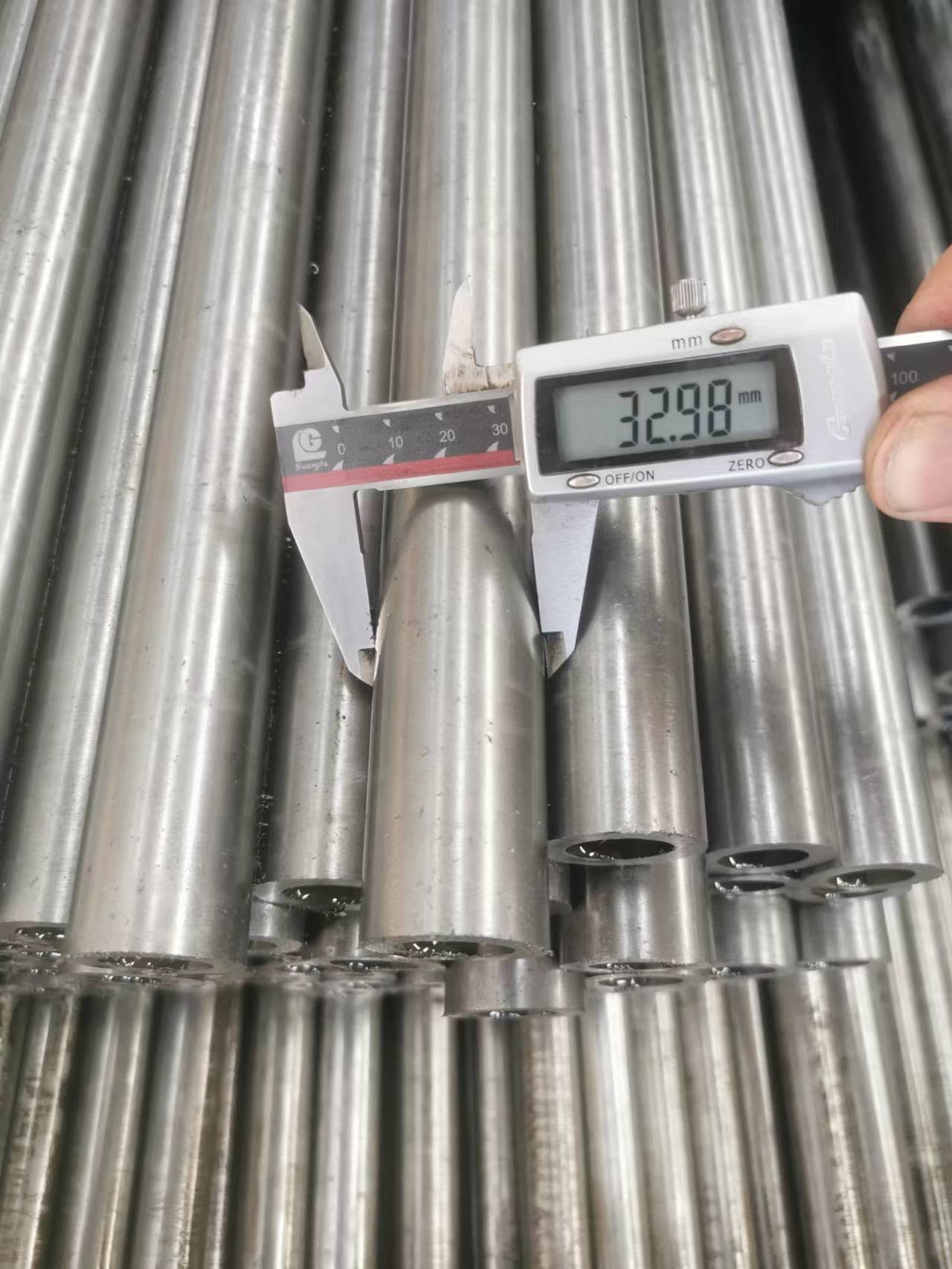
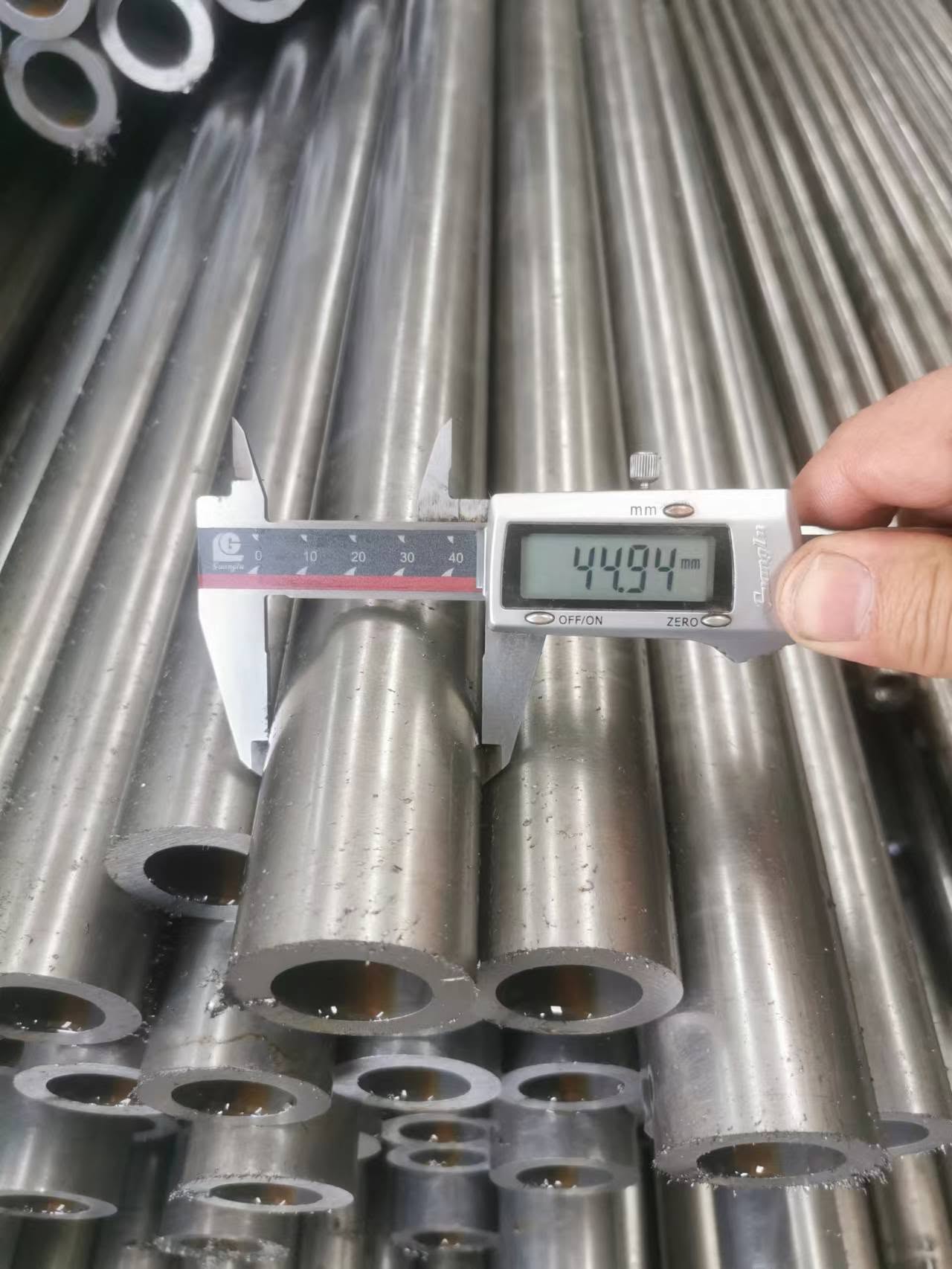
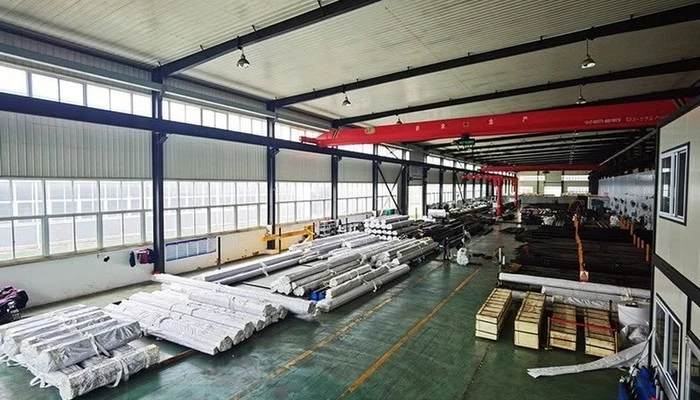
Packaging and shipping
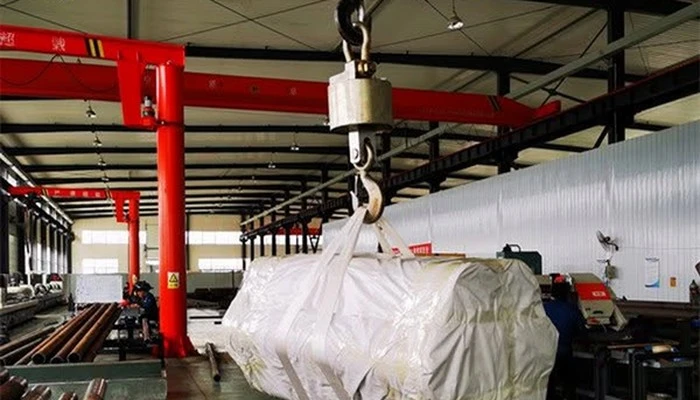
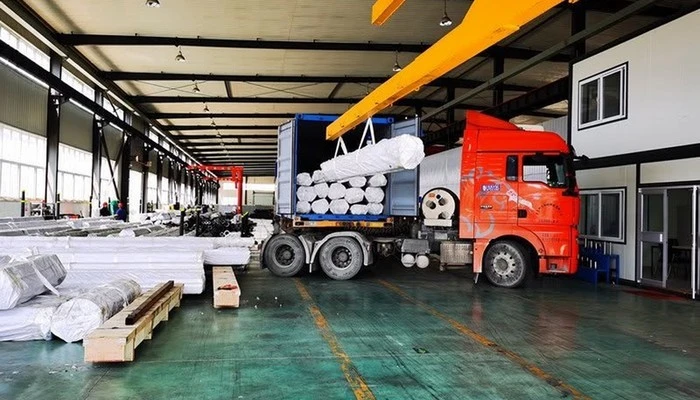
Send your bore, wall, length and delivery condition - our technical team will confirm the specification against the current mill range and return a quotation with lead time within 24 hours.
Request a 42CrMo4 Honed Tube Quote
FAQ
What is a 42CrMo4 honed tube used for?
A 42CrMo4 honed tube is used as the barrel of high-pressure hydraulic and pneumatic cylinders, and in heavy machinery, injection moulding machines, mining equipment and lifting gear where the bore must seal directly against a piston without further machining. Its quenched and tempered strength lets a thinner wall carry more pressure than an E355 or 20MnV6 tube at the same bore.
What is the yield strength of 42CrMo4 honed tube?
In the quenched and tempered (+QT) condition, the minimum yield strength is 900 MPa (130 ksi) for walls up to 16 mm, falling to 750 MPa at 16-40 mm, 650 MPa at 40-100 mm, 550 MPa at 100-160 mm and 500 MPa at 160-250 mm per EN 10083-3. The value you design to depends on your wall thickness, not the headline 900 MPa. A stress-relieved (+SR or +BKS) tube is weaker, around 660 MPa minimum.
Is 42CrMo4 the same as AISI 4140?
Yes, for most sourcing and engineering purposes 42CrMo4 and AISI 4140 are the same chromium-molybdenum alloy steel (material number 1.7225). The main difference is the manganese limit: 42CrMo4 allows 0.60-0.90 % Mn while 4140 allows 0.75-1.00 %. JIS SCM440 and GB 42CrMo are also commercial equivalents. Always confirm the actual chemistry on the 3.1 certificate, especially manganese.
What ID tolerance and surface finish can I get on a 42CrMo4 honed tube?
The honed bore is supplied to ISO H7, H8, H9 or H10 tolerance, with H8 as the standard grade. Surface roughness is Ra 0.4 micrometres or better, and Ra 0.3 micrometres is typical for an H8 bore. Straightness is held to 0.5 mm per metre. The choice of tolerance grade should follow the piston seal the barrel must accept.
Can 42CrMo4 honed tube be welded?
Yes, but 42CrMo4 is a chromium-molybdenum steel with a high carbon equivalent of about CEV 0.80, so it must not be welded like mild steel. Preheat to 150-250 degC, control interpass temperature around 200-300 degC, and apply post-weld stress relief. Specify the welding requirement on the order, because the mill test certificate does not print CEV automatically.
What is the difference between 42CrMo4 and E355 honed tube?
Both are honed cylinder barrels, but 42CrMo4 (1.7225, EN 10083-3) is a chromium-molybdenum alloy steel quenched and tempered to a minimum yield of 900 MPa, while E355 (1.0580) is a plain carbon-manganese steel with a minimum yield of 470 MPa. That is about 1.9 times the pressure capacity at the same geometry. Choose E355 for moderate-pressure, cost-driven cylinders and 42CrMo4 when wall weight, pressure or fatigue life force a stronger barrel.
Which standards apply to 42CrMo4 honed tubes?
The material is 42CrMo4 to EN 10083-3 (material number 1.7225). The tube is supplied to the dimensional tolerances of EN 10305-1 or the widely used DIN 2391 for seamless cold drawn precision tubes, with the bore finished by honing. Note that 42CrMo4 is not a grade listed in EN 10305-1; it is ordered by agreement from 42CrMo4 material to those tube tolerances.
How do I specify a 42CrMo4 honed tube on a purchase order?
State: material 42CrMo4 (EN 10083-3, 1.7225); delivery condition +QT or +SR; tube standard EN 10305-1 or DIN 2391; outside diameter, bore (ID) and wall thickness, or bore and wall; length and quantity; ID tolerance grade (H8 default) and Ra; end finish; and certificate type EN 10204 3.1. The three items buyers most often omit are the delivery condition, the bore diameter and the tolerance grade.


