




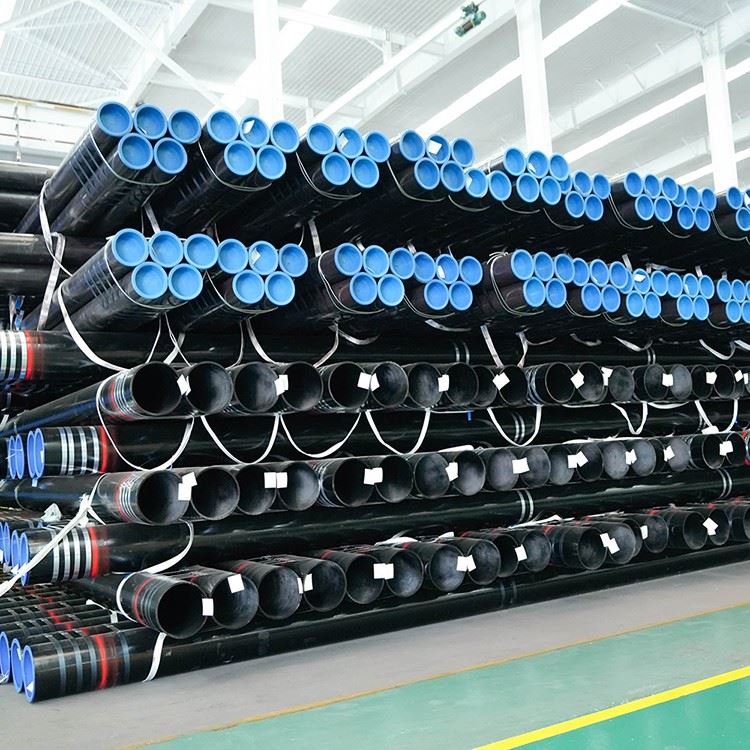
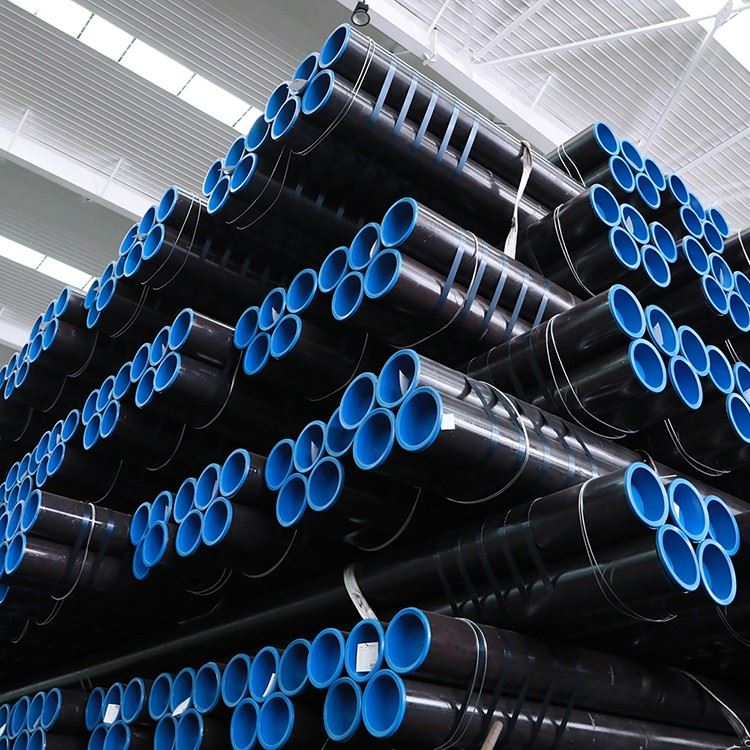
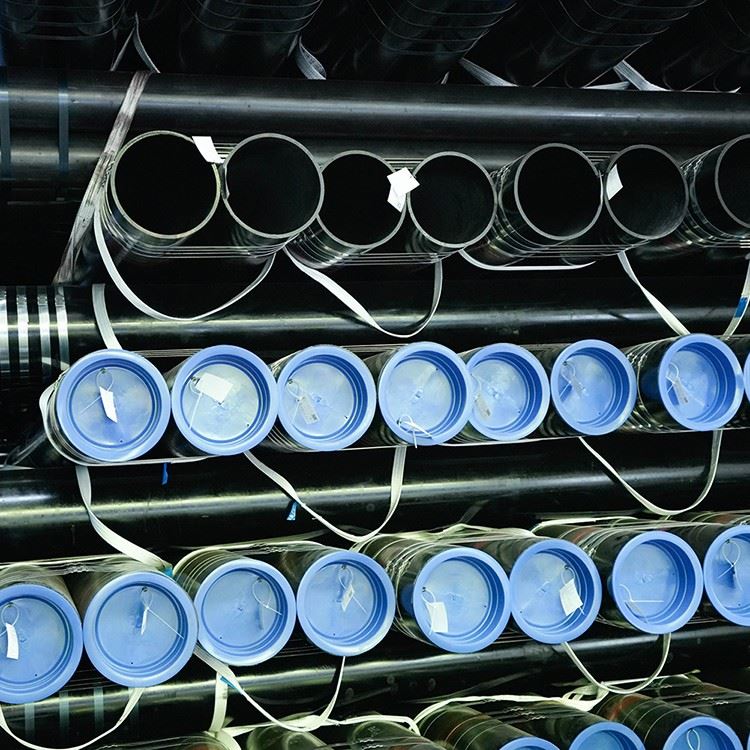
Oil & Gas Casing & Tubing
Quick summary: This guide covers everything you need to know about oil and gas casing and tubing - the two core OCTG pipe types that form the structural and operational backbone of every well. We explain what casing and tubing are, how they differ, the four casing string types, API steel grades (J55, P110, etc.), thread connections (STC, LTC, BTC, premium), and why every well needs both. All technical data is referenced to the latest API standards.
What Are Oil & Gas Casing And Tubing?
TL;DR: Casing and tubing are two distinct categories of steel pipe under the OCTG umbrella. Casing is the permanent structural lining cemented into the wellbore; tubing is the removable pipe inside casing that carries oil and gas to surface.
Casing and tubing are two distinct categories of steel pipe manufactured for downhole oil and gas operations. While both fall under OCTG (Oil Country Tubular Goods) specifications and share similar material grading systems, they differ in installation method, functional purpose and service life, and work in tandem to ensure safe and efficient well production.
If you're new to the oil and gas industry, the easiest way to think about it is this: casing is the walls of the tunnel, and tubing is the pipe inside that tunnel that carries the product. You can replace the pipe, but you can't replace the walls without rebuilding the whole well.
What Is Oil & Gas Casing?
TL;DR: Casing is large-diameter steel pipe permanently cemented into the wellbore. It reinforces borehole walls, isolates formations, contains pressure, and stays in the well for its entire productive life.
Casing is a large-diameter steel pipe string run into a drilled wellbore in concentric, progressively smaller diameters, and permanently fixed in place with cement. It acts as the permanent structural lining of the wellbore, reinforcing borehole walls, isolating different geological formations, containing downhole pressure and preventing formation collapse. Once cemented, casing remains in the well for its entire productive life and is not retrievable under normal operations.
The cementing process is critical: cement is pumped into the annular space between the casing and the wellbore wall, where it sets and forms a durable barrier. This cement sheath provides zonal isolation (preventing fluid migration between formations), structural support for the casing string, and corrosion protection for the steel pipe. Poor cementing is one of the leading causes of well integrity failure.
What Is Oil & Gas Tubing?
TL;DR: Tubing is smaller-diameter, removable pipe hung inside production casing. It is the dedicated conduit for produced oil and gas to flow to surface, and can be pulled and replaced during workovers.
Tubing is a smaller-diameter, removable pipe string installed inside the production casing. It serves as the dedicated conduit through which crude oil, natural gas and produced water flow from the hydrocarbon reservoir to surface processing facilities. Unlike casing, tubing is not cemented in place. It can be pulled, inspected, replaced or reconfigured during workover operations to resolve production issues, upgrade downhole tools or adjust completion schemes.
A key component that works with tubing is the production packer - a downhole sealing device set in the annulus between tubing and casing. The packer prevents produced fluids from entering the tubing-casing annulus, protecting casing from corrosive exposure and enabling annular pressure monitoring for well control.
Core Differences Between Casing And Tubing
TL;DR: Casing is large, permanent and cemented; tubing is small, removable and uncemented. Casing handles structural loads; tubing handles production flow.
The table below summarizes the key technical and operational differences between oilfield casing and tubing, which is the most frequently referenced distinction in engineering and procurement scenarios.
| Technical Parameter | Casing | Tubing |
|---|---|---|
| Primary function | Wellbore structural support, formation isolation, pressure containment | Dedicated conduit for hydrocarbon transport to surface |
| Installation method | Permanently cemented in the wellbore annulus | Hung inside production casing, no cementing required |
| Retrievability | Permanent; not retrievable in routine operations | Fully removable and replaceable during workovers |
| Outer diameter range | 4.5 in. to 36 in. (114.3 mm to 914.4 mm) | 1.05 in. to 4.5 in. (26.67 mm to 114.3 mm) |
| Standard joint length | 8–13 m (Range 2 / Range 3); short joints ≤ 20% of total quantity | 9 m (30 ft) as standard single-joint length |
| Exposure to produced fluids | Minimal; protected by tubing and downhole packer | Direct, continuous exposure to production flow |
| Typical service life | 20–40+ years (matches well life) | 5–15 years; replaced during scheduled workovers |
| Cementing | Required; cement fills casing-wellbore annulus | Not applicable; no cementing |
Types Of Casing Strings (By Installation Depth & Function)
TL;DR: Casing is installed in four nested strings from surface to total depth: conductor, surface, intermediate and production casing. Each has a specific engineering purpose.
Casing is installed in sequential, nested strings of decreasing diameter as drilling progresses deeper. Each string is cemented at a planned depth to fulfill a specific engineering purpose. From surface to total well depth, a standard casing program includes four main types:

1. Conductor Casing
TL;DR: The first and largest string, set at shallow depth to support the wellhead and guide drilling equipment.
As the first and largest-diameter string installed at shallow depth (typically 30–150 m), conductor casing supports the wellhead structure, prevents near-surface soil and unconsolidated formation collapse, and guides drilling equipment into the borehole. It is often driven or cemented into a pre-drilled hole.
2. Surface Casing
TL;DR: Protects freshwater aquifers and provides a mounting base for blowout preventer (BOP) equipment.
Run below the conductor casing and cemented across shallow formations (typically 300–1,500 m). Its core responsibilities include protecting freshwater aquifers from drilling fluid contamination, providing a secure mounting base for blowout preventer (BOP) equipment, and sealing off shallow gas zones. Regulatory agencies typically require surface casing to extend below the deepest protected freshwater zone.
3. Intermediate (Technical) Casing
TL;DR: Isolates troublesome zones - high-pressure formations, unstable shale, lost-circulation zones - to enable safe deep drilling.
Installed on an as-needed basis to isolate troublesome zones such as high-pressure formations, unstable shale intervals and lost-circulation zones. It enables safe deep drilling by containing abnormal formation pressures and maintaining wellbore stability. Not all wells require intermediate casing; its use depends on geological complexity.
4. Production Casing (Reservoir Casing)
TL;DR: The innermost and final casing string, set across the entire hydrocarbon reservoir. Its setting depth is essentially the total depth of the well.
The innermost and final casing string, set across the entire hydrocarbon-bearing reservoir. Extending from the wellhead to below the target formation, it provides long-term pressure containment and serves as the housing for production tubing and all downhole completion tools. Its setting depth is essentially the total depth of the well. Production casing is typically the highest-grade string in the well, selected to withstand reservoir pressure and temperature throughout the well's productive life.
Industry Standards, Steel Grades And Connection Types
TL;DR: All qualified casing and tubing are manufactured to API Spec 5CT (materials) and API Spec 5B (threading). Steel grades range from H40 to V150 by yield strength. Thread types include STC, LTC, BTC and premium connections.
All qualified oil and gas casing and tubing are manufactured, inspected and tested in compliance with globally unified API standards, ensuring interchangeability, safety and consistent performance across international oilfield operations.
Governing API & ISO Standards
- API Spec 5CT (11th Edition, 2024): The fundamental global standard covering seamless and welded casing and tubing for oil and gas wells, including material requirements, mechanical properties, dimensional tolerances, heat treatment rules and testing procedures. The international equivalent is ISO 11960:2014.
- API Spec 5B (16th Edition, 2023): The standard governing threading, gauging and thread inspection of casing, tubing and line pipe threads, guaranteeing the interchangeability and leak-tight performance of threaded connections.
- ISO 13680:2020: Covers corrosion-resistant alloy (CRA) seamless and welded tubular products for oil and gas wells, supplementing API Spec 5CT for sour service and high-corrosion applications.
- API TR 5C3 (2018, with 2015 Addendum): Technical report on casing, tubing and line pipe performance properties, including collapse, burst and axial load formulas used in well design.
Common API Steel Grades
Steel grades are classified by minimum yield strength (in ksi), with higher grades selected for deeper, higher-pressure wells. Standard grades defined in API Spec 5CT include:
| Grade | Min. Yield Strength | Typical Application | Sour Service? |
|---|---|---|---|
| H40 | 40 ksi (276 MPa) | Shallow wells, low pressure | No |
| J55 / K55 | 55 ksi (379 MPa) | Shallow to medium depth, surface casing | No |
| N80-1 / N80-Q | 80 ksi (552 MPa) | Medium depth, production casing | No |
| L80-1 | 80 ksi (552 MPa) | Sour service, medium depth | Yes |
| C90 | 90 ksi (621 MPa) | Sour service, high H₂S | Yes |
| T95 | 95 ksi (655 MPa) | Sour service, deep wells | Yes |
| P110 | 110 ksi (758 MPa) | Deep, high-pressure production casing | No |
| Q125 | 125 ksi (862 MPa) | Deep HPHT wells | No |
| V150 | 150 ksi (1034 MPa) | Ultra-deep, ultra-HPHT wells | No |
| 13Cr (CRA) | Varies by grade | CO₂-corrosive environments | Partial |
Corrosion-resistant alloy (CRA) grades such as 13Cr martensitic stainless steel and super duplex stainless steel are specified for sour service or high-corrosion downhole environments where carbon steel grades would suffer rapid degradation.
Submit your well parameters for a tailored OCTG solution
Standard Thread Connection Types
| Type | Full Name | Characteristics | Typical Use |
|---|---|---|---|
| STC | Short Threaded Coupled | Short round thread, basic sealing | Shallow, low-pressure wells |
| LTC | Long Threaded Coupled | Extended round thread, improved load-bearing and sealing | Medium-depth wells |
| BTC | Buttress Thread Coupled | Buttress thread, high tensile strength | Medium to deep wells |
| Premium | Proprietary gas-tight connections | Metal-to-metal seal, torque shoulder, gas-tight | HPHT wells, severe service |
Premium connections (e.g., TenarisHydril, VAM, Hunting SEAL) are proprietary gas-tight threads engineered for high-pressure high-temperature (HPHT) wells and severe service conditions where standard API threads cannot guarantee leak-tight performance.
Why Oil Wells Require Both Casing And Tubing
TL;DR: Producing directly through casing would destroy the permanent well structure. The casing-tubing system separates structural support from production flow, enabling cost-effective maintenance and operational flexibility.
Producing hydrocarbons directly through the casing would expose the permanent structural string and its cement sheath to erosive, corrosive produced fluids and cyclic pressure fluctuations, which would irreversibly degrade long-term well integrity. The combined casing-tubing system achieves functional separation with the following key benefits:
- Structural protection: Casing bears geomechanical loads and maintains wellbore stability, isolated from direct production flow erosion.
- Cost-effective maintenance: Tubing absorbs direct fluid exposure and can be replaced at lower cost during workovers, without damaging the permanent well structure.
- Operational flexibility: Tubing can be pulled for well logging, artificial lift installation or completion optimization without compromising well integrity.
- Annular pressure management: The annulus between tubing and casing, typically sealed with a production packer, enables pressure monitoring and well control operations.
Related OCTG Components: Drill Pipe, Couplings & Accessories
TL;DR: OCTG is broader than just casing and tubing - it also includes drill pipe, couplings, pup joints and wellhead accessories, all governed by API standards.
While casing and tubing are the most frequently discussed OCTG products, the full Oil Country Tubular Goods category includes several other essential components:
- Drill pipe: Thick-walled seamless pipe that transmits drilling torque and circulating fluid from the rotary table to the drill bit. Drill pipe is manufactured to API Spec 5DP and is designed for repeated tripping in and out of the well - unlike casing, it is not permanently installed.
- Couplings: Short threaded sleeves that connect individual joints of casing or tubing. Couplings are manufactured to the same steel grade as the pipe body and threaded per API Spec 5B.
- Pup joints: Short non-standard-length pipe joints used to adjust the overall string length to reach a precise landing depth. Typically available in 2 ft, 4 ft, 6 ft and 8 ft lengths.
- Wellhead equipment: The surface assembly that connects the casing strings to surface flowlines and BOPs. While not OCTG pipe per se, the wellhead is integral to the casing-tubing system and is specified under API Spec 6A.
Understanding these related components helps drilling engineers and procurement specialists plan the complete tubular goods package for a well, ensuring all items are compatible in grade, thread type and dimensional tolerance.
Primary Applications Of Casing And Tubing
TL;DR: Casing and tubing are used across conventional and unconventional oil/gas, geothermal, underground gas storage, injection/disposal wells and workover operations.
- Conventional onshore and offshore oil and gas drilling and production - the primary application, representing the majority of global OCTG demand.
- Unconventional resource development - shale gas, tight oil, coalbed methane (CBM). These wells often require higher-grade casing (P110+) to withstand multi-stage hydraulic fracturing pressures and horizontal lateral loads.
- Geothermal well construction and operation - casing and tubing must withstand high-temperature fluids (often above 200°C), corrosive brines and thermal cycling stress. Specialized high-temperature cement systems and thermal-stable premium connections are typically used.
- Underground gas storage (UGS) well facilities - depleted reservoirs or salt caverns converted for seasonal natural gas storage require casing strings designed for cyclic injection-withdrawal pressure loads.
- Water injection and produced water disposal wells - casing must resist corrosion from injected fluids and provide long-term zonal isolation to protect groundwater.
- Workover and well intervention operations - tubing is pulled and re-run, casing integrity is assessed, and additional strings may be installed to address production issues or upgrade completion designs.
OCTG Pipe test and inspection


Get factory-direct pricing and full inspection documentation.
Casing and tubing packaging and shipping

FAQ
Q: Is tubing the same as casing?
A: No. Casing is the permanent, cemented structural lining of the wellbore that stabilizes formations and contains pressure. Tubing is the smaller, removable pipe installed inside casing that carries produced oil and gas to the surface. They differ in diameter, installation method and core function.
Q: What standard are oil casing and tubing manufactured to?
A: The vast majority of global oilfield casing and tubing comply with API Spec 5CT for material and mechanical requirements, and API Spec 5B for threaded connection dimensions and inspection standards. Internationally, ISO 11960:2014 is the equivalent standard for casing and tubing specifications.
Q: Can tubing be used without casing?
A: No. Tubing relies on cemented casing to provide a stable borehole structure. Without casing, the open hole would collapse, and there would be no reliable way to isolate formations or contain downhole pressure for safe production.
Q: What is the most commonly used casing steel grade?
A: J55 and K55 are widely used for shallow to medium-depth wells and surface casing strings. N80 and P110 are the standard grades for deeper, higher-pressure production casing strings. For sour service environments, C90, T95 and 13Cr CRA grades are specified.
Q: Why is tubing smaller in diameter than casing?
A: Tubing must fit inside the production casing with sufficient clearance for the annular space, downhole packers and other completion tools. The nested concentric design also enables staged well construction and clear functional separation between structural support and production flow.
Q: What is the service life of oil well casing?
A: Properly designed, cemented and maintained casing can remain functional for 20 to 40 years or more, matching the full productive life of the well. Tubing has a shorter service life (typically 5–15 years) and is periodically replaced during scheduled workover operations.
Q: Does OCTG only include casing and tubing?
A: No. Oil Country Tubular Goods (OCTG) is a broader category that includes drill pipe, casing, tubing, couplings, pup joints and related accessories used in oil and gas exploration, drilling and production. Drill pipe transmits torque and drilling fluid to the bit, while casing and tubing serve structural and production functions.
Q: What does OCTG stand for in the oil and gas industry?
A: OCTG stands for Oil Country Tubular Goods. It is the collective term for all steel tubular products used in oil and gas well drilling and production, including casing, tubing, drill pipe, couplings and pup joints, all manufactured to API standards.
Q: What is the difference between STC, LTC and BTC thread connections?
A: STC (Short Threaded Coupled) uses short round threads for shallow, low-pressure wells. LTC (Long Threaded Coupled) extends the thread length for improved load-bearing and sealing. BTC (Buttress Thread Coupled) uses a buttress thread profile for high tensile strength, widely used in medium to deep wells. Premium connections are proprietary gas-tight designs for HPHT and severe service conditions.
Q: What is the difference between casing and tubing diameter?
A: Casing outer diameter ranges from 4.5 in. to 36 in. (114.3 mm to 914.4 mm), while tubing outer diameter ranges from 1.05 in. to 4.5 in. (26.67 mm to 114.3 mm). The size difference allows tubing to be nested inside production casing with clearance for packers and completion tools.
Q: What is the purpose of cementing in casing installation?
A: Cementing fills the annular space between the casing and the wellbore wall. It provides zonal isolation between geological formations, structural support for the casing string, corrosion protection for the steel pipe, and contains formation pressures. Cementing quality directly determines long-term well integrity.
Q: What are CRA grades and when are they used?
A: Corrosion-Resistant Alloy (CRA) grades, such as 13Cr martensitic stainless steel and super duplex stainless steel, are specified for wells with high H₂S content (sour service), CO₂ corrosion, or chloride-rich environments. API Spec 5CT defines sour-service grades C90 and T95, while super-CRA grades follow ISO 13680:2020 for CRA tubular products.
Q: How many types of casing strings are there in a typical well?
A: A standard casing program includes four main types installed sequentially from surface to total depth: conductor casing (shallowest, largest diameter), surface casing (protects freshwater aquifers), intermediate or technical casing (isolates troublesome zones), and production casing (innermost, set across the hydrocarbon reservoir). Not all wells require all four strings.
Q: What is a production packer and why is it important?
A: A production packer is a downhole sealing device set in the annular space between tubing and production casing. It isolates the tubing-casing annulus, preventing produced fluids from entering the annulus, enables annular pressure monitoring for well control, and protects casing from direct exposure to corrosive production fluids.
Q: Are casing and tubing used in geothermal wells?
A: Yes. Casing and tubing are essential in geothermal well construction, where they must withstand high-temperature fluids (often above 200°C), corrosive brines and thermal cycling stress. Geothermal wells typically use API-grade casing with specialized high-temperature cement systems and thermal-stable premium connections.
References & Authoritative Sources
- API Spec 5CT, 11th Edition (2024). Casing and Tubing. American Petroleum Institute. api.org/standards
- API Spec 5B, 16th Edition (2023). Threading, Gauging, and Thread Inspection of Casing, Tubing, and Line Pipe Threads. American Petroleum Institute.
- API Spec 5DP. Specification for Drill Pipe. American Petroleum Institute.
- API Spec 6A, 21st Edition. Specification for Wellhead and Christmas Tree Equipment. American Petroleum Institute.
- API TR 5C3 (2018, with 2015 Addendum). Technical Report on Equations and Calculations for Casing, Tubing, and Line Pipe Used as Casing or Tubing. American Petroleum Institute.
- ISO 11960:2014. Petroleum and natural gas industries - Steel pipes for use as casing or tubing for wells. International Organization for Standardization.
- ISO 13680:2020. Petroleum and natural gas industries - Corrosion-resistant alloy seamless tubes for use as casing, tubing and coupling stock. International Organization for Standardization.
- Society of Petroleum Engineers (SPE). Well Construction and Completion Design. SPE Textbook Series. spe.org
Hot Tags: oil & gas casing & tubing, China oil & gas casing & tubing manufacturers, suppliers, factory, octg customization, octg for deviated wells, octg gasket, octg market forecast, octg pricing, octg project execution
Previous
API 5CT Casing PipeYou Might Also Like



Send Inquiry