




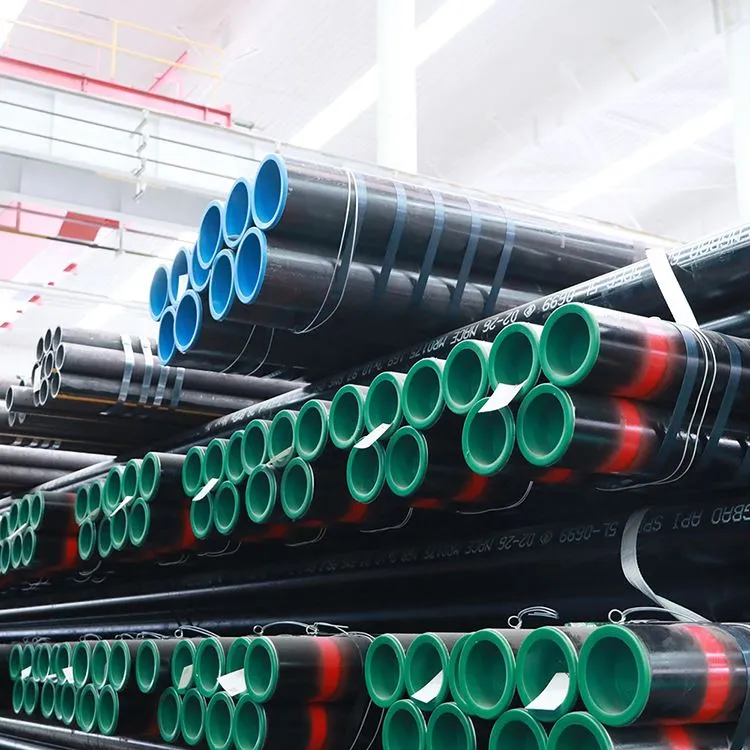

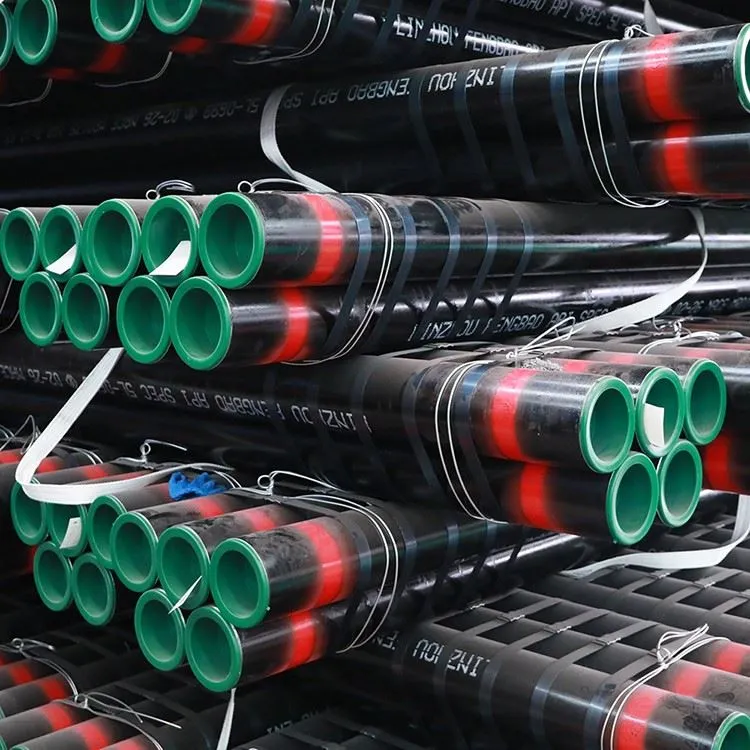
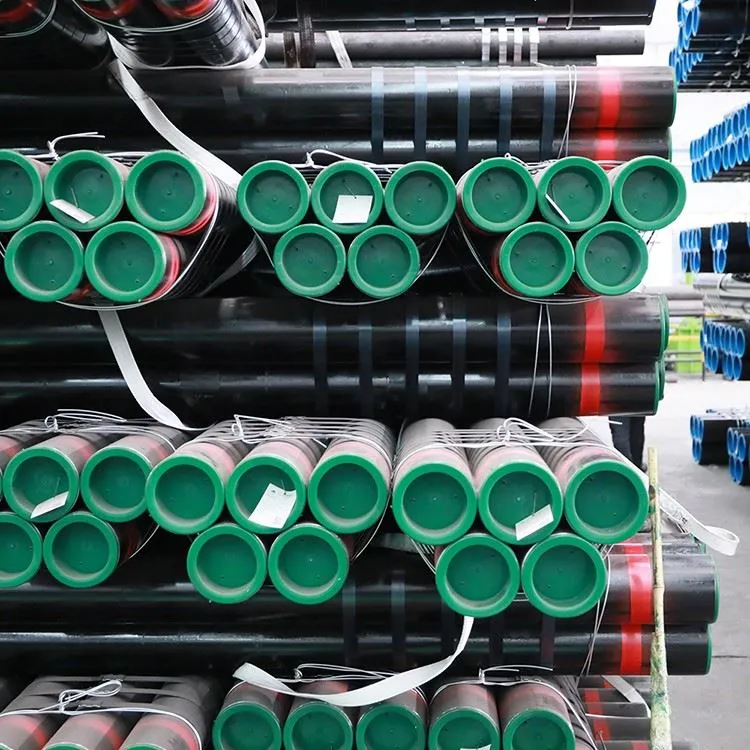
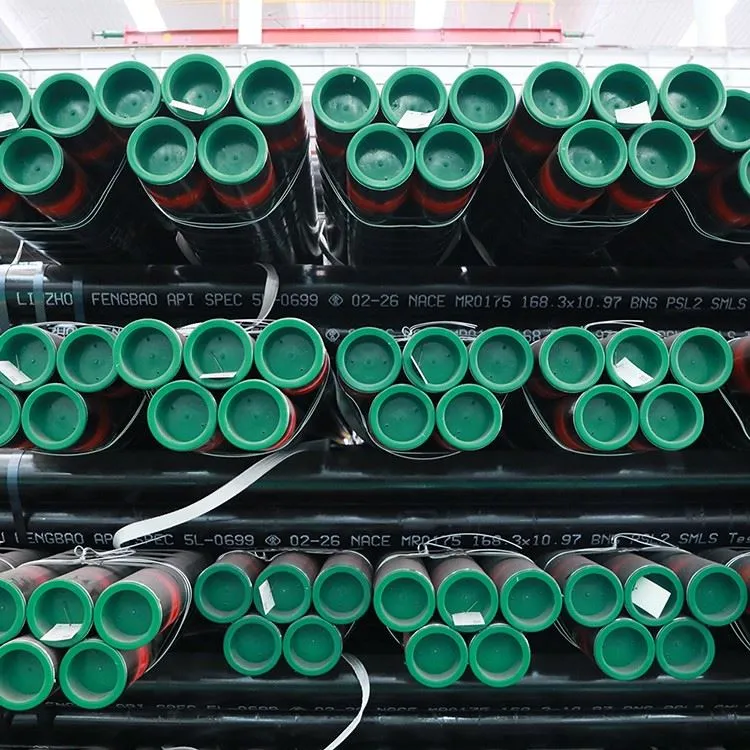
API 5CT Grade N80 Type Q Casing Steel Pipes
What is API 5CT Grade N80 Type Q (N80-Q) Casing?
API 5CT N80-Q is a high-strength oil casing pipe that undergoes a specialized Quench and Temper (Q&T) heat treatment. While it shares the same yield strength range as N80-1 (80,000 to 110,000 psi), N80-Q is a superior product in terms of toughness and structural integrity.
The "Q" stands for Quenched, meaning the pipe is heated and then rapidly cooled in a liquid medium, followed by tempering. This creates a refined tempered martensite microstructure. Unlike N80-1, N80-Q requires mandatory Charpy V-notch impact testing, making it the preferred choice for wells where higher ductility and resistance to brittle failure are required.
Looking for an N80-Q Supplier? Leave Your Inquiry and Get a Detailed Quote Within 2 Hours.
API 5CT N80-Q Casing Pipe Color Code
API 5CT uses color bands for visual identification:
Casing Pipe Body: One Red Band + One Bright Green Band.
Coupling: The entire coupling is painted Red with a Bright Green stripe.
Note: N80-1 only has a single Red band.
API 5CT N80-Q oil casing pipe Chemicals and Mechanical Strength
Chemical Composition (Mass Fraction, %)
API 5CT sets strict limits on impurities to ensure weldability and prevent cracking.
| Element | Requirement |
| Phosphorus (P) | ≤ 0.030% |
| Sulfur (S) | ≤ 0.030% |
| Carbon (C) / Manganese (Mn) | Not strictly specified (Manufacturer choice to meet Q&T properties) |
Mechanical Properties (Data-Driven)
| Property | Value (Imperial) | Value (Metric) |
| Yield Strength | 80,000 – 110,000 psi | 552 – 758 MPa |
| Tensile Strength (Min) | 100,000 psi | 689 MPa |
| Impact Energy (Charpy V-Notch) | Mandatory | Based on wall thickness and size (e.g., 20J to 30J min) |
| Hardness (Typical) | 18 – 24 HRC | 215 – 250 HBW |
API 5CT N80-Q Casing Dimensions and Weight (Selected Sizes)
N80-Q is typically used in the production string or intermediate string.
| OD (Inch) | Weight (lb/ft) | Wall Thickness (mm) | Inside Diameter (mm) | Drift Diameter (mm) |
| 5-1/2" | 17.00 | 7.72 | 124.26 | 121.08 |
| 7" | 26.00 | 9.19 | 159.41 | 155.45 |
| 9-5/8" | 40.00 | 10.03 | 224.42 | 220.45 |
| 9-5/8" | 47.00 | 11.99 | 220.50 | 216.53 |
| 13-3/8" | 68.00 | 12.19 | 315.32 | 311.35 |
API 5CT N80-Q steel oil casing pipe Connections, Ends, and Couplings
End Finishes:
PE (Plain End): For welding or specialized machining.
T&C (Threaded and Coupled): The most common delivery form.
Standard API Connections:
STC (Short Round Thread): 8 threads per inch.
LTC (Long Round Thread): 8 threads per inch; offers better leak resistance and tensile strength than STC.
BTC (Buttress Thread): Trapezoidal thread; provides maximum tension strength for deep wells.
Couplings:
Must be manufactured from N80-Q grade material.
Must undergo the same Quench & Temper heat treatment as the pipe body.
Standard couplings are "Regular," but "Special Clearance" couplings are available for tight-hole clearance.
API 5CT N80-Q Casing Pipe Inspection
Because N80-Q is used in critical environments, the inspection requirements are more stringent than for J55/K55:
Hydrostatic Testing: Every pipe is tested to a specific pressure (e.g., 3,000 to 9,000+ psi depending on size/weight) for at least 5 seconds.
Charpy V-Notch (CVN) Impact Test: Crucial Step. Performed at 0°C or room temperature to ensure the material does not fail under sudden impact.
Non-Destructive Examination (NDE):
Ultrasonic (UT): To detect internal flaws and verify wall thickness.
Magnetic Particle (MPI): To find surface cracks on the pipe body and threads.
Drift Test: Ensures the internal diameter is consistent and allows tools to pass through.
Hardness Testing: To verify the success of the Quench & Temper process and ensure no "hard spots" exist.
Visual Thread Inspection: Checking for galling, pitch errors, and thread depth.
API 5CT N80-Q oilfield casing pipe Manufacturing Processes
The production of N80-Q involves a more rigorous thermal cycle than standard grades:
Steel Making: Basic Oxygen Furnace (BOF) or Electric Arc Furnace (EAF) followed by Ladle Refining and Vacuum Degassing.
Pipe Forming: Piercing and rolling of billets to create a Seamless (SML) pipe.
Austenitizing: Heating the pipe above the upper critical temperature (Ac3).
Quenching: Rapidly cooling the pipe in water or oil to transform the structure into martensite.
Tempering: Reheating to a temperature below the critical point (Ac1) to restore ductility and toughness while maintaining strength.
Straightening & Sizing: Hot or cold straightening to meet API 5CT straightness tolerances (0.2% of length).
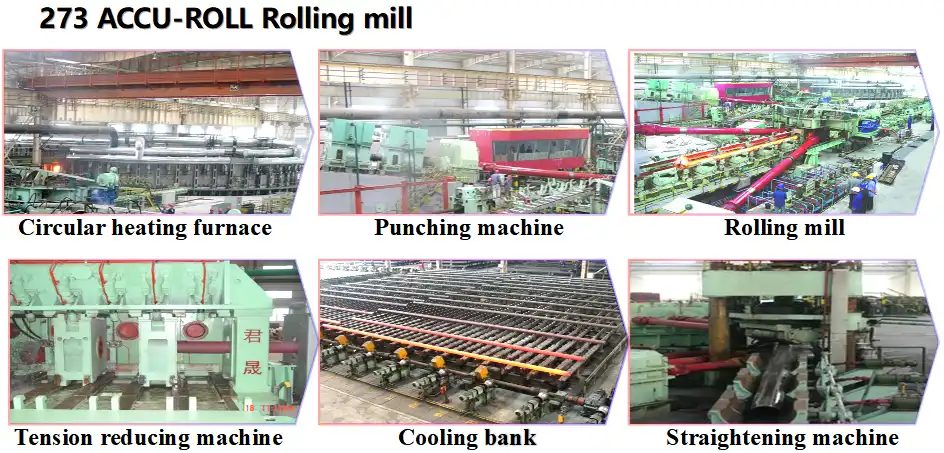
GNEE API 5CT N80Q OCTG Casing Pipe process line
GNEE API 5CT N80Q Seamless Casing Steel Pipe Test Equipments
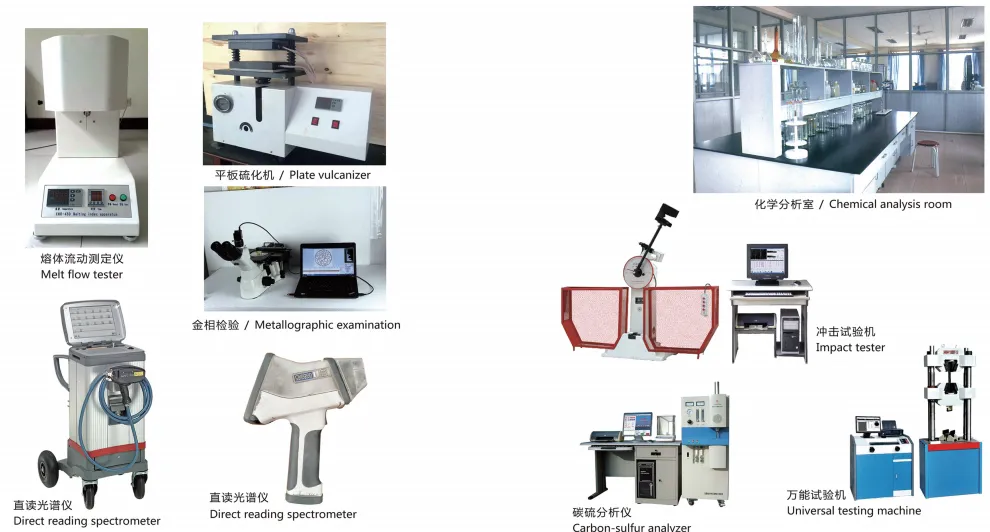
Every N80-Q Joint is 100% UT Inspected & Hydro-tested. Click to Learn About Our Quality Control Process.
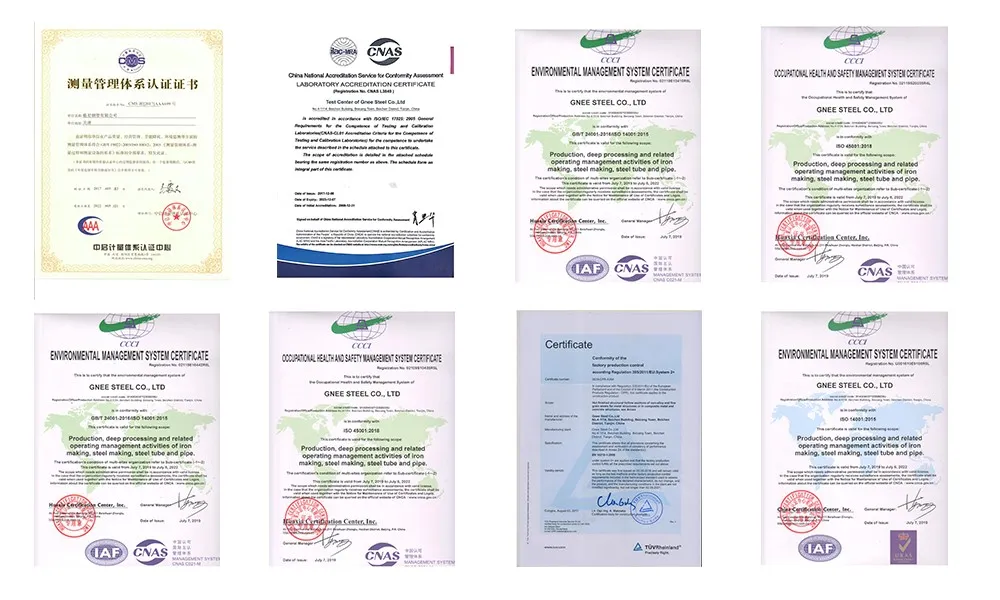
GNEE API 5CT N80Q carbon steel seamless tubing Certificate
FAQ
What is the difference between N80-1 and N80Q in API 5CT casing?
The main difference between N80-1 and N80Q lies in the heat treatment and toughness, even though they share the same strength (80,000 psi yield).
Heat Treatment: N80-1 is Normalized, while N80Q is Quenched & Tempered (Q&T).
Impact Testing: N80Q requires mandatory Charpy V-notch impact tests to prove toughness; N80-1 does not.
Performance: N80Q is more reliable and resistant to brittle failure, making it safer for complex or high-stress environments.
Color Code: N80-1 has one red band; N80Q has one red band and one green band.
What is the difference between casing and tubing?
The main difference between casing and tubing is their function and placement within the well:
Function:
Casing: Lines the entire wellbore to prevent the walls from collapsing, protects groundwater, and isolates different formation layers. It is the permanent structural shell of the well.
Tubing: The "production string" placed inside the casing. It is the pipe through which the oil or gas actually flows to the surface.
Size:
Casing: Larger in diameter (typically 4-1/2" to 20").
Tubing: Smaller in diameter (typically 1.050" to 4-1/2").
Installation:
Casing: Usually cemented in place and cannot be easily removed.
Tubing: Not cemented; it is suspended from the wellhead and can be pulled out for maintenance or replacement.
What is annular volume between casing and tubing used for?
The annular volume (the space between the casing and tubing) is used for several critical functions in a well:
Casing Protection: By filling this space with inhibited "packer fluid" and sealing it with a packer, the casing is protected from the high pressure and corrosive fluids (like CO2 or H2S) being produced through the tubing.
Artificial Lift (Gas Lift): In many wells, high-pressure gas is injected into the annulus. This gas enters the tubing through specialized valves to lighten the oil column and help it flow to the surface.
Chemical Injection: It can be used to pump corrosion inhibitors, scale inhibitors, or de-waxing chemicals down to the production zone.
Well Integrity Monitoring: Operators monitor the pressure in the annulus to detect leaks. A sudden pressure change can indicate a hole in the tubing or a failure in the packer.
Well Control: During maintenance (workovers), the annulus is used to circulate "kill fluid" to stabilize the well pressure.
Hot Tags: api 5ct grade n80 type q casing steel pipes, China api 5ct grade n80 type q casing steel pipes manufacturers, suppliers, factory, octg fatigue, octg project execution, octg customization, octg contingency plans, octg temperature resistance, octg standards
You Might Also Like


Send Inquiry