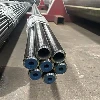
Definition and Use of Tubing
Tubing is a tubular structure, typically with a diameter between 2 and 4 inches, made of high-strength steel. It is primarily used in oil wells to transport produced oil and natural gas from the reservoir to the surface facilities. Tubing also plays a role in regulating well pressure, controlling reservoir production, and protecting the environment. It is run inside the casing string and is the conduit for produced fluids.
Definition and Use of Casing
Casing is the large-diameter pipe that serves as the structural retainer for the walls of the wellbore. It is inserted into the wellbore and cemented in place to protect both subsurface formations and the wellbore from collapse, to allow drilling fluid circulation, and to isolate different pressure zones. Casing strings run from the surface to the target depth and provide the structural backbone of the well.
Definition and Use of Drill Pipe
Drill pipe is a tool, usually made of high-strength steel, with a diameter between 1 and 6 inches, used in drilling to rotate the drill bit. Connected between the drill rig and the bit, the drill pipe is lowered to the bottom of the wellbore, and the bit is rotated and advanced to drill through the formations. Drill pipe transmits torque and weight, carries drilling fluid to the bit, and is the primary component of the drill string.
Structural and Material Differences
Tubing has a larger relative wall thickness to withstand the pressures of transporting oil and gas and is made of carbon or alloy steel in API 5CT grades. Casing has large diameters and thick walls to resist collapse from external pressure. Drill pipe has relatively thinner walls for weight efficiency, uses high-strength grades such as E-75 to S-135, and is manufactured with integral tool joints for repeated make-up and breakout.
Operating Environment Differences
Tubing operates inside the casing in the produced-fluid environment, enduring pressure, temperature, and corrosion. Casing is cemented in the wellbore and endures formation loads, temperature, and completion fluids. Drill pipe operates in the open wellbore during drilling, enduring high torque, tension, bending, vibration, and the abrasive drilling fluid environment, and is repeatedly tripped in and out of the hole.
Frequently Asked Questions
Q: What is the difference between drill pipe and tubing?
A: Drill pipe rotates the bit during drilling; tubing carries produced fluids from the well to the surface.
Q: What is the role of casing?
A: It stabilizes the wellbore, prevents collapse, and isolates formations.
Q: Which is larger, casing or tubing?
A: Casing, which lines the wellbore; tubing is run inside it.
Q: What grades are used for drill pipe?
A: E-75, X-95, G-105, and S-135 by minimum yield strength.
Q: What standard covers casing and tubing?
A: API 5CT; drill pipe is covered by API 5DP.
Q: Why does drill pipe need tool joints?
A> For repeated make-up and breakout and to transmit torque without failure.
For drill pipe, casing, and tubing quotations, contact our sales team.