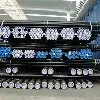
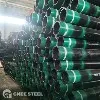
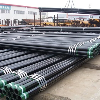
Drill pipe is a fundamental component of the drill string. It is made of seamless steel tubing (with a wall thickness typically of 9-11 mm). Its main functions are to transmit torque and transport drilling fluid, and to continuously deepen the wellbore by gradually lengthening the drill pipe. Therefore, drill pipe plays a crucial role in oil drilling.
Drill pipe must be able to withstand enormous internal and external pressures, torsion, bending, and vibration. During oil and gas extraction and refining, drill pipe can be reused multiple times. Drill pipe is classified into three categories: crisscross drill pipe, drill pipe, and weighted drill pipe. The connection sequence is: crisscross drill pipe (1 piece) + drill pipe (n pieces, determined by well depth) + weighted drill pipe (n pieces, determined by the drill string assembly design).

Functions of Drill Pipe
Drill pipe plays a crucial role in drilling engineering. Its functions include:
1. Transmitting Power
Drill pipe transmits power and torque to the drill bit, enabling it to drill holes underground.
2. Supporting the Drill Bit
Drill pipe supports the drill bit, keeping it stable during drilling.
3. Removing Cuttings
Drill pipe removes cuttings from the wellhead through pipes, keeping the wellhead clean.
4. Acquiring Geological Data
Drill pipe collects geological data through the drill bit, aiding in the analysis of the properties and structure of underground rock formations.
5. Well Workover
Drill pipe can be used for well workover, including placing pipes and repairing the wellhead.
To enhance the connection strength between the pipe body and the joints, the ends of the pipe body are thickened. Common thickening methods include internal thickening, external thickening, and internal and external thickening. According to the American Petroleum Institute (API), drill pipes are classified into three categories based on length:
Category 1: 5.486–6.706 m (18–22 ft);
Category 2: 8.230–9.144 m (27–30 ft);
Category 3: 11.582–13.716 m (38–45 ft);
The most commonly used drill pipe sizes are 88.9 mm (3.5 in), 114.3 mm (4.5 in), and 127.0 mm (5 in).
Drill Pipe Steel Grades and Strength
The steel grade of a drill pipe refers to the grade of the steel used in the drill pipe, which is determined by the minimum yield strength of the steel. API specifies five steel grades for drill pipe: D, E, 95(X), 105(G), and 135(S), with X, G, and S grades being high-strength drill pipes. The higher the steel grade of the drill pipe, the greater the yield strength of the pipe, and the greater the various strengths of the drill pipe (tensile strength, torsional strength, extrusion resistance, etc.). In the strength design of the drill string, it is recommended to increase the steel grade to improve the strength of the drill string, rather than increasing the wall thickness.