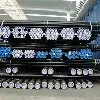
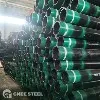
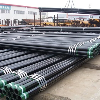
N80-1 is normalized steel, ideal for standard, cost-sensitive wells. N80-Q is Quenched & Tempered (Q&T), offering superior toughness and higher collapse resistance for deep or high-pressure wells. While they share the same yield strength, N80-Q is more reliable in extreme conditions and requires mandatory impact testing. Always check for the dual Red and Green color bands to verify N80-Q status.
Optimizing your casing design? Contact GNEE's technical team for a cost-performance analysis of N80-1 vs. N80-Q.
Technical Comparison Table
| Feature | N80-1 | N80-Q |
| Heat Treatment | Normalizing (N) or Normalizing & Tempering (N&T) | Quenching & Tempering (Q&T) |
| Mechanical Strength | Yield: 80-110 ksi; Tensile: ≥100 ksi | Yield: 80-110 ksi; Tensile: ≥100 ksi |
| Impact Toughness | Standard | Superior (Mandatory CVN testing) |
| Collapse Resistance | Moderate | High |
| Cost | More Economical | Higher (due to processing) |
| Color Coding | One Red Band | One Red + One Bright Green Band |
The Core Difference: Heat Treatment
The suffix "-1" and "-Q" refer specifically to the thermal processing of the steel:
N80-1 (Normalized): The pipe is heated above the critical temperature and cooled in open air. This refines the grain size but leaves a Ferrite-Pearlite structure. It is suitable for most standard, medium-depth wells.
N80-Q (Quenched & Tempered): The pipe is heated and then rapidly cooled in water or oil (Quenching), followed by reheating (Tempering). This creates a Tempered Sorbite structure-the "gold standard" for steel strength and toughness.
Performance Impact: Why Choose "Q" Over "1"?
Even though their strength numbers look the same on paper, their behavior downhole is different:
A. Collapse Resistance
Because the Q&T process results in a more uniform and refined microstructure, N80-Q has significantly higher collapse resistance. In deep wells where external formation pressure is intense, N80-Q is much less likely to "implode" compared to N80-1.
B. Impact Toughness (Charpy V-Notch)
N80-Q is required to pass mandatory impact tests to ensure the material isn't brittle. If your project is in a cold environment (e.g., North Sea, Canada, or Kazakhstan), N80-Q provides the safety margin needed to prevent brittle failure during handling or high-pressure operations.
C. Reliability in High-Stress Wells
N80-Q is more "predictable." The quenching process eliminates internal stresses more effectively than standard normalizing, making it the preferred choice for critical sections of the wellbore.
Your Pain Points and GNEE Solutions
Misidentification Risk
The Fear: Receiving N80-1 but paying for N80-Q.
GNEE Solution: We use dual-band color coding (Red + Green) and clear stenciling as per API 5CT. Our Mill Test Certificates (MTC) explicitly state the "Q" status and include mandatory impact test data.
Micro-crack Defects
The Fear: Quenching can sometimes cause micro-cracks if not cooled correctly.
GNEE Solution: 100% of our N80-Q pipes undergo Non-Destructive Testing (NDT)-including Ultrasonic and Magnetic Particle Inspection-post-heat treatment to ensure zero defects.
Delivery Delays
The Fear: Q&T processing takes longer than normalizing.
GNEE Solution: We maintain a strategic inventory of N80-Q coupling stock and green pipes to reduce lead times by up to 15 days compared to standard mill runs.
Identification at the Well Site
To prevent accidental mixing on the rig, API 5CT enforces strict marking rules:
N80-1: One Red paint band around the pipe.
N80-Q: One Red paint band plus one Bright Green paint band.
Stenciling: The pipe body must be clearly stenciled with either "N80-1" or "N80-Q".
GNEE API N80 OCTG Process Line
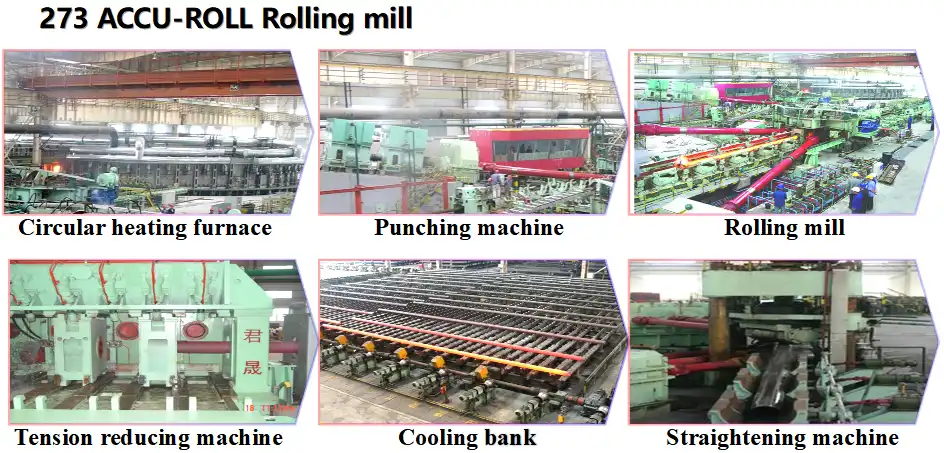
GNEE API N80 Casing and Tubing test equipments

GNEE API N80 OCTG Certificate

FAQ
Q: Can I use N80-1 and N80-Q in the same string?
A: Technically yes, but it is not recommended. If the well design specifies N80-Q, N80-1 will not provide the required collapse resistance. However, N80-Q can always safely replace N80-1.
Q: Is N80-Q suitable for Sour Service ( H2S )?
A: No. While N80-Q is strong, it is not hardness-controlled for H2S resistance. For sour environments, you must upgrade to L80-1.
Q: Why is there a price difference?
A: The Q&T process requires more energy, more advanced machinery (quenching tanks and tempering furnaces), and more rigorous testing (impact and NDT), which justifies the premium for N80-Q.