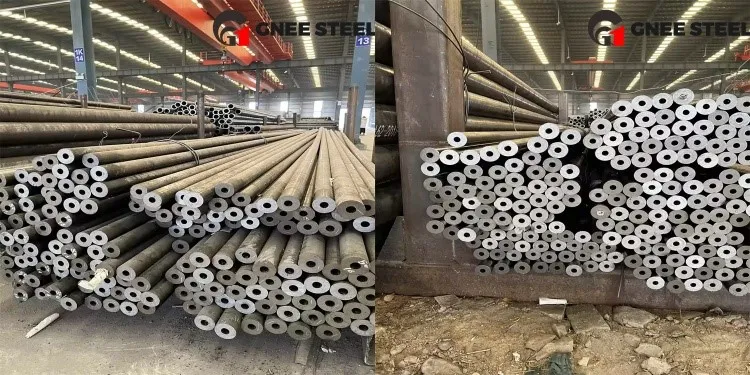
For seamless pipes, the hot rolling process involves piercing a solid round billet to form a hollow shell, which is then stretched and shaped to the desired size. The process requires precise control of temperature and deformation parameters to ensure uniform wall thickness and mechanical properties along the length of the pipe. The hot rolling process also helps to refine the grain structure of the steel, thereby improving its strength and toughness.
Heat treatment is a key step in the manufacturing process of A335 steel pipe. Pipes are usually normalized, which is to heat the steel to a specific temperature above its transformation point and then cool it in air. This process helps to achieve a uniform, fine-grained microstructure, which is essential for the strength and toughness of the pipe. In some cases, additional heat treatments such as tempering can be used to further optimize mechanical properties.
The manufacturing process significantly affects the microstructure of A335 steel, which in turn determines its mechanical properties. A well-controlled manufacturing process produces a fine-grained, uniform microstructure that provides the best balance of strength, toughness, and creep resistance. Any deviations or inconsistencies in the process can cause variations in properties or introduce defects that can compromise the performance of the pipe under high-pressure conditions.
A335 thick wall tube