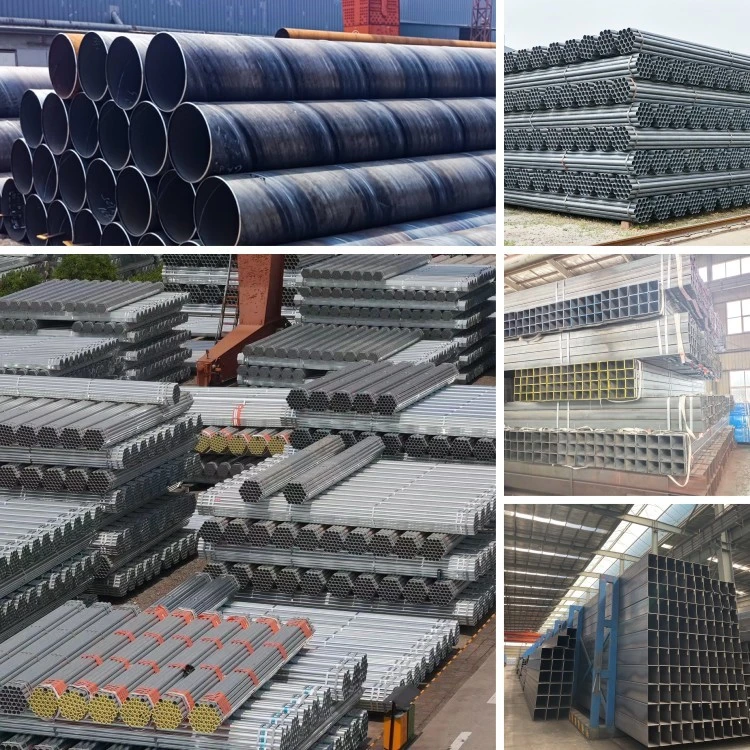
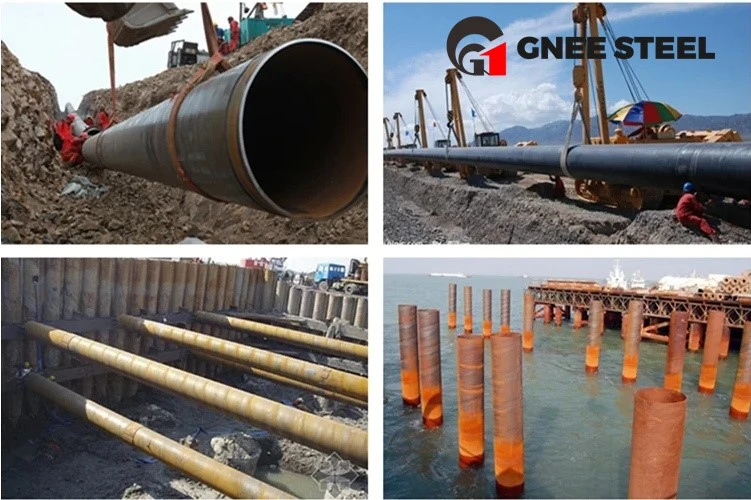
Spiral welded pipes (SSAW) used in water conservancy projects are generally spiral welded steel pipes with larger diameters. Due to the large amount of water passing through per unit time, work efficiency can be greatly improved. Since the inner wall of the spiral steel pipe is constantly washed by water, the inner wall generally does not undergo anti-corrosion treatment, but the exterior is generally in an elevated form, so anti-corrosion treatment is required to prevent rain erosion and sun and rain. exposed, so the requirements for anti-corrosion coatings are higher.
Before anti-corrosion of spiral steel pipes used in water conservancy projects, the surface of the steel pipes should be sandblasted, and the grade should reach ST2.5. Apply anti-corrosion primer immediately after sandblasting. The anti-corrosion primer is generally an epoxy zinc-rich paint with a zinc content of more than 70%, with an epoxy mica paint in the middle and an antioxidant and anti-corrosion outer layer. Polyurethane paint.
Spiral steel pipes should undergo mechanical properties, flattening, flaring and other tests before leaving the factory, and must meet the requirements of the standard. Spiral welded pipes have greater flexibility in pipe diameter and wall thickness specifications, especially in the production of high-end thick-walled pipes, especially small and medium-diameter thick-walled pipes. There are also more requirements in terms of spiral steel pipe specifications. The diameter and size range of spiral steel pipes should be flexibly controlled.
Complying with industry standards and regulations is critical. Common standards for spiral welded pipe include API 5L (for oil and gas pipelines) and ASTM A252 (for welded and seamless steel pipe piles).
Spiral welded steel pipes used in water conservancy projects should undergo various tests to ensure that they meet the specified quality standards. Common tests include visual inspection, ultrasonic testing and hydrostatic testing.
Depending on the application, coatings or linings may be required on the interior or exterior surfaces of the pipe to enhance corrosion resistance, prevent scaling, or meet specific hydraulic requirements.