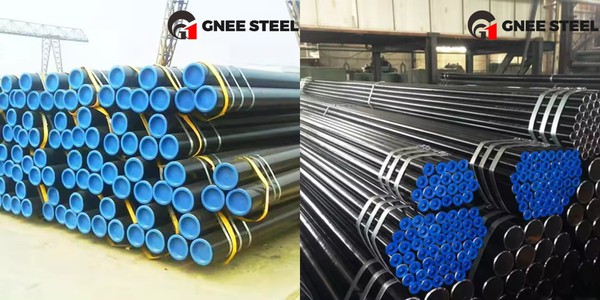
Pipes in PSL1 include grades A, B, X42, X46, X52, X56, X60, X65 and X70. Among them, API 5L B, API 5L X42 and API 5L X52 are the most commonly used because
API 5L B grade is a line pipe material that's widely used in the industry. It has the remarkable ability to strike a balance between mechanical properties and cost - effectiveness. When it comes to transporting natural gas, crude oil, and petroleum products in various operating environments, this grade is highly suitable. The grade B line pipe is quite versatile, and it's often seen in onshore pipeline projects.
API 5L X42 grade is a line pipe material with higher strength. Its mechanical properties are enhanced, for instance, it has increased tensile strength and yield strength. In applications where the pipeline system has to face higher pressures, temperatures, or more corrosive environments, this grade is often chosen. The X42 grade line pipe is commonly used for transporting natural gas, crude oil, and refined petroleum products.
API 5L X52 grade is a high-performance line pipe material designed to handle oil and gas transportation under high pressure and high temperature conditions. These pipes are produced with a strong focus on toughness and impact resistance, especially for sour service and other demanding applications. X52 grade line pipe is often used in projects that require increased performance and reliability.
Comparison of Common Grades in API 5L PSL1
|
Grade |
Minimum Yield Strength (MPa) |
Minimum Tensile Strength (MPa) |
Typical Applications |
|
Grade B |
315 |
455 |
Natural gas, crude oil, and petroleum product transportation |
|
Grade X42 |
290 |
415 |
Natural gas, crude oil, and refined product transportation in moderate-pressure environments |
|
Grade X52 |
360 |
500 |
High-pressure and high-temperature natural gas and crude oil transportation |
API 5L PSL1 X52 carbon steel tube