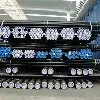
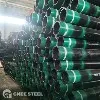
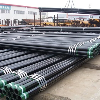
OCTG (Oil Country Tubular Goods) pipe grades are primarily defined by the API 5CT specification (for casing and tubing) and API 5DP (for drill pipe). These grades define the material's minimum yield strength, chemical composition, and intended environment.
The number in the grade (e.g., 55, 80, 110) represents the minimum yield strength in thousands of pounds per square inch (ksi).
Casing and Tubing Grades (API 5CT)
API 5CT categorizes grades into several groups based on their mechanical properties and service suitability.
Group 1: General Purpose (Sweet Service)
Used in wells with little to no corrosive gases ( H2S ) and moderate pressures.
H40: Low strength, rarely used in modern deep wells.
J55: The most common "workhorse" grade for shallow, low-pressure wells. Economical and versatile.
K55: Similar to J55 in yield strength but has a higher minimum tensile strength.
N80-1 / N80-Q: Mid-tier strength. N80-Q (Quenched & Tempered) is tougher and more reliable for deeper wells than the normalized N80-1.
Group 2: Restricted Yield (Sour Service)
These are engineered to resist Sulfide Stress Cracking (SSC) in environments containing Hydrogen Sulfide ( H2S ). They have strictly controlled hardness limits (usually max 23 HRC).
L80 (Type 1, 9Cr, 13Cr): The industry standard for sour service.
L80-9Cr/13Cr: High-alloy versions containing Chromium for resistance to Carbon Dioxide ( CO2 ) corrosion.
C90: Higher strength than L80 but remains sour-resistant.
T95: A high-strength, high-quality grade for deep, high-pressure sour wells.
C110: The highest strength API grade certified for sour service.
Group 3: High Strength
Used for very deep wells where the pipe string must support its own massive weight and withstand extreme internal pressures.
P110: A very common high-strength grade for deep, non-corrosive wells. Marked with a white band.
Group 4/5: Extreme High Strength
Q125: Designed for the most extreme depths and pressures. It requires rigorous testing on every single joint of pipe.
Drill Pipe Grades (API 5DP)
Drill pipe uses a different grading system, represented by letters. These pipes are designed to handle high torque and tension during the drilling process.
Grade E-75: Lowest strength; used in shallow to medium wells.
Grade X-95: A standard mid-strength drill pipe.
Grade G-105: High strength for deeper and more difficult drilling environments.
Grade S-135: Ultra-high strength for very deep or horizontal drilling where torque is extreme.
Summary Comparison Table
| Grade | Min Yield Strength (psi) | Service Type | API Color Code |
| J55 | 55,000 | General (Sweet) | One Bright Green |
| K55 | 55,000 | General (Sweet) | Two Bright Green |
| L80 | 80,000 | Sour Service ( H2S ) | One Red |
| N80-Q | 80,000 | General (Sweet) | One Red + One Green |
| P110 | 110,000 | High Pressure / Deep | One White |
| Q125 | 125,000 | Ultra-Deep Wells | One Orange |
| S-135 | 135,000 | Drill Pipe (Extreme) | N/A (Standardized markings) |
OCTG Factory

OCTG Test equipments

FAQ
What is an octg pipe used for?
OCTG pipe is used to create the structural and functional path for oil and gas wells. Its main uses include:
Drilling: Drill pipes transmit torque and drilling fluid to the bit to create the wellbore.
Structural Support: Casing pipes line the well to prevent the earth from collapsing and protect groundwater from contamination.
Production: Tubing serves as the conduit that safely transports oil, gas, or water from the reservoir to the surface.
Well Control: These pipes are designed to withstand the extreme internal and external pressures found miles underground.
What are octg connections?
OCTG connections are the threaded joints used to securely link individual sections of pipe (joints) together. They ensure the pipe string is leak-proof and strong enough to support its own weight.
There are two main categories:
API Standard Connections: Common, cost-effective threads like STC (Short Thread), LTC (Long Thread), and BTC (Buttress Thread).
Premium Connections: Specialized, proprietary threads (like TenarisHydril, VAM, or proprietary gas-tight seals) designed for extreme environments, high pressures, and high-temperature wells where standard API threads might leak.