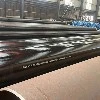
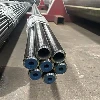
What 309H Pipe Is and Why the H Matters
309H is a high carbon austenitic stainless steel supplied as seamless or welded pipe under ASTM A312/A312M as grade TP309H, with the UNS number S30909. The base 309 grade is a 23 percent chromium, 13 percent nickel austenitic steel developed for oxidation resistance at elevated temperature, and the H suffix marks a controlled carbon range of roughly 0.04 to 0.10 percent. That carbon range is not a metallurgical afterthought: in a high temperature component, carbon is the element that keeps the austenitic matrix strong when the alloy is held at 800 to 1000 degrees Celsius for months, and it does so through the slow precipitation of chromium carbides that resist the grain boundary sliding and creep deformation which limit the life of furnace internals.
The practical consequence for a buyer is that 309H cannot be substituted by 309S in high temperature service without a design review, and 309S cannot be substituted by 309H where heavy welding is involved without a corrosion review. The extra carbon that gives 309H its elevated temperature strength also increases the risk of chromium carbide precipitation in the heat affected zone, which is why the grade is normally specified for the furnace side of a system and not for the wet corrosive side.
Composition Compared with 309, 309S and 310S
The chromium content of about 22 to 24 percent is what provides the protective oxide scale, and the nickel content of about 12 to 15 percent is what holds the structure austenitic and gives it the toughness and thermal expansion behaviour expected of a 300 series steel. Silicon is held at a modest level in the pipe specification; it matters because silicon improves oxidation resistance but degrades weldability and increases sigma phase formation after long exposure. Sulphur is held low for weldability and for resistance to hot cracking during autogenous welding.
The comparison that matters in a purchase decision is 309H against 309, 309S and 310S. Plain 309 allows carbon up to 0.20 percent and is rarely specified today. 309S restricts carbon to 0.08 percent maximum, which improves weldability and intergranular corrosion resistance but lowers elevated temperature strength. 309H sets a floor as well as a ceiling on carbon, so the mill cannot deliver the cheapest chemistry and still call it 309H. 310S moves to 25 percent chromium and 20 percent nickel, giving better oxidation resistance at the very top of the useful temperature range but at a substantially higher alloy cost.
| Grade | UNS | Carbon, % | Chromium, % | Nickel, % | Practical high temperature role |
|---|---|---|---|---|---|
| 309 | S30900 | 0.20 max | 22.0-24.0 | 12.0-15.0 | Legacy grade, now largely replaced by 309S and 309H |
| 309S | S30908 | 0.08 max | 22.0-24.0 | 12.0-15.0 | Welded fabrications needing good corrosion resistance after welding |
| 309H | S30909 | 0.04-0.10 | 22.0-24.0 | 12.0-15.0 | Furnace internals and tubing held at 800-1000 C under load |
| 310S | S31008 | 0.08 max | 24.0-26.0 | 19.0-22.0 | Cyclic oxidation and higher peak temperatures, higher alloy cost |
Room Temperature Mechanical Properties
ASTM A312 requires for TP309H a minimum tensile strength of 515 MPa and a minimum yield strength of 205 MPa in the solution annealed condition, with a minimum elongation of 40 percent in 50 mm. Those figures are modest by carbon steel standards and they are deliberately so: the grade is not chosen for pressure capability at ambient temperature, it is chosen for what it does when hot. A 205 MPa minimum yield strength at room temperature corresponds to a design allowable stress that is far below what a carbon steel of the same wall thickness would give, which is why a 309H line designed for pressure at ambient conditions is usually heavier than the process requires.
What matters more in the delivered product is the annealed condition and the absence of sensitisation. A tube that leaves the mill with the correct strength but a partially annealed structure will crack in service at the heat affected zone of a fabrication weld, and a tube that has been straightened at the wrong temperature may show intergranular attack in a corrosion test even though its tensile results are acceptable. Hardness is not a reliable acceptance indicator for an austenitic grade, because the grade work hardens readily and a cold drawn tube can reach a high hardness while fully solution annealed in structure.
High Temperature Strength: Creep and Stress Rupture Behaviour
Above about 550 degrees Celsius the design of a 309H component is governed by creep, not by yield. The elevated carbon content raises the creep rupture strength by promoting carbide precipitation on the grain boundaries, which resists boundary sliding; this is the same mechanism that makes the H suffix grades useful in furnace service, and it is why the H designation exists in ASTM specifications at all. Published stress rupture data for 309H is usually compared with 309S at the same temperature, and the difference becomes significant in long term tests rather than in short term ones, so a design based on a hundred hour rupture value can be badly optimistic.
The practical design rule is to use the allowable stress values in ASME BPVC Section II Part D for the specific grade and temperature, to keep the component's calculated metal temperature conservative enough that a small process upset does not push it into the range where oxidation accelerates, and to treat any local hot spot from a burner, a poor insulation detail or a bypass leak as a design case rather than an anomaly. Thermal fatigue is the other limiting mechanism: 300 series steels have a thermal expansion coefficient roughly 50 percent higher than carbon steel, and a component restrained at both ends through a temperature swing accumulates strain that eventually cracks it at a weld toe or a support attachment.
Oxidation, Sulfidation and Carburisation Resistance
The chromium oxide scale that forms on 309H is protective up to a temperature that depends on the atmosphere. In clean air, the grade is commonly used for continuous service around 980 degrees Celsius and for intermittent service somewhat higher, because the intermittent condition allows the scale to re-form after each cooling cycle and thin sections may survive. In combustion products containing sulphur, alkali or vanadium, the usable temperature falls sharply, because these species flux the protective oxide and turn a slow oxidation process into a rapid metal loss.
Carburisation is the other environment that changes the material selection. In a carbon rich atmosphere such as a carburising furnace or a petrochemical cracker, carbon diffuses into the austenite, precipitates chromium carbides, and eventually destroys the oxidation resistance and the toughness. 309H offers only modest carburisation resistance, and a heavy carburising duty normally calls for a higher nickel alloy. In a strongly sulphidising atmosphere at high temperature, the chromium oxide scale is replaced by a fast growing sulphide, and the alloy selection moves to the high nickel family rather than staying in the 300 series.
Solution Annealing and the Delivered Condition
Austenitic pipe is delivered in the solution annealed condition. The treatment heats the steel to roughly 1040 to 1120 degrees Celsius so that the carbides dissolve, and then cools it rapidly - by water quenching for heavy sections, by forced air for thin wall tube - so that carbon stays in solution and the alloy is homogeneous. For a high carbon grade such as 309H the cooling rate is more critical than for 304L, because the higher carbon content shifts the time-temperature-sensitisation curve to shorter times and a slow cool can leave chromium carbides on the grain boundaries even before the pipe is welded.
Two fabrication consequences follow. First, hot forming or a heavy cold forming operation destroys the annealed condition, and the component must be re-solution annealed, not merely stress relieved, before it goes into high temperature service. Second, the annealing atmosphere matters: a furnace atmosphere with a high sulphur content or with incomplete combustion can contaminate the surface, and the resulting intergranular attack appears only after the part has been in service. Where a fabrication involves welding 309H, a post-weld solution anneal is usually impractical on site, which is precisely why the grade is selected for components where the weld is not exposed to the most aggressive condition.
Welding 309H and Dissimilar Joints
Welding practice for 309H follows the austenitic stainless rules with three additions that are specific to the high carbon grade. The first is heat input control: the joint is welded with a moderate input and a maximum interpass temperature that keeps the heat affected zone from spending too long in the sensitising range. The second is filler metal selection: a matching 309H covered electrode or bare wire, or a 309 filler where dilution from a carbon steel or low alloy side is expected, and never a 308 or 316 filler on a joint that will run hot. The third is cleanliness: dedicated stainless tooling, no carbon steel wire brushes, no grinding wheels that have been used on carbon steel, and a pickled and passivated finish after welding where the surface will see a corrosive condensate.
The reason 309H is so widely used as a dissimilar metal filler is its high chromium and nickel content, which tolerates dilution from the ferritic side without forming a hard, crack sensitive martensite in the root. When 309H pipe itself is welded to a carbon steel header, the joint design should place the stainless side in a position where thermal expansion mismatch is accommodated by the geometry rather than by the weld, and a transition piece is often cheaper than a field weld that later cracks. Preheat is not used for the austenitic side, but the ferritic side may still require it, and the two requirements must be reconciled in the procedure.
Forming, Machining and Thermal Expansion
309H work hardens quickly, so cold bending requires more force and more springback compensation than a carbon steel of the same size, and the bend radius should be generous. A cold bend above a modest strain level leaves a structure that is no longer fully annealed, and in high temperature service a strained bend is a creep crack initiation site. Machining requires sharp tooling, a rigid setup and a cutting speed that keeps the tool edge from rubbing, because the grade galls readily against a dull insert. The thermal expansion coefficient, roughly 50 percent above carbon steel, is what governs support spacing, expansion joint design and the anchor points of a furnace tube assembly: a 6 metre length of 309H tube heated through 600 degrees Celsius grows about 50 mm, and a support that does not allow for that growth will load the tube rather than carry it.
Typical Service Applications
The classic application is furnace internals: radiant and convection tube supports, hangers, muffle tubes, retort and salt bath components, and the high temperature sections of heat treatment furnace furniture. In the process industries, 309H pipe is used for the tube side of high temperature heat exchangers, for flue gas and exhaust ducting in power and cement plants, for recuperator tubing, and for the transition sections of reformers and incinerators where the metal temperature exceeds what 304H or 321 can carry. It also appears as the welded outlet of a high temperature vessel where the shell is a lower grade and a dissimilar joint is unavoidable.
Selection is driven by three questions rather than by grade habit: what is the true metal temperature, including the hot spot; what is the atmosphere, in particular the sulphur and carbon activity; and is the component restrained. A 309H part that fails early almost always fails because one of these three was answered optimistically at the design stage rather than because the material was defective.
Inspection, Testing and Acceptance
Pipe supplied to ASTM A312 is tested on each length by a hydrostatic test or by a non-destructive electric test, with the electric test performed by eddy current or ultrasonic methods. Ultrasonic examination of an austenitic weld or tube body is complicated by the coarse grain structure and anisotropic sound velocity, which is why ASTM E309 exists as the practice for the ultrasonic examination of austenitic steels rather than applying a ferritic procedure. Where the pipe is welded, a liquid penetrant examination to ASTM E165 of the completed weld is common practice on the furnace side, and a radiographic examination to ASTM E94 may be specified for pressure retaining joints.
For corrosion acceptance, ASTM A262 provides the practices for detecting susceptibility to intergranular attack in austenitic stainless steels, and a purchaser who intends to weld 309H heavily can specify one of those practices on a sample from the lot. The documentation package should include the mill certificate with the actual chemistry by heat, the mechanical results, the heat treatment record showing the solution annealing temperature and the cooling method, the non-destructive test report, and an unambiguous statement of the grade - because a certificate that says only 309 without the H is a different material with a different carbon guarantee.
Procurement and Handling Points That Prevent Early Failure
Ordering 309H correctly means writing the grade as TP309H to ASTM A312/A312M with the UNS number S30909, stating the size and the schedule or wall thickness, the manufacturing route - seamless or welded and fully radiographed - the length and end finish, the solution annealing requirement, the non-destructive test method, and the documentation. It also means stating whether the pipe will be welded or bent after delivery, because that answer decides whether an additional intergranular corrosion test is worth specifying.
Handling is often where the damage happens. Stainless pipe stored in contact with carbon steel picks up free iron that rusts and initiates pitting; banding with carbon steel strap on a galvanised or painted rack leaves a corrosion cell; lifting with a chain through the bore scratches the internal surface. Pipe should be stored on timber or plastic dunnage with the ends capped, kept away from chlorides including marine atmosphere and marking crayons that contain chlorides, and cut with dedicated stainless consumables. A rust stain on a 309H tube at receipt is not cosmetic - it is an early indicator of contamination that will show up as pitting once the component reaches service temperature and the condensate forms on cooldown.
FAQ
Q: What does the H in 309H stand for?
The H designates a controlled higher carbon range of approximately 0.04 to 0.10 percent, compared with 0.08 percent maximum for 309S. The carbon floor is what provides elevated temperature strength through carbide precipitation, so 309H is specified where the pipe will carry load at 800 to 1000 degrees Celsius for long periods.
Q: What are the minimum mechanical properties of 309H pipe?
ASTM A312/A312M requires for TP309H a minimum tensile strength of 515 MPa, a minimum yield strength of 205 MPa and a minimum elongation of 40 percent in 50 mm, in the solution annealed condition. The elevated temperature design does not use these values; it uses the creep governed allowable stresses in ASME BPVC Section II Part D.
Q: What is the difference between 309H and 309S?
Both are 22 to 24 percent chromium, 12 to 15 percent nickel austenitic steels, but 309S limits carbon to 0.08 percent maximum while 309H specifies 0.04 to 0.10 percent. 309S is easier to weld and more resistant to intergranular corrosion after welding, while 309H holds more strength in long term high temperature service.
Q: Can 309H be used in a carburising atmosphere?
Only for mild carburising duty. Carbon diffuses into the austenite at high temperature, precipitates chromium carbides and eventually destroys the oxidation resistance and toughness of the alloy. A strongly carburising atmosphere normally requires a high nickel alloy rather than a 300 series stainless steel.
Q: Why does 309H pipe sometimes crack at a weld after a few years in service?
The usual causes are thermal fatigue from restrained expansion, sensitisation of the heat affected zone by excessive heat input, and creep damage at a weld that was made with the wrong filler metal. All three can be avoided at the fabrication stage with a qualified procedure, moderate heat input and a matching filler.
Q: Is a rust stain on a 309H tube a defect?
Not necessarily a defect in the steel, but it is a contamination indicator. Free iron picked up from carbon steel tooling, storage racks or lifting gear breaks down the passive film and produces pitting. The surface should be cleaned and passivated, and the source of the contamination eliminated before the component goes into service.