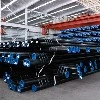
L80-1 is a medium-to-high strength corrosion-resistant steel grade under the API 5CT standard, specifically designed for the oil and gas industry.
Its core characteristics include:
- Material Properties: Tempered martensite structure is formed through a quenching and tempering heat treatment process (quenching + tempering), resulting in both high strength and toughness.
- Applications: Suitable for oil well casing, tubing, and high-pressure pipelines in moderately corrosive environments, capable of withstanding downhole high pressure, impact loads, and mild acidic media corrosion.
- Performance Rating: Yield strength (552-655MPa) falls between J55/K55 and N80, tensile strength ≥655MPa, with overall performance superior to ordinary carbon steel.

Chemical Composition of API 5CT Standard L80-1 Material
According to API SPEC 5CT 11th Casing and Tubing, the chemical composition of L80-1 is designed based on carbon and manganese, with optimized overall performance through alloy element ratios:
- C: ≤0.43% Increases strength and hardness; must be strictly controlled to avoid embrittlement.
- Mn: ≤1.90% Enhances toughness and resistance to deformation, promotes uniform carbide distribution.
- P: ≤0.030 Strictly limits impurities, reducing the risk of intergranular corrosion.
- S: ≤0.030 Reduces sulfide inclusions, improving resistance to hydrogen embrittlement.
- Cr: ≤0.15% Aids in the formation of a passivation film, enhancing corrosion resistance (lower Cr content compared to other L80 steel grades).
API 5CT L80-1 Casing and tubing Mechanical Performance Requirements and Analysis
1. The mechanical properties of L80-1 are achieved through a precise heat treatment process. The following are the core indicators specified in API SPEC 5CT 11th:
Tensile Strength: ≥655 MPa Ensures the pipe does not fracture under tensile loads, suitable for axial stress scenarios in deep well casing.
Yield Strength: 552-655 MPa Ensures the pipe maintains elastic deformation under complex stresses, avoiding plastic failure.
Elongation: ≥18% Improves impact and fatigue resistance, adapting to downhole vibration environments.
Impact Test: ≥40 J (-20℃) Resistance to brittle fracture in low-temperature environments, ensuring safety in Arctic or deep-sea projects.
Hardness: ≤241 HB Balances wear resistance and machinability, facilitating thread machining and on-site installation.
2. Key Technology Analysis:
Temperature and Quenching Heat Treatment: The 880℃ quenching + 650℃ tempering process refines the grain size, controlling yield strength fluctuations within ±10%.
Performance Uniformity: By controlling carbon content (0.34-0.36%) and tempering time (≤30 minutes), consistent performance across the entire wall thickness is ensured.