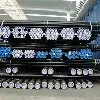
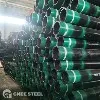
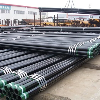
In the oil and gas industry standards (such as API 5L for line pipe and API 5CT for casing and tubing), PSL stands for Product Specification Level.
It defines different tiers of quality and testing requirements for the same steel grade (e.g., X52 or L80). As the level increases (from PSL1 to PSL3), the technical requirements become significantly more stringent.
Need a custom recommendation for your project's PSL level? Contact GNEE's technical experts today.
Comparison Table
| Feature | PSL1 | PSL2 | PSL3 |
| Quality Tier | Standard Quality | High Quality | Critical Quality |
| Chemical Composition | Loose restrictions | Strict limits (including CEQ) | Most restrictive (trace elements) |
| Impact Testing | Not mandatory | Mandatory (CVN Impact) | Mandatory (Higher standards) |
| Non-Destructive Testing (NDT) | Only for welds (if any) | Body NDT (partial/required) | 100% Full-body NDT (strictest) |
| Traceability | Traceable by batch | Individual pipe traceability | Strict full-process traceability |
| Environment | Shallow, low-pressure | High-pressure, gas, cold | Deepsea, extreme pressure |
Deep Dive into Each Level
PSL1: Standard Quality
Positioning: The entry-level tier of API standards.
Key Features: It does not require Carbon Equivalent (CEQ) calculations or notch impact toughness testing.
Buyer Pain Point: It is the most economical option but carries the risk of brittle failure in cold environments. It is primarily used for water wells or low-pressure oil wells.
PSL2: Industry Standard (Most Common)
Positioning: The mandatory level for most modern oil/gas transmission pipelines and standard drilling.
Key Features:
Toughness: Must pass the Charpy V-Notch (CVN) impact test to ensure the steel does not shatter at low temperatures.
Weldability: Strict limits on Carbon Equivalent (CEQ) ensure that field welding is easy, strong, and reliable.
Buyer Focus: This is the "sweet spot" between cost and safety. Most international tenders require PSL2 as the minimum.
PSL3: Extreme Quality (API 5CT Only)
Positioning: Specifically designed for the most hazardous or critical working environments.
Key Features:
Full Inspection: Every single pipe must undergo the most rigorous NDT (Ultrasonic or Electromagnetic) to ensure zero micro-cracks in the pipe body.
Dimensional Precision: Tighter tolerances on OD and wall thickness compared to PSL2.
Application: Deepsea drilling, high-pressure gas wells, or pipelines near populated residential areas.
3 Concerns for Overseas Buyers
At GNEE, we help our clients navigate these differences by focusing on:
"Do I really need PSL2?"
Advice: If your project is in a cold region (e.g., Canada, Kazakhstan) or involves natural gas, PSL2 is a must. The risk of gas leaks is much higher than liquids, and PSL2's toughness is your safety insurance.
How to verify the PSL level?
GNEE Advantage: Check the MTC (Mill Test Certificate). A PSL1 MTC is basic, but a PSL2 MTC must include CEQ values and specific CVN impact data. We fully support Third-Party Inspections (SGS/BV) to witness these tests.
Lead Time Differences:
Advice: PSL1 is often available in stock. PSL2 and PSL3 usually require custom production due to the strict material and NDT requirements. GNEE's supply chain efficiency can reduce PSL2 production cycles by up to 20%.
GNEE API Pipe Process Line

GNEE API Pipe test equipments

GNEE API Pipe certificate

FAQ
Q: Is there a physical difference between PSL1 and PSL2 pipes?
A: They look nearly identical, but the stenciling is different. PSL2 pipes are clearly marked with "PSL2." Also, PSL2 pipes usually have a better surface finish because full-body NDT requires a smooth surface for accurate sensor readings.
Q: Why is PSL2 more expensive than PSL1?
A: The extra cost comes from: 1. Cleaner raw material (purer steel melt); 2. Mandatory testing costs (CVN tests, CEQ analysis); 3. NDT fees (the cost of running advanced scanning equipment).
Q: Can GNEE provide PSL3?
A: Yes. GNEE has the capability to produce API 5CT PSL3 casing and tubing, equipped with state-of-the-art automated NDT lines to ensure 100% compliance.