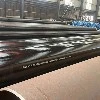
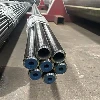
X65 is a pipeline steel conforming to API 5L standards, primarily used in pipelines for transporting energy resources such as oil and natural gas. In its name:
"X" indicates pipeline steel;
"65" represents a minimum yield strength of 65 ksi (approximately 448 MPa), although some standards may specify 460 MPa.
This steel grade must meet PSL2 (Product Specification Level 2) requirements, emphasizing high strength, low-temperature toughness, and corrosion resistance.
Chemical Composition
X65 is a low-carbon, low-alloy steel with the following typical composition (by weight):
Carbon (C): ≤0.09% (controls grain boundary carbide precipitation, improving weldability)
Manganese (Mn): 1.00~1.70% (enhances hardenability, increases strength)
Phosphorus (P), Sulfur (S): ≤0.02% (reduces impurities, improves toughness)
Niobium (Nb), Vanadium (V), Titanium (Ti): Added in trace amounts to refine grains and increase strength
Chromium (Cr), Nickel (Ni): Added in appropriate amounts to improve corrosion resistance (especially resistance to hydrogen sulfide corrosion)

Mechanical Properties
Yield Strength (ReL): ≥448 MPa (or 460 MPa as per standard)
Tensile Strength (Rm): 535~760 MPa
Elongation (A): ≥18% (gauge length 50mm)
Impact Toughness: Charpy impact energy at -20℃ ≥40 J (ensuring resistance to brittle fracture in low-temperature environments);
Hardness: ≤250 HB (while also considering machinability)
Key Performance Characteristics
High Strength and Lightweight: Yield strength is 40% higher than ordinary carbon steel, allowing for thinner pipe walls and reduced material costs.
Excellent Corrosion Resistance: Through low-sulfur and phosphorus control and the addition of Cr and Ni, it resists hydrogen sulfide stress corrosion (SSC) and seawater corrosion, making it suitable for subsea pipelines.
Excellent Weldability: Carbon equivalent (Ceq) ≤0.42%, it can be processed by submerged arc welding, high-frequency welding, etc., requiring no complex heat treatment after welding.
Stable Low-Temperature Toughness: Through controlled rolling and controlled cooling (TMCP) process to refine grains, it maintains high toughness even at -30℃.