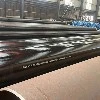
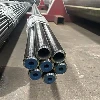
Duplex stainless steel has the characteristics of ferrite and austenite, and its strength and hardness are good. It organically combines the excellent plasticity and toughness of ferrite and austenite with corrosion resistance, so it has good mechanical properties and corrosion resistance. In terms of performance, duplex stainless steel is significantly better than ferritic stainless steel and austenitic stainless steel.
1. Molybdenum duplex stainless steel has good resistance to chloride ion stress corrosion under low stress. Generally, 18-8 austenitic stainless steel is prone to stress corrosion cracking in neutral chlorine solutions above 60°C, such as trace amounts of chloride ions. Stainless steel heat exchangers, evaporators and other equipment made in the hydrogen sulfide industry are prone to stress corrosion cracking. Duplex stainless steel has good resistance to stress corrosion cracking.
2. Molybdenum-containing duplex stainless steel has good corrosion resistance. Under the same corrosion resistance value (PRE=Cr%+3.3Mo%+16N%), the critical corrosion potentials of duplex stainless steel and austenitic stainless steel are similar. The corrosion resistance of duplex and austenitic stainless steels is comparable to AISI 316L. High chromium duplex stainless steel containing 25% Cr, especially nitrogen-containing high chromium duplex stainless steel, has higher corrosion resistance than AISI 316L.
3. It has good resistance to corrosion fatigue and wear and corrosion, and is suitable for the production of power equipment such as pumps and valves under some corrosive media conditions.
4. It has good comprehensive mechanical properties, high strength and fatigue strength, and its yield strength is twice that of 18-8 austenitic stainless steel. In the solid solution state, the elongation reaches 25%, and the toughness value AK (V-notch) is greater than 100J.
5. Good weldability and low tendency of hot cracking. Generally, no preheating is required before welding, and no heat treatment is required during welding. It can be welded with special-shaped welding such as 18-8 type austenitic stainless steel or carbon steel.
6. Duplex stainless steel with low chromium (18%Cr) has a wider temperature range for hot processing than 18-8 type austenitic stainless steel, and has less resistance. No forging is required, and steel plates can be directly rolled from blanks. Duplex stainless steel contains high chromium (25% Cr) and is slightly more difficult to heat treat than austenitic stainless steel. It can produce plates, tubes and wire products.
7. C old processing has a greater work hardening effect than 18-8 type austenitic stainless steel. In the early stages of tube and plate deformation, greater stress needs to be applied to deform.
8. Compared with austenitic stainless steel, it has a large thermal conductivity and a small linear expansion coefficient, and is suitable for equipment lining and production of composite plates. It is also suitable for making the tube core of heat exchangers, and its heat transfer efficiency is higher than that of austenitic stainless steel.
9. High-chromium ferrite stainless steel still has various brittleness tendencies and should not be used under working conditions above 300°C. The lower the chromium content in duplex stainless steel, the less harmful the brittle phase is.