




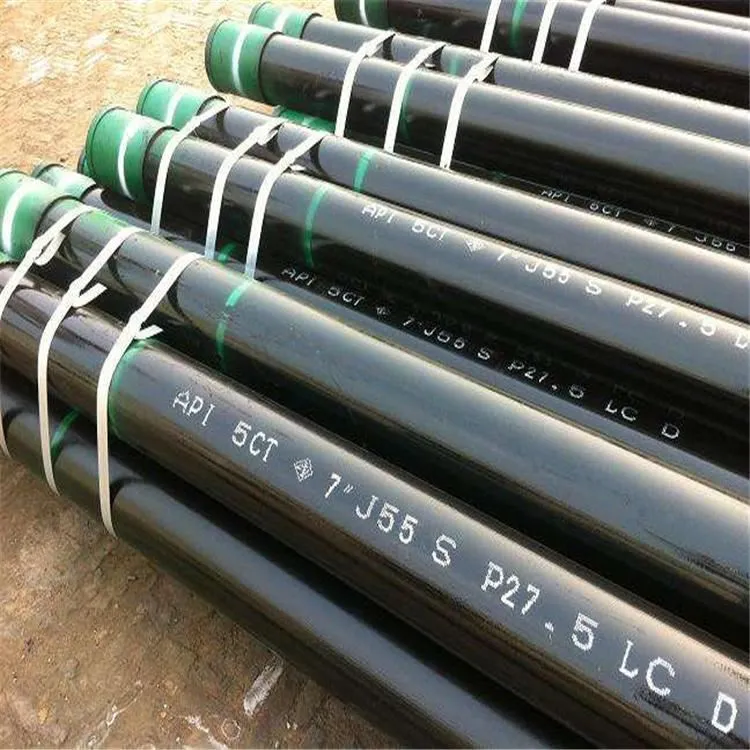

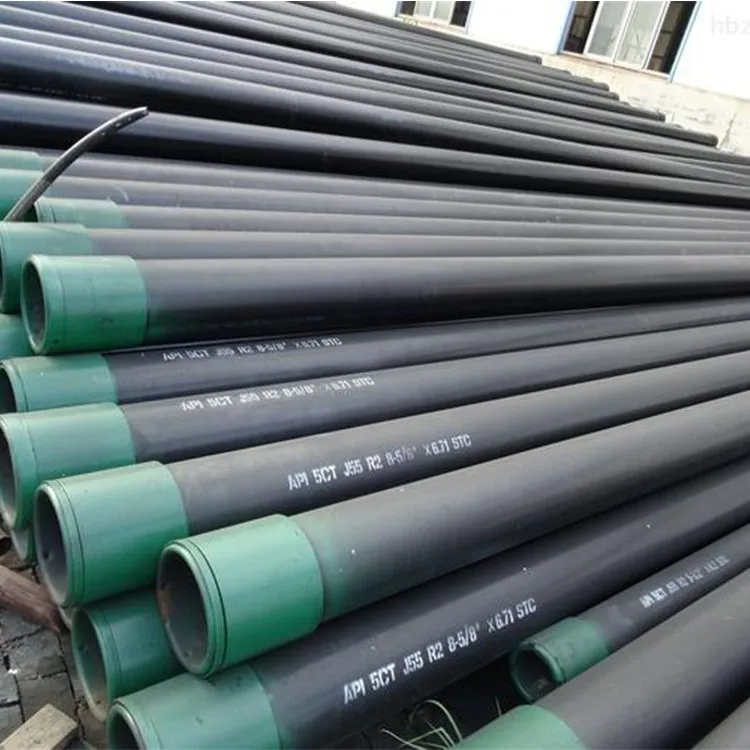
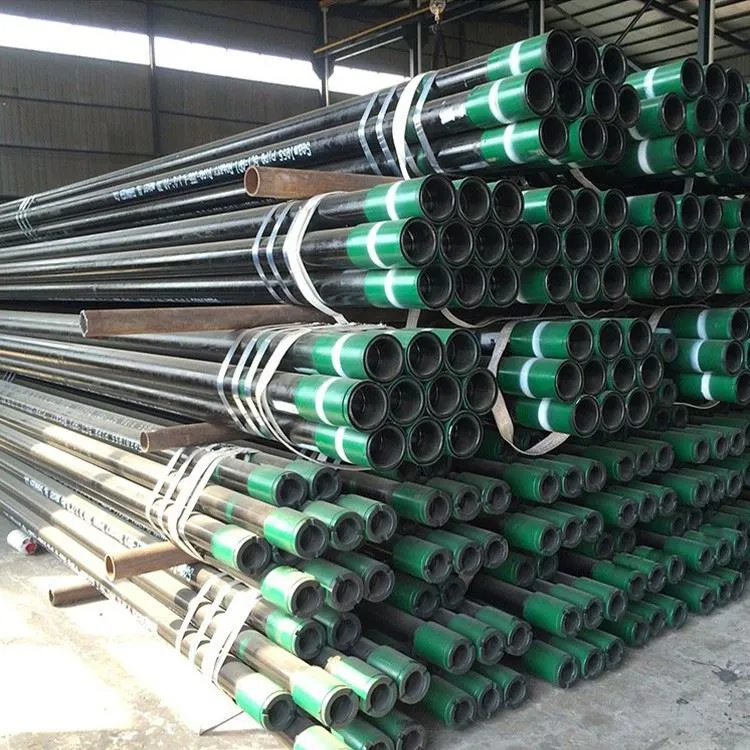
API 5CT J55 EUE Pipes For Borewell System
API 5CT J55 EUE pipes are low-carbon alloy steel pipes manufactured to American Petroleum Institute standards, featuring External Upset Ends for reinforced thread strength, designed specifically for deep water wells and geothermal systems to provide a high-strength, leak-proof, and cost-effective fluid transport solution.
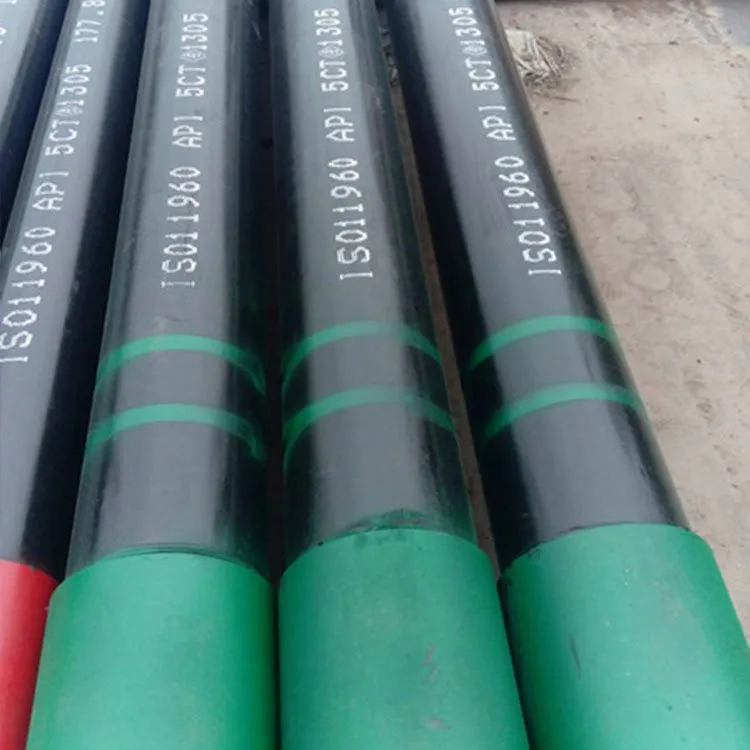
Color Coding
According to API 5CT, J55 grade is identified by:
Pipe Body: One Bright Green band.
Coupling: The entire coupling is painted Bright Green.
API 5CT J55 EUE Specification
| Item | Description |
| Standard | API Spec 5CT (Latest Edition) |
| Steel Grade | J55 |
| End Finish | EUE (External Upset End) |
| Product Type | Tubing (Commonly used for Borewells) |
| Specification Level | PSL-1 (Standard), PSL-2, PSL-3 |
| Size Range | 1.050" to 4-1/2" (Tubing sizes) |
| Threading Standard | API 5B |
Chemical Composition & Mechanical Properties
Chemical Composition (%)
| Grade | C (Carbon) | Mn (Manganese) | P (Phosphorus) | S (Sulphur) | Si (Silicon) |
| J55 | Not Specified | Not Specified | ≤ 0.030 | ≤ 0.030 | Not Specified |
| Note: J55 chemistry is usually at the manufacturer's discretion as long as mechanical properties are met. |
Mechanical Properties
| Grade | Yield Strength (MPa) | Tensile Strength (MPa) | Min. Elongation | Hardness |
| J55 | 379 - 552 (55-80 ksi) | ≥ 517 (75 ksi) | Per API formula | No mandatory requirement |
Dimensions & Tolerances
Dimensions
| Nominal OD | Weight (lb/ft) | Wall Thickness (mm) | Upset OD (mm) | Drift Diameter (mm) |
| 2-3/8" (60.32mm) | 4.70 | 4.83 | 65.89 | 49.25 |
| 2-7/8" (73.02mm) | 6.50 | 5.51 | 78.58 | 59.61 |
| 3-1/2" (88.90mm) | 9.30 | 6.45 | 95.25 | 72.77 |
| 4-1/2" (114.3mm) | 12.75 | 6.88 | 120.65 | 98.48 |
Tolerances
| Parameter | Tolerance |
| Outside Diameter (OD) | ± 0.79 mm (for sizes < 4") |
| Wall Thickness (WT) | - 12.5% (Upper limit governed by weight) |
| Weight | + 6.5% / - 3.5% |
| Length | Range 1: 6.10-7.32m; Range 2: 8.53-9.75m |
EUE vs. NUE
Example based on common 2-7/8" (73.02mm) J55 Tubing:
| Feature | EUE (External Upset End) | NUE (Non-Upset End) | Key Difference |
| Upset Outer Diameter | 78.58 mm | 73.02 mm (No Upset) | EUE ends are visibly larger |
| Threads Per Inch | 8 (8rd) | 10 (10rd) | EUE threads are more robust/durable |
| Joint Strength Efficiency | 1.0 (Full Strength) | Approx. 0.75 | EUE joint is as strong as the pipe body |
| Recommended Depth | Deep wells (>1000m) | Shallow wells / Flow lines only | Significant safety factor gap |
| Impact Resistance | Extremely high (Thick wall) | Moderate (Risk of root fracture) | Vital for complex downhole conditions |
J55 Tubing vs. J55 Casing Comparison
| Comparison Item | J55 Tubing | J55 Casing | Principal Difference |
| Primary Function | Fluid Transport: Conveys water/oil/gas from the bottom to the surface. | Structural Support: Reinforces the borehole wall to prevent collapse and isolate formations. | Fundamentally different roles. |
| Common OD | Smaller: 1.050" to 4-1/2" (26.7mm - 114.3mm) | Larger: 4-1/2" to 20" (114.3mm - 508mm) | Casing surrounds the tubing. |
| Common Connections | EUE (External Upset), NUE (Non-Upset) | STC (Short Round), LTC (Long Round), BTC (Buttress) | Tubing emphasizes sealing/tension; Casing emphasizes structural collapse resistance. |
| Wall Thickness | Relatively thinner. | Relatively thicker to withstand external formation pressure. | Casing has higher collapse resistance. |
| Installation | Installed last, suspended inside the casing. | Installed first, usually cemented into the borehole. | Different sequence in well construction. |
| Drift Diameter | Ensures pumps or tools can pass through the tubing. | Ensures the tubing string can pass through the casing. | Different clearance standards. |
| Length (Range) | Range 1 (6-8m), Range 2 (8-10m) | Range 1, Range 2, Range 3 (up to 14m) | Casing often uses longer joints to reduce the number of connections. |
| Accessories | Pumps, Tubing Hangers. | Centralizers, Float Shoes, Cementing Heads. | Completely different toolsets. |
J55 Oil Tube For Petroleum And Natural Gas Industries
EUE Couplings: Used to connect two pipe joints.
Pup Joints: Shorter lengths (2ft to 12ft) used for precise depth adjustment.
Crossovers (X-overs): Used to transition between different sizes or thread types (e.g., EUE to NPT).
Centralizers: To center the pipe string within the well casing.
API 5CT J55 EUE pipes for borewell system features
Manufacturing Process
Forming: Produced as Seamless (SMLS) or Electric Resistance Welded (ERW). Seamless is preferred for high-pressure borewells.
Upsetting: The pipe ends are heated (induction) and forged to increase wall thickness.
Threading: Precision CNC machining of API 8-round (8rd) or 10-round (10rd) threads.
Surface Treatment: Includes anti-corrosion painting (varnish) and mandatory stenciling.
Heat Treatment Methods
For Grade J55, API allows several conditions:
As-rolled: No mandatory heat treatment (manufacturer's option).
Normalizing (N): To refine grain structure.
Normalizing and Tempering (N&T).
Quenching and Tempering (Q&T): Full-length heat treatment (usually for PSL-2/3 requirements).
Test and Inspection of API 5CT J55 EUE pipes for borewell system
Hydrostatic Test: Every pipe is tested under high water pressure to ensure no leaks (usually >3000 psi).
Non-Destructive Testing (NDT): Ultrasonic (UT), Eddy Current, or Magnetic Particle Inspection (MPI).
Tensile Test: To verify yield and ultimate tensile strength.
Flattening Test: Conducted on ERW pipes to ensure weld integrity.
Visual Inspection: For surface defects, pits, or cracks.
Why Choose API 5CT J55 EUE for Borewell Systems?
Superior Joint Strength: The External Upset (EUE) design ensures that the threaded connection is stronger than the pipe body, preventing the pipe string from snapping under its own weight in deep wells.
Excellent Sealing: API 8-round threads combined with thread compound provide a reliable seal against high hydrostatic pressure.
Cost-Effectiveness: J55 is the most economical API grade, providing sufficient strength for most water wells without the high cost of premium grades like N80 or P110.
Standardization: Its universal API dimensions make it compatible with standard submersible pumps, wellheads, and maintenance tools globally.
Durability: Offers reliable performance in underground environments and is easily treated with anti-corrosion coatings for long-term use.
API 5CT K55 vs. J55 Tubing Comparison
J55 and K55 are the most similar grades in API 5CT. While they share the same Yield Strength, they differ significantly in Tensile Strength and Color Coding.
| Comparison Item | J55 Tubing | K55 Tubing | Key Difference |
| Yield Strength | 379 - 552 MPa (55-80 ksi) | 379 - 552 MPa (55-80 ksi) | Same |
| Tensile Strength | ≥ 517 MPa (75 ksi) | ≥ 655 MPa (95 ksi) | K55 is stronger in terms of ultimate pulling force. |
| Min. Elongation | Per API Formula | Per API Formula | Same |
| Chemical (P, S) | P ≤ 0.030%, S ≤ 0.030% | P ≤ 0.030%, S ≤ 0.030% | Same |
| Color Band | One Bright Green Band | Two Bright Green Bands | Visual identification on the pipe body/coupling. |
| Heat Treatment | No mandatory requirement (Usually As-rolled/Normalized) | No mandatory requirement (Usually As-rolled/Normalized) | Same |
| Primary Application | Shallow to medium depth wells, low-pressure environments. | Deeper wells or strings with higher suspended loads. | K55 provides a higher safety margin against snapping. |
| Price / Cost | Most economical. | Slightly higher than J55. | J55 is the standard choice for most borewells. |
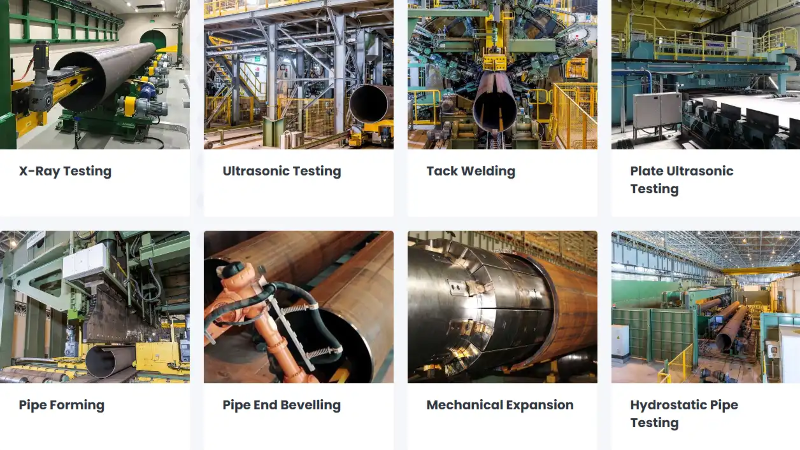
API 5CT J55 Tubing process line
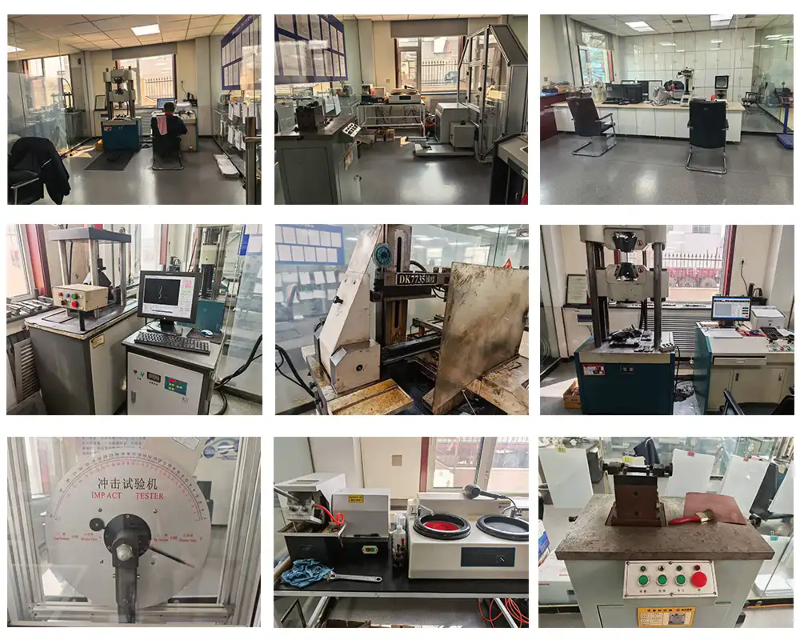
API 5CT J55 Tubing test equipments
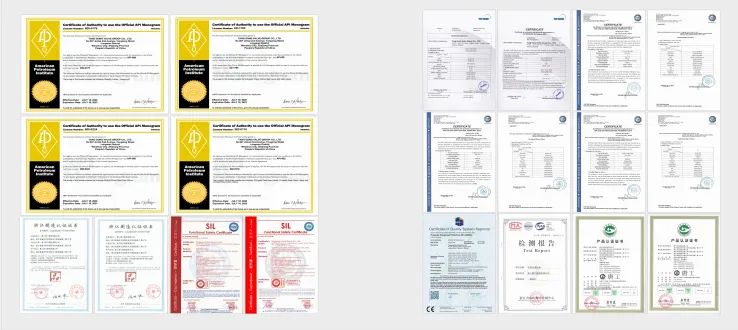
API 5CT J55 OCTG Tubing certificate
FAQ
Q: What does J55 mean in API 5CT?
A: According to the API 5CT standard, J55 serves as a designated steel grade that is categorized by its mechanical strength properties:
The letter "J" is the specific code assigned by API to mark this particular category of carbon steel.
The number "55" corresponds to the material's minimum yield strength requirement, which is 55,000 pounds per square inch, or 55 ksi for short.
Q: What is an eue pipe?
A: EUE pipe (full name: External Upset End pipe, namely external upset end tubing) is a commonly used API standard tubing in the oil and gas industry. With thickened pipe ends, it boasts higher strength and can withstand harsh high-pressure working conditions.
Q: Can J55 be used in corrosive environments?
A: Yes, improved J55 steel can be used in mildly corrosive oil and gas environments
Standard J55 steel has general corrosion resistance, and modified J55 with added corrosion-resistant alloy elements (such as chromium and copper) can effectively cope with mild corrosive environments containing CO₂ and Cl⁻, and is commonly used for oil and gas well casings in slightly corrosive situations.
Hot Tags: api 5ct j55 eue pipes for borewell system, China api 5ct j55 eue pipes for borewell system manufacturers, suppliers, factory, OCTG, octg energy projects, octg pup joints, octg resource efficiency, octg wear resistance, octg well servicing companies
Previous
API 5CT K55 BTC CasingNext
Slotted CasingYou Might Also Like


Send Inquiry