




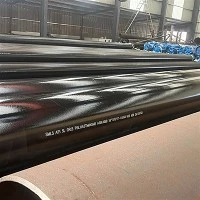
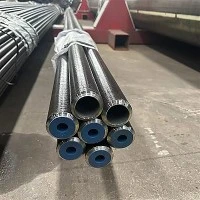


API 5CT Q125 Seamless Tubing with Premium Connections
Grade: Q125 (Group 4)
Yield: 862-1034 MPa
Tensile: ≥ 931 MPa
Types: 1 / 2 / 3 / 4
Connection: Premium (metal-to-metal)
API 5CT Q125 is the highest-strength standard grade in the American Petroleum Institute's specification for oil-country tubular goods, sitting alone in Group 4. It is defined by a yield window of 125,000-150,000 psi (862-1034 MPa) with a minimum tensile strength of 135,000 psi (931 MPa), and it is always supplied quenched and tempered. This page covers Q125 as production tubing - the string through which well fluids flow - and the premium connections that are normally specified with it, because at this strength level a gas-tight, pipe-body-efficient joint is what makes the grade usable in deep, high-pressure and HPHT wells. The grade overview and the general OCTG tubing pages (linked in related reading) cover the casing use and the well-string context respectively.
Q125 vs P110: Q125's 862 MPa minimum yield is about 14% above P110's 758 MPa, and its 931 MPa minimum tensile beats P110's 862 MPa. Both are non-sour, heat-treated high-strength grades, but Q125 reaches the same burst and collapse at a thinner wall, cutting string weight across an ultra-deep completion. Q125 is the top of the API 5CT strength ladder and is never normalized - only quench-and-tempered.
API 5CT Q125 tubing specification
| Parameter | API 5CT Q125 specification |
|---|---|
| Standard | API 5CT (OCTG); latest edition in force |
| Product | Tubing (oil-country tubular goods) |
| Grade / group | Q125 / Group 4 (highest-strength standard grade) |
| Types | Type 1, 2, 3, 4 (chemistry, hardness ceiling, testing differ) |
| Hardness | Types 1-2: no fixed ceiling, within-body variation controlled; Types 3-4: 34 HRC (327 HBW) max |
| Manufacturing | Seamless; quench and temper (Q+T) mandatory, no normalizing route |
| Outside diameter | 1.050 in to 4-1/2 in (26.7-114.3 mm); 5 in available |
| Wall (weight design) | nominal weight per foot; wall set by weight design |
| Length range | R1, R2 or R3 |
| Ends & connection | plain-ended; API 5B NU/EU or proprietary premium connection |
| Product specification level | PSL1, PSL2 and PSL3 |
| Wall tolerance | 0 to -12.5% of nominal wall |
| Service basis | non-sour, high-pressure and HPHT production strings |
| Mill certificate | EN 10204 3.1; 3.2 with third-party inspection on request |
Where Q125 sits in the API 5CT strength ladder
Tubing and casing grades are chosen by the loads a string must carry - burst, collapse and tension - and by the well fluid. Q125 occupies the top of the standard ladder, above the heat-treated P110 grade, and is the only grade in Group 4:
| Grade | Yield MPa (ksi) | Tensile min MPa (ksi) | Typical tubing role |
|---|---|---|---|
| J55 / K55 | 379-552 (55-80) | 517 / 655 (75 / 95) | shallow, low-load, non-sour tubing |
| N80-1 | 552-758 (80-110) | 689 (100) | conventional-depth production tubing |
| L80-1 | 552-655 (80-95) | 655 (95) | sour-service tubing (22 HRC limit) |
| T95 | 655-758 (95-110) | 724 (105) | sour-service, higher strength |
| P110 | 758-965 (110-140) | 862 (125) | deep, high-pressure non-sour tubing |
| Q125 | 862-1034 (125-150) | 931 (135) | ultra-deep, HPHT, high-pressure non-sour tubing |
Yield is shown as the API 5CT min-max window; tensile is the minimum. Grade selection also depends on Type, PSL, heat treatment and the operator's tubing-design program. The values are indicative of the API 5CT grade bands; confirm against the invoked edition.
Mechanical properties of Q125 tubing
Q125 is set by its strength window, its quench-and-temper route, and - for Types 3 and 4 - a hardness ceiling. The table below summarizes the requirements that define the grade:
| Property | Requirement |
|---|---|
| Yield strength | 862 MPa (125 ksi) min, 1034 MPa (150 ksi) max |
| Tensile strength | 931 MPa (135 ksi) min |
| Heat treatment | quench and temper mandatory; no normalizing route |
| Hardness (Types 1-2) | no fixed ceiling; within-body variation controlled to 3.0 HRC (≤12.70 mm wall) / 5.0 HRC (heavier wall) |
| Hardness (Types 3-4) | 34 HRC (327 HBW) max |
| Impact testing | mandatory Charpy V-notch (Group 4 supplemental requirement) |
| Product level | PSL1, PSL2 and PSL3 |
The wide yield window is controlled by the within-body hardness-variation limit rather than by a single hardness number. Because Types 1 and 2 have no hardness ceiling, Q125 is not sour-service rated; the 34 HRC ceiling of Types 3 and 4 is still above the carbon-steel sour limit of 22 HRC.
Chemistry and the Q125 Type system
API 5CT fixes a tighter chemistry for Q125 than for most lower grades, because the quench-and-temper response that delivers 125 ksi minimum yield needs controlled alloying. The four Types share the strength grade but differ in impurity and alloy limits, hardness ceiling and mandatory testing:
| Type | C max | Mn max | P max | S max | Hardness | Mandatory Charpy |
|---|---|---|---|---|---|---|
| Type 1 | 0.35 | 1.00 | 0.020 | 0.010 | no fixed ceiling | No |
| Type 2 | 0.35 | 1.00 | 0.020 | 0.020 | no fixed ceiling | No |
| Type 3 | 0.50 | 1.90 | 0.030 | 0.020 | 34 HRC max | Yes |
| Type 4 | 0.50 | 1.90 | 0.030 | 0.020 | 34 HRC max | Yes |
Molybdenum, chromium and nickel are also controlled on Type 1 (and reported for the others) to secure hardenability. Type 4 carries the most restrictive overall chemistry. Molybdenum, chromium and nickel limits and the exact carbon ceiling follow the invoked API 5CT edition; the actual heat analysis for each heat is recorded on the mill test certificate.
Manufacturing route for Q125 tubing
Q125 tubing is produced seamless - a round billet is heated, pierced, rolled and sized, giving uniform circumferential properties with no longitudinal weld - and is then quenched and tempered. API 5CT does not permit a normalizing-only route for Q125: the grade's 125 ksi minimum yield is reached only through quench-and-temper heat treatment, which also supplies the through-wall microstructure consistency that the hardness-variation control verifies. The seamless route is standard for tubing because of pressure integrity and the absence of a seam in the body.
Sizes, weight designs and lengths
Q125 tubing is produced in the standard API 5CT tubing outside-diameter series. Outside diameters run from 1.050 in to 4-1/2 in (26.7-114.3 mm), with 5 in available, and lengths are supplied in ranges R1, R2 and R3. Wall is expressed through the nominal weight per foot, which fixes the wall for a given outside diameter. The table lists common weight designs and the indicative wall derived from each nominal weight:
| OD (in) | OD (mm) | Nominal weight (lb/ft) | Wall, indicative (mm)* |
|---|---|---|---|
| 2-3/8 | 60.32 | 4.70 / 5.80 / 6.50 | 5.15 / 6.51 / 7.42 |
| 2-7/8 | 73.02 | 6.50 / 8.70 / 10.40 | 5.84 / 8.09 / 9.96 |
| 3-1/2 | 88.90 | 9.30 / 12.95 / 15.80 | 6.85 / 9.90 / 12.49 |
| 4-1/2 | 114.30 | 12.75 / 15.10 / 16.90 | 7.19 / 8.63 / 9.77 |
*Indicative wall derived from the nominal weight; the specified minimum wall per API 5CT for the invoked edition may differ slightly and is confirmed at order. Tubing is specified by OD and nominal weight design (not a schedule number); other weights exist for each OD. Length ranges: R1 (about 4.88-7.62 m), R2 (about 7.62-10.36 m, the most common) and R3 (longest); exact limits follow the invoked edition.
Premium connections - the defining feature of this tubing
The phrase "with premium connections" is what distinguishes this product from a plain Q125 tubing string. A premium connection is a proprietary, licensed threaded-and-coupled or integral joint built around a metal-to-metal seal rather than thread-compound-dependent sealing. On Q125 tubing it is specified because the standard API 5B tubing threads - non-upset (NU) and external-upset (EU) - cannot reliably reach pipe-body joint efficiency and gas-tight sealing at 862-1034 MPa yield under the combined loading of an HPHT production string.
What a premium connection adds
Gas-tight sealing. A verified metal-to-metal seal is leak-tight to helium or nitrogen across the internal-pressure, external-pressure, tension, compression and bending envelope - essential for high-pressure gas and sour-free corrosive service where an API thread's compound seal would weep.
Joint efficiency near pipe body. Premium thread forms are qualified to carry loads approaching 100% of the pipe-body capacity, against roughly 60-80% for standard NU/EU threads, so the connection does not become the weak point of a high-strength string.
Combined-loading robustness. The connection is designed and selected for the actual downhole load path - burst plus tension, collapse plus compression, and bending - not for a single axis in isolation.
Re-makeable, monitored make-up. Premium connections are run with torque-turn monitoring (and, for some systems, dedicated or dry-seal compounds) so each joint is verified at the rig.
Connection families and qualification
Premium connections are proprietary systems supplied against a license; widely used families in the market include VAM-type (VAM TOP, NEW VAM, VAM FJL), TenarisHydril (Wedge and PH series), Hunting (SLIJ-II, Seal-Lock), Weatherford (ClearWave, WSP), JFE (FOX) and NOV Grant Prideco designs, among others. The connection is not assumed - it is qualified under ISO 13679 (referenced as API 5C5) connection-integrity testing, typically to CAL IV, which cycles the joint through combined loading far beyond the pipe-body design envelope and reports the limiting loads and sealability. The specific connection model and its qualification level are stated on the purchase order and verified against the Q125 heat, outside diameter and wall.
Selection rule: the connection must be rated to approach the pipe-body strength of the specific Q125 heat and wall. A premium connection qualified to CAL IV on a nominal 4-1/2 in Q125 tubing is not automatically valid for a different size or wall - confirm the qualification envelope for the exact joint design.
Service limits and the sour-service exception
Q125 tubing is a non-sour, high-pressure and HPHT product. It is used for deep and ultra-deep production strings, high-pressure gas lift and hostile downhole conditions where a lower grade cannot meet the burst, collapse or tension demand at a practical wall. It is not rated for sour (H2S) service under NACE MR0175 / ISO 15156: Types 1 and 2 carry no hardness ceiling, and Types 3 and 4 are capped at 34 HRC - well above the carbon-steel sour limit of 22 HRC - so sulfide-stress-cracking resistance cannot be demonstrated. Where hydrogen sulfide is present or anticipated, the string is stepped down to a sour-service grade such as C110, L80-1, C90, T95 or a corrosion-resistant alloy.
PSL levels for Q125 tubing
Q125 is offered in PSL1, PSL2 and PSL3 - broader than the conventional grades limited to PSL1/PSL2. PSL1 is the basic delivery state; PSL2 adds mandatory heat treatment, full-length volumetric and surface NDE, and impact testing; PSL3 adds the tightest dimensional, surface, NDE and documentation controls for the most demanding programs. Because Q125 is Group 4, the supplemental Charpy V-notch requirement applies regardless of PSL, and the connection qualification is added on top for premium-connection strings.
Acceptance testing and documentation
Hydrostatic or NDE. Each pipe is hydrostatically tested or, as the order permits, full-length volumetric NDE is applied in lieu of the hydrostatic test, per API 5CT.
Body inspection. Seamless Q125 tubing receives full-length volumetric NDE of the body (typically UT and/or EMI) plus surface examination.
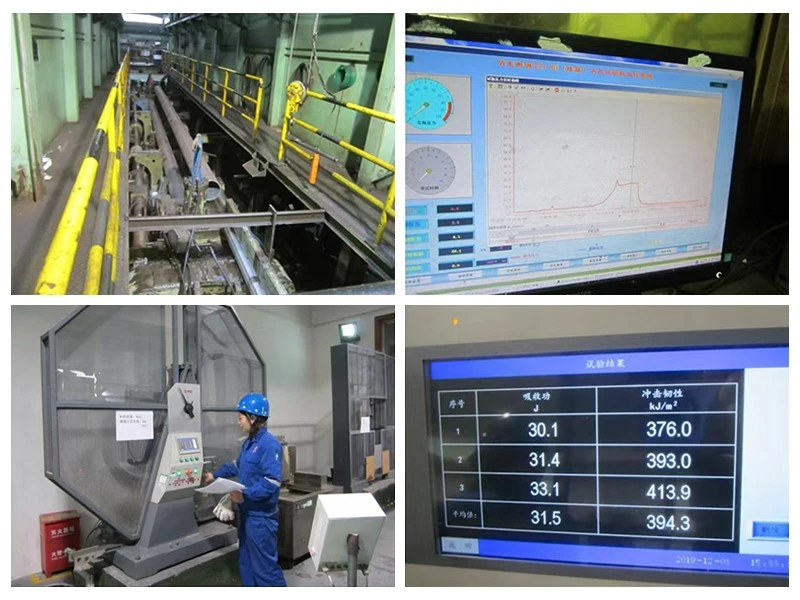
Charpy impact. Mandatory for Group 4 - Charpy V-notch testing per the API 5CT supplemental requirements, with test temperature stated on the order.
Hardness. Controlled to the Type-specific limit; where no ceiling applies, the within-body variation is verified (3.0 HRC for wall ≤ 12.70 mm, 5.0 HRC for heavier wall).
Mill certificate. EN 10204 3.1 as standard; 3.2 with SGS / BV / DNV / TUV or other third-party inspection on request, reporting heat analysis, tensile, impact and dimensions.
Marking. Manufacturer, specification, grade and Type, size, weight design, heat number, connection type and PSL, per API 5CT.
Q125 premium-connection tubing ordering checklist
Provide the following so the mill documents match the well program:
Specification & grade: API 5CT (Edition), Grade Q125, Type 1-4, PSL1/PSL2/PSL3.
Size & wall: outside diameter and nominal weight design (sets the wall), or wall directly.
Length range: R1, R2 or R3; cutting lengths by agreement.
Connection: premium connection system + model and its ISO 13679 / API 5C5 CAL IV qualification level; or API 5B NU/EU if premium is not required.
Quantity & ends: total quantity and end finish (plain-ended, or threaded-and-coupled / integral for the premium joint).
Service basis: non-sour, high-pressure / HPHT; state the sour (H2S) restriction - Q125 is not the grade for H2S service.
Certificate: EN 10204 3.1; 3.2 or third-party inspection on request.
Test and inspection
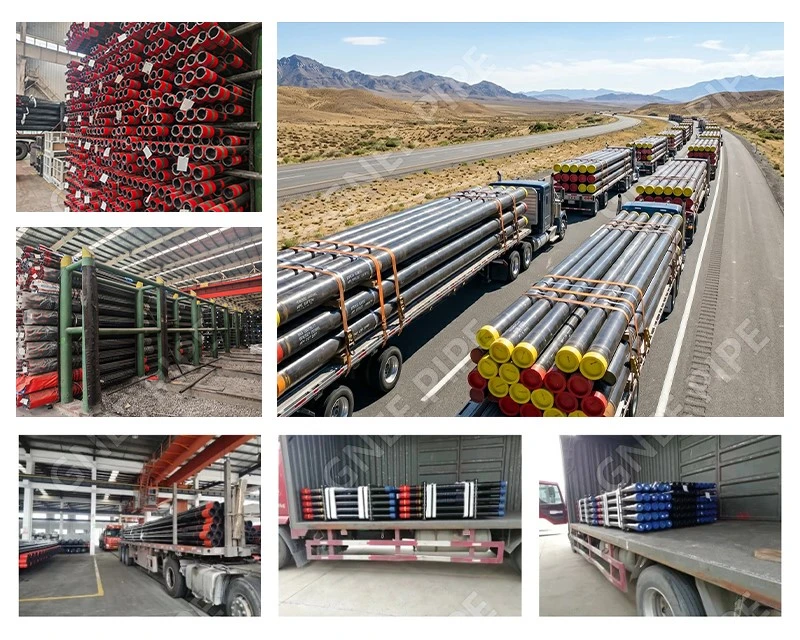
packaging and shipping
Send your bill of materials - API 5CT (Edition), Grade Q125 and Type, PSL1/PSL2/PSL3, outside diameter and nominal weight design (or wall), length range, the premium connection system with its ISO 13679 / API 5C5 CAL IV qualification level, quantity and required certificate - and we will return a quote with the quench-and-temper, NDE and connection plan and lead time. Tell us the service is non-sour, high-pressure or HPHT production tubing and the design loads so the supply matches the completion program.
FAQ
What yield and tensile strength does API 5CT Q125 tubing provide, and why is the yield window controlled?
Q125 is the highest-strength standard grade in API 5CT Group 4. Its specified yield is 125,000-150,000 psi (862-1034 MPa) and the minimum tensile strength is 135,000 psi (931 MPa). The wide 172 MPa yield window is deliberate: it accommodates the quench-and-temper response of the controlled-alloy heat and is controlled by the standard's within-body hardness-variation limit rather than a fixed hardness ceiling. Confirm the invoked API 5CT edition, as the property tables are edition-specific.
Why are premium connections specified on Q125 tubing instead of standard API 5B NU or EU threads?
At 862-1034 MPa yield, the standard API 5B non-upset (NU) and external-upset (EU) tubing threads have joint strength and seal limits that can fall short of pipe-body performance under high internal pressure, collapse, tension and bending. Premium connections use a metal-to-metal seal and a thread form qualified to approach pipe-body efficiency, giving gas-tight sealing across the full load envelope. They are the default for Q125 production strings in HPHT and high-pressure gas wells, while NU/EU remain an option for lighter, lower-load tubing.
What do the Q125 Types 1 through 4 change, and which type suits deep HPHT tubing?
All four Q125 types share the same yield, tensile and quench-and-temper requirements; they differ in chemistry controls, hardness ceiling and mandatory testing. Type 1 is the baseline with no hardness ceiling and no mandatory Charpy; Type 2 tightens phosphorus and sulfur and still has no ceiling; Type 3 adds a 34 HRC (327 HBW) ceiling and mandatory Charpy V-notch testing; Type 4 is the most restrictive chemistry with the same 34 HRC ceiling and Charpy requirement. For deep, HPHT critical tubing, Types 3 or 4 are specified because the hardness ceiling and impact testing give a verifiable quality limit.
Can API 5CT Q125 tubing be used in H2S (sour) service, and what replaces it?
No. Q125 is not rated for sour (H2S) service under NACE MR0175 / ISO 15156. Types 1 and 2 have no hardness ceiling at all, and Types 3 and 4 are capped at 34 HRC - above the carbon-steel limit of 22 HRC - so sulfide-stress-cracking resistance cannot be demonstrated. Q125 is for non-sour, high-pressure and HPHT production strings. Where hydrogen sulfide is present or anticipated, select a sour-service grade such as C110, L80-1, C90, T95 or a corrosion-resistant alloy instead.
How is a premium connection on Q125 tubing qualified, and what load envelope must it cover?
Premium connections are qualified under ISO 13679 (now referenced as API 5C5) connection-integrity testing, typically to CAL IV, which subjects the connection to combined internal pressure, external pressure, tension, compression and bending cycles well beyond the pipe-body design envelope. The qualification reports the connection's limiting loads and sealability, so the engineer verifies the connection efficiency against the specific Q125 heat, outside diameter and wall. The connection model and its qualification level are stated on the purchase order, not assumed.
What outside-diameter and weight range applies to Q125 seamless tubing, and how is wall set?
Q125 tubing is produced seamless across the standard API 5CT tubing series - commonly 1.050 in to 4-1/2 in outside diameter (about 26.7-114.3 mm), with 5 in available - in length ranges R1, R2 and R3. Wall is set by the nominal weight design (lb/ft) rather than a schedule number; for example 2-3/8 in is supplied at 4.70, 5.80 or 6.50 lb/ft and 4-1/2 in at 12.75, 15.10 or 16.90 lb/ft. The exact wall matched to each weight follows the API 5CT tables for the invoked edition.
What should a purchase order specify for API 5CT Q125 tubing with premium connections?
State the specification (API 5CT, Edition), grade Q125 and the Type (1-4), product specification level (PSL1, PSL2 or PSL3), outside diameter and nominal weight design (which sets the wall), length range, the premium connection system and its qualification level (ISO 13679 / API 5C5 CAL IV), end finish, quantity, and the certificate (EN 10204 3.1; 3.2 with third-party inspection on request). State explicitly that the service is non-sour (Q125 is not sour-rated), plus the inspection and NDE level and packing and marking basis. Prices and lead times are quoted against the specific bill of materials.
Hot Tags: API 5CT Q125 Seamless Tubing with Premium Connections, China API 5CT Q125 Seamless Tubing with Premium Connections manufacturers, suppliers, factory, octg development projects, octg delivery, octg r d, octg with premium connections, octg special requirements, octg certification
You Might Also Like


Send Inquiry