




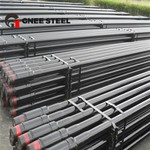
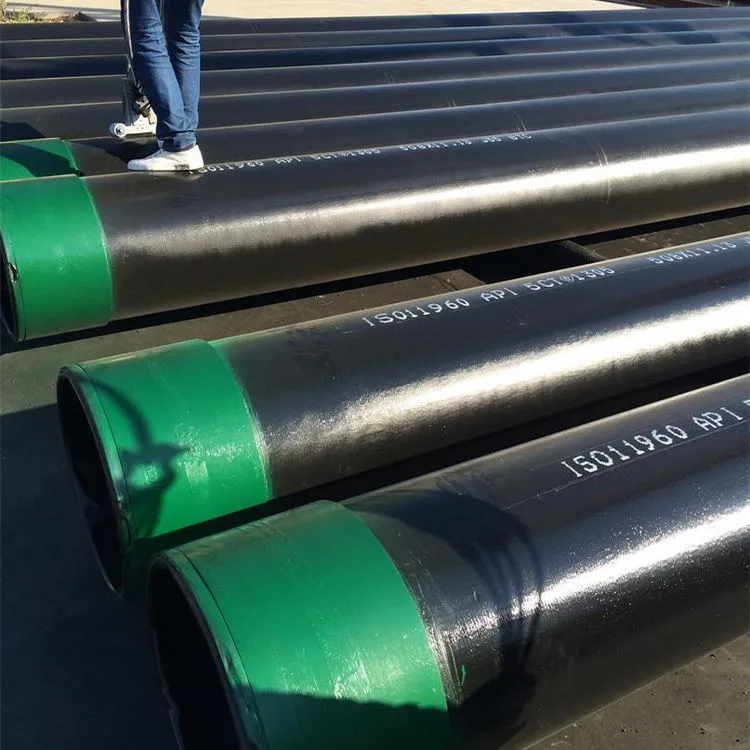

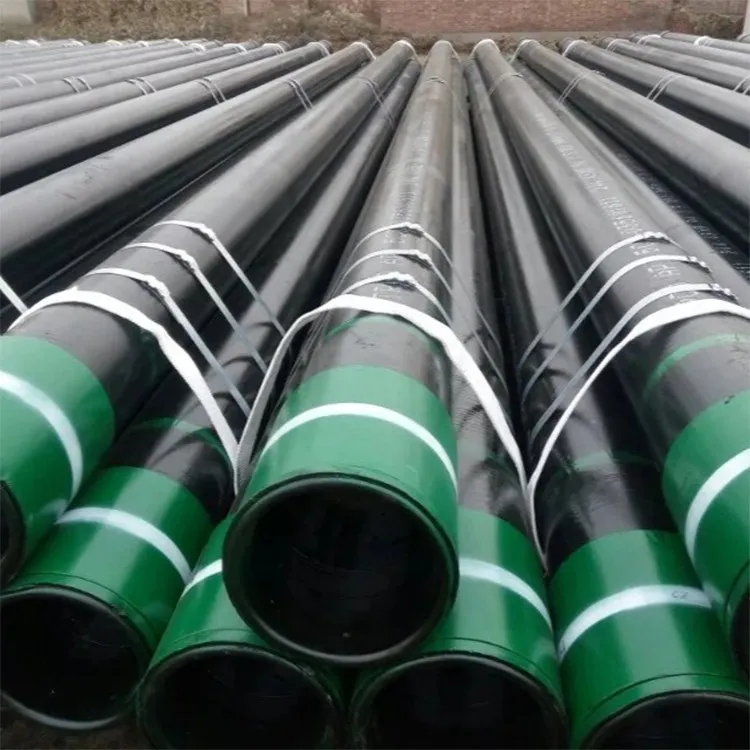
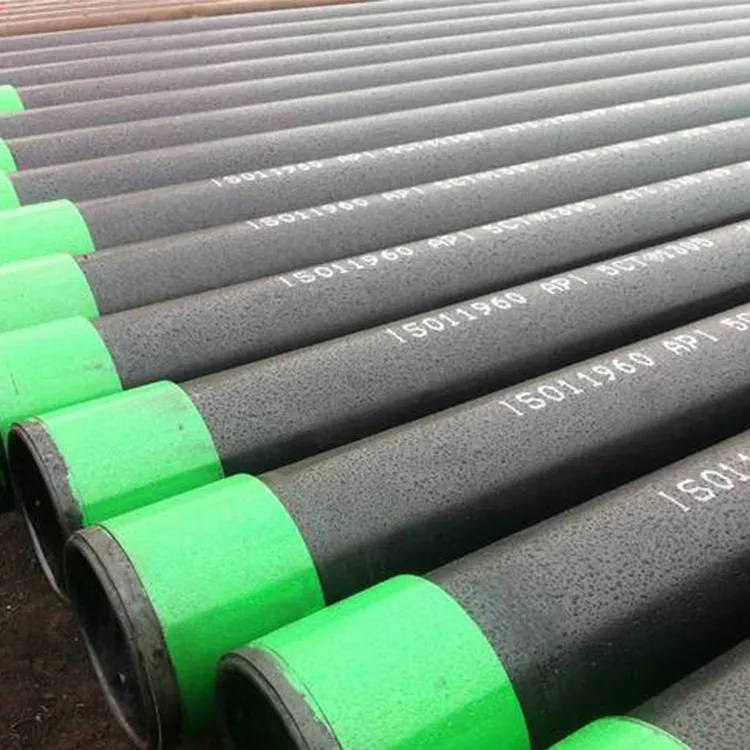

API 5CT K55 BTC Casing
According to the API 5CT standard, K55 BTC casing is a high-strength carbon steel structural pipe for well construction, fitted with trapezoidal buttress thread connections (BTC). It is purpose-built to line the boreholes of water, oil and gas wells: it reinforces wellbore structural stability, prevents borehole wall collapse, withstands external loads acting on the wellbore, and delivers reliable high tensile strength that meets the performance requirements of deep-well casing strings.
API 5CT K55 BTC Casing Specification
| Item | Description |
| Standard | API Spec 5CT (Latest Edition) |
| Grade | K55 |
| Thread Type | BTC (Buttress Thread Connection) |
| Product Type | Casing (Structural support pipe) |
| PSL Level | PSL-1 (Standard), PSL-2 |
| Size Range | 4-1/2" to 20" (Outside Diameter) |
| Common Lengths | R1 (4.88–7.62m), R2 (7.62–10.36m), R3 (10.36–14.63m) |
Chemical Composition & Mechanical Properties
Chemical Composition (Max %)
| Grade | Phosphorus (P) | Sulphur (S) | Carbon/Manganese |
| K55 | ≤ 0.030% | ≤ 0.030% | Manufacturer's choice (Carbon steel) |
Mechanical Properties
| Grade | Yield Strength (psi) | Yield Strength (MPa) | Tensile Strength (psi) | Tensile Strength (MPa) |
| K55 | 55,000 - 80,000 | 379 - 552 | ≥ 95,000 | ≥ 655 |
| Note: While K55 and J55 have the same yield strength, K55 has significantly higher tensile strength. |
Dimensions & Tolerances
Common BTC Casing Dimensions
| OD (Inches) | Weight (lb/ft) | Wall Thickness (mm) | Drift Diameter (mm) |
| 4-1/2" | 10.50 | 5.21 | 99.19 |
| 5-1/2" | 15.50 | 6.48 | 122.56 |
| 7" | 23.00 | 8.05 | 157.07 |
| 9-5/8" | 36.00 | 8.94 | 222.12 |
Tolerances
| Parameter | Tolerance Limit |
| Outside Diameter | ± 0.75% of OD (for pipes ≥ 4-1/2") |
| Wall Thickness | - 12.5% |
| Weight | + 6.5% / - 3.5% |
| Length | Within specified Range (R1, R2, or R3) |
Color Coding
According to API 5CT standard:
Pipe Body: Two Bright Green Bands.
Coupling: The entire coupling is painted Bright Green.
Ends and connection
BTC Couplings: Threaded sleeves to connect two casing joints.
Float Shoes / Float Collars: Placed at the bottom for cementing operations.
Centralizers: Attached to the OD to center the casing in the hole.
Crossover: To transition from BTC to other thread types (e.g., LTC or STC).
Manufacturing Process
Forming: Produced via Seamless (SMLS) or Electric Resistance Welding (ERW).
Thread Cutting: BTC (Buttress) threads are CNC-machined. The trapezoidal thread profile allows for high tension.
Hydrostatic Testing: Every joint is pressurized to ensure integrity.
Coating: Varnish or anti-rust oil is applied to the surface.
Heat Treatment
For Grade K55, the manufacturer can choose:
As-rolled (No mandatory heat treatment).
Normalized (N).
Normalized and Tempered (N&T).
Quenched and Tempered (Q&T).
Inspection (Quality Control)
Visual Inspection: Surface defects, dents, or straightness.
NDT (Non-Destructive Testing): Ultrasonic or Magnetic Particle testing for cracks.
Thread Inspection: Gauging thread height, lead, and taper.
Drift Test: Mandatory passing of a mandrel to ensure internal clearance.
Applications
Surface Casing: To protect fresh water zones and support the wellhead.
Intermediate Casing: To isolate high-pressure or unstable rock formations.
Borewells: Large diameter structural support for deep water extraction.
Oil & Gas: Standard casing for shallow to medium-depth hydrocarbon wells.
K55 BTC Casing vs. Tubing
| Feature | K55 BTC Casing | K55 EUE/NUE Tubing |
| Function | Structural support (Lining) | Fluid transport (Production) |
| Diameter | Usually > 4-1/2" | Usually ≤ 4-1/2" |
| Connection | BTC (Trapezoidal threads) | EUE (Upset) or NUE (Non-upset) |
| Installation | Cemented in place | Suspended, removable |
K55 BTC vs. J55 Comparison
| Feature | J55 | K55 | Difference |
| Yield Strength | 55 - 80 ksi | 55 - 80 ksi | Identical |
| Tensile Strength | ≥ 75 ksi | ≥ 95 ksi | K55 is much stronger |
| Color Band | 1 Green Band | 2 Green Bands | Visual Identification |
| BTC Compatibility | Common | Common | - |
Although their yield strength values are identical, K55 is typically used in oil and gas wells-environments characterized by higher pressures and temperatures-whereas J55 is more commonly utilized in water wells and irrigation wells.
API 5CT K55 BTC Casing features
High Tensile Capacity: The BTC (Buttress) thread is trapezoidal, which prevents "pull-out" failure under heavy loads in deep wells.
Easy Make-up: BTC threads are designed for easy alignment and fast assembly on the rig.
High Strength-to-Weight Ratio: K55's 95 ksi tensile strength allows for longer casing strings compared to J55.
Versatility: Compatible with standard cementing and wellhead equipment.
Cost-Effective: Provides high structural integrity without the extreme cost of premium alloy grades.
API 5CT K55 BTC Casing process line

API 5CT K55 BTC OCTG test equipments

API 5CT K55 BTC oil country tubular goods certificate

FAQ
What is the difference between BTC and LTC threads?
BTC is buttress thread (Buttress Thread Coupling) with a buttress thread profile. It features higher connection strength, better over-torque resistance during make-up, and stronger sealing capability, and is mainly used for high-pressure working conditions such as deep wells and ultra-deep wells; LTC is long round thread (Long Thread Coupling) with an arc-shaped thread profile. It boasts lower processing difficulty and production cost, but its connection strength and sealing performance are inferior to those of BTC, and is generally applicable to medium-shallow wells and low-pressure working conditions.
What is the API standard for casing?
The core and most widely used API standard for oil & gas well casing is API 5CT, it specifies technical requirements for casing, tubing, and matching accessories, including dimensional tolerance, material performance, connection quality, and 3 product specification levels (PSL-1 to PSL-3).
In addition, API 5B is also matched with it to specify standards for thread processing, gauging and inspection of casing threads.
What are the types of casings?
According to the positioning and function in the wellbore structure of oil and gas wells, casings are mainly divided into 4 types:
Conductor casing: The first layer of casing to isolate seawater/loose surface strata and guide drilling
Surface casing: Seal shallow unstable strata and water layers to support the wellhead and subsequent casings
Intermediate (technical) casing: Isolate complex uncontrollable strata to ensure smooth drilling
Production (oil layer) casing: Seal oil, gas and water layers to establish long-term oil and gas production channels
Hot Tags: api 5ct k55 btc casing, China api 5ct k55 btc casing manufacturers, suppliers, factory, api 5l grade x46 pipe, api 5l grade x60 pipe, api 5l line pipe with reliable quality, api 5l pipe for hydrocarbon transportation, api 5l pipe for lubricant transportation, oil pipeline pipe
You Might Also Like


Send Inquiry