




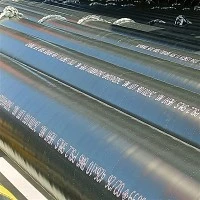
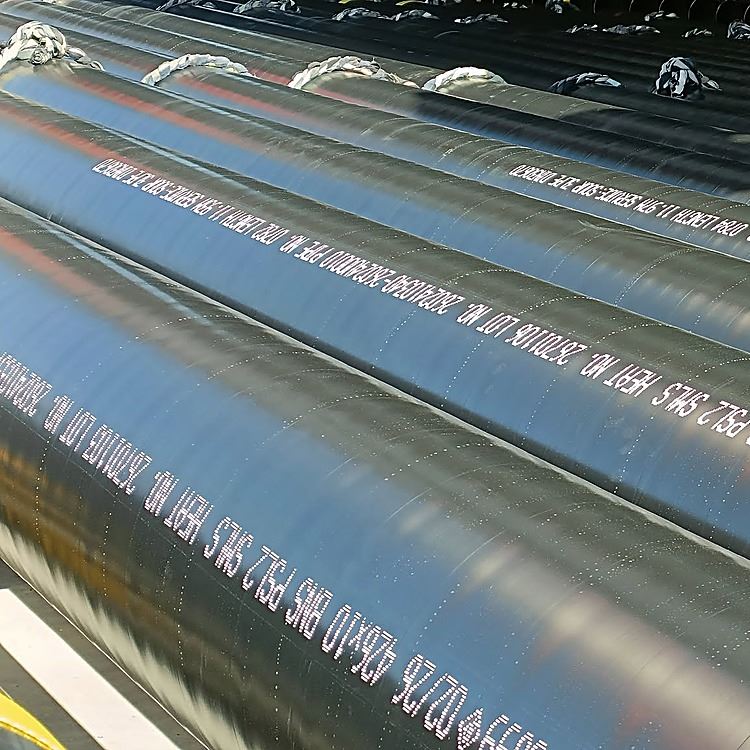

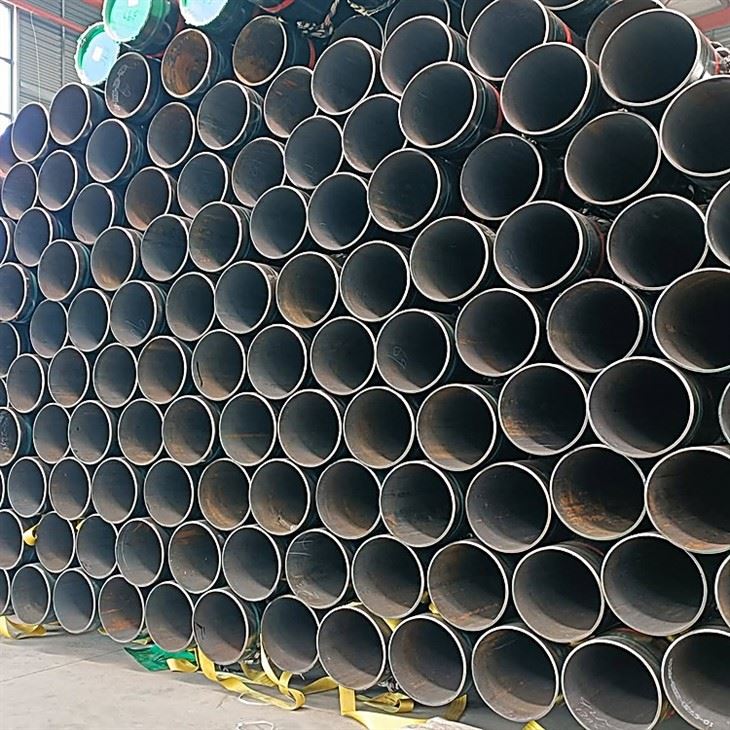
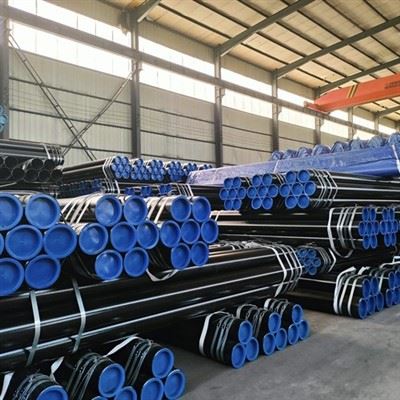
API 5L PSL2 Seamless Line Pipe With 3LPE Coating
Level: PSL2
Manufacture: Seamless (SMLS)
External: 3LPE (3-layer PE)
Coating std: DIN 30670 / ISO 21809-1
Grades: Gr B to X70
API 5L PSL2 seamless line pipe with 3LPE coating pairs a seamless API 5L / ISO 3183 PSL2 base pipe with a three-layer polyethylene (3LPE) external anti-corrosion system. The 3LPE system - fusion-bonded epoxy primer, copolymer adhesive and polyethylene topcoat - is the global default for buried and submerged oil, gas and water lines because it combines a chemically bonded primer, strong interfacial adhesion and a tough, electrically insulating outer shield. This page explains the coating itself: its layered structure, the standards that govern it (DIN 30670 and ISO 21809-1), thickness grading, performance testing, mill application, inspection and field repair, and how the system is applied to seamless pipe. It is the coating-technology page; the grade-specific line-pipe pages cover individual grades and their pressure design.
Why 3LPE on seamless PSL2 pipe: The seamless substrate carries no longitudinal seam, so the coating runs continuously around the circumference with no seam metallurgy to protect and no seam-area thickness reduction to manage - which simplifies holiday control and gives a uniform coated surface. PSL2 brings the tighter chemistry, mandatory impact testing and full-length body volumetric NDE that buried, high-consequence lines want. 3LPE then supplies the external barrier, with cathodic protection held as the backstop for any coating holiday.
Three-layer coating structure
The 3LPE system is three bonded layers applied in one operation. The primer does the corrosion work, the adhesive holds the system together, and the polyethylene topcoat takes the mechanical punishment of trenching, backfill and handling.
| Layer | Material | Typical thickness | Function |
|---|---|---|---|
| 1 - Primer | Fusion-bonded epoxy (FBE) powder | ≥150 µm (ISO 21809-1); 60–125 µm (DIN 30670) | Chemically bonds to steel; primary corrosion barrier; resists cathodic disbondment |
| 2 - Adhesive | Copolymer adhesive | 170–250 µm | Ties FBE to the polyethylene; the critical interfacial layer |
| 3 - Topcoat | High-density polyethylene (HDPE) | 1.4–3.7 mm | Mechanical protection, moisture and electrical insulation |
The total finished coating is typically about 1.8 to 4.7 mm depending on grade and duty class. The copolymer adhesive is the most common root cause of premature failure if under-applied - it is the layer a specifier should not let be squeezed to save cost.
Governing standards: DIN 30670 vs ISO 21809-1
Both standards describe the same three-layer polyethylene concept on buried or immersed pipelines; the choice is a contract decision, not a difference in coating kind. Projects state the edition and the thickness or duty class they require, and the coating house applies and tests to that document.
| Standard | Region / role | Thickness grading |
|---|---|---|
| DIN 30670 | Europe; long-established 3LPE specification | normal (n), increased (v), special (s) |
| ISO 21809-1 | International; polyolefin coatings for buried/immersed pipelines | duty classes B1 (light), B2 (moderate), B3 (heavy) |
| CSA Z245.21 | Canada | external polyethylene coating |
| NFA 49-710 | France | equivalent national specification |
| GB/T 23257 | China | buried steel pipe polyethylene coating |
| AS 1518 | Australia | external extruded polyethylene coating |
The grade-specific line-pipe pages (for example the X52N, X42 and X65 pages linked in related reading) cover individual pipe grades; this page covers the coating regardless of grade.
Thickness grading and minimum by diameter
Thickness is graded by service duty, with heavier duty giving a thicker nominal coating. Using the DIN 30670 minimum total-thickness schedule as a typical reference, the reinforced class is selected for heavier backfill, handling or design life.
| Nominal diameter | Normal (mm) | Reinforced (mm) |
|---|---|---|
| DN ≤ 100 | 1.8 | 2.5 |
| 100 < DN ≤ 250 | 2.0 | 2.7 |
| 250 < DN < 500 | 2.2 | 2.9 |
| 500 ≤ DN < 800 | 2.5 | 3.2 |
| DN ≥ 800 | 3.0 | 3.7 |
ISO 21809-1 gives equivalent duty-class minima (B1/B2/B3); confirm the exact values against the invoked edition and the project's specified duty class. Larger diameters and harsher installation exposure use the reinforced or special class.
Performance and test requirements
The coating is qualified and production is controlled against the invoked standard. The values below are typical for the regular polyethylene system and are confirmed by coupon testing, not assumed.
| Property | Typical requirement (regular class) | Test basis |
|---|---|---|
| Cathodic disbondment | ≤7 mm radius (23°C / 28 d, or 60°C / 2 d) | ISO 21809-1 / DIN 30670 |
| Peel strength | ~100 N/cm (23°C), ~20 N/cm (50°C) [S class ~150 / ~30] | ISO 21809-1 / DIN 30670 |
| Impact resistance | ≥5 J/mm (N); ≥7 J/mm (S) at 23°C; low-temp variant at −20 / −40°C | DIN 30670 Annex H |
| Elongation at break | ≥400% (23°C) | DIN 30670 Annex F |
| Specific electrical resistance | ≥108 Ω·m2 | DIN 30670 Annex J |
| Continuity (holiday) | no discharges; 25 kV test (typically 10 kV/mm of min. thickness) | DIN 30670 Annex E |
The cathodic-disbondment and peel tests are the two that reveal whether the adhesive layer is doing its job; a coating that passes only the holiday spark test but fails peel at temperature will disbond in service. State the test temperature and acceptance in the order.
Mill application process
3LPE is applied on a continuous coating line, not in the field. The sequence is what gives the three layers their bond.
Surface preparation. The pipe is abrasive-blast cleaned to Sa 2½ per ISO 8501-1 with an anchor profile of about 50–100 µm (ISO) or Rz 40–90 µm (DIN); the steel is kept at least about 3°C above the dew point before blasting.
Preheat and FBE. The pipe is heated and the fusion-bonded epoxy primer is sprayed electrostatically, where it melts and chemically bonds to the steel.
Adhesive and polyethylene. The copolymer adhesive and then the high-density polyethylene topcoat are extruded over the still-warm primer so the layers fuse.
Cooling and cutback. The coated pipe is water-quenched to set the polyethylene, then the ends are stripped to a bare cutback for field welding.
Inspection. Holiday detection, thickness measurement and visual check follow before marking and packing.
Temperature envelope and the 3LPP alternative
Standard 3LPE is rated for continuous buried service from about −40°C to roughly +80°C (some specifications cite up to +85°C). The boundary near 80°C is the important engineering point: above it the adhesive softens and disbondment accelerates, so hot crude, desert and high-temperature gas lines should specify 3LPP (three-layer polypropylene) instead - its topcoat runs to about +110°C continuous and 130–140°C peak. 3LPP changes only the outer topcoat material; the FBE primer and adhesive concept are identical.
| System | Continuous temperature | Outer layer | Primary use |
|---|---|---|---|
| 3LPE | −40 to +80°C | Polyethylene | Buried oil, gas and water lines (default) |
| 3LPP | −20 to +110°C | Polypropylene | High-temperature / hot-crude lines |
| FBE (single layer) | −40 to ~90°C | Epoxy only | Thin-film primer / internal, higher-temp niche |
Seamless substrate and seam coating
On seamless pipe the 3LPE runs without interruption around the circumference - there is no longitudinal weld seam to coat and no seam-area thickness reduction to allow for, which keeps holiday control straightforward. On welded pipe (ERW/HFW or SAW) the same system is applied over the seam, with the seam area permitted a small thickness reduction (commonly up to about 10% on SAW pipe per some specifications); the seam is still fully covered, only the minimum at the weld is slightly lower. This page addresses the seamless product; welded coated pipe is covered on the relevant welded grade pages.
Inspection, repair and cutback
Production control and field readiness are defined by the coating specification:
100% holiday detection with a high-voltage spark tester (typically 10 kV per mm of minimum thickness, capped at 25 kV) on every length.
Thickness readings at multiple positions per pipe (for example about 12 on a plain length, plus readings on any SAW seam).
System qualification coupons tested for peel strength and cathodic disbondment; impact, elongation and electrical resistance verified on the coating system.
Cutback to a bare end for the field girth weld - typically about 150 mm or less below DN 600, about 150 mm ± 20 for DN 600 and above, set by the project.
Field repair of small defects within limit - commonly a maximum repaired area of about 10 cm² per defect and no more than one such defect per metre - with the repair re-tested for continuity.
Handling, storage and packing
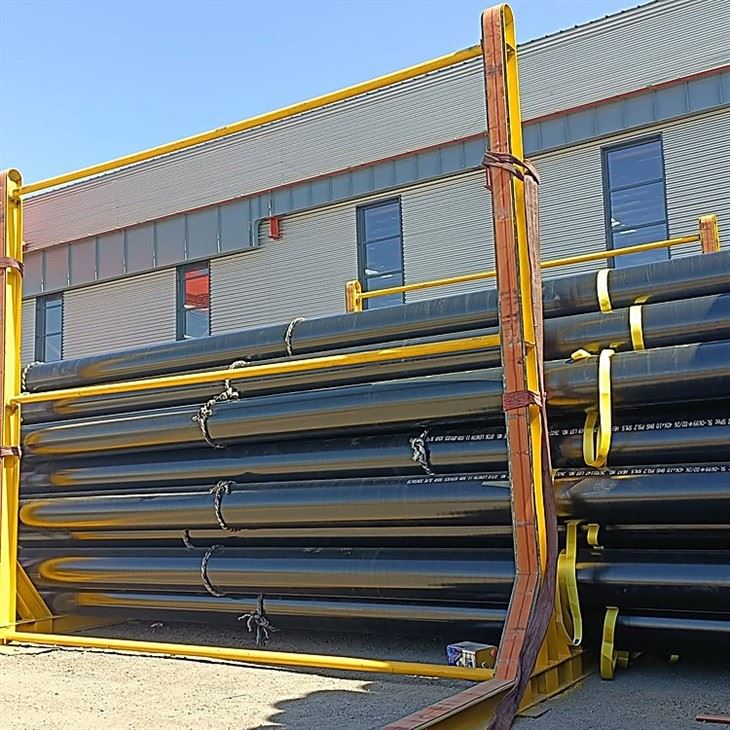
The polyethylene surface is tough but not indestructible. Use nylon slings and end protectors, avoid dragging coated pipe on the ground, and store it off the soil on padded supports away from direct, prolonged UV exposure. Export packing uses bundled, end-capped, seaworthy protection; longer or larger-diameter coated lengths may ship with added impact ropes and bevel protectors to keep the coating intact through transit.
Ordering the coating items
A coating purchase order line states the base pipe and the coating scope separately. For the base pipe: API 5L / ISO 3183, grade (Gr B through X70), PSL2, seamless (SMLS), outside diameter and wall or NPS and schedule, length basis, end condition and quantity. For the coating: standard (DIN 30670 or ISO 21809-1), thickness or duty class (normal/reinforced or B1/B2/B3), topcoat colour, cutback length, holiday-test voltage, peel and cathodic-disbondment test plan, and the inspection certificate (EN 10204 3.1; 3.2 with SGS / BV / DNV / TUV or other TPI on request). Also state whether an internal lining is required - that is a separate scope governed by its own standard (for example internal liquid epoxy per API RP 5L2 / EN 10301).
Test and inspection
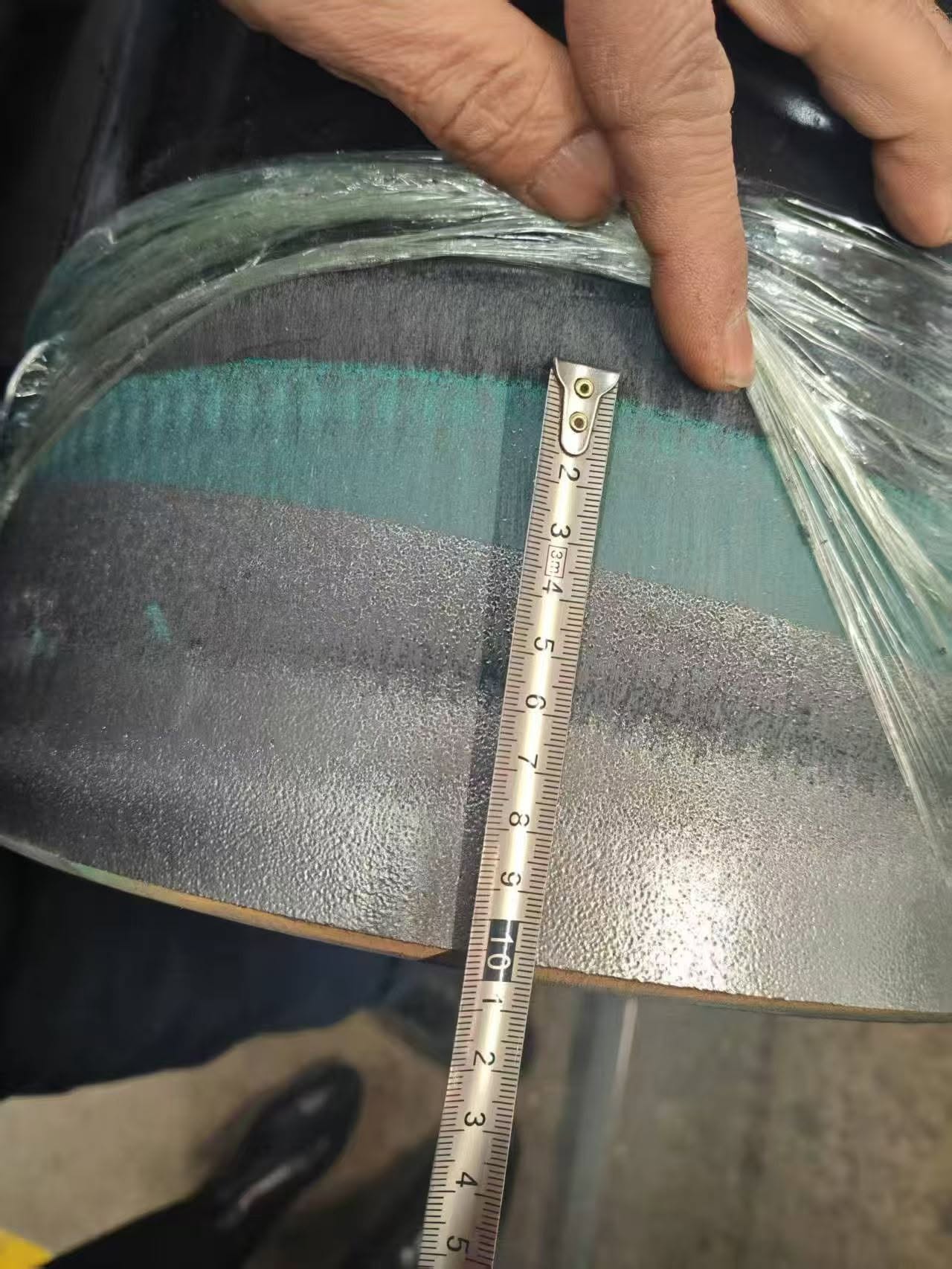
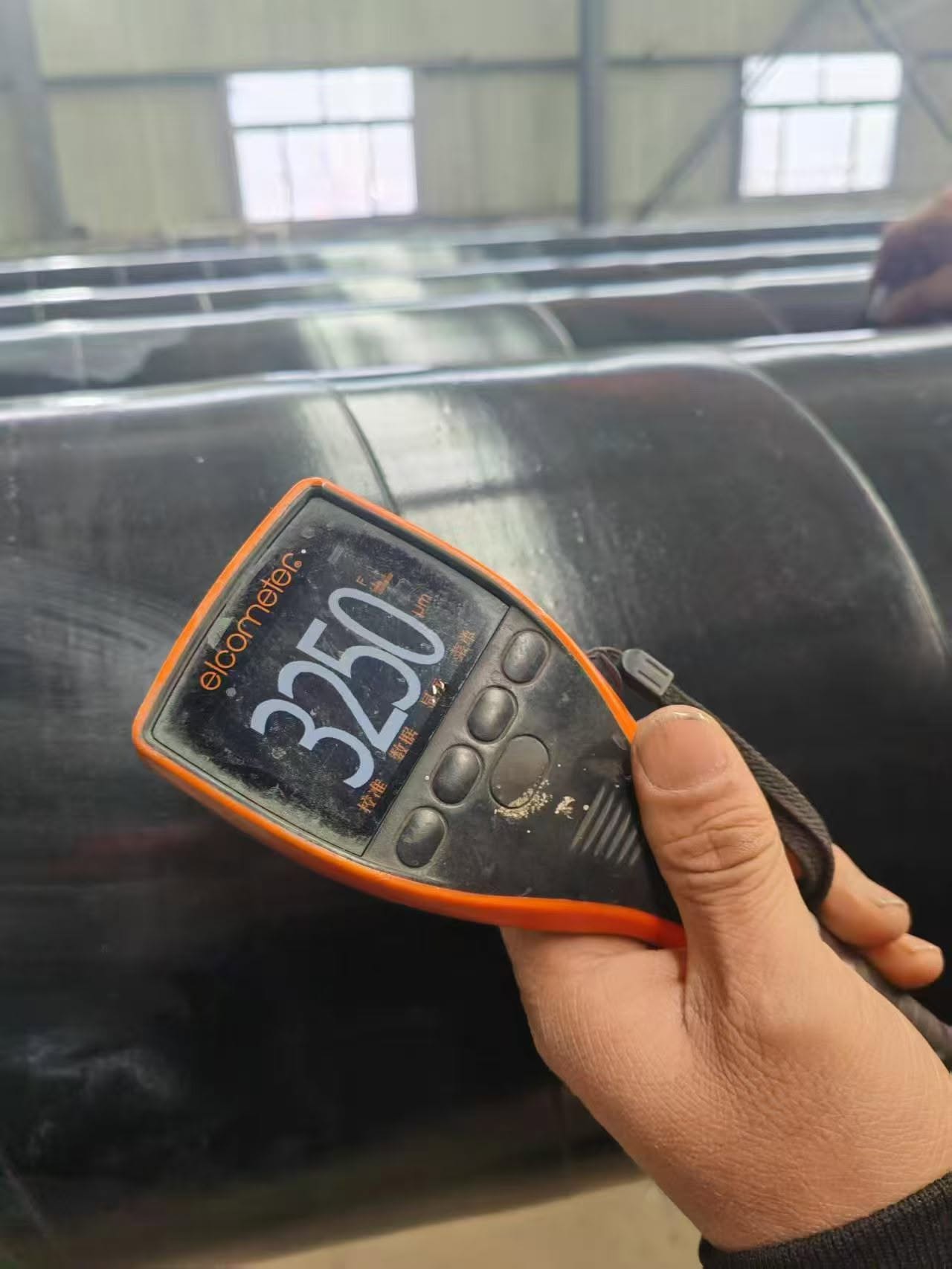
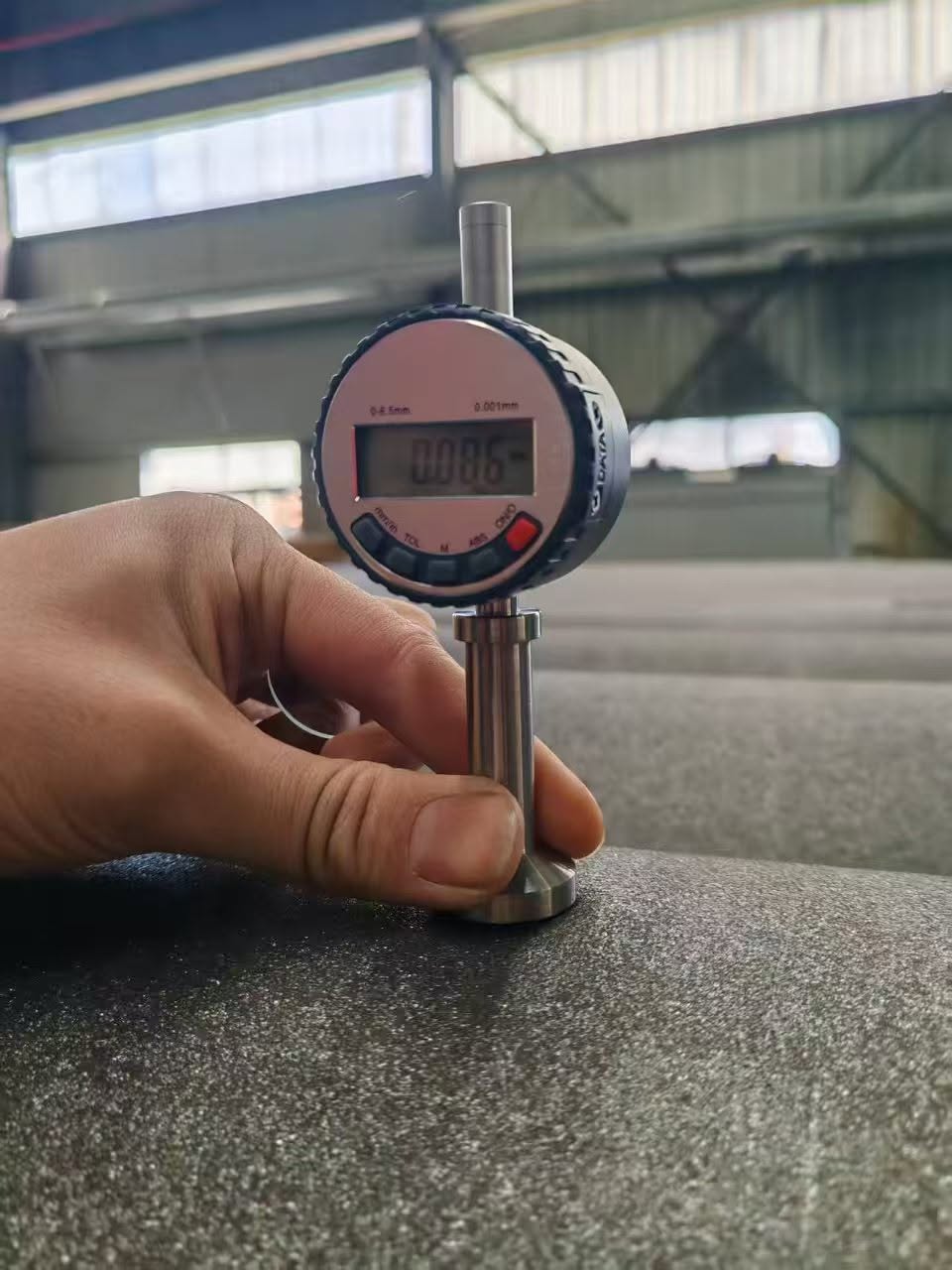
Send your requirement as two parts - the base pipe (API 5L / ISO 3183 grade, PSL2, seamless, outside diameter and wall or NPS and schedule, length basis, ends, quantity, EN 10204 3.1 / 3.2) and the coating scope (standard, thickness or duty class, colour, cutback, holiday voltage, peel and cathodic-disbondment test plan, and whether an internal lining is needed). We will return a quote covering steel, coating class and the test file, with lead time against the specific enquiry.
FAQ
What is a 3LPE coating and how is its three-layer structure built on line pipe?
3LPE means three-layer polyethylene - an external anti-corrosion system applied to the outside of line pipe. Layer 1 is a fusion-bonded epoxy (FBE) primer, typically 150 micrometres or more, that chemically bonds to the grit-blasted steel and forms the primary corrosion barrier. Layer 2 is a copolymer adhesive, about 170 to 250 micrometres, whose only job is to tie the FBE to the outer layer. Layer 3 is the high-density polyethylene topcoat, roughly 1.4 to 3.7 mm, which supplies mechanical protection, moisture resistance and electrical insulation. The three layers are applied in one continuous mill operation - FBE sprayed electrostatically onto heated pipe, then adhesive and polyethylene extruded over it, then cooled - so the system performs as a single bonded shield rather than three loose films.
What is the difference between DIN 30670 and ISO 21809-1 for 3LPE coating, and which should a project specify?
Both standards describe the same three-layer polyethylene concept on buried or immersed pipelines; the choice is a contract decision, not a performance difference in kind. DIN 30670 is the long-established European specification and grades thickness as normal (n), increased (v) and special (s). ISO 21809-1 is the international standard for polyolefin coatings and grades duty as B1 (light), B2 (moderate) and B3 (heavy). Regional equivalents include CSA Z245.21 (Canada), NFA 49-710 (France), GB/T 23257 (China) and AS 1518 (Australia). A project simply states the edition and the thickness or duty class it requires; the coating house applies and tests to that document.
How is 3LPE coating thickness graded, and what minimum thickness applies by pipe diameter?
Thickness is graded by service duty: DIN 30670 normal (n) and reinforced (or increased, v) classes, and ISO 21809-1 B1/B2/B3 duty classes, with heavier duty giving a thicker nominal coating. Using the DIN 30670 minimum total-thickness schedule as a typical reference: DN 100 and below 1.8 mm normal / 2.5 mm reinforced; DN 100 to 250 about 2.0 / 2.7 mm; DN 250 to 500 about 2.2 / 2.9 mm; DN 500 to 800 about 2.5 / 3.2 mm; DN 800 and above about 3.0 / 3.7 mm. Larger diameters and heavier backfill or handling exposure use the reinforced or special class. Confirm the exact minima against the invoked standard edition and the project's duty class.
What operating temperature can 3LPE withstand, and when should 3LPP be specified instead?
Standard 3LPE is rated for continuous buried service from about -40 degC up to roughly +80 degC (some specifications cite up to +85 degC). The boundary near 80 degC matters: above it the copolymer adhesive softens, peel strength drops and cathodic disbondment accelerates, so for hot crude, desert or high-temperature gas lines specify 3LPP (three-layer polypropylene) instead - its polypropylene topcoat runs to about +110 degC continuous and 130 to 140 degC peak. 3LPP swaps only the outer topcoat material; the FBE primer and adhesive concept are the same. Choose the system from the pipe-wall temperature, not from the fluid temperature alone.
How is 3LPE coating inspected and tested before shipment - holiday detection, peel strength and cathodic disbondment?
Every coated length receives 100 percent holiday (continuity) detection with a high-voltage spark tester - typically about 10 kV per millimetre of minimum thickness, capped at 25 kV - so no pinhole or discontinuity passes. Coating thickness is measured at multiple positions per pipe. Representative coupons are tested for peel strength (for example about 100 N/cm at 23 degC for the regular class, lower at elevated temperature) and cathodic disbondment (commonly 7 mm radius maximum at 23 degC over 28 days or 60 degC over 2 days under the ISO 21809-1 / DIN 30670 methods). Impact resistance, elongation at break and specific electrical resistance are verified on the coating system qualification. Results are recorded on the inspection certificate.
Can 3LPE coating be repaired in the field, and what are the size and frequency limits?
Yes - small coating defects found at the holiday test or during handling are field-repairable with a compatible material, but only within defined limits. A common ISO 21809-1 limit is a maximum repaired area of about 10 square centimetres per defect and no more than one such defect per metre of pipe; larger or more frequent damage is cut out or the length is re-coated at the plant. The repair must be re-tested for holiday continuity and must not reduce the surrounding coating. Field joints at girth welds are not 'repaired' but coated fresh with a compatible field-applied system to match the mill coating.
What cutback and field-joint coating are required at girth welds for 3LPE-coated line pipe?
Each length is given a bare cutback at both ends so the field welder can make the girth weld on clean steel; a typical cutback is about 150 mm or less for diameters below DN 600, and about 150 millimetres plus or minus 20 for DN 600 and above, with the exact length set by the project. After welding, the exposed bare band and the heat-affected coating edge are protected by a field-applied joint coating - liquid epoxy, shrink sleeve or a heat-applied wrap - chosen to be compatible with the mill 3LPE so the whole line stays continuous. The cutback length and the field-joint system are stated in the coating specification, not left to the welder.
Hot Tags: api 5l psl2 seamless line pipe with 3lpe coating, China api 5l psl2 seamless line pipe with 3lpe coating manufacturers, suppliers, factory
Previous
No InformationYou Might Also Like



Send Inquiry