





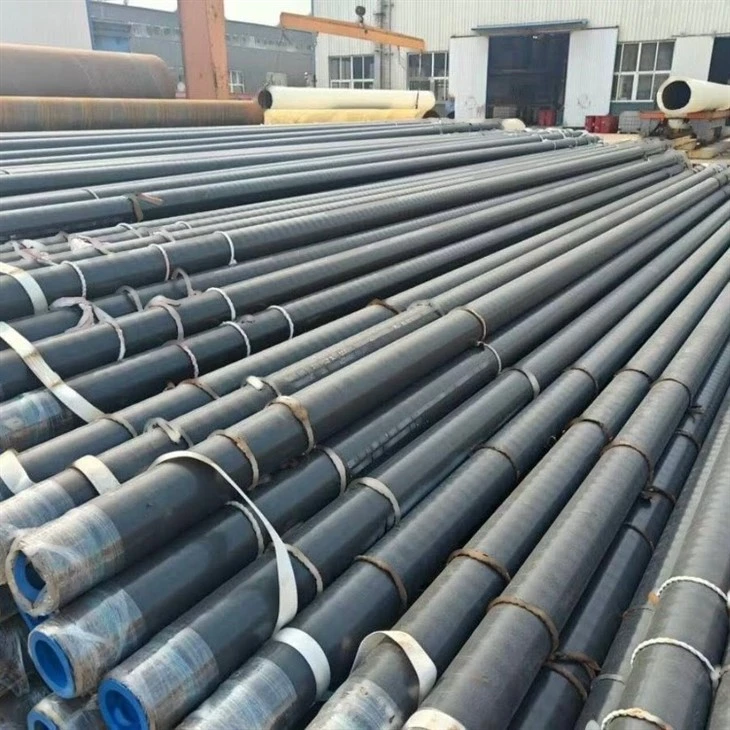
API 5L X52N PSL2 SMLS Underground Natural Gas Pipeline
Grade: X52N (L360N)
Level: PSL2
Manufacture: Seamless (SMLS)
Use: Buried natural-gas line
Document: EN 10204 3.1
API 5L X52N PSL2 seamless (SMLS) line pipe for underground natural-gas pipelines is line pipe ordered to API 5L / ISO 3183 in normalized Grade X52N (ISO 3183 name L360N, 360 MPa minimum yield) and supplied by the seamless route for buried gas transmission, gathering, city-gate and distribution mains. The seamless, normalized product is chosen where a uniform wall without a longitudinal seam and a predictable as-supplied toughness are valued, and where the line is protected underground by an external coating plus cathodic protection.
Why X52N SMLS for a buried gas main: X52N sits in the middle of the line-pipe grade ladder (360 MPa minimum yield) - above Grade B, X42 and X46, below X60 and X65 - and gives the best cost-to-strength balance for the majority of transmission and gathering lines. The normalized (N) condition gives consistent toughness, and the seamless route removes the longitudinal seam and heat-affected zone that buried, cyclically loaded pipe would otherwise carry. Underground service then adds the corrosion-protection package (coating + CP) that this page treats as a first-class design item rather than an afterthought.
Product identification and delivery condition
| Item | Specification / option |
|---|---|
| Specification | API 5L / ISO 3183 |
| Grade | X52N (ISO 3183 name L360N) - minimum yield 360 MPa (52 ksi) |
| Delivery condition | N = normalized (air-cooled from above the upper critical temperature); PSL2 applies |
| Product specification level | PSL2 (dual yield limits, controlled Y/T ratio, mandatory CVN impact, full-length body NDE, tightened chemistry) |
| Manufacture | Seamless (SMLS) by hot piercing and rolling - no longitudinal weld |
| Diameter range | Seamless typically to about NPS 24 (larger diameters use welded routes) |
| Length | Single random, double random, or fixed lengths (commonly 6 to 12 m) |
| Ends | Beveled for field girth welding (standard); plain ends where specified |
| External protection | 3LPE / FBE / 3LPP coating plus cathodic protection; field-joint coating to match |
| Certificate | EN 10204 3.1; 3.2 with SGS / BV / DNV / TUV or other TPI on request |
Grade X52N chemistry (PSL2 limits)
| Element | Grade X52N (L360N), PSL2 (seamless) |
|---|---|
| Carbon (C) | 0.24 (seamless route) |
| Manganese (Mn) | 1.40 |
| Phosphorus (P) | 0.025 |
| Sulfur (S) | 0.015 |
| Silicon (Si) | 0.45 |
| Niobium + Vanadium + Titanium (Nb+V+Ti) | 0.15 (sum) |
| Carbon equivalent | CEIIW 0.43 max (tighter limits may be agreed for sour service) |
The seamless carbon limit for X52N is 0.24; welded variants (X52M) and sour-service agreements can impose lower carbon and carbon-equivalent limits. Confirm the invoked API 5L / ISO 3183 edition and any project-specific element or CE ceiling.
Grade X52N mechanical properties (PSL2)
| Property | Requirement |
|---|---|
| Yield strength | 360 MPa (52 ksi) min, 530 MPa (76.9 ksi) max - PSL2 sets both a minimum and a maximum |
| Tensile strength | 460 MPa (66.7 ksi) min, 760 MPa (110 ksi) max |
| Yield-to-tensile ratio | 0.93 max |
| Elongation | per the API 5L elongation table (depends on wall thickness and area) |
| Charpy V-notch impact | mandatory under PSL2; test temperature and absorbed-energy acceptance agreed in the order |
| Hardness | controlled where sour-service qualification is specified |
The dual yield limits (360 to 530 MPa) and mandatory impact testing are the main reasons gas-transmission projects specify PSL2: they give a predictable, tough product for buried, high-consequence mains, while the 360 MPa minimum yield supports the wall calculation under ASME B31.8.
Why seamless (SMLS) for a buried gas main
For an underground natural-gas line the pipe spends its life under soil weight, traffic and third-party-damage loads as well as internal pressure. A seamless pipe carries no longitudinal weld seam and no heat-affected zone, so its wall is metallurgically uniform around the circumference; there is no seam metallurgy to manage and no seam NDE program to administer on the body. The comparison below frames the seamless choice against the welded routes for buried gas service.
| Aspect | Seamless (SMLS) | ERW / HFW | LSAW |
|---|---|---|---|
| Seam | none - uniform wall | one straight electric-resistance / HF seam (HAZ) | one or two straight SAW seams (HAZ) |
| Diameter fit | small to medium (to about NPS 24) | small to medium (to about NPS 24) | large transmission mains |
| Buried-gas relevance | preferred where no seam and uniform wall are valued; city-gate, gathering, distribution laterals | economical small/medium diameters; seam NDE per spec | large-diameter trunk lines where seamless is not available |
| Body inspection | full-length volumetric UT of the (seamless) body per spec | 100% seam UT + surface examination; body UT as specified | 100% seam UT + surface examination; body UT as specified |
The route is selected by the design diameter, wall, project specification and the required NDE coverage. This page addresses the seamless X52N product; the welded thermomechanically rolled variant is covered on the X52M page and the general X52 PSL2 product on its own page.
Underground service and corrosion protection
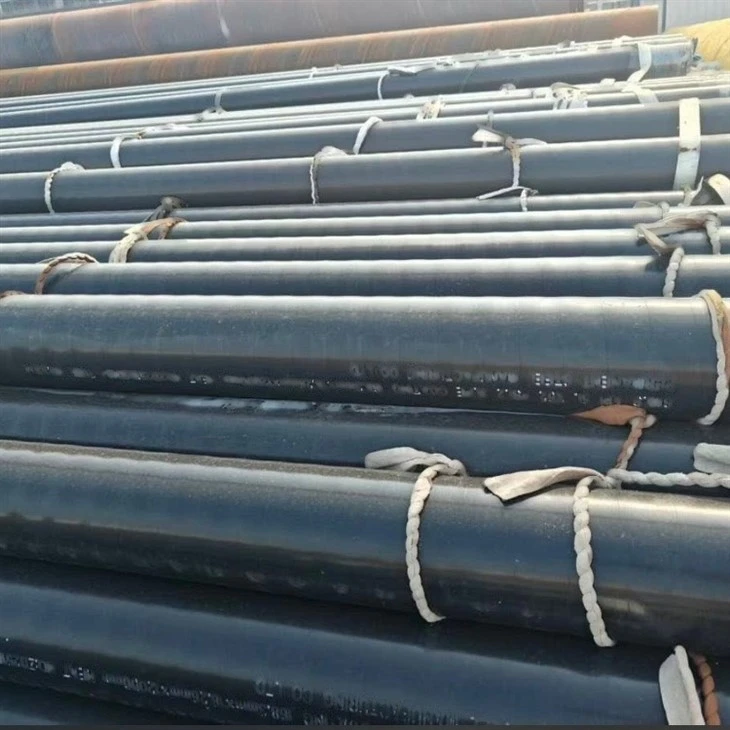
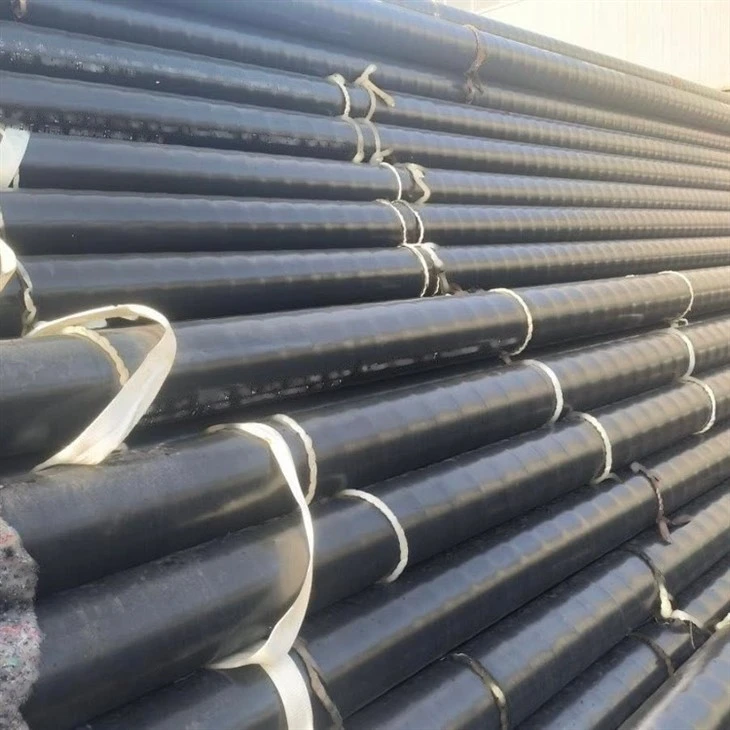
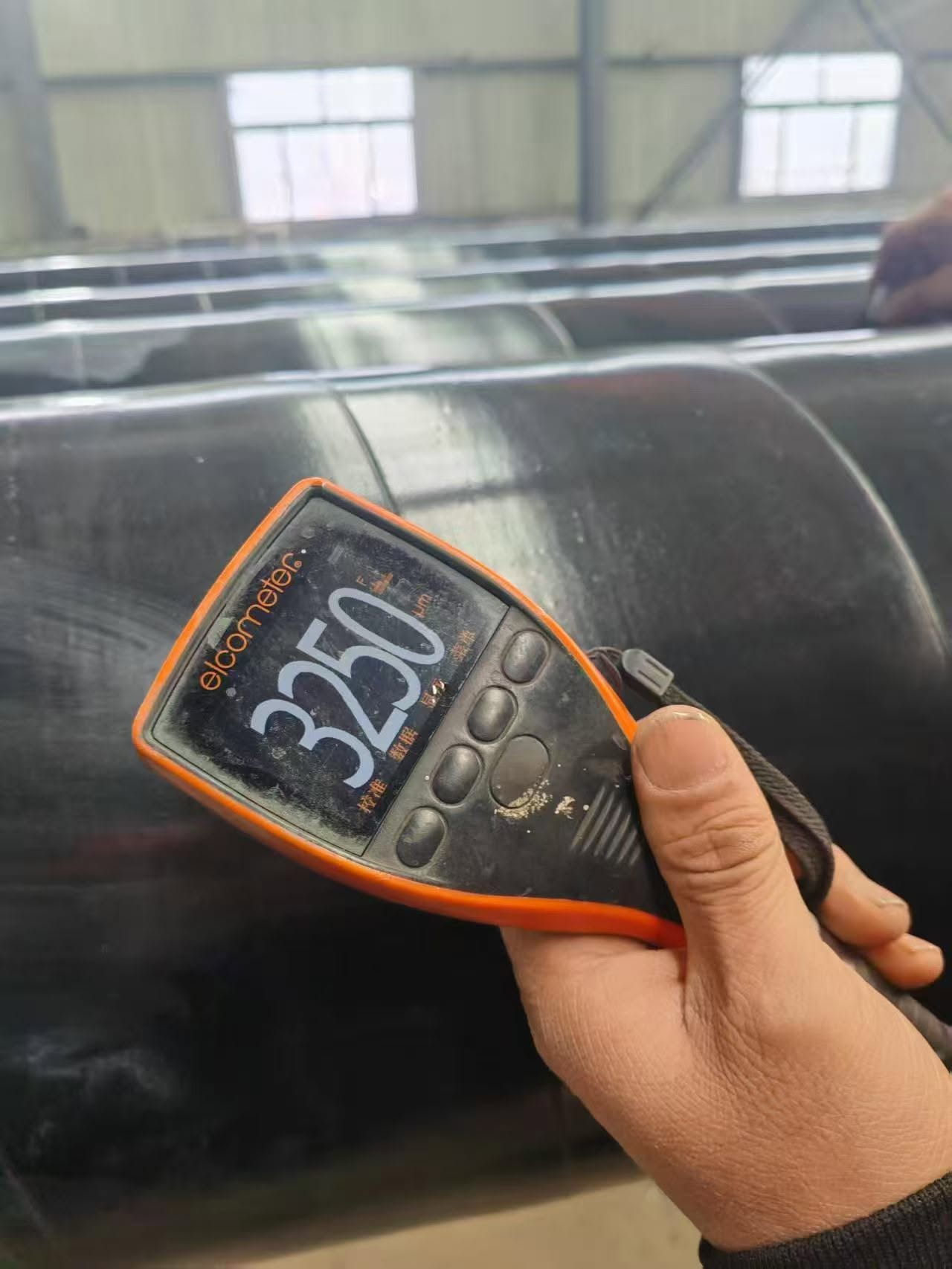
Buried X52N gas pipe is protected by a dual barrier designed together under the project's corrosion-control specification. The primary barrier is an external coating applied at the mill and made continuous at field joints; the secondary barrier is cathodic protection (CP) that intercepts any coating holiday. Neither barrier alone is relied on - the coating carries most of the protection and CP is the backstop.
| Coating | Typical build-up | Service temperature | Use note |
|---|---|---|---|
| FBE (fusion-bonded epoxy) | single or dual-layer powder epoxy | up to about 110°C | strong adhesion, thin film; common primer/anchor layer |
| 3LPE (3-layer polyethylene) | FBE primer + adhesive + PE topcoat | about -40 to 85°C | most common system for buried gas mains |
| 3LPP (3-layer polypropylene) | FBE primer + adhesive + PP topcoat | up to about 140°C | higher-temperature or elevated-service lines |
| Coal-tar / bitumen | legacy hot-applied system | limited | declining; only where specified for existing-spec tie-ins |
| Cathodic protection | impressed-current or galvanic-anode CP | ambient burial | backstop for coating holidays; designed with the coating |
The internal surface of a dry-gas line is normally left bare or given a temporary mill varnish; an internal lining is added only where gas quality (e.g. wet, corrosive or metering-sensitive gas) requires it. Field-joint coating must match the mill system, and the coating and CP design - including test-holiday levels and CP current - are set by the corrosion-design document, not by the pipe grade.
Dimensions and weight (selected SCH 40 sizes)
| NPS | OD (mm) | Wall (mm) | Mass (kg/m) |
|---|---|---|---|
| NPS 2 | 60.3 | 3.91 | 5.44 |
| NPS 3 | 88.9 | 5.49 | 11.29 |
| NPS 4 | 114.3 | 6.02 | 16.08 |
| NPS 6 | 168.3 | 7.11 | 28.26 |
| NPS 8 | 219.1 | 8.18 | 42.55 |
| NPS 10 | 273.1 | 9.27 | 60.31 |
| NPS 12 | 323.9 | 10.31 | 79.73 |
| NPS 16 | 406.4 | 12.70 | 123.31 |
| NPS 20 | 508.0 | 14.27 | 173.75 |
| NPS 24 | 609.6 | 17.48 | 255.25 |
Theoretical mass uses W = 0.0246615 x (OD - t) x t kg/m and is for the steel only; the external coating adds a small, system-dependent mass. Other diameters and walls, and NPS/schedule equivalents, are available; state the required outside diameter and wall or the NPS and schedule on the order.
Wall design under ASME B31.8
A buried natural-gas line is designed under ASME B31.8. The nominal wall is set by the hoop-stress (Barlow-type) formula, with the allowable stress equal to the specified minimum yield times the location-class design factor, the longitudinal-joint factor and the temperature-derating factor. Because the pipe is seamless, the longitudinal-joint factor is 1.0.
| NPS | OD (mm) | Design P (MPa) | t = P·D / (2·F·E·T·S) (mm) |
|---|---|---|---|
| NPS 8 | 219.1 | 7.0 | 2.96 |
| NPS 12 | 323.9 | 7.0 | 4.37 |
| NPS 16 | 406.4 | 7.0 | 5.49 |
| NPS 20 | 508.0 | 7.0 | 6.86 |
The pressure-only minimum is a starting point: the ordered wall also carries allowance for external soil and traffic loads, handling, third-party damage and corrosion, so the selected schedule is usually thicker than the calculated minimum. The design factor depends on the ASME B31.8 location class (0.72 for Class 1 down to 0.40 for Class 4), and the actual wall is fixed by the pipeline design, not by this illustration.
Testing and acceptance (PSL2 seamless)
| Item | Requirement |
|---|---|
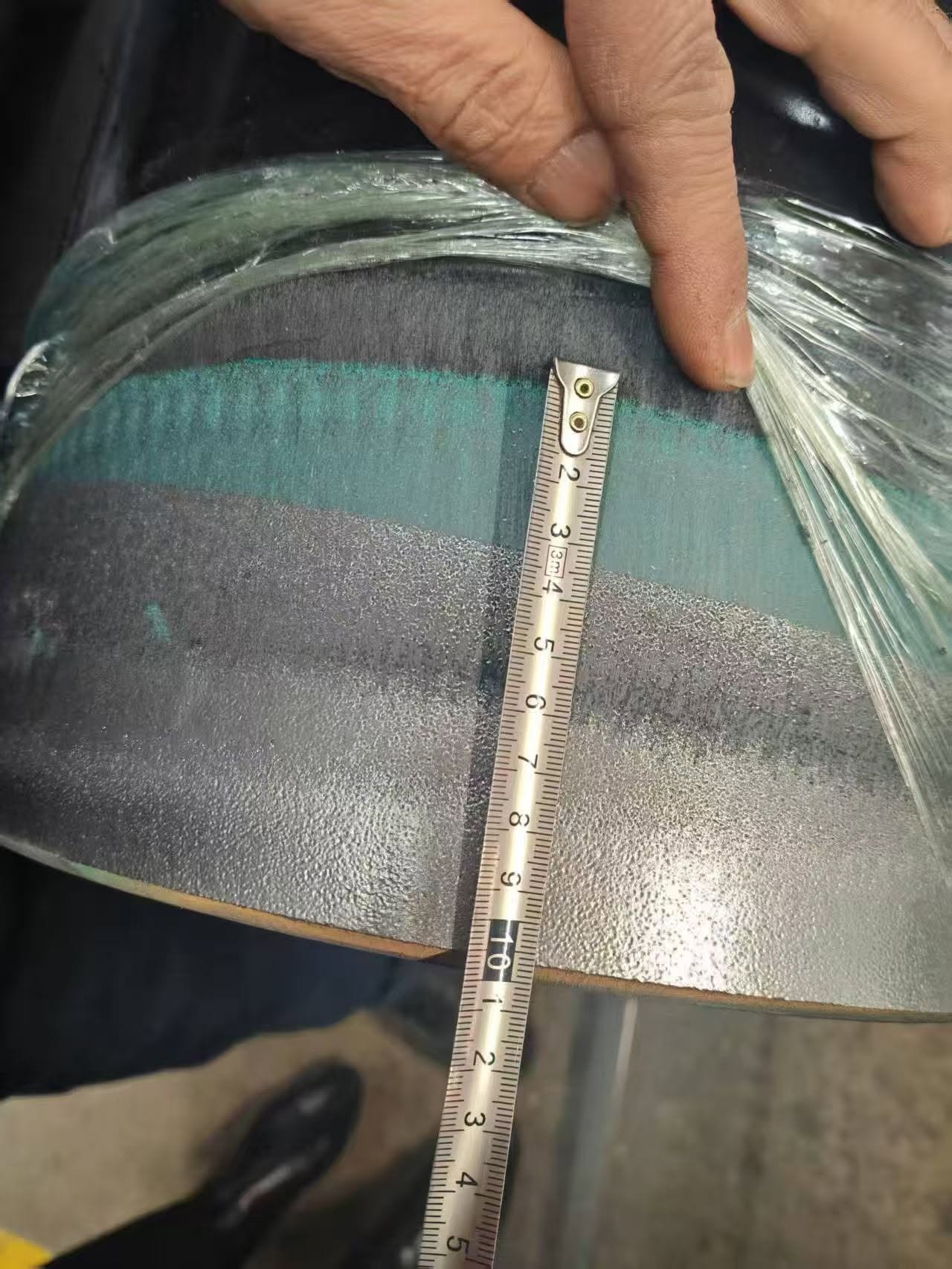
| Wall thickness tolerance | -12.5% (nominal); minimum wall not below 87.5% of nominal (per API 5L) |
| Outside diameter and length | per API 5L for the seamless route |
| Hydrostatic test | each pipe, per the PSL2 hydrostatic requirement (test stress per the order) |
| Body NDE | seamless: full-length volumetric UT of the pipe body per the specification (no seam to inspect) |
| Body tests | Tensile, flattening / bend; CVN impact mandatory under PSL2 |
| Large-diameter tests | DWTT often specified for PSL2 large-diameter lines |
| Mill certificate | EN 10204 3.1; 3.2 with SGS / BV / DNV / TUV or other TPI on request |
| Marking | Manufacturer, specification, grade, size, wall, heat number and test method, per API 5L |
Sour service and temperature limits
X52N PSL2 in the as-supplied condition is not automatically qualified for sour (H2S) service. When the conveyed gas contains hydrogen sulfide, the order must invoke the sour-service requirements - hardness control and HIC/SSC testing per NACE MR0175 / ISO 15156 (API 5L Annex B) - and the steel and welding procedure must meet them; state this explicitly or the supply is not sour-qualified. For cold-climate buried lines, specify the design metal temperature and the PSL2 Charpy impact acceptance (test temperature and absorbed energy) so the pipe is qualified for the climate; the normalized condition supports a predictable toughness level. Neither sour nor low-temperature service is implied by X52N alone.
Typical applications
Buried natural-gas transmission mains. Medium-pressure trunk lines carrying sales gas from gate stations to cities and industrial parks.
Gathering and field lines. Collecting produced or associated gas from well sites to processing before it enters the transmission system.
City-gate and distribution laterals. Smaller-diameter seamless mains and laterals where a uniform, seam-free wall is valued underground.
Compressor-station piping and tie-ins. Station pipework and tie-in spools where seamless fittings and predictable toughness matter.
Crossings and directional drills. Bored or thrust-bored crossings where external coating integrity and third-party-damage resistance are critical.
Ordering, marking and packing
A complete order line reads: API 5L / ISO 3183, Grade X52N (L360N), PSL2, seamless (SMLS), outside diameter and wall (or NPS and schedule), length basis, end condition (beveled for field girth welding), quantity, and EN 10204 3.1 (3.2 or third-party inspection on request). Also state the design code (ASME B31.8 for gas), the design pressure and temperature, the location class and design factor, the impact-test temperature, the external coating and cathodic-protection system (3LPE/FBE/3LPP and CP type), any sour-service (H2S) requirements with HIC/SSC testing per NACE MR0175 / ISO 15156, and the NDE requirements, so the pipe and documents match the buried-gas scope.
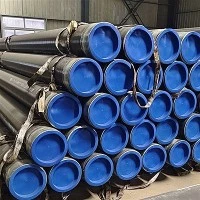
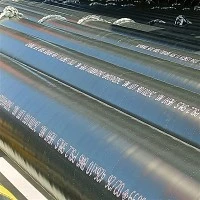
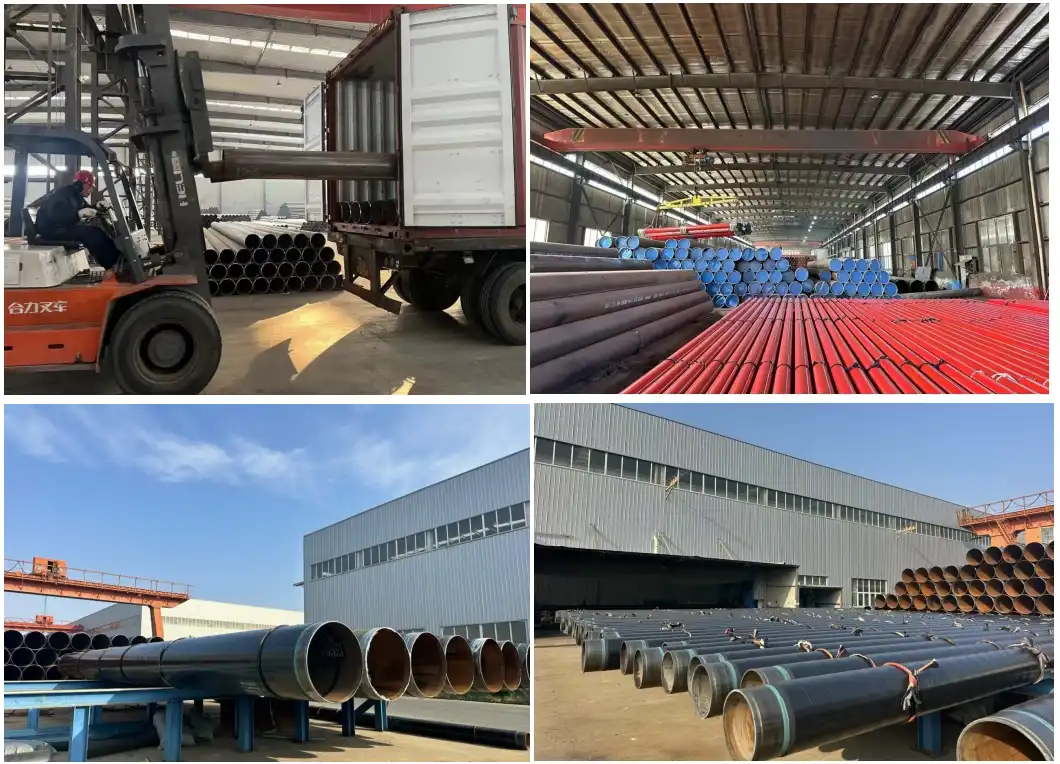
Pipe is marked continuously with the manufacturer's mark, specification, grade, size, wall, heat number and the method of test, following API 5L. Export packing uses bundled, end-capped and seaworthy protection; coated pipe is handled and stored to protect the coating.
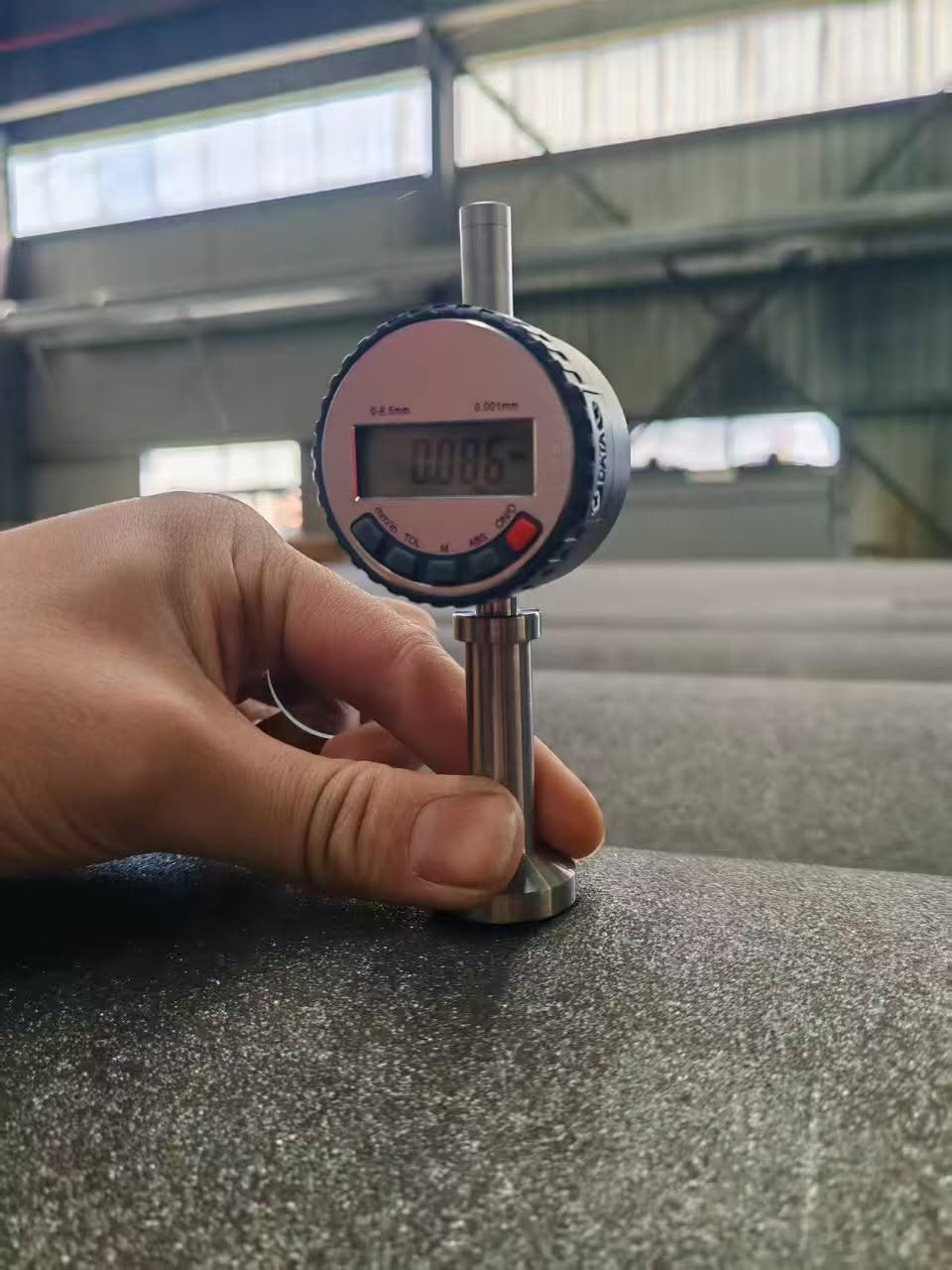
test and inspection
packaging and shipping
Send your bill of quantities - specification (API 5L / ISO 3183), Grade X52N (L360N), PSL2, seamless (SMLS), outside diameter and wall or NPS and schedule, length basis, end condition, quantity and required certificate - and we will return a quote with the test, coating and cathodic-protection plan and lead time. Tell us the design code (ASME B31.8 for gas), the design pressure and temperature, the location class and design factor, the impact-test temperature, the external coating and CP system, any sour-service requirements and the hydrostatic-test basis so the supply matches the buried-gas scope.
FAQ
What does the 'N' delivery condition mean in API 5L X52N, and how is X52N different from X52M or as-rolled X52?
X52N is Grade X52 (ISO 3183 name L360, 360 MPa minimum yield) supplied in the normalized (N) delivery condition. The 'N' means the pipe is normalized - heated above the upper critical temperature and cooled in air - which refines the grain structure and gives a consistent as-supplied toughness, in contrast to the as-rolled condition used for base X52 and the thermomechanically rolled (M) condition used for X52M. For line pipe the delivery condition is stated because it changes the carbon and carbon-equivalent limits and the as-supplied toughness level, and PSL2 applies in every case. This page deals with the normalized seamless product; the welded thermomechanically rolled variant is covered on the X52M page.
Why specify seamless (SMLS) X52N rather than welded pipe for a buried natural-gas main?
Seamless (SMLS) X52N has no longitudinal weld seam and no heat-affected zone, so the wall is metallurgically uniform around the circumference - an advantage for buried mains that see soil loading, fluctuating internal pressure, third-party-damage risk and cyclic service where a seam is a potential initiation point. Seamless also removes seam-weld variables and is the natural route for the smaller and medium diameters typical of city-gate, gathering and distribution laterals. Welded routes (ERW/HFW and LSAW) remain valid for larger diameters and are addressed on the X52M and general X52 pages; the choice is made by diameter, wall, project specification and the required inspection coverage.
What external corrosion-protection system is applied to an underground X52N gas pipeline?
A buried X52N gas line is protected by a dual barrier. The primary barrier is an external coating - most commonly 3-layer polyethylene (3LPE) or fusion-bonded epoxy (FBE), with 3-layer polypropylene (3LPP) for higher operating temperatures - applied at the mill and repaired at field joints so the whole pipe is covered. The secondary barrier is cathodic protection (impressed-current or galvanic-anode CP) that picks up any coating holiday. Coating and CP are designed together under the pipeline corrosion-control specification; the internal surface is typically left bare or given mill varnish for dry gas, with an internal lining only where the gas quality requires it. The exact coating system and CP details are set by the project's corrosion-design document.
How is the required wall thickness for a buried X52N natural-gas line calculated under ASME B31.8?
The nominal wall for a buried X52N gas line is set by the hoop-stress formula in ASME B31.8: t = P x D / (2 x F x E x T x S), where P is the design pressure, D the outside diameter, F the location-class design factor (0.72 for Location Class 1, lower for higher classes), E the longitudinal-joint factor (1.0 for seamless), T the temperature-derating factor (1.0 up to 250 degF / 121 degC) and S the specified minimum yield (360 MPa for X52N). Example: at 7.0 MPa design pressure, NPS 12 (323.9 mm OD), F = 0.72, E = 1.0, T = 1.0, t = 7.0 x 323.9 / (2 x 0.72 x 1.0 x 1.0 x 360) = about 4.4 mm minimum. The selected wall also adds allowance for external loads, handling, third-party damage and corrosion, so the ordered wall is usually thicker than the pressure-only minimum. This is an illustration; the actual wall is fixed by the pipeline design.
What PSL2 quality and inspection requirements apply to seamless X52N pipe for gas transmission?
Seamless X52N for gas transmission is supplied and accepted to API 5L / ISO 3183 PSL2: each pipe receives a hydrostatic test; the pipe body receives full-length volumetric nondestructive examination (UT) per the specification because there is no seam to inspect; the mandatory PSL2 Charpy V-notch impact test is performed at the order-specified temperature; tensile and flattening or bend tests confirm properties; and large-diameter lines often add drop-weight tear testing (DWTT). A mill test certificate to EN 10204 3.1 (3.2 with third-party inspection on request) reports heat analysis, tensile, impact and dimensional results, and each pipe is marked with the manufacturer, specification, grade, size, wall, heat number and test method.
Can X52N PSL2 be used in cold-climate or sour (H2S) gas service, and what extra qualification is needed?
X52N PSL2 in the as-supplied condition is not automatically qualified for sour (H2S) service; if the gas contains hydrogen sulfide the order must invoke the sour-service requirements - hardness control and HIC/SSC testing per NACE MR0175 / ISO 15156 (API 5L Annex B) - and the steel and the welding procedure must meet them. For cold-climate buried lines, specify the design metal temperature and the PSL2 Charpy impact acceptance (test temperature and energy) so the pipe is qualified for the climate; the normalized condition supports a predictable toughness level. Neither sour nor low-temperature service is implied by X52N alone - both are project-specific qualifications stated in the order.
What should a purchase order include for seamless X52N PSL2 buried natural-gas pipeline pipe?
A complete order line reads: API 5L / ISO 3183, Grade X52N (L360N), PSL2, seamless (SMLS), outside diameter and wall (or NPS and schedule), length basis, end condition (beveled for field girth welding), quantity, and EN 10204 3.1 (3.2 or third-party inspection on request). Also state the design code (ASME B31.8 for gas), the design pressure and temperature, the location class and design factor, the impact-test temperature, the external coating and cathodic-protection system (3LPE/FBE/3LPP and CP type), any sour-service (H2S) requirements with HIC/SSC testing per NACE MR0175 / ISO 15156, and the NDE requirements, so the pipe and documents match the buried-gas scope.
Hot Tags: api 5l x52n psl2 smls underground natural gas pipeline, China api 5l x52n psl2 smls underground natural gas pipeline manufacturers, suppliers, factory
You Might Also Like


Send Inquiry