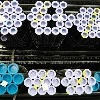
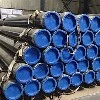
Engineering Excellence with API 5L X42 PSL2 Seamless Pipes
API 5L Grade X42, designated as L290 under ISO 3183, is a high-test line pipe grade designed for the transportation of petroleum and natural gas. When specified as PSL2 (Product Specification Level 2), the pipe meets much stricter technical delivery conditions than standard PSL1. Seamless X42 PSL2 pipes provide the ultimate security for high-pressure transmission lines, offering uniform structural integrity and predictable mechanical behavior in demanding environments.
Mechanical Properties and PSL2 Thresholds
The defining characteristic of X42 PSL2 is its strict adherence to mechanical thresholds. PSL2 mandates specific limits on the yield-to-tensile ratio and requires mandatory fracture toughness testing to prevent catastrophic failure.
| Metric | API 5L X42 PSL2 Requirement |
|---|---|
| Yield strength | 290–495 MPa (42,100–71,800 psi) |
| Tensile strength | 415–655 MPa (60,200–95,000 psi) |
| Yield-to-tensile ratio | 0.93 max |
| Impact energy (CVN) | Mandatory at 0°C or -20°C |
Chemical Composition and Weldability
X42 PSL2 seamless pipes are manufactured with a balanced carbon equivalent (CEV). The chemistry is optimized to provide excellent field weldability while maintaining the strength required for high-pressure service. This balance is critical for preventing cold cracking in the heat-affected zone (HAZ) during automated pipeline construction.
Quality Assurance and NDT Requirements
Unlike PSL1, every length of API 5L X42 PSL2 seamless pipe must undergo comprehensive non-destructive examination, typically 100% automated ultrasonic (UT) or radiographic (RT) testing to ensure zero internal or surface defects. Full mandatory traceability from the steel melt to the finished pipe is a hallmark of PSL2, giving engineers confidence in the material's origin and performance.
Hydrostatic Testing
Every pipe must be hydrostatically tested at the mill to a pressure that creates a fiber stress of at least 90% of the minimum yield strength, verifying leak-tightness before shipment.
Frequently Asked Questions
Is X42 PSL2 stronger than X42 PSL1?
The minimum yield strength is the same at 290 MPa, but PSL2 has a strictly defined upper limit for yield and tensile strength to ensure predictable ductility.
Can X42 PSL2 be used for sour service?
Only if ordered as X42QS or X42MS, which includes additional HIC and SSC testing according to NACE MR0175/ISO 15156.
What is the maximum service temperature for X42 pipe?
It is generally rated for service up to 200°C (392°F); higher temperatures require specialized high-heat alloy grades.
Why is seamless preferred for PSL2 gathering lines?
Seamless manufacturing eliminates the longitudinal weld seam, a potential focal point for stress corrosion and fatigue cracks in high-pressure gathering systems.
Does PSL2 require hydrostatic testing?
Yes. Every pipe is hydrostatically tested at the mill to a fiber stress of at least 90% of the minimum yield strength.
Why is the yield-to-tensile ratio capped at 0.93?
It guarantees ductile deformation before rupture, providing warning before catastrophic failure in pressurized service.