


According to API 5CT Standard, API 5CT K55 and API 5CT N80 casing perform the same fundamental role in maintaining well integrity, supporting the wellbore, and isolating formations.
The primary difference is strength. K55 is a medium-strength, cost-effective grade commonly used in shallow to medium-depth wells, water injection projects, and conventional oil and gas developments. N80 is a higher-strength grade designed for deeper wells, higher pressures, and more demanding operating conditions.
Buyers often compare these two grades because K55 offers lower cost, while N80 provides greater load-bearing capacity and safety margins. The final selection depends on well depth, pressure conditions, design loads, and project economics.
API 5CT K55 and API 5CT N80 casing Grade Comparison
| Item | API 5CT K55 | API 5CT N80 Type 1 | API 5CT N80Q |
|---|---|---|---|
| API Standard | API 5CT | API 5CT | API 5CT |
| Grade Group | Group 1 | Group 2 | Group 2 |
| Typical Application | Shallow–Medium Wells | Medium–Deep Wells | Deep Wells |
| Strength Level | Medium | High | High |
| Heat Treatment | Optional | Mandatory | |
| Manufacturing Cost | Lower | Higher | Highest |
| Well Depth Suitability | ≤ 3,500 m | 3,000–5,000 m | 4,000 m+ |
API 5CT K55 Casing VS API 5CT N80 casing Mechanical Properties
The largest difference between K55 and N80 is their yield strength.
| Property | K55 | N80 Type 1 | N80Q |
|---|---|---|---|
| Minimum Yield Strength | 379 MPa (55 ksi) | 552 MPa (80 ksi) | 552 MPa (80 ksi) |
| Maximum Yield Strength | 552 MPa (80 ksi) | 758 MPa (110 ksi) | 758 MPa (110 ksi) |
| Minimum Tensile Strength | 655 MPa (95 ksi) | 689 MPa (100 ksi) | 689 MPa (100 ksi) |
| Yield Strength Increase vs K55 | - | +46% | +46% |
| Tensile Strength Increase vs K55 | - | +5% | +5% |
Although N80's tensile strength is only slightly higher than K55, its yield strength is significantly higher. This allows N80 casing to withstand much higher axial loads, internal pressures, and collapse forces.
API 5CT K55 and API 5CT N80 casing API Color Code
| Grade | Pipe Body Marking |
|---|---|
| K55 | Two Bright Green Bands |
| N80 Type 1 | One Red Band |
| N80Q | One Red Band + One Green Band |
These markings allow rapid identification in the field.
API 5CT K55 and API 5CT N80 casing Heat Treatment Comparison
K55 Heat Treatment
| Item | K55 |
|---|---|
| Hot-Rolled | Allowed |
| Normalized | Allowed |
| Normalized & Tempered | Allowed |
| Quenched & Tempered | Not Required |
| ERW Weld Seam Heat Treatment | Required |
N80 Type 1 Heat Treatment
| Item | N80 Type 1 |
|---|---|
| Normalized | Required |
| Normalized & Tempered | Permitted |
| Hot-Rolled | Not Permitted |
| Quenched & Tempered | Not Required |
N80Q Heat Treatment
| Item | N80Q |
|---|---|
| Quenched & Tempered | Mandatory |
| Normalized | Not Sufficient |
| Mechanical Property Control | Strict |
| Toughness Control | Enhanced |
Key Difference
K55 can be supplied in a relatively simple hot-rolled condition.
N80 requires controlled heat treatment.
N80Q specifically requires quenching and tempering (Q&T), which produces a more uniform microstructure and significantly improves strength and toughness.
API 5CT K55 and API 5CT N80 casing Collapse Resistance Comparison
Collapse resistance becomes increasingly important as well depth increases.
| Performance | K55 | N80 Type 1 | N80Q |
|---|---|---|---|
| Collapse Resistance | Moderate | High | Very High |
| Deep Well Suitability | Fair | Good | Excellent |
| Heavy Casing String Capability | Moderate | High | Very High |
For the same casing size and wall thickness:
N80 withstands substantially higher external pressure.
N80 is preferred for deeper formations and depleted reservoirs.
K55 is generally adequate for shallow conventional wells.
API 5CT K55 and API 5CT N80 casing Burst Resistance Comparison
| Property | K55 | N80 |
|---|---|---|
| Internal Pressure Capacity | Moderate | Higher |
| Fracturing Operations | Limited | Better |
| Injection Wells | Acceptable | Preferred |
| High-Pressure Gas Wells | Generally Not Recommended | Commonly Used |
N80 is more suitable for wells with high production pressures or water injection operations.
API 5CT K55 and API 5CT N80 casing Impact Toughness Comparison
| Property | K55 | N80 Type 1 | N80Q |
|---|---|---|---|
| Charpy Impact Testing | Usually Optional | More Common | Frequently Specified |
| Toughness Level | Moderate | Good | Excellent |
| Low Temperature Performance | Limited | Better | Best |
| Thermal Fatigue Resistance | Moderate | Good | Excellent |
N80Q exhibits the best toughness among these three grades due to its mandatory quench-and-temper process.
API 5CT K55 and API 5CT N80 casing Sour Service Capability
| Environment | K55 | N80 |
|---|---|---|
| Sweet Service Wells | Suitable | Suitable |
| Mild H₂S Service | Limited | Limited |
| Severe Sour Service | Not Recommended | Not Recommended |
| NACE MR0175 Compliance | Not Standard | Not Standard |
For sour service applications, GNEE recommends choosing L80, C90, or T95 instead of K55 or N80.
API 5CT K55 Casing and N80 Casing Cost Comparison
| Factor | K55 | N80 Type 1 | N80Q |
|---|---|---|---|
| Material Cost | Lowest | 10–20% Higher | 20–35% Higher |
| Heat Treatment Cost | Low | Medium | High |
| Inspection Requirements | Standard | More Stringent | Most Stringent |
| Manufacturing Complexity | Low | Medium | High |
The higher cost of N80 is mainly driven by additional heat treatment, quality control, and mechanical property requirements.
API 5CT K55 Casing Applications
Commonly used for:
- Surface casing
- Conductor casing
- Water wells
- Shallow oil wells
- Low-pressure gas wells
- Geothermal wells
Typical depth:
500–3,500 m
API 5CT N80 Casing applications
Commonly used for:
- Intermediate casing
- Production casing
- Deep oil wells
- High-pressure gas wells
- Water injection wells
- Horizontal wells
Typical depth:
3,000–5,000+ m
If you are:
- Water well drilling contractors
- Small independent oil producers
- Operators developing shallow to medium-depth oil and gas wells
- Geothermal well contractors operating under moderate temperature and non-corrosive conditions
- Cost-driven projects in Africa, Southeast Asia, or the Middle East
API 5CT K55 Casing can meet your needs by:
Achieving the lowest possible casing cost while maintaining API compliance
Providing sufficient strength for conventional well conditions
Reducing drilling and completion costs
Delivering reliable performance in shallow and medium-depth wells
Offering broad market availability and shorter lead times
Typical Applications:
Surface casing
Intermediate casing
Production casing in conventional wells
Water wells
Moderate-depth geothermal wells
If you are:
- National Oil Companies (NOCs)
- International Oil Companies (IOCs)
- EPC contractors
- Contractors operating deep, high-pressure, or mechanically demanding wells
- Water injection project operators
- High-pressure gas field developers
- Horizontal and directional well operators
API 5CT N80 Casing can meet your needs by:
Providing significantly higher yield strength than K55
Supporting longer and heavier casing strings
Offering higher axial load capacity
Providing higher collapse and burst resistance than K55 when comparing casing of the same size and weight
Improving well integrity in challenging downhole environments
Delivering greater safety margins for critical drilling and production operations
Typical Applications:
Intermediate casing
Production casing
Deep oil wells
Deep gas wells
High-pressure gas wells
Water injection wells
Horizontal and directional wells
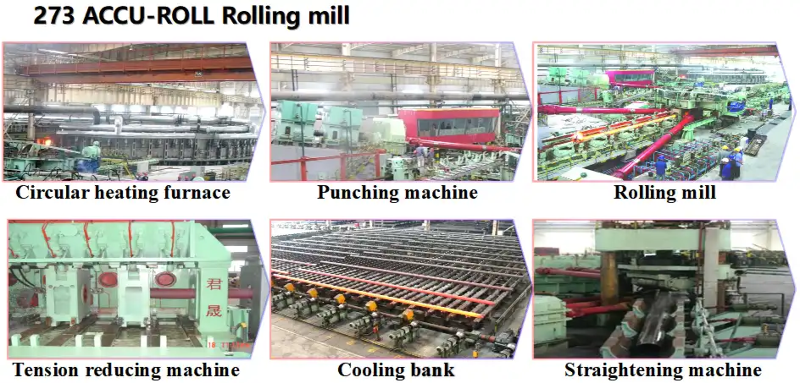
API 5CT K55 and N80 Casing factory
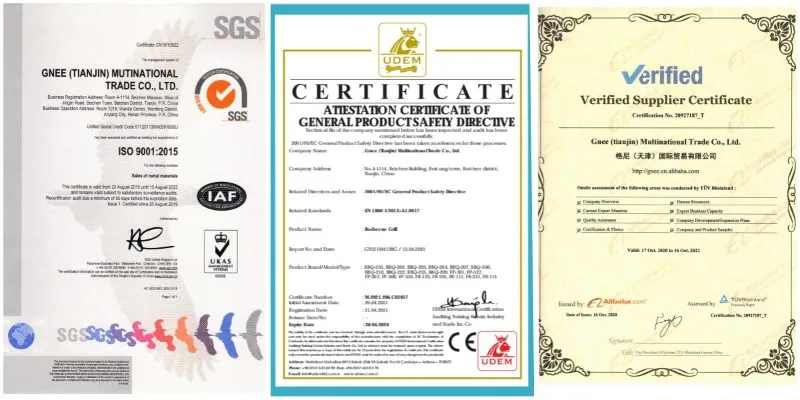
API 5CT K55 and N80 casing certificate
If you require:
- Mill test certificates (MTC)
- API 5CT compliance documentation
- Casing size and weight recommendations
- Connection type selection (STC, LTC, BTC)
- Material grade comparisons
Our technical team can provide additional information based on your project requirements.
FAQ
Can K55 Replace N80 Casing?
K55 can replace N80 only if the well design requirements allow it.
Although both grades are manufactured under API 5CT, N80 has significantly higher strength than K55. K55 may be suitable for shallow wells, low-pressure wells, and surface casing applications, while N80 is typically required for deeper wells, higher-pressure conditions, and heavier casing loads.
Before replacing N80 with K55, engineers must verify that the casing can safely meet the required burst, collapse, and tensile load criteria.
In general, K55 should not be used as a direct substitute for N80 without engineering verification.
Is N80 Stronger Than K55?
Yes. N80 is significantly stronger than K55.
| Property | K55 | N80 |
|---|---|---|
| Minimum Yield Strength | 55 ksi (379 MPa) | 80 ksi (552 MPa) |
| Minimum Tensile Strength | 95 ksi (655 MPa) | 100 ksi (689 MPa) |
The main difference is yield strength. N80 offers approximately 45% higher yield strength, giving it better resistance to deformation, collapse, and high downhole loads.
As a result, N80 is commonly used in deeper and more demanding well conditions.
How Do I Choose Between K55 and N80 Casing?
The choice depends on well depth, pressure, loading conditions, and budget.
| Application | Recommended Grade |
|---|---|
| Surface casing | K55 |
| Shallow oil and gas wells | K55 |
| Water wells | K55 |
| Medium-depth wells | K55 or N80 |
| Deep wells | N80 |
| High-pressure wells | N80 |
| Water injection wells | N80 |
| Heavy-load casing strings | N80 |
Choose K55 when moderate strength is sufficient and cost efficiency is important.
Choose N80 when higher yield strength, better collapse resistance, and greater safety margins are required.
In practice, the most economical solution is not always the strongest grade, but the grade that fully satisfies the well design requirements while maintaining an appropriate safety factor.


