


API 5L is a general-purpose standard for pipeline transportation systems (onshore and offshore), while ASTM A333 is specifically engineered for low-temperature service, requiring mandatory impact testing to ensure toughness at sub-zero temperatures.
Confused about API 5L and A333? Discover the essential differences in Charpy V-Notch impact testing, chemical composition, and fracture toughness. Read our 2026 technical guide.
Quick Comparison Table: API 5L vs. ASTM A333
| Feature | API 5L (Line Pipe) | ASTM A333 (Low-Temp Pipe) |
| Primary Focus | Transmission of Oil, Gas, and Water. | Low-Temperature pressure service. |
| Common Grades | Grade B, X42, X52, X60, X70. | Grade 6 (Most common), Grade 3, 8. |
| Min. Temperature | Usually -29°C (-20°F) for standard. | Down to -45°C (-50°F) for Grade 6. |
| Impact Testing | Mandatory for PSL2 only. | Mandatory for all grades. |
| Manufacturing | Seamless, ERW, LSAW, SSAW. | Seamless or Welded (with no filler). |
| Standard Level | Divided into PSL1 and PSL2. | Single specification level. |
API 5L vs. ASTM A333: Minimum/Maximum Service Temperature Comparison Table
| Standard & Steel Grade | Min. Design Metal Temp (MDMT) | Mandatory Impact Testing | Max. Recommended Service Temp | Typical Applications / Service Environment |
| API 5L PSL1 (Grade B to X70) | -29°C (-20°F) | Not Mandatory (Optional) | 232°C (450°F) | Standard onshore oil/gas transmission in mild climates. |
| API 5L PSL2 (Grade B to X80) | -45°C (-50°F) | Mandatory (Charpy V-notch required) | 232°C (450°F) | High-pressure gas mains, offshore/subsea, and arctic regions. |
| ASTM A333 Grade 6 | -45°C (-50°F) | Mandatory (Full batch testing) | 343°C (650°F) | Low-temp process piping, compressed gases, and cold weather stations. |
| ASTM A333 Grade 3 | -101°C (-150°F) | Mandatory (Full batch testing) | 343°C (650°F) | Liquefied gas processing and cryogenic industrial pipelines. |
| ASTM A333 Grade 8 | -196°C (-320°F) | Mandatory (Full batch testing) | N/A | Ultra-Cryogenic service (e.g., Liquid Nitrogen, LNG). |
Impact Testing & Fracture Toughness Comparison: API 5L vs. ASTM A333
| Testing Item | API 5L PSL1 (Line Pipe) | API 5L PSL2 (Line Pipe) | ASTM A333 (Low-Temp Pipe) | Expert Technical Insight |
| Mandatory Status | Optional (unless specified by contract). | 100% Mandatory. | 100% Mandatory (All Grades). | PSL1 carries a high brittle fracture risk in low-temperature environments. |
| Typical Test Temp | N/A (Standard testing not required). | 0°C (32°F) or -18°C (0°F). | -45°C (-50°F) (For Grade 6). | ASTM A333 is specifically engineered for much harsher, sub-zero climates. |
| Impact Specimen | None. | Charpy V-notch (CVN). | Charpy V-notch (CVN). | CVN testing is the industry gold standard for evaluating material toughness. |
| Energy Requirements | None. | Formula-based (Typically Avg. ≥ 27J). | Avg. ≥ 18J (13 ft-lb) for Gr.6. | API 5L PSL2 often has higher energy requirements than A333 to ensure fracture arrest. |
| Fracture Evaluation | None. | Requires high DWTT (Drop Weight Tear Test) performance. | Excellent low-temp fracture toughness. | Large-diameter gas mains must consider DWTT to prevent "running fractures." |
| Manufacturing Impact | Standard Hot Rolled. | TMCP or Normalized. | Mandatory Grain Refinement (Normalizing, etc.). | Grain refinement is the only effective way to improve low-temp impact performance. |
Comparison Table: API 5L vs. ASTM A333 Application & Environment
| Application Category | API 5L (Line Pipe) | ASTM A333 (Low-Temp Pressure Pipe) | Expert Insight |
| Industry Focus | Midstream Energy: Specifically for long-distance trunk lines in the oil and gas industry. | Mid-to-Downstream Process: Refineries, chemical plants, and liquefied gas (LNG) stations. | API 5L focuses on "Transporting Distance," while A333 focuses on "Extreme Temperature." |
| Typical Use Cases | Cross-country oil/gas pipelines, offshore/subsea pipelines, and water-coal slurry transport. | Low-Temperature Process Piping, compressed gas handling, and Liquid Nitrogen/Oxygen systems. | In LNG (Liquefied Natural Gas) receiving terminals, A333 is the standard specification. |
| Min. Design Metal Temp (MDMT) | Typically -29°C (-20°F). PSL2 can be tested down to -45°C (-50°F). | -45°C (-50°F) for Grade 6, down to -196°C (-320°F) for Grade 8. | If your project is in the Arctic or involves cryogenic processes, ASTM A333 is mandatory. |
| Pressure Characteristics | Dynamic High Pressure: Designed to withstand pressure fluctuations and surges over long distances. | Steady High Pressure / Cryogenic Stress: Focuses on maintaining toughness under internal pressure in cold conditions. | API 5L emphasizes the pipe's "Fracture Arrest" capability. |
| Manufacturing Process | Seamless, ERW, LSAW, SSAW. | Seamless or Welded with no filler metal added during the welding process. | Welding quality requirements for A333 are generally stricter than standard API 5L PSL1. |
| Installation Method | Primarily long-distance field butt-welding in remote areas. | In-plant piping using elbows, tees, and flanged connections. | API 5L emphasizes welding efficiency for large-scale onsite construction. |
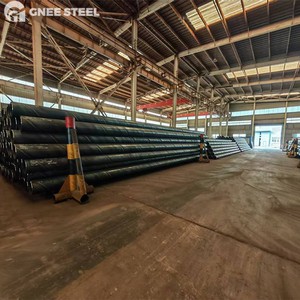
GNEE API 5L and A333 pipe factory
FAQ
What does A333 mean?
ASTM A333 (ASME S/A-333) Pipe grades permit low temperature service. This specification covers nominal (average) walled pipe almost exclusively in seamless. Several grades of ferritic steel are included.
What are the different versions of API 5L?
Types of API 5L Pipes
API 5L pipes are categorized mainly into two product specifications: PSL1 and PSL2. Each type offers different performance standards, with PSL2 categorically having stricter chemical, mechanical, and testing requirements than PSL1.


