


Drill pipe connections are formally known in API standards as Rotary Shouldered Connections (RSC). Unlike casing (STC/LTC) which relies on thread interference for sealing, drill pipe connections seal via metal-to-metal contact at the shoulder. The threads serve only to join the pieces together.
Looking for high-performance tool joints at factory prices? Get a Fast Quote on API 7-1 Drilling Connections Today!
Rotary Shouldered Connections (RSC)
These are used for the drill string (drill pipe, drill collars, and heavy-weight drill pipe). They are designed to handle extreme rotation (torque) and bending.
NC (Numbered Connection): The modern standard (e.g., NC38, NC50).
REG (Regular): Used primarily for drill bits and tools where the inner diameter is less critical.
IF (Internal Flush): Designed so the inside of the pipe is perfectly smooth to allow for better fluid flow.
FH (Full Hole): An older standard used for specific drill pipe sizes.
API Drill Pipe Connection (RSC) Core Parameter Table
| Connection Type | Thread Form | Threads Per Inch (TPI) | Taper | Remarks |
| NC (Numbered) | V-0.038R | 4 | 1:6 or 1:4 | The modern industry standard (e.g., NC38, NC50) |
| IF (Internal Flush) | V-0.038R | 4 | 1:6 | ID matches pipe body for minimal flow resistance |
| REG (Regular) | V-0.040 / V-0.050 | 4 or 5 | 1:4 or 1:6 | Primarily used for drill bits and tools |
| FH (Full Hole) | V-0.040 / V-0.050 | 4 | 1:4 | Older standard; mostly replaced by NC |
Parameter Details
Common Thread Forms
API "V-threads" for drilling have variations primarily based on the root radius to reduce stress concentration:
V-0.038R: Features a rounded root. Used for NC and IF connections; offers high fatigue resistance.
V-0.040: Flat crest and sharper root. Commonly found on REG connections.
V-0.050: A deeper thread form designed for high load-bearing capacity.
Taper
Drill pipe connections have a steeper taper than casing threads to allow for faster "makeup" (connection) and breakout:
1:6 (2 inches per foot): Used for most NC and IF connections.
1:4 (3 inches per foot): Used for most REG and some FH connections.
NC and IF Interchangeability (Essential Knowledge)
In the oilfield, many NC (Numbered Connections) are fully interchangeable with older IF (Internal Flush) connections because their thread form, TPI, and taper are identical:
NC26 = 2-3/8" IF
NC31 = 2-7/8" IF
NC38 = 3-1/2" IF
NC46 = 4" IF
NC50 = 4-1/2" IF
Drill Pipe RSC vs. Casing Threads
| Feature | Drill Pipe RSC | Casing Threads (STC/LTC/BTC) |
| Sealing Location | Shoulder (Metal-to-Metal) | Thread Flanks (Surfaces) |
| Primary Stress | Torque & Bending | Tension & Internal Pressure |
| Connection Frequency | Extremely High (Every trip) | Extremely Low (Permanent installation) |
| Standard | API 7-1 | API 5B / 5CT |
API Drill pipe connection factory

Drill pipe connection test equipments

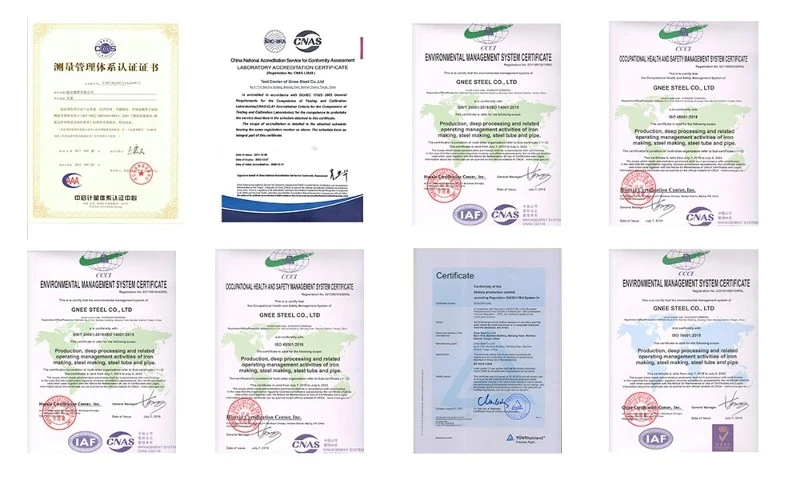
Drill pipe connection certificate
FAQ
What are the different types of drill pipe threads?
Drill pipe joint threads are primarily categorized into API standard threads and non-API premium connections, with API standard threads including NC, IF, FH, and REG, which are commonly used standardized connection types in oil drilling.
NC (Numeric): Recommended by API as the preferred type, offering excellent interchangeability, suitable for drill pipes, drill collars, and bit connections.
IF (Internal Flat): Features a joint inner diameter matching the pipe body, reducing flow resistance; however, prone to stress concentration and largely replaced by NC.
FH (Full Hole): Used for large-size tools with a smaller joint inner diameter, now mostly superseded by NC.
REG (Regular): Has the smallest joint inner diameter, primarily used for bit connections, and all sizes remain in API standards.
What size hole to drill for 3/4 pipe thread?
For a 3/4" pipe thread, the recommended pilot hole diameter is 19.05 mm for straight (G) threads. For tapered threads like R3/4 or NPT 3/4-14, use a smaller hole - approximately 17.2 mm - calculated as: major diameter minus pitch.


