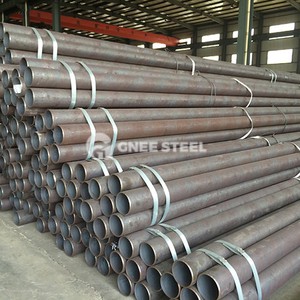

Is API 5L X52 carbon steel pipe
API 5L X52 belongs to carbon steel pipes, but its composition design combines a low-carbon steel base with microalloy strengthening elements. The specific analysis is as follows:
1. Basic material classification
Carbon steel definition: API 5L X52 has a carbon content of C≤0.28% (seamless pipe) or C≤0.26% (welded pipe), and a manganese content of Mn≤1.40%, which is in line with the typical composition range of carbon steel.
Standard classification: The X52 steel grade (corresponding to L360) in the API 5L standard is classified as a carbon steel pipeline material, mainly used for oil and gas transportation.
2. Alloy strengthening elements
Microalloying design: X52 adds trace elements such as niobium (Nb), vanadium (V), and titanium (Ti) (total ≤0.15%) to carbon steel to refine grains and improve strength and toughness, but it still belongs to the category of low-alloyed carbon steel.
Composition balance: A balance between strength and weldability is achieved by reducing the carbon content (such as the optimized version with C≤0.18%) and increasing the manganese content (Mn 1.25-1.50%).
3. Performance and use
Mechanical properties: Yield strength ≥360MPa, tensile strength ≥460MPa, which meet the pressure requirements of carbon steel pipes in high-pressure oil and gas pipelines.
Applicable scenarios: Widely used in land and marine oil and gas transportation, chemical raw material pipelines, etc., with the cost advantage of carbon steel and the corrosion resistance of low-alloy steel.
4. Manufacturing Process Production Process: X52 steel pipe can be produced by hot rolling, controlled rolling and controlled cooling (TMCP) or welding process, and its carbon steel matrix allows conventional processing methods. Summary API 5L X52 is a low-alloyed pipeline steel based on carbon steel. Although it contains trace alloy elements, it still belongs to the category of carbon steel pipe according to standard classification. Its design balances cost, strength and corrosion resistance, and is suitable for medium and high pressure oil and gas transportation scenarios.