


L80 (The "Sour Service" Specialist): Designed specifically for environments containing Hydrogen Sulfide (H2S). API 5CT mandates a maximum hardness of 23 HRC for L80. This is crucial because lower hardness prevents Sulfide Stress Cracking (SSC).
P110 (The "Deep Well" Specialist): Focused on mechanical power. It is used in ultra-deep wells or high-pressure formations where the weight of the pipe string is massive. However, it is highly sensitive to H2S. In a sour environment, P110 can shatter like glass due to "Hydrogen Embrittlement."
In a sour service (H2S) environment, L80 is the correct and standard choice, while standard P110 must be avoided.
Download our "Sour Service Material Selection Guide" and avoid common procurement pitfalls.
The reasons are based on metallurgical properties and international safety standards (NACE/ISO):
Resistance to Sulfide Stress Cracking (SSC)
L80: This grade is specifically designed for sour service. It undergoes a controlled "Quench and Temper" heat treatment to ensure a maximum hardness of 23 HRC. This low hardness makes the steel ductile enough to resist Sulfide Stress Cracking (SSC) and hydrogen embrittlement.
P110: This is a high-strength grade with no upper hardness limit in its standard form (often exceeding 28–30 HRC). In the presence of H2S, high-strength steels become extremely brittle. A P110 pipe can suffer a catastrophic, "shattering" failure under tension long before any traditional corrosion is visible.
Compliance with NACE MR0175 / ISO 15156
L80 is pre-qualified by NACE standards for use in sour environments because its chemical composition and mechanical properties are strictly controlled to prevent cracking.
Standard P110 is generally not compliant with NACE MR0175 for sour service. Using it in a sour well violates international safety protocols and poses a massive liability risk.
What if you need the strength of 110?
If the well is very deep or has high pressure, and L80 is not strong enough, you cannot simply use standard P110. Instead, you must specify Proprietary Sour Service Grades, such as:
API 5CT C110: A high-strength grade specifically designed for sour service with a strictly controlled hardness (max 30 HRC).
P110-MS (Modified Sour): A non-API proprietary grade offered by top-tier mills that provides 110 ksi strength but with the metallurgical cleanliness required to survive H2S exposure.
Comparison Table: API 5CT L80 vs. P110
| Comparison Item | L80 (Group 2) | P110 (Group 3) |
| Category | Controlled Yield Grade | High Strength Grade |
| Yield Strength | 80,000 ~ 95,000 psi (552~655 MPa) | 110,000 ~ 140,000 psi (758~965 MPa) |
| Tensile Strength | ≥ 95,000 psi (655 MPa) | ≥ 125,000 psi (862 MPa) |
| Hardness Limit | Strictly Limited: ≤ 23 HRC | No standard limit (typically > 28 HRC) |
| Heat Treatment | Quenched & Tempered (Q&T) | Quenched & Tempered (Q&T) |
| H2S Resistance | Excellent (NACE MR0175 Compliant) | Poor (Prone to Hydrogen Embrittlement/SSC) |
| Application | Sour Service (H2S), Medium-Deep Wells | Sweet Service, Ultra-Deep Wells, High-Pressure Wells |
| Main Pain Point | Strength may be insufficient for ultra-deep/high-pressure | Risk of sudden brittle failure in H2S environments |
| Price Projection | Moderate (Requires precise hardness control) | Higher (Due to high-strength specifications) |
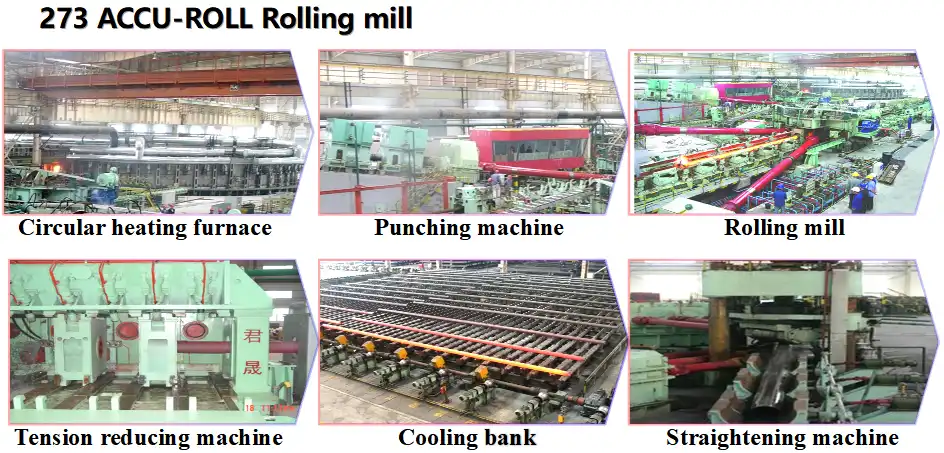
GNEE API NACE OCTG Pipe process line
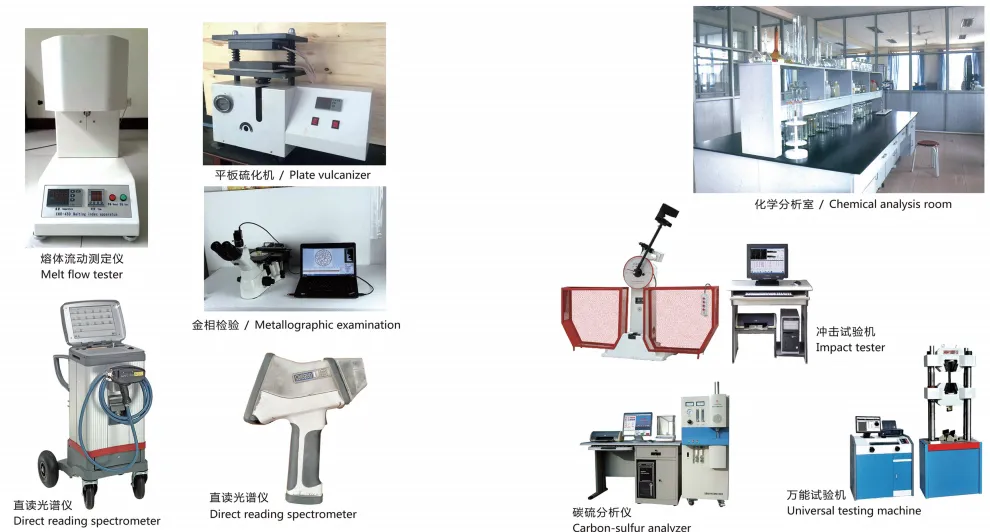
GNEE API NACE OCTG Pipe test equipments
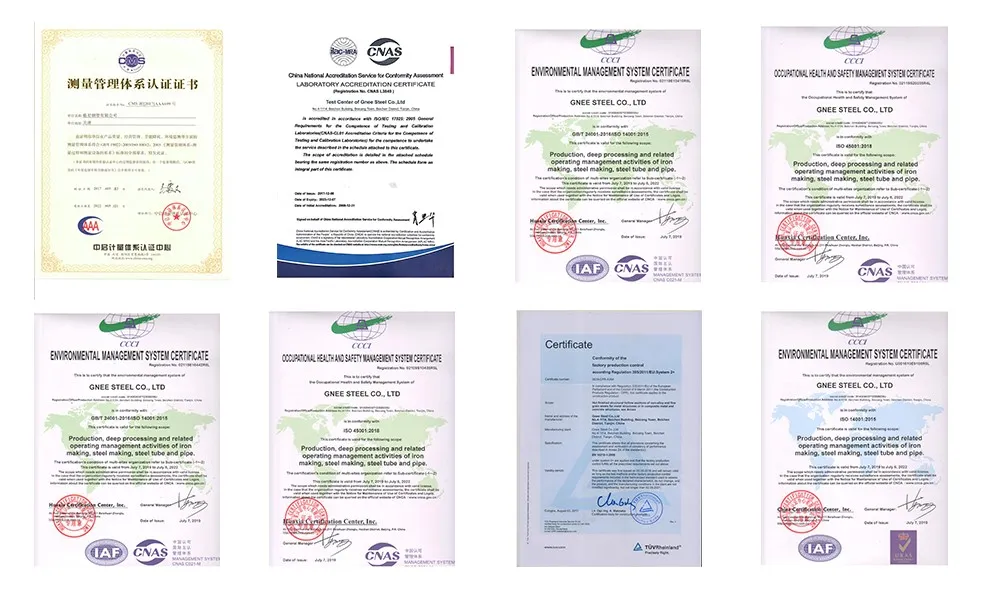
GNEE API NACE OCTG Pipe certificate
FAQ
What is P110 material?
P110 is a high-strength steel grade specified under the API Spec 5CT standard, primarily used for casing and tubing in oil and gas wells.
It belongs to "Group 3" of the API 5CT grades and is designed for environments that require extreme mechanical performance.
What material is equivalent to L80?
Finding an "equivalent" to API 5CT L80 depends on whether you are looking for an equivalent in terms of mechanical strength or chemical/corrosion resistance (Sour Service).
| API 5CT Grade | ISO Equivalent | Chemistry/CRA Equivalent | Purpose |
| L80-1 | ISO 11960 L80 | AISI 4140 (Cr-Mo) | Standard Sour Service |
| L80-9Cr | ISO 11960 L80-9Cr | AISI 410 / 9% Cr | CO2 Corrosion Resistance |
| L80-13Cr | ISO 11960 L80-13Cr | AISI 420 / UNS S42000 | High CO2 Resistance |


