Why a 360 MPa Seamless Grade Still Earns Its Place Offshore
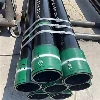
Offshore and marine projects rarely select a line pipe grade on strength alone. They select it on the balance between pressure containment, installation strain, corrosion allowance and the cost of qualifying a welding procedure in a yard that may be thousands of kilometres from the mill. API 5L X52 seamless pipe, with a specified minimum yield strength of 360 MPa and a level 2 yield window of 359 to 530 MPa, holds a strong position in that balance because it is strong enough for high pressure service while remaining ductile enough to absorb the curvature of installation and to tolerate the weld procedures available at a marine fabrication yard. Seamless construction adds the absence of a longitudinal weld seam, which matters wherever the pipe will be reeling, cold bent or exposed to cyclic loading, because the seam and its heat affected zone are the features that most often limit toughness and fatigue performance.
The Standards Framework Around a Marine Line Pipe Order
A single standard is never sufficient for a marine pipe. API 5L or ISO 3183 defines the product itself: grade, chemistry, mechanical properties, tolerances, testing and marking. DNV-ST-F101 governs submarine pipeline system design and imposes supplementary requirements on material toughness, dimensional tolerances, weld qualification and installation analysis. ISO 15156 and NACE MR0175 govern material selection for hydrogen sulphide service and set the hardness ceilings and chemistry restrictions that apply when the produced fluid is sour. ISO 21809-2 covers fusion bonded epoxy external coating for offshore pipelines and defines the surface preparation, coating thickness and holiday testing regime, while ISO 12944 governs the protective paint systems used on the atmospheric zone of platform structures where the pipe is exposed above water. Cathodic protection design follows NACE SP0169 principles, and the interaction between coating, cathodic protection and the seawater environment has to be considered as one system rather than as three separate items.
Strength, Toughness and Strain Capacity in Practice
Subsea flowlines are frequently designed by strain rather than by stress, because installation by reeling or S-lay imposes bending strains that can exceed the elastic limit of the pipe. A grade with a yield-to-tensile ratio well below 0.90 and a modest yield level tolerates that strain with a lower risk of ovalisation and a wider window for the welding procedure. The table below shows how the selection shifts with diameter and water depth band in general terms; the values are design intentions, not fixed rules, and every project still requires its own engineering critical assessment.
| Service | Governing requirement | Typical grade intent | Key material evidence |
|---|---|---|---|
| Shallow water flowline, sweet service | Internal pressure and span fatigue | X52 to X60, level 2 | Charpy energy at design temperature, girth weld qualification |
| Deepwater flowline, reeled installation | Installation strain capacity | X52 level 2, normalised or quenched and tempered | Yield to tensile ratio, uniform elongation, reeling trial |
| Sour service flowline | Resistance to sulphide stress cracking | X52 with restricted hardness | ISO 15156 qualification, hardness survey, sulphur control |
| Water injection and utility line | Corrosion allowance and internal coating | X52 carbon steel with lining | Coating adhesion, holiday test, wall thickness verification |
| Platform structural member | Buckling and fatigue under wave load | Structural grades rather than line pipe | Toughness at low temperature, weldability, lamellar tearing resistance |
One distinction in that table is routinely overlooked: line pipe and structural pipe are separate product families. A jacket leg, brace or pile is normally designed against a structural standard and specified with through-thickness properties and a toughness class suited to the lowest service temperature, whereas a flowline is designed against a pipeline code. Using line pipe as a primary structural member requires the structural design to be reworked, and simply quoting a higher line pipe grade does not substitute for the required through-thickness testing.
Subsea Wellhead and Drilling Support Duties
Around a subsea wellhead, carbon steel pipe appears as conductor, surface casing, caisson and as utility and injection lines rather than as a drilling riser. It is worth stating plainly that X52 is not an oil country tubular grade: casing and tubing are ordered against the API 5CT grade list with API 5B thread requirements, and a specification asking for X52 casing cannot be met as written. Where X52 appears in a well-related role it is normally as driven conductor, structural piling or a process line, and in those duties the acceptance criteria come from the applicable structural or pipeline standard, with welding qualification to a recognised offshore welding specification. For any line carrying produced fluid, the sour service assessment under ISO 15156 determines whether the grade and heat treatment are admissible at all, because hardness in the seam heat affected zone is the controlling variable for sulphide stress cracking.
Platform Piping, Risers and Utility Systems
On a fixed or floating platform, X52 seamless pipe is used for process piping, flare and vent lines, utility headers, firewater mains and seawater service lines, with the atmospheric and splash zones requiring a coating system selected for the corrosivity category of the site. Risers and topside lines see pressure cycling from batch operations, thermal cycling between shut-in and flowing conditions, and vibration from machinery, so fatigue assessment of girth welds and supports is part of the design rather than an afterthought. Seamless pipe helps here because the absence of a seam removes one class of weld defect from the fatigue-critical path, although the girth welds remain the governing locations. Field joint coatings, weld cap profile and the sequence of coating repair after welding should all be defined before fabrication starts, since a coating system that cannot be repaired in the yard will become a long-term corrosion liability.
Seawater Desalination and Marine Utility Service
Desalination plants combine three aggressive environments in one facility: raw seawater with high chloride content and biological activity, concentrated brine at elevated temperature, and chemical dosing streams that may be acidic or oxidising. Carbon steel line pipe such as X52 is used extensively for the non-wetted and structural duties, for pre-treated feed lines with internal lining, and for utility systems, but it is not the correct choice for continuously wetted high chloride service without a fully qualified internal protection system. Where the wetted path demands a corrosion-resistant alloy, the selection normally moves to austenitic or duplex stainless grades under ASTM A312 or ASTM A789 and ASTM A790, with pitting resistance verified by a standard test method such as ASTM G48. The practical procurement rule is to split the plant into wetted and non-wetted circuits at the specification stage, so that each circuit is bought against the standard and test regime appropriate to it rather than applying one material to the whole facility.
Corrosion Protection, Handling and Installation
External corrosion control on a marine pipeline is a combined system: a coating that provides the primary barrier, a cathodic protection system that protects coating holidays, and handling rules that prevent coating damage before the pipe reaches the water. Fusion bonded epoxy to ISO 21809-2 is common for operating temperatures in the moderate range, while three-layer polypropylene is chosen where higher temperatures or mechanical abrasion demand it. Field joints require compatible coating and a tested application procedure. Internally, a flow coating or cement mortar lining may be specified where the product is corrosive or where erosion from sand production is expected. During storage and transport, pipe ends need protection, the stack height must respect the coating type, and any lifting gear that contacts the coated surface must be padded; on the vessel, the stalking and tensioning operations impose loads that the installation analysis must cover.
Inspection and Documentation for Marine Acceptance
Marine projects are audited on documents, so the documentation package should be designed at the same time as the technical specification. A typical requirement set includes chemical analysis by heat with carbon equivalent and Pcm values, tensile and impact results per test unit with specimen orientation and test temperature, hardness surveys for sour and welded product, dimensional and visual inspection records, non-destructive examination of the pipe body and any seam by ultrasonic methods under the ISO 10893 series or ASTM E213, hydrostatic test records with calculated pressure and hold time, coating inspection including surface profile, dry film thickness and holiday detection, and welding procedure and welder qualification records for any fabrication performed before delivery. Third-party witness points, typically at heat treatment, hydrostatic testing and coating, should be named in the order rather than left to a general clause about inspection rights.
Common Procurement Errors in Marine Packages
The first error is specifying X52 for casing or tubing, which the API 5CT grade list does not contain. The second is accepting as-rolled pipe against an offshore specification that requires toughness verified after a coating reheat cycle, which can only be demonstrated by testing after simulation. The third is treating the delivery condition suffix as a formality; a normalized and a thermomechanical product of the same grade behave differently in strain capacity and in sour service. The fourth is applying a single corrosion strategy across wetted and non-wetted circuits of a desalination plant. The fifth is leaving field joint coating, coating repair and marking transfer outside the technical specification, so that these items become commercial arguments during fabrication.
FAQ
Q: Is API 5L X52 seamless pipe suitable for subsea flowlines?
It is frequently used for flowlines and water injection lines, particularly where installation strain governs the design, because a 360 MPa yield strength with a moderate yield-to-tensile ratio accommodates reeling and S-lay curvature. The design must still be checked against a submarine pipeline standard such as DNV-ST-F101 and against ISO 15156 where the fluid is sour.
Q: Can X52 pipe be used as an offshore platform structural member?
Only with care. Platform jackets, braces and piles are designed against structural standards that require through-thickness properties and a toughness class for the lowest service temperature, and line pipe does not automatically satisfy those requirements. Line pipe is normally used for platform piping and utility systems rather than for primary structure.
Q: What does seamless construction contribute in marine service?
The absence of a longitudinal weld seam removes one weld from the fatigue and toughness critical path and avoids seam-related defects in reeling and cold bending. Girth welds connecting joints remain the governing features for fatigue assessment.
Q: How should external corrosion be protected on a marine pipeline?
By a qualified coating system such as fusion bonded epoxy to ISO 21809-2 or a three-layer polyolefin coating, combined with cathodic protection designed to cover coating holidays, and by handling procedures that prevent mechanical damage. Field joints need compatible coating and a proven application procedure.
Q: Is carbon steel appropriate for seawater desalination piping?
For non-wetted, structural and lined duties, yes. For continuously wetted high chloride service the material selection normally moves to austenitic or duplex stainless steel under ASTM A312, ASTM A789 or ASTM A790, with pitting resistance verified by a recognised test method.
Q: Which tests should the mill certificate include for an offshore order?
Chemical analysis with carbon equivalent, tensile and impact results per test unit, hardness values where specified, dimensional records, non-destructive examination results, hydrostatic test records, and coating inspection data. Welding procedure and welder qualifications are required for any fabrication carried out before delivery.