




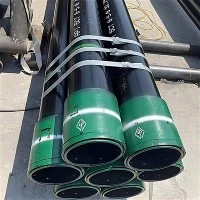
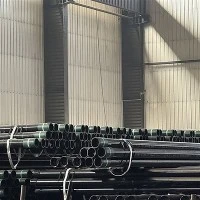
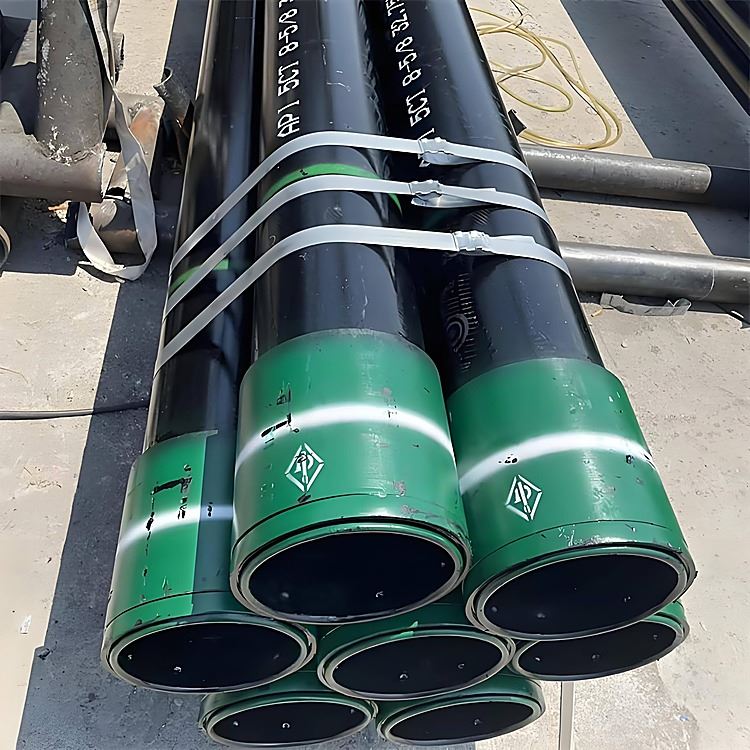

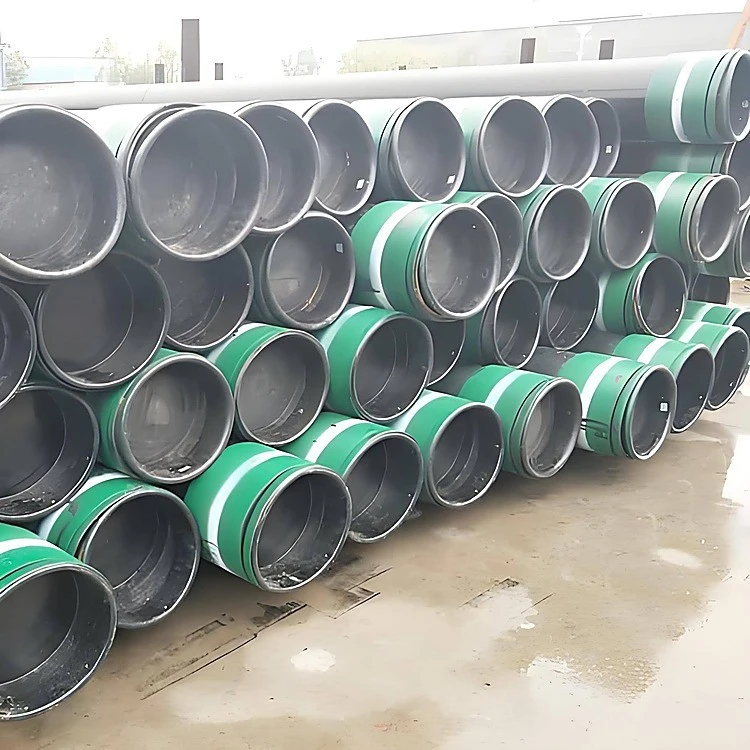
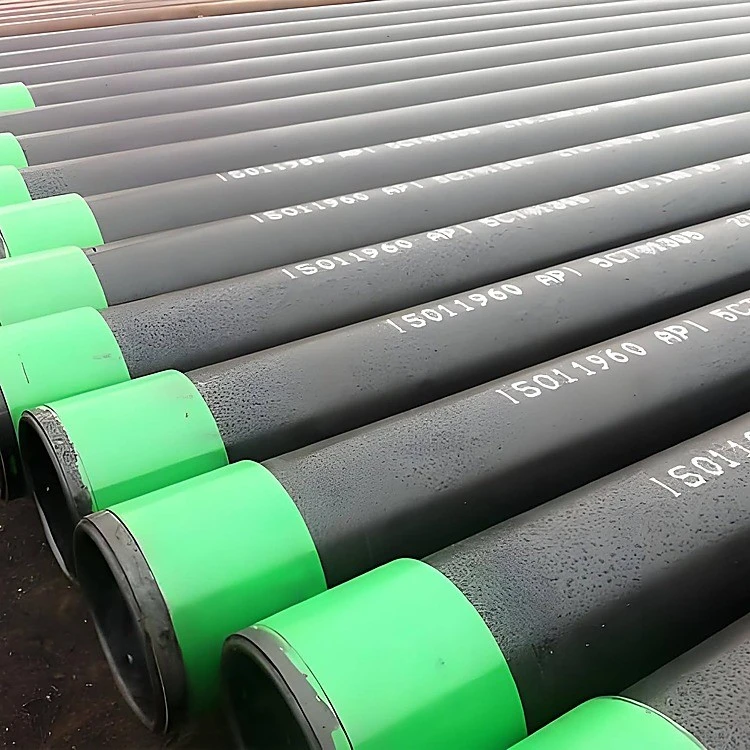
Oil Well Casing Pipe
OD range: 4-1/2 - 20 in
Weight classes: 9.5 - 133 lb/ft
Connections: STC / LTC / BTC / premium
Grades: H40 - Q125
Length ranges: R1 / R2 / R3
Oil well casing pipe is the large-diameter steel pipe cemented in place to line the borehole, isolate formation pressures and protect the well through its life. Made to API Spec 5CT / ISO 11960, this oil casing pipe spans nominal outside diameters from 4-1/2 to 20 in, with wall chosen by nominal weight in lb/ft and supplied plain end or with STC, LTC, BTC or premium connections. Grades run from H40 and J55 to N80, L80 and P110. As oil well casing, it is a permanent structural string - unlike tubing it is not recovered - so its size, weight, grade and connection are fixed by the well programme.
Product Specification
| Item | Specified value |
|---|---|
| Product | Oil well casing pipe (cemented, permanent wellbore string) |
| Standard | API Spec 5CT / ISO 11960; threads to API Spec 5B |
| Outside diameter | 4-1/2 to 20 in (114.3 to 508.0 mm) nominal sizes |
| Nominal weight | About 9.5 to 133 lb/ft depending on size and wall |
| Grades | H40, J55, K55, N80, L80, C90, T95, P110, Q125 |
| Connections | STC, LTC, BTC, premium; plain end available |
| Length range | R1 4.88-7.62 m, R2 7.62-10.36 m, R3 10.36-14.63 m |
| Manufacture | Seamless hot-rolled or ERW, full-body heat treatment |
| Testing | Hydrostatic test, drift mandrel, API 5B thread gauging |
| Documents | MTC to EN 10204 3.1 (3.2 on request), API monogram where licensed |
The values describe the product family, not a single ordered item. Confirm the exact size, weight, grade, end finish and standard edition against the purchase order and the mill certificate.
Full Casing Size and Weight Chart
The oil well casing size chart below lists the nominal outside diameters most used in well programmes with a representative weight, wall, inside diameter and drift for each. Buyers comparing oil well casing sizes should treat these oilfield casing sizes as reference combinations; most diameters are available in several weights, and the oilfield casing dimensions for the ordered weight must be read from the API 5CT table of the delivered edition.
| OD (in) | OD (mm) | Nom. weight (lb/ft) | Wall (in) | Nom. ID (in) | Drift (in) | Typical string |
|---|---|---|---|---|---|---|
| 4-1/2 | 114.3 | 11.60 | 0.250 | 4.000 | 3.875 | Production liner |
| 5 | 127.0 | 15.00 | 0.296 | 4.408 | 4.283 | Production liner |
| 5-1/2 | 139.7 | 17.00 | 0.304 | 4.892 | 4.767 | Production casing |
| 6-5/8 | 168.3 | 24.00 | 0.352 | 5.921 | 5.796 | Production / intermediate |
| 7 | 177.8 | 26.00 | 0.362 | 6.276 | 6.151 | Production casing |
| 7-5/8 | 193.7 | 33.70 | 0.430 | 6.765 | 6.640 | Intermediate |
| 8-5/8 | 219.1 | 36.00 | 0.400 | 7.825 | 7.700 | Intermediate |
| 9-5/8 | 244.5 | 47.00 | 0.472 | 8.681 | 8.525 | Intermediate |
| 10-3/4 | 273.1 | 51.00 | 0.450 | 9.850 | 9.694 | Intermediate |
| 13-3/8 | 339.7 | 68.00 | 0.480 | 12.415 | 12.259 | Surface casing |
| 16 | 406.4 | 84.00 | 0.495 | 15.010 | 14.822 | Surface / structural |
| 18-5/8 | 473.1 | 87.50 | 0.435 | 17.755 | 17.567 | Conductor |
| 20 | 508.0 | 133.00 | 0.635 | 18.730 | 18.542 | Conductor |
Source values follow API 5CT tables as compiled in public buyer guides; verify each OD and weight combination against the current edition before ordering.
This oilfield casing chart is a starting point for comparing strings, not a stock list. A given diameter such as 9-5/8 in appears with lighter and heavier weights, and the wall and drift change with each. Buyers of oilfield casing therefore select the weight from the well design first, then confirm that the corresponding bore will pass the completion equipment.
Casing and Tubing Size Boundary
Casing and tubing are two different strings and the size tables should not be mixed. Oil well tubing sizes run from about 1.050 to 4-1/2 in, while casing starts at 4-1/2 in and continues to 20 in. The 4-1/2 in diameter appears in both families, but one is a retrievable flow string and the other is a cemented structural string; the connection and duty are different.
| Family | Nominal OD range | Function | Typical connection | Retrievable |
|---|---|---|---|---|
| Tubing | 1.050 - 4-1/2 in | Internal flow path | NUE / EUE / premium | Yes |
| Casing | 4-1/2 - 20 in | Wellbore structure and isolation | STC / LTC / BTC / premium | No |
Published oilfield tubing dimensions and casing dimensions use the same outside diameter units and the same nominal weight convention, but they are separate tables. When a programme lists both strings, read each from its own chart so the wall, drift and connection match the string being ordered.
Dimensional Tolerances
These oil well casing specifications state the product tolerances applied at manufacture and receiving inspection. They are part of a complete oilfield casing specifications package together with the grade, connection and testing clauses.
| Item | Range | Permitted deviation |
|---|---|---|
| Outside diameter | Up to 8-5/8 in | -0.5% / +1.0% |
| Outside diameter | Larger sizes | Per API 5CT table |
| Wall thickness | All sizes | -12.5% of nominal |
| Weight | Welded and seamless | -3.5% / +6.0% per API tables |
| Drift | Every joint | Minimum-length mandrel must pass |
| Length | R1 / R2 / R3 | Within the ordered range |
| Thread | API round / buttress | Gauged to API Spec 5B |
Tolerances are reference API 5CT values. The governing figures are those of the standard edition and specification level on the purchase order.
Mechanical Properties by Grade
Grade choice follows the load case. The oilfield casing specs below show yield and tensile ranges for the commonly ordered grades; hardness limits and elongation requirements depend on the grade group and delivered wall, and are confirmed on the certificate.
| Grade | Yield min (MPa) | Yield max (MPa) | Tensile min (MPa) | Typical service |
|---|---|---|---|---|
| H40 | 276 | 552 | 414 | Conductor, shallow wells |
| J55 | 379 | 552 | 517 | Surface, low-pressure wells |
| K55 | 379 | 552 | 655 | Surface / intermediate, higher tensile |
| N80 | 552 | 758 | 689 | Intermediate / production |
| L80 Type 1 | 552 | 655 | 655 | Sour service, hardness controlled |
| C90 | 621 | 724 | 689 | High-pressure sour wells |
| T95 | 724 | 828 | 758 | Sour service, higher strength |
| P110 | 758 | 965 | 862 | Deep, high-pressure wells |
| Q125 | 862 | 1034 | 931 | Ultra-deep, extreme pressure |
Chemical Composition of Common Grades
Chemistry is defined by grade group and heat treatment. The indicative ranges below cover frequently ordered carbon and alloy casing grades; phosphorus and sulfur are controlled for toughness and, in sour service, for resistance to sulfide stress cracking. The mill test certificate is the authoritative record for the heat delivered.
| Grade | C | Mn | P ≤ | S ≤ | Cr | Other |
|---|---|---|---|---|---|---|
| J55 / K55 | 0.34-0.39 | 1.25-1.50 | 0.020 | 0.015 | ≤ 0.15 | Si 0.20-0.35 |
| N80 | 0.34-0.38 | 1.45-1.70 | 0.020 | 0.015 | - | V 0.11-0.16 |
| L80-13Cr | 0.15-0.22 | 0.25-1.00 | 0.020 | 0.010 | 12.0-14.0 | Si ≤ 1.00 |
| P110 | 0.26-0.35 | 0.40-0.70 | 0.020 | 0.010 | 0.80-1.10 | Mo 0.15-0.25 |
These are reference ranges, not a substitute for the API 5CT chemistry table of the ordered grade and edition. Confirm the heat analysis on EN 10204 3.1 or 3.2 documentation.
Grade and Supply Selection
A oil field casing size is rarely chosen alone: the grade follows the well condition. J55 casing and K55 casing serve shallow and moderate duty, N80 is the common intermediate and production grade, and L80 covers sour service. High-strength P110 and Q125 casings are used where collapse and burst loads are severe.
For buyers comparing oilfield casing suppliers, the scope of oil field pipe supply matters as much as the pipe: seamless or ERW manufacture, threading, coupling, protective coating, documentation and export packing should be stated in the offer. Oilfield casing for sale at a published figure is a reference point only - a firm offer is built against a defined size, weight, grade, connection and specification level.
Indicative oilfield casing prices move chiefly with steel weight, grade and connection; sour-service testing, third-party inspection and order volume change the figure further. Because quotes differ in what they include, compare offers only after the size, weight, end finish and certificate scope have been aligned.
Inspection and Documentation
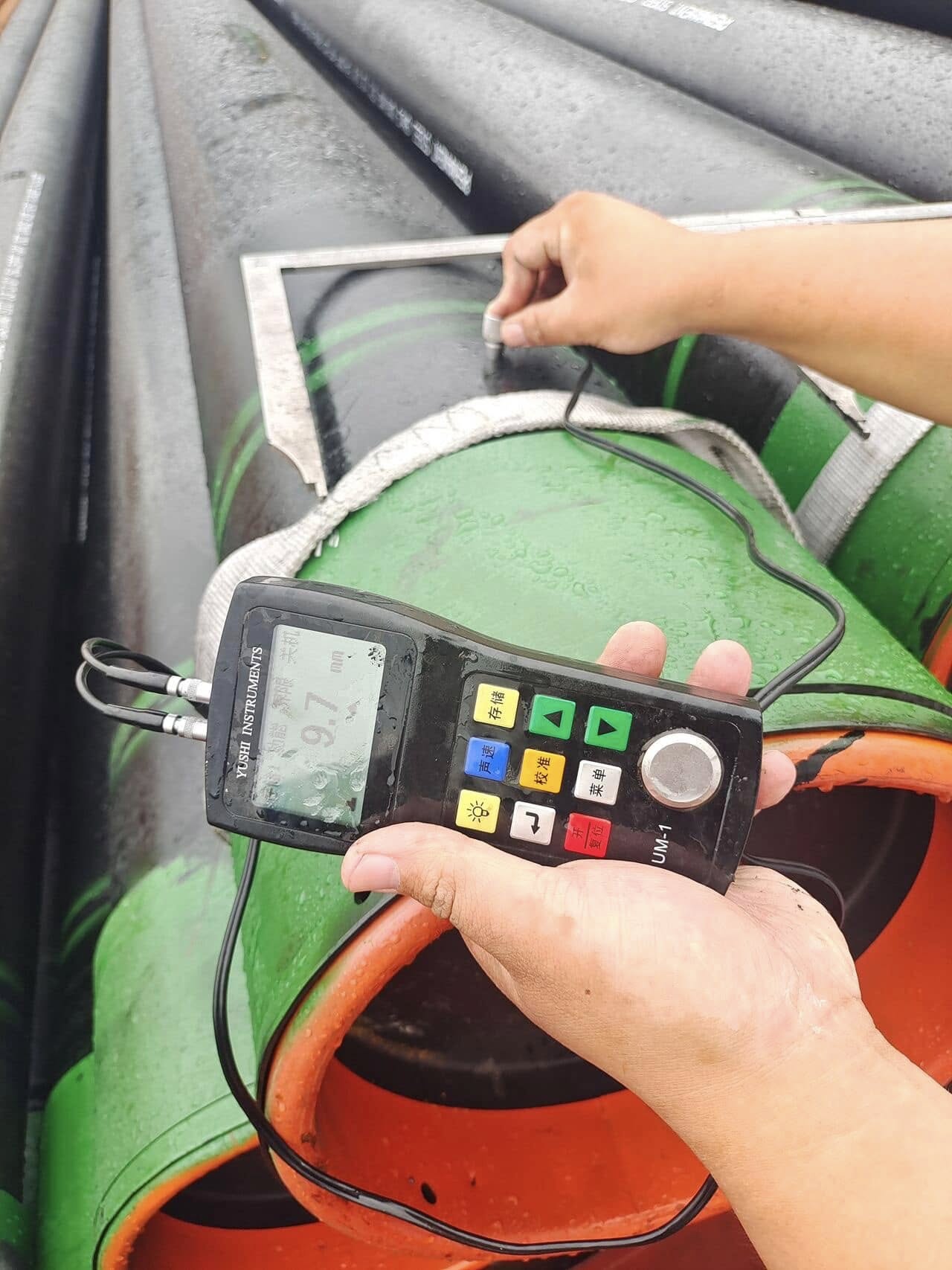
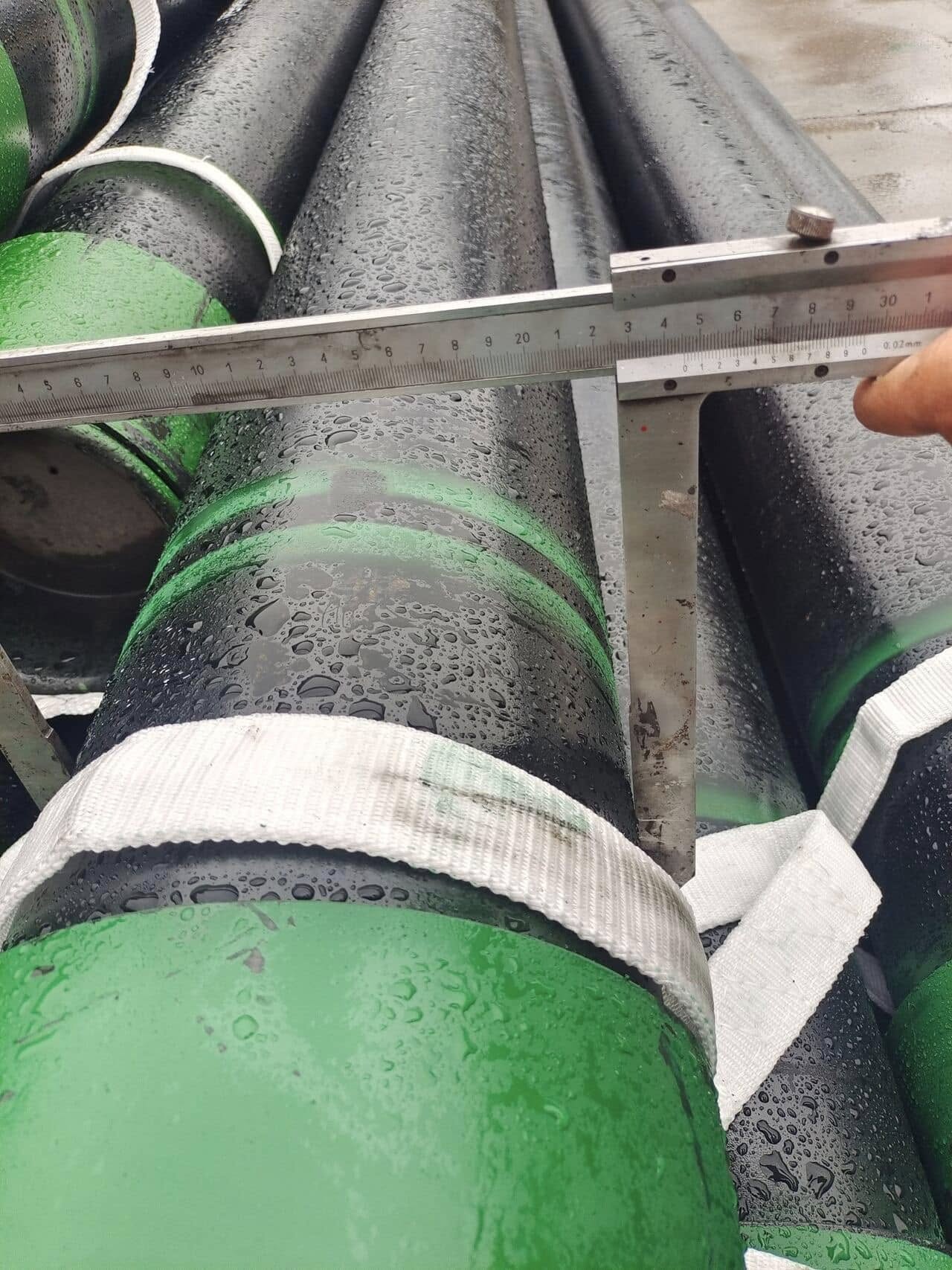
Each joint is hydrostatically tested to the API 5CT pressure table, passed through a drift mandrel and thread-gauged to API Spec 5B. Sour-service grades add hardness verification and, where specified, sulfide stress cracking testing to NACE MR0175 / ISO 15156. Request the mill test certificate to EN 10204 3.1 as standard, with 3.2 available where the project needs third-party validation; state the API monogram on the offer where licensed.
test and inspection
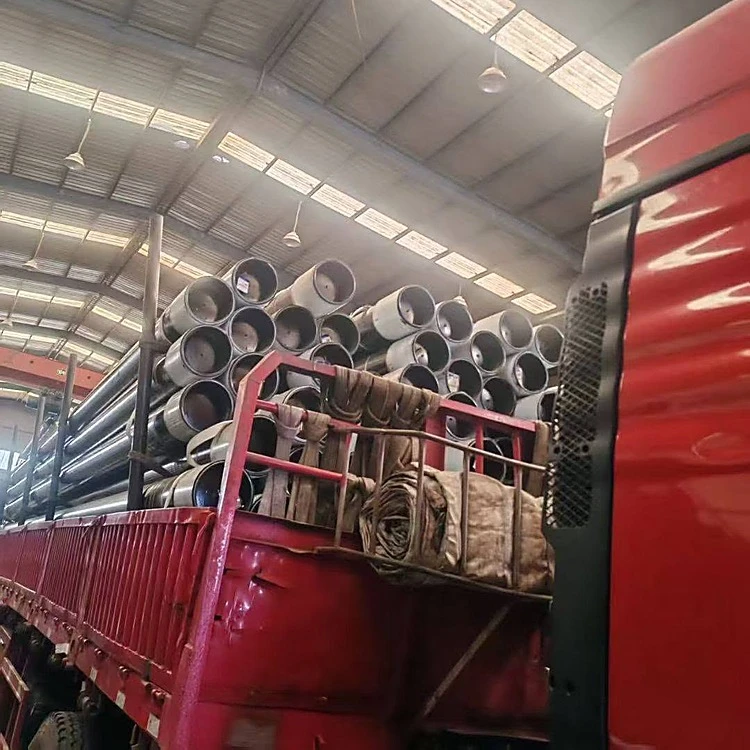
Packaging and shipping
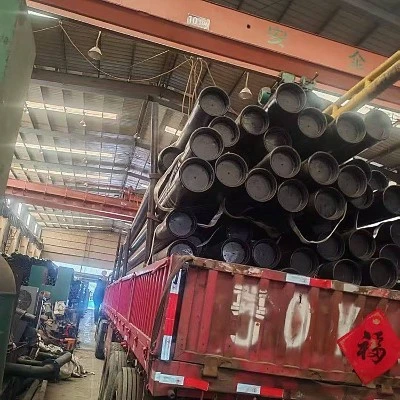
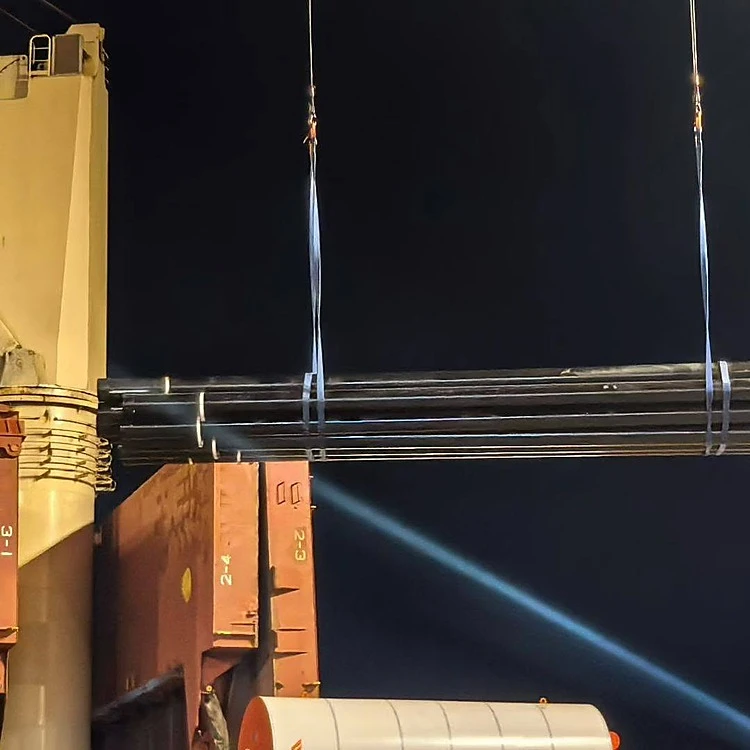
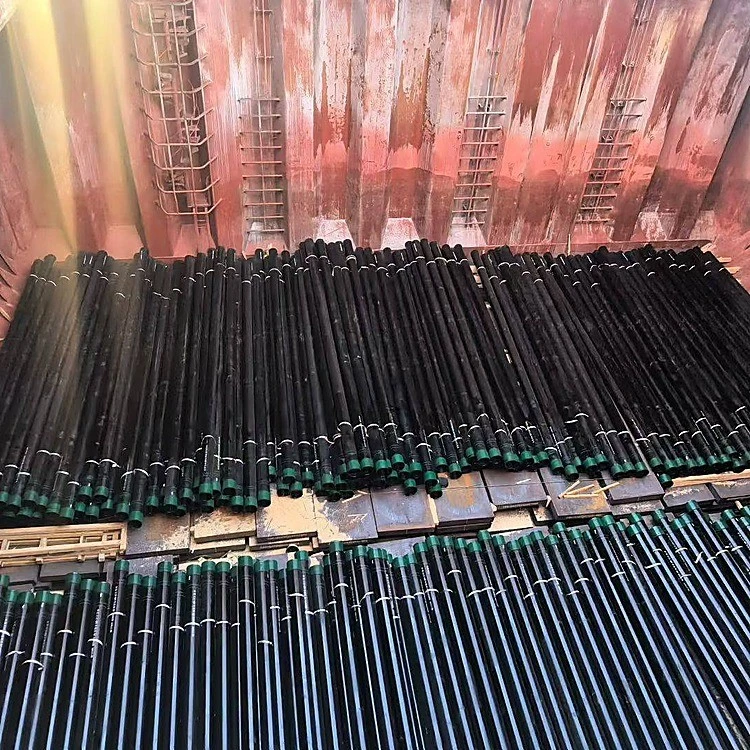
Send the complete line - outside diameter, nominal weight, grade, connection, length range and specification level - with quantity and destination. The quotation can then be built against the exact API 5CT / ISO 11960 size and weight, with drift, thread and certificate scope confirmed, so the casing matches the well programme rather than being priced as general pipe.
Request an Oil Well Casing Pipe Quotation
related product
FAQ
What outside diameters does an oilfield casing size chart cover?
API 5CT casing runs from 4-1/2 in (114.3 mm) to 20 in (508.0 mm) outside diameter. A chart lists the nominal diameters used for production, intermediate, surface and conductor strings, and pairs each with several nominal weights. The size selected for a well depends on the casing programme, not on availability alone.
Why does one casing outside diameter appear with several nominal weights?
Nominal weight in pounds per foot expresses wall thickness. A heavier joint has a thicker wall, a smaller inside diameter and a smaller drift, which raises resistance to collapse and burst but reduces the bore. Each outside diameter therefore appears with a range of weights, and the completion design selects the one that meets the load case.
How is drift diameter different from the calculated inside diameter?
Calculated inside diameter is outside diameter minus twice the nominal wall. Drift diameter is smaller because API 5CT requires a minimum-length mandrel to pass through every joint after threading. Drift is the guaranteed clear bore that tools and equipment must fit through, so it is the value checked against the completion design.
Where does the casing size range end and the tubing size range begin?
Casing is normally ordered from 4-1/2 in upward; oil well tubing sizes are listed from about 1.050 in up to 4-1/2 in. The two overlap at 4-1/2 in, but the products differ in duty: casing is cemented and permanent, tubing is an internal, retrievable flow string. Confirm which string a size refers to before comparing charts.
Which grades are specified for sour or high-pressure casing?
Sour wells use controlled-hardness grades such as L80 Type 1, C90, T95 or C110, with conformity to NACE MR0175 / ISO 15156. Deep, high-pressure sweet wells commonly use P110 or Q125. The grade is chosen from H2S partial pressure, temperature and the collapse and burst loads, and is stated with its specification level on the certificate.
What distinguishes STC, LTC and BTC connections on casing?
STC is a short round thread for shallow, low-tension strings; LTC engages a longer thread and carries more tension; BTC is a buttress thread that resists both tension and compression and is widely used for production casing. All are cut and gauged to API Spec 5B. Where a gas-tight seal is required, a premium metal-to-metal connection is specified instead.
What drives oilfield casing prices in a quotation?
Price is driven mainly by outside diameter and nominal weight, then grade, connection, specification level and order quantity. Seamless versus ERW manufacture, sour-service testing and third-party inspection also change the cost. Published prices are reference points only; a comparable figure requires the same size, weight, grade, end finish and certificate scope.
What should an oilfield casing enquiry state for a comparable offer?
List the outside diameter, nominal weight or wall, grade, connection, length range, specification level and quantity, plus the standard edition and any sour-service or special-drift requirement. Add the delivery port and required documents. Quotes prepared from different connection or certificate assumptions are not like-for-like.
Hot Tags: oil well casing pipe, China oil well casing pipe manufacturers, suppliers, factory
Previous
API 5CT Casing PipeNext
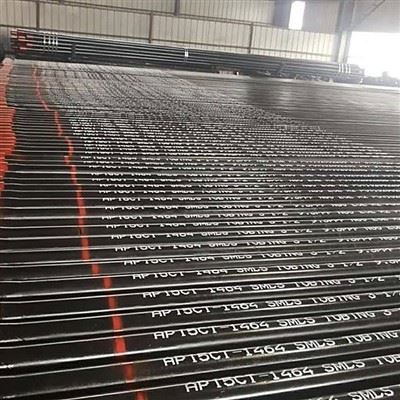
Oil Well TubingYou Might Also Like


Send Inquiry