




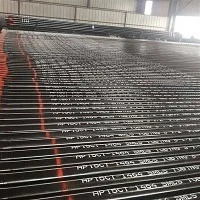
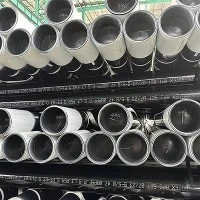
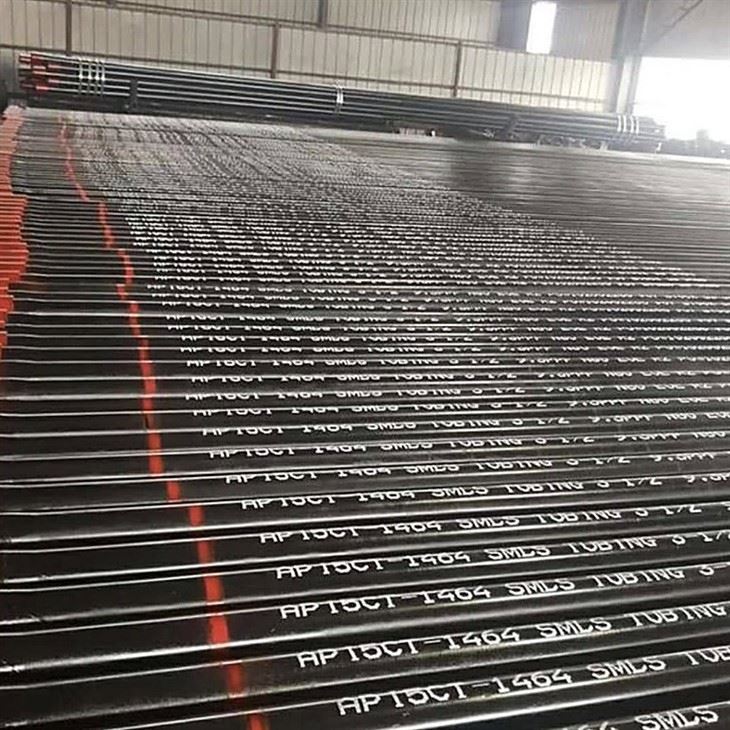

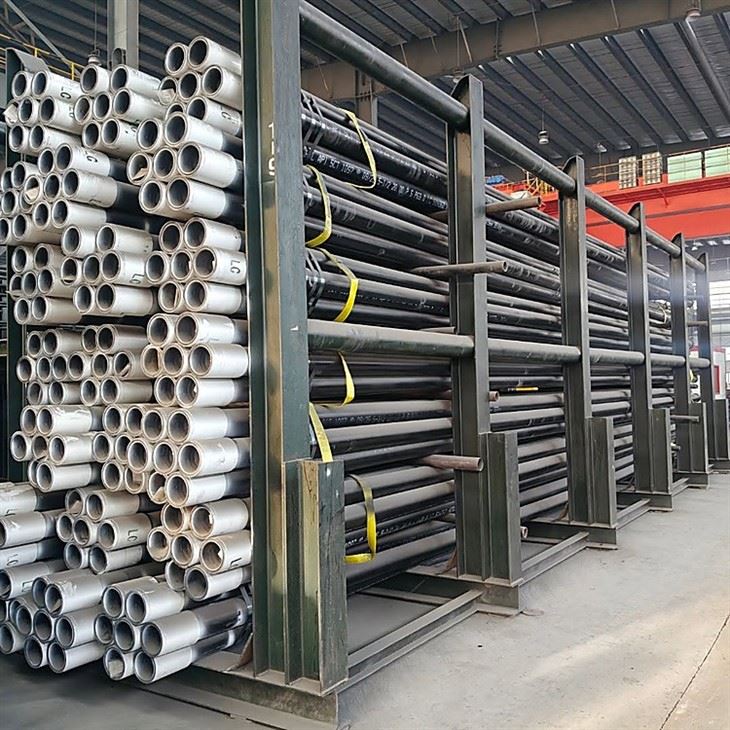
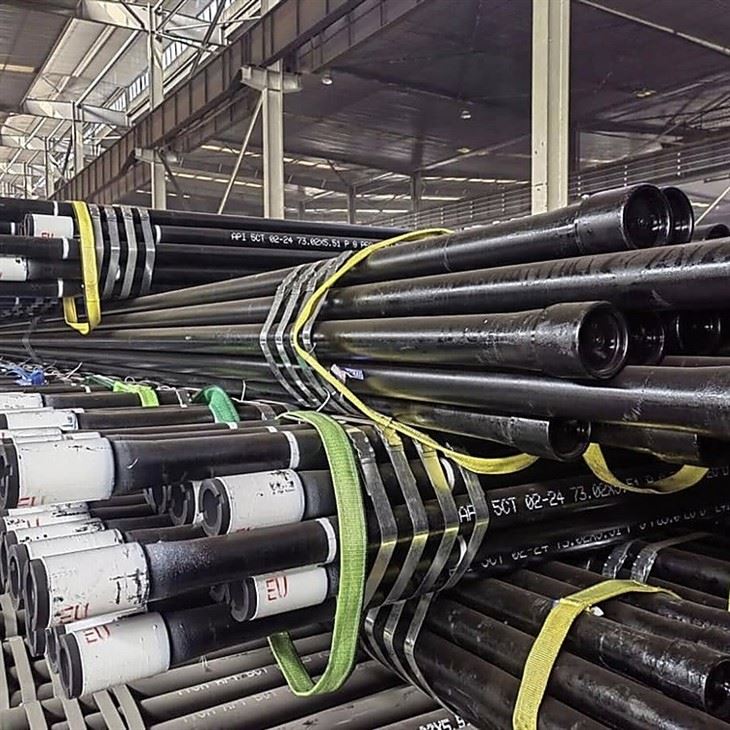
Production Casing And Tubing
Casing OD: 4-1/2 - 20 in
Tubing OD: 1.05 - 4-1/2 in
Common grades: J55 / N80 / L80 / P110
Casing threads: STC / LTC / BTC
Tubing threads: NUE / EUE / Integral
Production casing and tubing are the two API 5CT / ISO 11960 tubular products that line a completed well and carry its production. Production casing is the larger-diameter string, typically 4-1/2 to 20 in OD, set and cemented to isolate formations and contain well pressure; production tubing is the smaller string, usually 1.05 to 4-1/2 in OD, run inside the casing as the controlled flow path to the wellhead. Both are finished products - plain-end or threaded pipe made up with couplings - supplied in grades such as J55, N80, L80 and P110, seamless or ERW, and ordered against a specification rather than a catalogue number. Buyers of well tubing and casing select them by diameter, weight, grade, connection, length range and product specification level.
Product Specification
| Item | Production casing | Production tubing |
|---|---|---|
| Standard | API Spec 5CT / ISO 11960 | API Spec 5CT / ISO 11960 |
| Outside diameter | 4-1/2 to 20 in (114.3-508 mm) | 1.05 to 4-1/2 in (26.7-114.3 mm) |
| Common sizes | 5-1/2, 7, 9-5/8 in | 2-3/8, 2-7/8, 3-1/2 in |
| Manufacturing route | Seamless or ERW | Seamless or ERW |
| Grades | H40, J55, K55, N80, L80, P110, Q125 | J55, N80, L80, P110, 13Cr |
| Connections | STC, LTC, BTC, premium | NUE, EUE, integral, premium |
| Length range | R1 / R2 / R3 (R3 common) | R1 / R2 / R3 (R2 common) |
| Specification level | PSL1 / PSL2 / PSL3 as ordered | PSL1 / PSL2 / PSL3 as ordered |
| Testing | Hydrostatic, drift, NDT, thread gauging | Hydrostatic, drift, NDT, thread gauging |
| Documentation | EN 10204 3.1/3.2 MTC, API monogram | EN 10204 3.1/3.2 MTC, API monogram |
How the Two Products Differ
As products, production casing and tubing are made to the same material system but are ordered to different dimensional and connection ranges. Casing is the larger, cemented barrier around the wellbore; tubing is the smaller, retrievable flow path run inside it. The table compares them as supply items so that each can be specified correctly.
| Attribute | Production casing | Production tubing |
|---|---|---|
| Position in well | Set around the wellbore, normally cemented | Run inside the casing, retrievable on workover |
| Typical OD | 4-1/2 to 20 in | 1.05 to 4-1/2 in |
| Typical length | R3 common to reduce make-ups | R2 common for completion equipment |
| Standard connections | STC / LTC / BTC | NUE / EUE / integral joint |
| Ordering focus | Collapse, burst, connection strength | Internal pressure, tension, corrosion, flow bore |
This is a product-selection comparison. Final sizing and grade are set by the approved well design and the applicable specification, not by the supplier.
Steel Grades and Mechanical Properties
API 5CT groups grades by yield strength and, for sour service, by hardness control. Production programmes commonly start with J55 or K55, move to N80 for higher load, and use L80 where H2S is present; P110 and higher grades cover deep, high-pressure wells. The H40 grade covers the lightest-duty applications.
| Grade | Yield min | Yield max | Tensile min | Typical duty |
|---|---|---|---|---|
| H40 | 276 MPa / 40 ksi | 552 MPa / 80 ksi | 414 MPa / 60 ksi | Light-duty casing |
| J55 | 379 MPa / 55 ksi | 552 MPa / 80 ksi | 517 MPa / 75 ksi | Standard casing and tubing |
| K55 | 379 MPa / 55 ksi | 552 MPa / 80 ksi | 655 MPa / 95 ksi | Higher-tensile casing |
| N80 | 552 MPa / 80 ksi | 758 MPa / 110 ksi | 689 MPa / 100 ksi | Production casing and tubing |
| L80 Type 1 | 552 MPa / 80 ksi | 655 MPa / 95 ksi | 655 MPa / 95 ksi | Sour-service |
| C90 | 621 MPa / 90 ksi | 724 MPa / 105 ksi | 689 MPa / 100 ksi | Sour-service |
| T95 | 655 MPa / 95 ksi | 758 MPa / 110 ksi | 724 MPa / 105 ksi | Sour-service |
| P110 | 758 MPa / 110 ksi | 965 MPa / 140 ksi | 862 MPa / 125 ksi | Deep, high-pressure |
| Q125 | 862 MPa / 125 ksi | 1034 MPa / 150 ksi | 931 MPa / 135 ksi | High-stress wells |
Values are common API 5CT minimums for guidance. The applicable edition, grade and specification level control the limits on a delivered order; sour-service grades carry additional hardness requirements.
Chemical Composition
API 5CT fixes mechanical properties and heat-treatment condition for the general-purpose grades rather than one compulsory chemistry, so the certificate for the delivered heat is the controlling document. Typical ranges below guide grade selection and do not replace the mill test certificate.
| Grade | C | Mn | P max | S max | Si | Others |
|---|---|---|---|---|---|---|
| H40 / J55 / K55 | 0.30-0.39 | 1.20-1.50 | 0.030 | 0.030 | 0.20-0.35 | Cu/Ni/Cr residual |
| N80 | 0.34-0.38 | 1.45-1.70 | 0.030 | 0.030 | 0.20-0.35 | Cr, Ni, Cu each <= 0.15 |
| L80 Type 1 | 0.34-0.44 | 0.40-0.70 | 0.020 | 0.030 | 0.20-0.35 | Cr 0.80-1.10 |
| C90 / T95 | 0.26-0.35 | 0.60-1.00 | 0.020 | 0.010 | 0.20-0.35 | Cr, Ni, Cu, Mo per grade |
Typical mill chemistry for guidance only. API Spec 5CT / ISO 11960 and the agreed specification level govern; controlled-hardness sour-service grades have additional chemistry and hardness limits.
Tubing Sizes and Weights
Production tubing is identified by outside diameter and nominal weight in lb/ft. The mass designation fixes the nominal wall and internal diameter used for flow and strength calculations. Common API combinations are listed below; verify each against the current API 5CT size list and the chosen end finish.
| OD (in) | OD (mm) | Nominal weight (lb/ft) | Wall thickness (mm) | End finish |
|---|---|---|---|---|
| 2-3/8 | 60.32 | 4.70 | 4.83 | NUE |
| 2-3/8 | 60.32 | 5.80 | 6.45 | NUE / EUE |
| 2-3/8 | 60.32 | 7.35 | 8.53 | EUE |
| 2-7/8 | 73.02 | 6.40 | 5.51 | NUE / EUE |
| 2-7/8 | 73.02 | 7.80 | 7.01 | EUE |
| 3-1/2 | 88.90 | 9.20 | 6.45 | NUE / EUE |
| 3-1/2 | 88.90 | 12.70 | 9.52 | EUE |
| 4 | 101.60 | 11.00 | 6.65 | NUE / EUE |
| 4-1/2 | 114.30 | 12.60 | 6.88 | NUE / EUE |
Wall values are reference combinations; nominal inside diameter equals OD minus twice the wall. Drift diameter is a separate mandated value and is always smaller. Confirm the exact weight, wall and drift basis against the standard and the purchase specification.
Production Casing Sizes and Weights
Production casing diameters overlap the intermediate range because the same API size system serves every string in the well. The sizes below are frequently specified for production casing; each weight fixes the wall, nominal inside diameter and collapse resistance, so it is ordered explicitly.
| OD (in) | OD (mm) | Nominal weight (lb/ft) | Wall thickness (mm) | Common grades |
|---|---|---|---|---|
| 5-1/2 | 139.70 | 17.00 | 7.72 | J55 / K55 / N80 |
| 5-1/2 | 139.70 | 20.00 | 9.17 | N80 / L80 |
| 5-1/2 | 139.70 | 23.00 | 10.54 | N80 / L80 / P110 |
| 7 | 177.80 | 23.00 | 8.05 | J55 / N80 |
| 7 | 177.80 | 26.00 | 9.19 | N80 / L80 |
| 7 | 177.80 | 29.00 | 10.36 | N80 / P110 |
| 9-5/8 | 244.48 | 40.00 | 8.94 | J55 / N80 / L80 |
| 9-5/8 | 244.48 | 47.00 | 11.99 | N80 / P110 / Q125 |
Weights are API size-and-mass designations, not measured weights of every joint. The applicable edition, connection and specification level control the exact dimensions and threaded-and-coupled mass.
Dimensional Tolerances
Dimensional limits are set by API 5CT and the ordered specification level. The commonly applied bands below show what a delivered joint may vary within; the applicable edition controls the exact figures for both casing and tubing.
| Item | Permitted deviation |
|---|---|
| Pipe body OD <= 101.6 mm | +/- 0.79 mm |
| Pipe body OD >= 114.3 mm | -0.5% D to +1.0% D |
| Coupling OD | +/- 1% D |
| Wall thickness | -12.5% |
| Weight, single length | +6.5% / -3.5% |
| Length | R1 / R2 / R3 range as ordered |
Values shown are common API 5CT tolerance bands for guidance. Confirm the exact limits for the edition, size and specification level on the purchase order.
Connections and End Finishes
Casing connections are cut to short round (STC), long round (LTC) or buttress (BTC) profiles, with buttress used where higher joint strength is needed. Tubing uses non-upset (NUE) or external-upset (EUE) ends, or an integral joint where a compact connection is preferred. Premium gas-tight connections are specified only when the well design requires them. All API threads and gauging follow API Spec 5B, and the connection designation appears beside the grade and weight on the ordering line.
Manufacturing, Inspection and Documentation
Both products are made by the seamless route, piercing and rolling a solid billet, or by electric-resistance welding of strip with the seam heat-treated. ERW casing and tubing is used where the design permits; seamless pipe is chosen where pressure integrity, the specification or the service environment demands it. Each joint is hydrostatically tested and drifted, threads are gauged, and non-destructive inspection is applied where the specification level requires it. Sour-service grades such as C110 are hardness-verified.
The document package is part of the product: a mill test certificate to EN 10204 3.1 or 3.2 when agreed, evidence of API monogram authorisation, and hydrostatic, drift and thread-gauging records traceable to the heat and size delivered. Buyers of oil casing and tubing should confirm this scope with the quotation, because it changes what is actually certified.
Specifying and Ordering Casing and Tubing
A clear enquiry itemises each product: outside diameter, nominal weight or wall, grade, connection and end finish, length range, specification level and quantity, plus the standard edition and any sour-service or impact requirement. Casing and tubing pipe should not be quoted as one undifferentiated line, because the two have different diameter ranges, connections and inspection scope.
Compare quotations on the same grade, connection, length range and specification level. A lower price that changes the end finish or omits the certificate scope is not a like-for-like offer, and the connection must be covered by the stated API monogram.
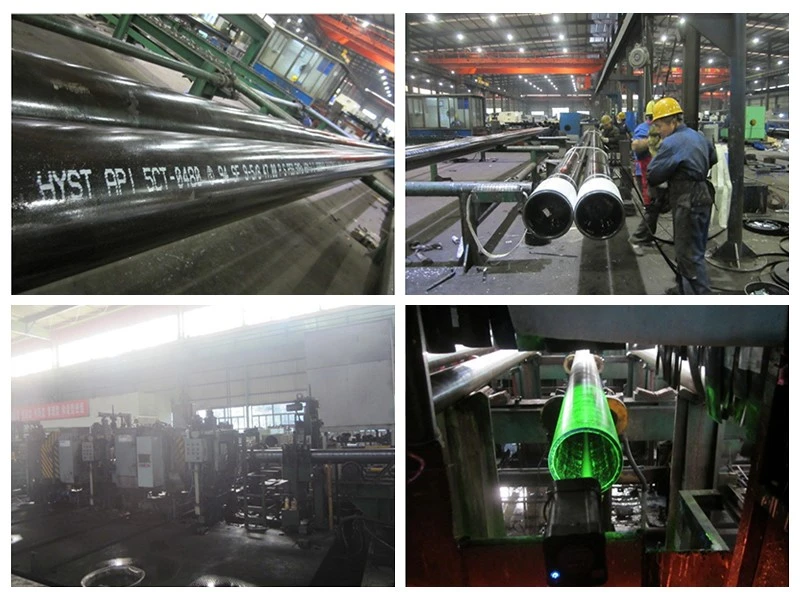
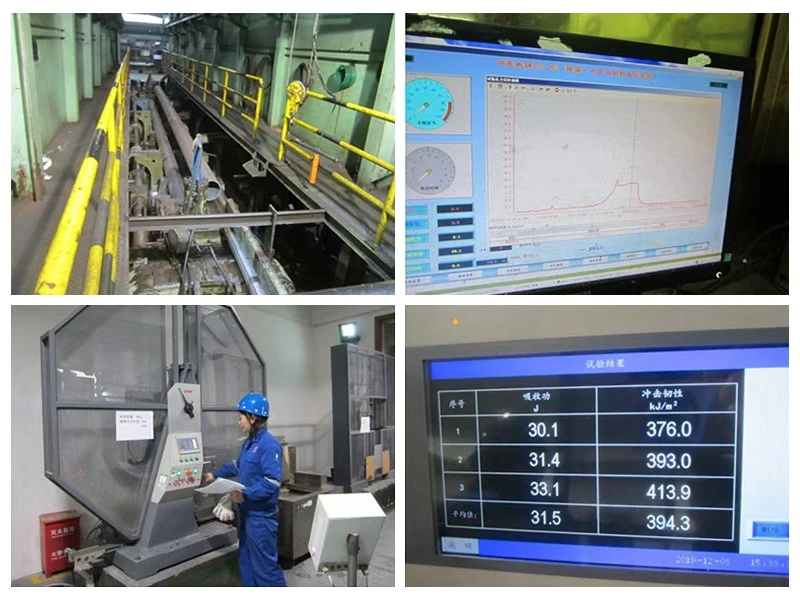
OCTG Test and Inspection
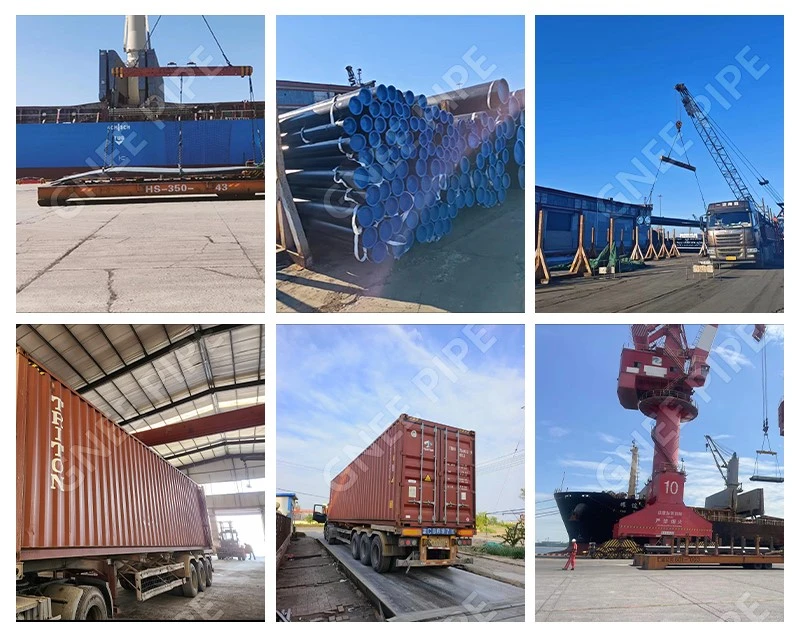
packaging and shipping
Send the diameter, weight, grade, connection and length range for each string, together with the specification level and quantity. A quotation can then be built against the exact API 5CT / ISO 11960 line - with grade, end finish and certificate scope confirmed - so that the casing barrier and the production tubing are matched to the same well program instead of priced as generic pipe.
Request a Casing and Tubing Quotation
FAQ
What outside diameters are supplied for production casing and tubing?
Production casing is commonly ordered from 4-1/2 in (114.3 mm) to 20 in (508 mm) outside diameter, with 5-1/2, 7 and 9-5/8 in frequent in production strings. Production tubing covers about 1.05 in (26.7 mm) to 4-1/2 in (114.3 mm), with 2-3/8, 2-7/8 and 3-1/2 in the most widely used. The exact size is taken from the well program and the API 5CT size-and-mass list.
Which grades are most common for a production string?
J55 and K55 cover lower-load production casing, N80 is widely used for intermediate and production strings, and L80 Type 1 is specified where H2S is present. P110 and Q125 serve deeper, higher-pressure wells, and 13Cr or other corrosion-resistant grades are selected for CO2 or sour service. The grade must be verified against the well load case and the applicable NACE MR0175 / ISO 15156 requirement where sour conditions apply.
How do casing connections differ from tubing connections?
Casing is normally threaded with short round (STC), long round (LTC) or buttress (BTC) connections, while tubing uses non-upset (NUE), external-upset (EUE) or integral joint connections. Premium gas-tight connections are available for both where the design calls for them. Threads and gauging follow API Spec 5B, and the connection is ordered explicitly because it changes joint strength and threaded-and-coupled mass.
What does NUE versus EUE mean for tubing?
NUE (non-upset external) tubing has a plain end with an internal-upset or non-upset thread and uses a smaller coupling; EUE (external-upset) tubing has an upset end and a larger, stronger coupling. EUE gives greater joint strength and is used where tension or pressure demands it, while NUE is the economical choice for lighter service. The end finish must be stated in the order.
Can production casing and tubing be supplied in sour-service grades?
Yes. Sour-service grades such as L80 Type 1, C90 and T95 are supplied with controlled hardness and chemistry, and conformity to NACE MR0175 / ISO 15156 must be stated in the purchase specification. These grades are selected from the H2S partial pressure, temperature and pH of the well, not substituted on price; the mill certificate must record the hardness and heat treatment delivered.
What length ranges apply to production casing and tubing?
API 5CT defines R1 (about 4.88-7.62 m), R2 (about 7.62-10.36 m) and R3 (about 10.36-14.63 m). Production casing is frequently ordered in R3 to reduce the number of make-ups, while tubing is commonly R2. The range length is a purchase decision tied to handling and completion equipment and must be written into the order.
What inspection and certificates accompany a delivery?
A shipment normally carries a mill test certificate to EN 10204 3.1, or 3.2 when agreed, with chemistry, yield, tensile and elongation for each heat, plus evidence of API monogram authorisation for the stated specification level. Hydrostatic test, drift and thread-gauging records are supplied, and non-destructive inspection such as ultrasonic or electromagnetic testing is added where the specification level or grade requires it.
What should a casing and tubing enquiry specify?
A comparable enquiry lists, for each product, the outside diameter, nominal weight or wall thickness, grade, connection and end finish, length range, specification level and quantity, together with the standard edition and any sour-service or impact requirement. Casing and tubing are different products with different size and connection ranges, so the two should be itemised separately rather than quoted as one line.
Hot Tags: production casing and tubing, China production casing and tubing manufacturers, suppliers, factory
Previous
API 5CT Casing PipeYou Might Also Like


Send Inquiry