





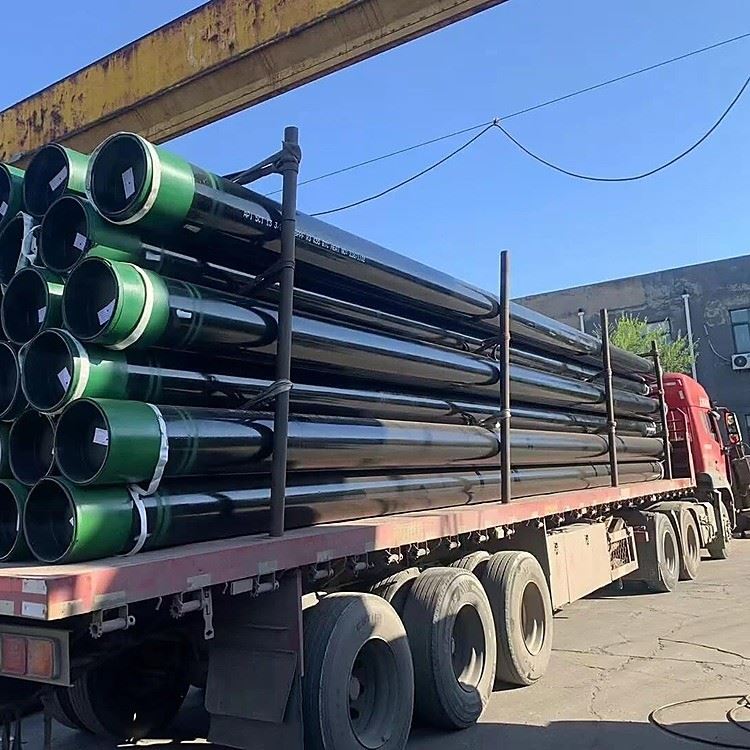
Production Casing
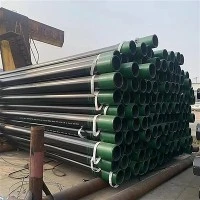
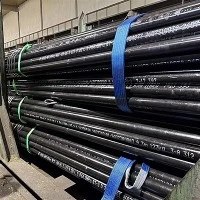
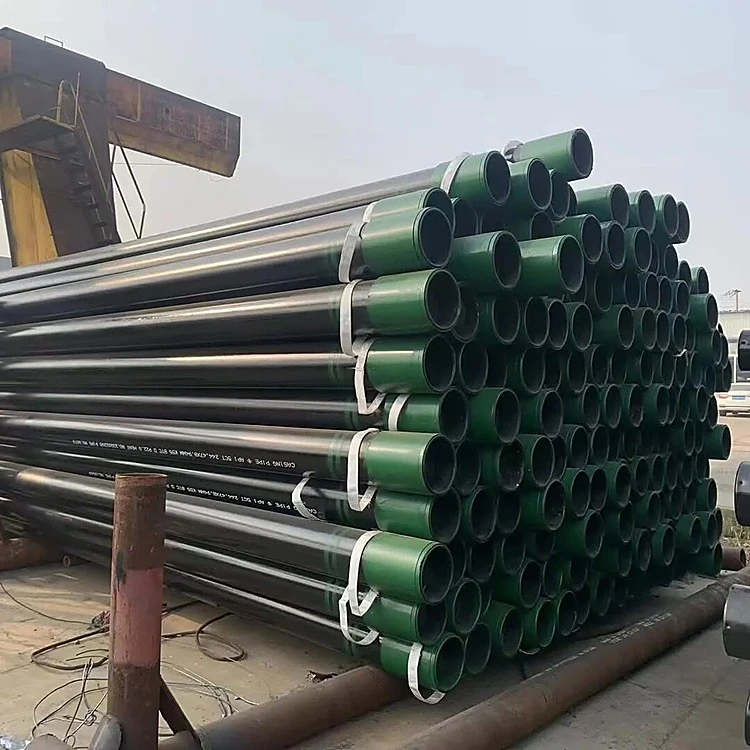
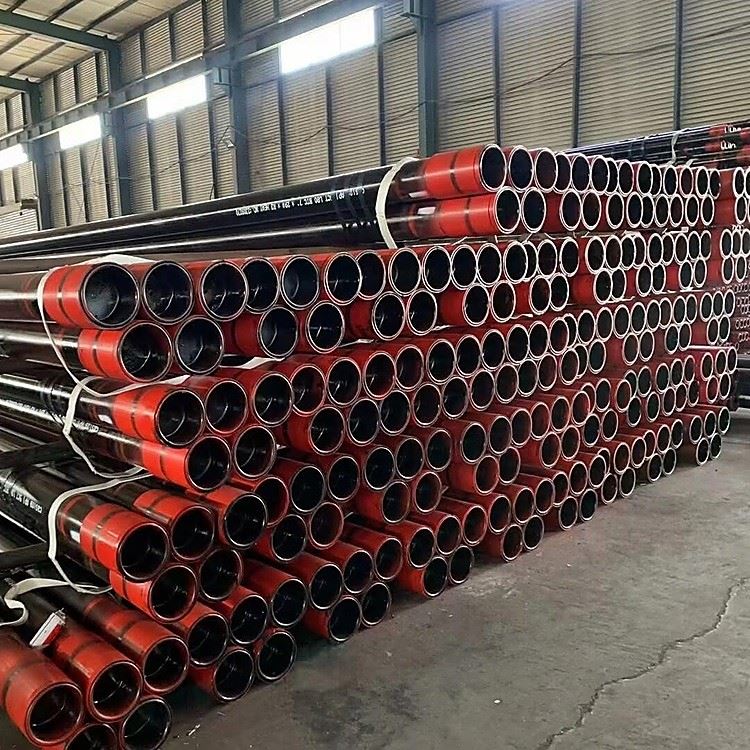
Production casing is the final string of api 5ct casing run and cemented across the producing formation to isolate zones and provide a permanent pressure barrier for the life of the well. Made to API Spec 5CT / ISO 11960, it is a large-diameter carbon steel casing pipe - commonly 5-1/2, 7 or 9-5/8 in outside diameter - supplied plain-end or with STC, LTC or BTC connections in grades such as J55, N80, L80 and P110. Because it is cemented in place and cannot be pulled, its burst, collapse and joint strength govern the order. Buyers of production casing oil and gas specify it by size, weight, grade, connection and specification level.
Product Specification
| Item | Specification |
|---|---|
| Standard | API Spec 5CT / ISO 11960 (current edition as ordered) |
| Product | Production casing, plain end or threaded-and-coupled |
| Outside diameter | Commonly 4-1/2 to 20 in (114.3-508 mm); production strings often 5-1/2 to 9-5/8 in |
| Nominal weight | Per API 5CT size-and-mass table, e.g. 9-5/8 in at 32.3-75.6 lb/ft |
| Connections | STC, LTC, BTC; premium gas-tight where specified |
| Grades | J55, K55, N80, L80, C90, T95, P110, Q125; 9Cr, 13Cr and duplex where specified |
| Length range | R1 / R2 / R3 (R2 common onshore, R3 offshore) |
| Strength basis | Burst and collapse per API 5C3; joint strength per API 5CT |
| Testing | Hydrostatic, drift, thread gauging, NDT where required |
| Documentation | EN 10204 3.1 / 3.2 mill certificate, API monogram evidence |
What Production Casing Is Made To Do
As a product, octg casing is the permanent steel lining of the finished well. A steel well casing pipe is run into the drilled hole and cemented in place across the producing interval. It isolates the target zone from water-bearing and non-productive formations, contains the pressure of the produced or injected fluids, and carries the load of the wellhead and the tubing hung inside it. That duty sets the priorities: collapse and burst strength, a connection that holds under tension and pressure, and material suited to the produced fluid.
Unlike tubing, the string is not retrieved during a workover; it is part of the well for its whole life. A casing in well remains as the structural barrier long after the completion is run. In a gas well casing design the gas-tightness of the connection and the collapse rating become controlling considerations, because a small leak path at the joint cannot be accepted in sustained gas service.
| String | Position | Primary product duty | Typical size example |
|---|---|---|---|
| Conductor | Shallowest, large diameter | Hold the hole, carry the wellhead | 20 in |
| Surface casing | Set below freshwater | Isolate shallow water, support BOP | 13-3/8 in |
| Intermediate casing | Between surface and production | Isolate pressure and unstable zones | 9-5/8 in |
| Production casing | Across the producing interval | Final barrier, zone isolation, pressure containment | 7 in or 5-1/2 in |
Sizes are illustrative; the actual programme is set by the well design, hole size and local regulation.
Steel Grades and Mechanical Properties
Casing grades are the API 5CT grades used for the cemented string. J55 and K55 cover shallow, low-pressure wells; N80 is the general production grade; L80, T95 and C90 serve sour service; P110 and Q125 cover deep, high-pressure wells. Chrome and duplex grades handle CO2 and chlorides.
| Grade | Yield min | Yield max | Tensile min | Typical casing duty |
|---|---|---|---|---|
| H40 | 276 MPa / 40 ksi | 552 MPa / 80 ksi | 414 MPa / 60 ksi | Shallow, low-pressure wells |
| J55 / K55 | 379 MPa / 55 ksi | 552 MPa / 80 ksi | 517 MPa / 75 ksi | Conventional wells |
| N80-1 / N80-Q | 552 MPa / 80 ksi | 758 MPa / 110 ksi | 689 MPa / 100 ksi | Intermediate and production strings |
| L80 Type 1 | 552 MPa / 80 ksi | 655 MPa / 95 ksi | 655 MPa / 95 ksi | Sour service, controlled hardness |
| C90 | 621 MPa / 90 ksi | 724 MPa / 105 ksi | 689 MPa / 100 ksi | Sour service |
| T95 | 655 MPa / 95 ksi | 758 MPa / 110 ksi | 724 MPa / 105 ksi | High-strength sour service |
| P110 | 758 MPa / 110 ksi | 965 MPa / 140 ksi | 862 MPa / 125 ksi | Deep, high-pressure wells |
| Q125 | 862 MPa / 125 ksi | 1034 MPa / 150 ksi | 931 MPa / 135 ksi | Ultra-deep, extreme pressure |
Values are common API 5CT minimums for guidance; the delivered edition, grade and specification level control the exact limits. Sour-service grades add hardness requirements under NACE MR0175 / ISO 15156.
Chemical Composition
API 5CT sets mechanical properties and heat treatment for general-purpose casing grades rather than a single compulsory chemistry. The mill certificate for the delivered heat is therefore the controlling document; the ranges below are guidance for selection only.
| Grade | C | Mn | P max | S max | Si | Others |
|---|---|---|---|---|---|---|
| J55 | 0.30-0.39 | 1.20-1.50 | 0.030 | 0.030 | 0.20-0.35 | Cu/Ni/Cr residual |
| N80 | 0.34-0.38 | 1.45-1.70 | 0.030 | 0.030 | 0.20-0.35 | Cr, Ni, Cu each <= 0.15 |
| L80 Type 1 | 0.34-0.44 | 0.40-0.70 | 0.020 | 0.030 | 0.20-0.35 | Cr 0.80-1.10 |
Typical mill chemistry for guidance only. Corrosion-resistant and sour-service grades have additional composition and hardness limits; always use the certificate for the actual heat.
Burst, Collapse and Joint Strength
Casing is selected by load, not by grade name alone. Internal yield (burst) rises with wall and yield strength; collapse resistance depends on diameter-to-wall ratio and grade; joint strength depends on the connection. The values below are reference ratings for one common production size and illustrate why the grade step matters. Final ratings must be calculated with API 5C3 for the ordered size, weight and grade.
| Grade | Approx. collapse | Approx. burst | Comment |
|---|---|---|---|
| K55 | about 24 MPa (3,480 psi) | about 37 MPa (5,370 psi) | Shallow, low-pressure duty |
| N80 | about 35 MPa (5,080 psi) | about 54 MPa (7,830 psi) | General production string |
| P110 | about 48 MPa | about 74 MPa | Deep, high-pressure wells |
Indicative values from published references for the same size and weight; rating depends on the exact wall, grade and connection. Confirm against the API 5C3 calculation for the ordered specification.
Casing Sizes and Nominal Weights
An oil casing pipe is identified by outside diameter and nominal weight in lb/ft. The weight fixes the wall, the nominal inside diameter and the drift, so all three must be considered together. Common API combinations are listed below; verify each against the current size list and the chosen connection.
| OD (in) | OD (mm) | Common nominal weights (lb/ft) | Wall range (mm) | Typical use |
|---|---|---|---|---|
| 4-1/2 | 114.30 | 9.5 - 15.1 | 5.21 - 8.56 | Small production / liner |
| 5-1/2 | 139.70 | 15.5 - 23.0 | 6.98 - 10.54 | Production casing |
| 7 | 177.80 | 20.0 - 38.0 | 7.11 - 13.72 | Production casing |
| 8-5/8 | 219.08 | 24.0 - 36.0 | 6.71 - 10.16 | Production / intermediate |
| 9-5/8 | 244.48 | 32.3 - 75.6 | 7.92 - 20.24 | Intermediate / production |
Weight and wall ranges are reference combinations, not a single ordered value. Confirm the exact weight, wall and drift basis against the API 5CT table for the delivered edition.
Dimensional Tolerances
API 5CT and the ordered specification level set the dimensional limits. The commonly applied bands below show the variation a delivered joint may have; the applicable edition controls the exact figures.
| Item | Permitted deviation |
|---|---|
| Outside diameter | +/- 0.79 mm for OD < 114.3 mm; percentage band for larger OD |
| Wall thickness | Not less than 87.5% of specified nominal wall unless otherwise agreed |
| Weight, single length | +6.5% / -3.5% |
| Threaded-and-coupled length | Per API 5CT end-finish table |
| Drift diameter | Mandrel per API 5CT for the ordered size and weight |
| Straightness | Within the limit defined by the applicable edition |
Values shown are common API 5CT tolerance bands for guidance. Confirm the exact limits for the edition, size, connection and specification level on the purchase order.
Connections and Threading
This oil well casing pipe is supplied plain end or threaded-and-coupled. API Spec 5B defines three standard casing connections - STC (short round), LTC (long round) and BTC (buttress) - all cut and gauged to the same standard so that pipe and couplings from different suppliers interchange. They differ in thread form, engagement length and therefore in the load the joint can carry before the pipe body becomes the limit. The connection is specified separately from the grade and must match the tension, burst and collapse of the design.
| Connection | Thread form | TPI | Seal mechanism | Typical joint efficiency | Gas-tight | Typical casing duty |
|---|---|---|---|---|---|---|
| STC (short round) | 60 degree rounded V, 1:16 taper | 8 | Thread interference + compound | Lowest of the three | No | Shallow, low-tension strings |
| LTC (long round) | Same profile, longer engagement | 8 | Thread interference + compound | Above STC | No | Surface and intermediate strings |
| BTC (buttress) | Trapezoidal, square shoulder | 5 | Thread interference + compound | High in tension and compression | No | Intermediate and production casing |
| Premium (proprietary) | Proprietary form + torque shoulder | Varies | Radial metal-to-metal seal | About pipe-body strength | Yes | Gas, HPHT, sour, deviated wells |
Joint efficiency figures published by different sources vary with size, weight and grade; the values above are comparative guidance only. Confirm the exact rating from the connection data and API 5CT / API 5B for the ordered specification. None of the three standard API connections is classified as gas-tight.
Round-thread connections (STC and LTC) share an 8 TPI, 60 degree profile with rounded crests and roots and a 1:16 taper on diameter. Make-up drives the tapered flanks into interference; the thread compound fills the residual helical clearance and provides the seal. LTC simply extends the engaged length, giving more tensile area and a longer leak path than STC. BTC changes the form to a 5 TPI buttress profile with a square load flank, which carries higher axial and compression loads and resists jump-out under combined tension and bending.
| Casing OD (in) | Total thread length L4 | Hand-tight engagement L1 | Pitch diameter at L1 (E1) |
|---|---|---|---|
| 4-1/2 | 2.000 | 1.000 | 4.412 |
| 5-1/2 | 2.125 | 1.125 | 5.412 |
| 7 | 2.250 | 1.250 | 6.912 |
| 8-5/8 | 2.500 | 1.500 | 8.537 |
| 9-5/8 | 2.625 | 1.625 | 9.537 |
| 10-3/4 | 2.875 | 1.875 | 10.662 |
| 13-3/8 | 3.125 | 2.125 | 13.287 |
| 20 | 3.625 | 2.625 | 19.912 |
Reference dimensions from published API 5B data for guidance. Exact L4, L1, E1 and make-up allowance depend on the edition, size, weight and connection; use the licensed gauge and the supplier thread data for the delivered order.
Where the well is a gas or high-pressure gas casing application, an API round or buttress thread that relies on thread compound may not provide a defensible gas-tight seal. A premium connection with a radial metal-to-metal seal and a positive torque shoulder, qualified to API RP 5C5 or ISO 13679, is then specified. Make-up is controlled to a defined torque range - reference values are published in API RP 5C1 - and torque and turns are recorded for each joint; under-torque leaves the seal unloaded and over-torque can damage the thread. The connection is ordered with the well design; a premium name alone does not establish interchangeability.
Manufacture, Inspection and Documentation
Casing is made as seamless casing pipe by piercing and rolling a solid billet, or as erw casing by forming and longitudinally welding strip with the weld and heat-affected zone heat treated. ERW casing pipe is a cost-effective option where the design allows, while seamless is chosen where pressure integrity and critical service dominate; a seamless steel casing string and a welded string are supplied to the same API 5CT product specification with different inspection focus.
Each joint is hydrostatically tested and drifted, and threads are gauged to API Spec 5B. The ERW seam receives non-destructive examination, and sour-service grades receive hardness verification. The document set - a mill test certificate to EN 10204 3.1 or 3.2 when agreed, API monogram evidence, and hydrostatic, drift and thread records tied to the delivered heat - is part of the product, not an option. Buyers of oil and gas well casing should confirm this scope with the quotation.
Specifying and Ordering Production Casing
A clear enquiry lists the outside diameter, nominal weight, grade, connection, length range, specification level and quantity, plus the standard edition and any sour-service, CO2, drift or special-thread requirement. Defining the weight rather than a rough wall removes ambiguity, because weight and wall together set the burst, collapse and joint strength that the cemented string will see.
Compare offers on the same connection and certificate scope. A quotation that changes BTC to STC, or omits the drift basis, is not a like-for-like price because it supplies a different casing string. Confirm that the connection is covered by the stated API monogram, and that a gas pipe casing order states its gas-tightness basis explicitly.
Test and inspection

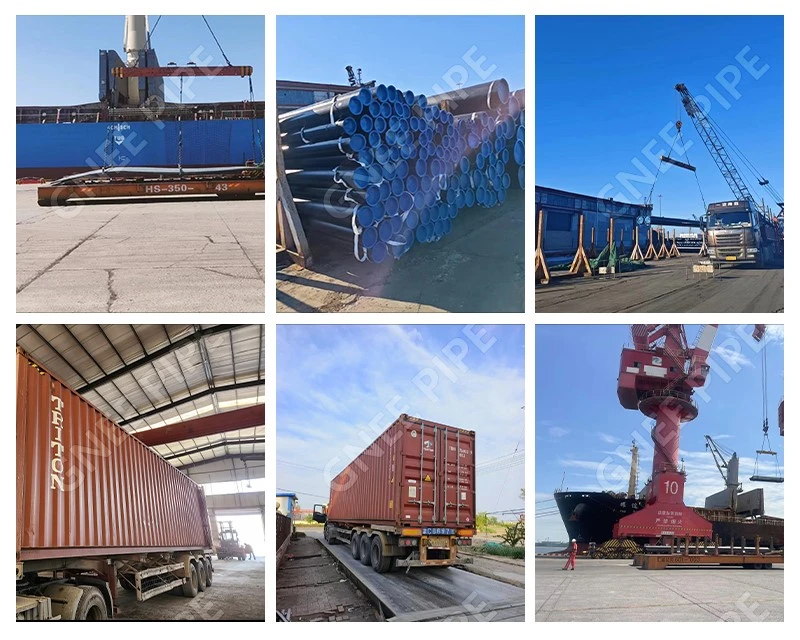
Packaging and shipping
Send the size, weight, grade, connection and length range for your string, together with the specification level, quantity and any sour-service or gas-tight requirement. A quotation can then be built against the exact API 5CT / ISO 11960 line.
Request a Production Casing Quotation
Related Product
FAQ
Where does production casing sit in the casing programme?
It is the last casing string run before the production tubing, set across or just above the producing interval and cemented back up the annulus. Surface casing protects shallow freshwater, and intermediate casing isolates pressure and unstable zones; production casing is the final barrier that isolates the producing zone from other formations and supports the wellhead and completion.
Why must production casing resist collapse as well as burst?
Cemented casing sees external pressure from the formation and the mud column, and internal pressure from produced fluids or injection. Collapse resistance depends on diameter-to-wall ratio and grade, while burst resistance rises with wall and yield strength. Both are checked with API 5C3 formulas against the deepest and highest-pressure conditions, because the string cannot be retrieved once set.
Which sizes are most common for a production string?
Typical production casing outside diameters are 5-1/2, 7 and 9-5/8 in, with 4-1/2 and 8-5/8 in also used. Each diameter carries several nominal weights that set wall, drift and rating. The size follows the completion design and the next bit size, not a catalogue preference, because the casing inside diameter limits the tubing and tools that can be run.
How do STC, LTC and BTC connections differ on casing?
STC is a short round thread with the lowest joint strength, used on shallow, low-tension strings. LTC uses a longer round-thread engagement for more joint strength. BTC is a buttress thread that carries both tension and compression and resists jump-out, making it the common default for intermediate and production casing. Gas-tight duties may require a premium metal-to-metal seal connection.
When is a premium connection required on production casing?
Where the well is high-pressure, high-temperature, sour, or a gas well where a leak path cannot be tolerated, API round and buttress threads that rely on thread compound may be inadequate. A premium connection with a metal-to-metal seal and positive torque shoulder, qualified to API RP 5C5 or ISO 13679, is then specified. The connection is selected with the well design, not substituted by name.
Can production casing be supplied in seamless and ERW forms?
Yes. Seamless casing is made by piercing a solid billet and is preferred where pressure integrity and critical service dominate. ERW casing is formed and longitudinally welded from strip with the weld and heat-affected zone heat treated; it is a cost-effective option where the design permits. Both are supplied to API 5CT with the weld seam and seam properties controlled.
Which grades suit sour or high-pressure production casing?
Carbon steel grades such as J55 and N80 suit conventional wells, while L80 Type 1, C90 and T95 are selected where H2S is present, with hardness and chemistry controlled to NACE MR0175 / ISO 15156. P110 and Q125 cover deep, high-pressure wells with high collapse and burst demand; 13Cr, 9Cr and duplex casing address CO2 and chlorides.
What should a production casing enquiry specify for a comparable quote?
List outside diameter, nominal weight, grade, connection (STC, LTC, BTC or premium), length range, specification level and quantity, plus the standard edition and any sour-service, CO2, drift or special thread requirement. Quotes that change connection or certificate scope are not like-for-like, because both change the string that is actually run and cemented.
Hot Tags: production casing, China production casing manufacturers, suppliers, factory
Previous
API 5CT Casing PipeYou Might Also Like


Send Inquiry