





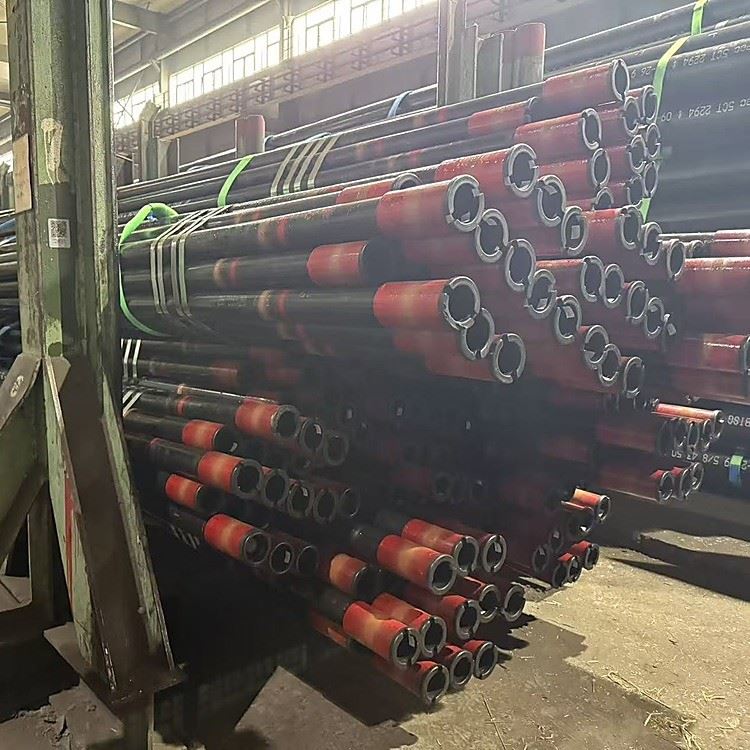
Production Tubing
OD range: 1.05 - 4-1/2 in
End finishes: EUE / NUE / Integral
Common grades: J55 / N80 / L80 / P110
Length ranges: R1 / R2 / R3
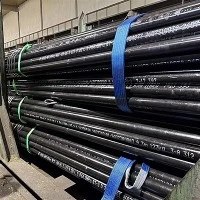
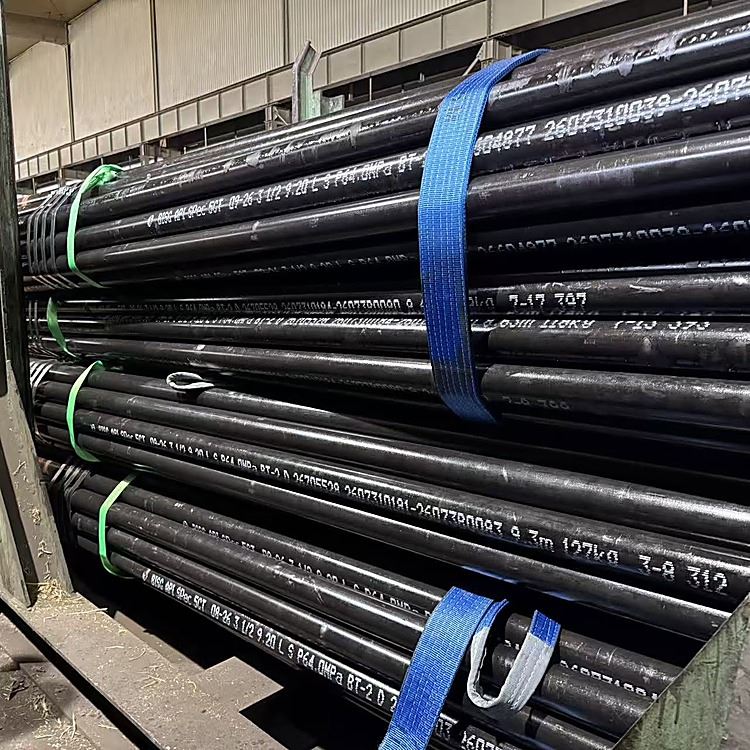
Production tubing is the smaller-diameter steel pipe run inside the production casing to carry oil or gas from the reservoir to the wellhead. Made to API Spec 5CT / ISO 11960, this is a finished, retrievable flow string - normally 1.05 to 4-1/2 in outside diameter, plain-end or threaded with an EUE (external-upset) or NUE (non-upset) connection - supplied in grades such as J55, N80, L80 and P110. Unlike cemented casing, well tubing can be pulled for inspection or replacement, so its joints, bore and corrosion resistance govern the order. Buyers of oil field tubing specify it by size, weight, grade, end finish and connection.
Product Specification
| Item | Specification |
|---|---|
| Standard | API Spec 5CT / ISO 11960 (current edition as ordered) |
| Product | Production tubing, plain end or threaded with coupling |
| Outside diameter | Typically 1.05 to 4-1/2 in (26.7-114.3 mm) |
| Nominal weight | Per API 5CT size-and-mass table, e.g. 2-3/8 in at 4.60-7.35 lb/ft |
| End finish | NUE (non-upset), EUE (external upset), integral joint |
| Grades | J55, N80, L80, P110; 13Cr and sour-service grades where specified |
| Length range | R1 / R2 / R3 (R2 common for tubing) |
| Thread standard | API Spec 5B for API connections; API RP 5C5 / ISO 13679 for premium |
| Drift | API 5CT mandated drift; special drift available on request |
| Testing | Hydrostatic, drift, thread gauging, NDT where required |
| Documentation | EN 10204 3.1 / 3.2 mill certificate, API monogram evidence |
What Production Tubing Is Made To Do
As a product, octg tubing is a pressure-containing flow conduit. It hangs inside the casing from the completion to the wellhead, carries the produced stream, and must remain tight at its joints while supporting its own weight and any downhole equipment. That duty sets the priorities: reliable connections, a clean bore, adequate tensile and burst strength, and material suited to the produced fluid.
In an injector the same pipe carries fluid downhole instead of up, so internal pressure and corrosion resistance still govern selection. The string is retrievable, which is why tubing is specified with an end finish and coupling that can be made up and broken in a workover rather than cemented in place.
Steel Grades and Mechanical Properties
Tubing grades are the API 5CT grades used for the production string. J55 covers light duty, N80 is the general production grade, and L80 is selected where H2S is present or hardness must be controlled; higher-strength tubing serves deep, high-pressure wells. Chrome and duplex grades handle CO2 and chlorides.
| Grade | Yield min | Yield max | Tensile min | Typical tubing duty |
|---|---|---|---|---|
| J55 | 379 MPa / 55 ksi | 552 MPa / 80 ksi | 517 MPa / 75 ksi | Light production service |
| N80-1 / N80-Q | 552 MPa / 80 ksi | 758 MPa / 110 ksi | 689 MPa / 100 ksi | General production string |
| L80 Type 1 | 552 MPa / 80 ksi | 655 MPa / 95 ksi | 655 MPa / 95 ksi | Sour service, controlled hardness |
| C90 | 621 MPa / 90 ksi | 724 MPa / 105 ksi | 689 MPa / 100 ksi | Sour service |
| T95 | 655 MPa / 95 ksi | 758 MPa / 110 ksi | 724 MPa / 105 ksi | High-strength sour service |
| P110 | 758 MPa / 110 ksi | 965 MPa / 140 ksi | 862 MPa / 125 ksi | Deep, high-pressure wells |
Values are common API 5CT minimums for guidance; the delivered edition, grade and specification level control the exact limits. Sour-service grades add hardness requirements under NACE MR0175 / ISO 15156.
Chemical Composition
API 5CT sets mechanical properties and heat treatment for general-purpose tubing grades rather than a single compulsory chemistry. The mill certificate for the delivered heat is therefore the controlling document; the ranges below are guidance for selection only.
| Grade | C | Mn | P max | S max | Si | Others |
|---|---|---|---|---|---|---|
| J55 | 0.30-0.39 | 1.20-1.50 | 0.030 | 0.030 | 0.20-0.35 | Cu/Ni/Cr residual |
| N80 | 0.34-0.38 | 1.45-1.70 | 0.030 | 0.030 | 0.20-0.35 | Cr, Ni, Cu each <= 0.15 |
| L80 Type 1 | 0.34-0.44 | 0.40-0.70 | 0.020 | 0.030 | 0.20-0.35 | Cr 0.80-1.10 |
Typical mill chemistry for guidance only. Corrosion-resistant and sour-service grades have additional composition and hardness limits; always use the certificate for the actual heat.
Tubing Sizes and Nominal Weights
Production tubing is identified by an outside diameter and a nominal weight in lb/ft. The weight fixes the wall thickness, the nominal inside diameter and the drift, so all three must be considered together. Common API combinations are listed below; verify each against the current size list and the chosen end finish.
| OD (in) | OD (mm) | Nominal weight (lb/ft) | Wall thickness (mm) | Common end finish |
|---|---|---|---|---|
| 1.900 | 48.26 | 2.75 | 3.68 | NUE / EUE |
| 2-3/8 | 60.32 | 4.60 | 4.83 | NUE / EUE |
| 2-3/8 | 60.32 | 5.80 | 6.45 | NUE / EUE |
| 2-3/8 | 60.32 | 7.35 | 8.53 | EUE |
| 2-7/8 | 73.02 | 6.40 | 5.51 | NUE / EUE |
| 2-7/8 | 73.02 | 7.80 | 7.01 | EUE |
| 3-1/2 | 88.90 | 9.20 | 6.45 | NUE / EUE |
| 3-1/2 | 88.90 | 12.70 | 9.52 | EUE |
| 4-1/2 | 114.30 | 12.60 | 6.88 | NUE / EUE |
Wall values are reference combinations; nominal inside diameter equals OD minus twice the wall. Drift diameter is a separate mandated value and is always smaller. Confirm the exact weight, wall and drift basis before ordering.
End Finishes, Couplings and Threads
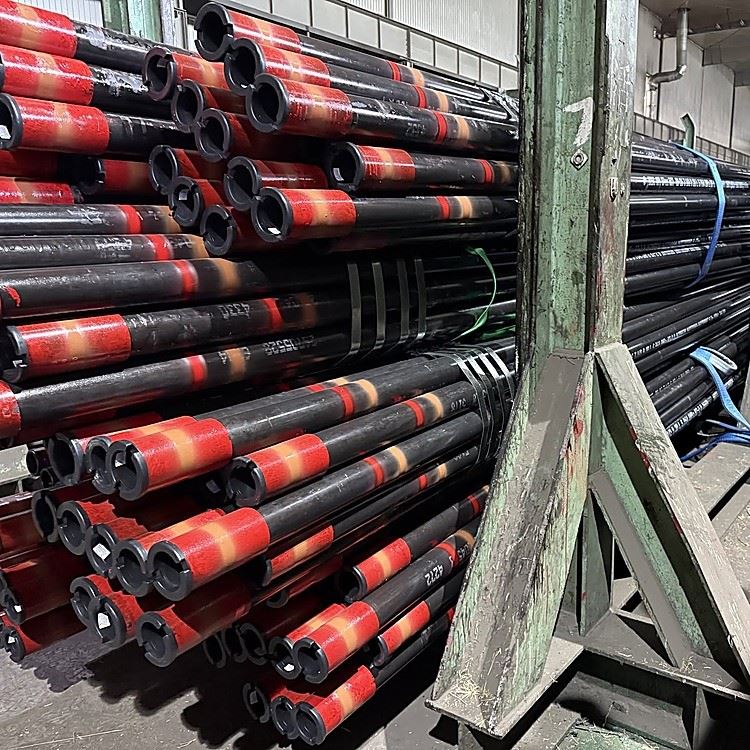
The end finish is a defining choice for api tubing. A non-upset (NUE) end leaves the body diameter unchanged at the thread and uses a smaller coupling; an external-upset (EUE) end is forged outward so extra wall sits under the thread, allowing a larger coupling and higher joint strength. An integral joint (IJ) machines a box on one end and a pin on the other, removing the separate coupling where outside-diameter clearance or bore area is critical. The upset operation, the coupling and the thread are all covered by the product specification, and the selected finish changes both joint efficiency and the threaded-and-coupled mass of the string.
| End finish | End preparation | Thread form | Relative joint strength | Typical duty |
|---|---|---|---|---|
| NUE (non-upset) | Plain body end; thread cut in full wall | API 8-round (8 TPI); 10-round on some small sizes | Lower than EUE | Shallow, low-load or clearance-critical strings |
| EUE (external upset) | Ends forged outward for extra wall at the thread | API 8-round (8 TPI) | Higher; most common production finish | General production strings, moderate depth and load |
| EUE long | Same upset with longer thread engagement | API 8-round (8 TPI) | Above standard EUE | Deeper wells or higher axial load |
| Integral joint (IJ) | Box on one end, pin on the other; no separate coupling | 10-round (10 TPI); typically 1.315-2-1/16 in | Flush OD with larger bore through the joint | Slimhole and velocity strings where clearance or bore governs |
End-finish availability depends on size and grade. Confirm the exact upset and coupling dimensions against the delivered API 5CT edition before ordering.
The coupling is a short, heavy-wall sleeve made from seamless coupling stock, normally in the same steel grade as the pipe body. It is phosphate treated - or copper plated on corrosion-resistant grades - to resist galling during make-up, and colour-banded to identify the grade. Because tubing runs inside casing, coupling outside diameter controls the annular clearance past packers, gas-lift mandrels, safety valves and pumps. Where that clearance is tight, a factory-machined special-clearance coupling can replace the standard size while retaining the connection.
| Nominal size (in) | EUE coupling OD (in) | EUE thread | EUE length (in) | NUE coupling OD (in) | NUE thread | NUE length (in) |
|---|---|---|---|---|---|---|
| 1.900 | 2.500 | 10-round | - | 2.200 | 10-round | 3.750 |
| 2-3/8 | 3.063 | 8-round | 4.875 | 2.875 | 10-round | 4.500 |
| 2-7/8 | 3.668 | 8-round | 5.500 | 3.500 | 10-round | 5.500 |
| 3-1/2 | 4.500 | 8-round | 5.750 | 4.250 | 10-round | 5.625 |
| 4-1/2 | 5.563 | 8-round | 6.500 | 5.200 | 8-round | 6.500 |
Reference dimensions from published API 5CT tables; exact outside diameters, lengths and special-clearance options depend on the edition, size and supplier data. Verify against the purchase order.
API connections are cut and gauged to API Spec 5B. The round thread is a non-shouldered, tapered interference form: pin and box flanks make contact under make-up, and API RP 5A3 thread compound fills the helical clearance path to seal liquids. That compound-dependent seal is adequate for low-pressure liquid service but can degrade in high-pressure dry gas, gas lift or thermally cycled wells. For those duties a premium connection with a radial metal-to-metal seal and a positive torque shoulder is specified, its performance qualified to API RP 5C5 or ISO 13679. A premium thread is not interchangeable by name alone: its geometry, make-up torque and seal design must match the project.
Make-up is controlled rather than left to feel. Torque should land inside the specified window, commonly within plus or minus ten percent of the recommended value, and torque-turn recorders are used to flag a joint that departs from the expected signature. Thread protectors stay in place until make-up, and the compound must suit the connection - a lubricant intended for an API round thread is not automatically right for a premium seal. For well tubing in sour or high-pressure service, these connection details are specified alongside the grade rather than assumed from the pipe body.
Dimensional Tolerances
API 5CT and the ordered specification level set the dimensional limits. The commonly applied bands below show the variation a delivered joint may have; the applicable edition controls the exact figures.
| Item | Permitted deviation |
|---|---|
| Pipe body OD | +/- 0.79 mm for smaller OD; percentage band for larger OD |
| Wall thickness | -12.5% of nominal |
| Weight, single length | +6.5% / -3.5% |
| Threaded-and-coupled length | Per API 5CT end-finish table |
| Drift diameter | Mandrel per API 5CT for the ordered size and weight |
| Straightness | Within the limit defined by the applicable edition |
Values shown are common API 5CT tolerance bands for guidance. Confirm the exact limits for the edition, size, end finish and specification level on the purchase order.
Manufacture, Inspection and Documentation
Tubing is made by piercing and rolling a billet into seamless pipe, or by electric-resistance welding of strip where the size and specification permit. Welded tubing is used where the design allows; seamless is chosen where pressure integrity or service conditions demand it. The pipe is then straightened, upset if EUE, threaded, coupled and protected at the ends.
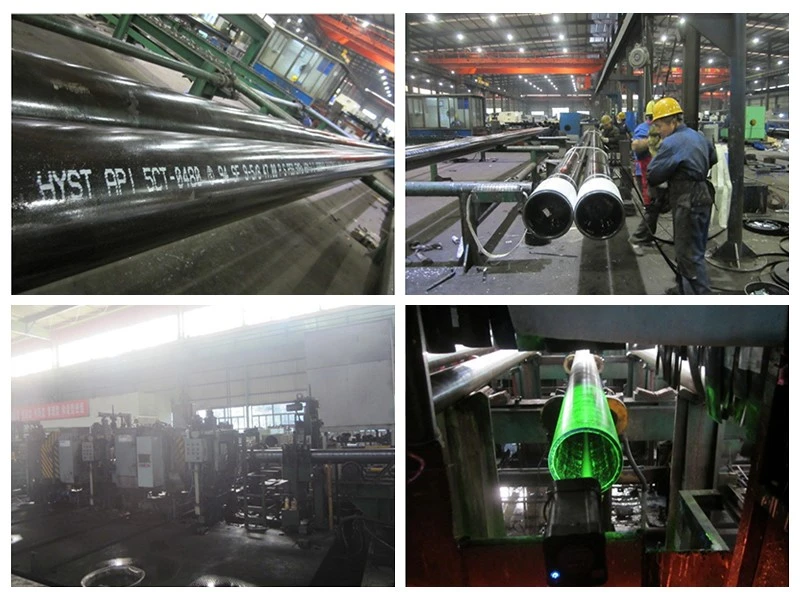
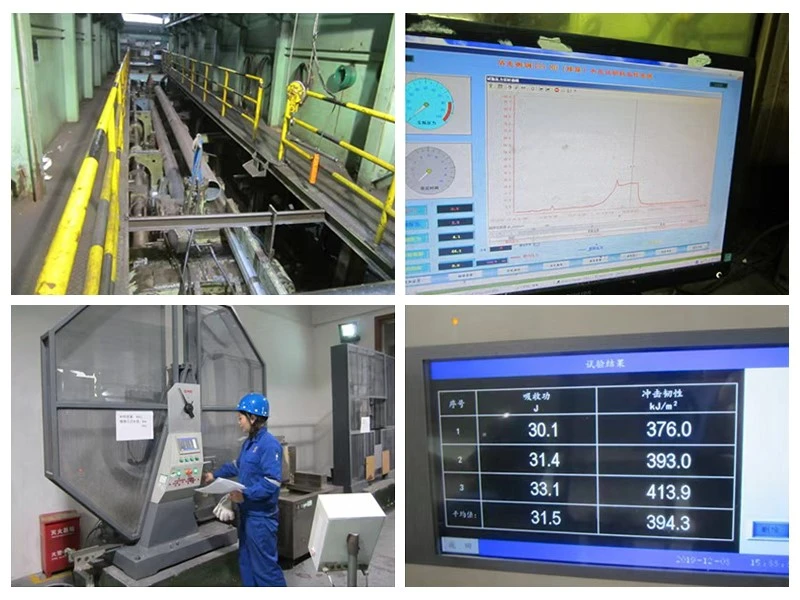
Each joint is hydrostatically tested and drifted, and threads are gauged. Electromagnetic or ultrasonic inspection is added where the specification level requires it, and sour-service grades receive hardness verification. The document set - a mill test certificate to EN 10204 3.1 or 3.2 when agreed, API monogram evidence, and hydrostatic, drift and thread records tied to the delivered heat - is part of the product, not an option. Buyers of production tubing oil and gas strings should confirm this scope with the quotation.
Specifying and Ordering Tubing
A clear enquiry lists the outside diameter, nominal weight or wall, grade, end finish, connection, length range, specification level and quantity, plus the standard edition and any sour-service, CO2 or special-drift requirement. Defining the weight rather than a rough wall removes ambiguity, because weight and wall together set the drift and the joint strength that the completion will see.
Compare offers on the same end finish, connection and certificate scope. A quotation that changes EUE to NUE, or omits the drift basis, is not a like-for-like price because it supplies a different string. Confirm that the connection is covered by the stated API monogram.
test and inspection
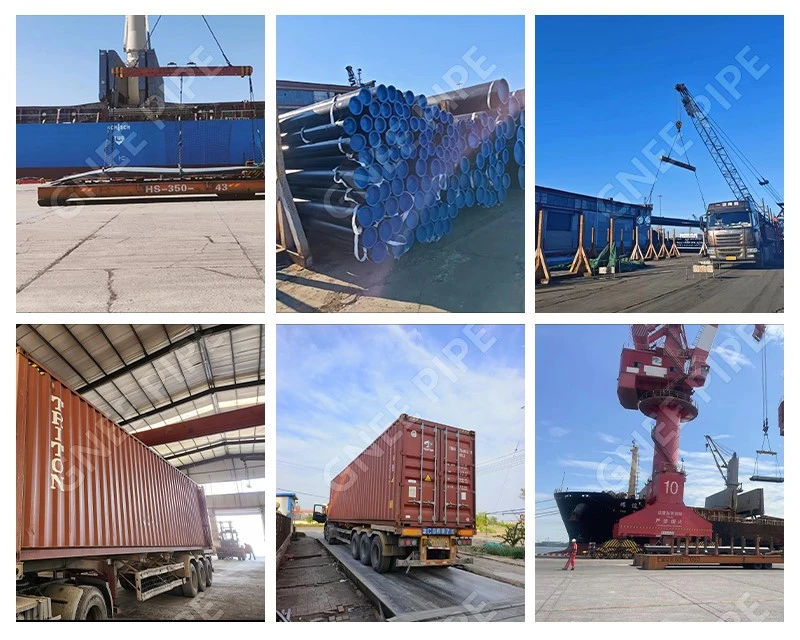
Packaging and Shipping
Send the size, weight, grade, end finish and connection for your string, together with the length range, specification level and quantity. A quotation can then be built against the exact API 5CT / ISO 11960 line - with drift, end finish and certificate scope confirmed - so the tubing matches the completion instead of being priced as general pipe.
Request a Production Tubing Quotation
related product
FAQ
What does production tubing do that casing does not?
Tubing is the flow path inside the casing: it conveys produced fluid or injection fluid between the completion interval and the wellhead. It is not cemented in place, so it can be retrieved during a workover. Casing, by contrast, is cemented as a permanent structural barrier. Tubing must therefore be selected for internal pressure, tension, corrosion and a clean flow bore.
Why does an EUE connection give more joint strength than NUE?
EUE (external upset) tubing has the pipe ends forged outward to a larger outside diameter, which leaves more wall at the thread and produces a larger, stronger coupling. NUE (non-upset) tubing keeps a plain body diameter and uses a smaller coupling. EUE is chosen where tension or internal pressure is higher; NUE is the economical choice for lighter duties.
Which tubing sizes are most common in a production string?
The widely used outside diameters are 2-3/8, 2-7/8, 3-1/2 and 4-1/2 in, with 1.900 and 2-3/8 in common in smaller completions. Each outside diameter has several nominal weights that set the wall and drift. The size is taken from the completion design and the API 5CT table, not chosen from a catalogue alone.
How is the drift diameter specified for tubing?
Drift diameter is the diameter of the mandrel that must pass through the finished tube, and it is smaller than the nominal inside diameter. It is mandated by API 5CT for the ordered size and weight, and a special drift can be requested where downhole tools demand it. Confirming drift before ordering avoids a string that will not pass the completion hardware.
When should corrosion-resistant tubing be selected over carbon steel?
Where produced fluid contains CO2, H2S or chlorides, carbon steel may not survive the service life. Grades such as L80-13Cr, super 13Cr or duplex stainless steel, and sour-service grades like L80-1, C90 and T95, are selected from the gas partial pressures, temperature and pH of the well. Conformity to NACE MR0175 / ISO 15156 must be stated where H2S is present.
Are premium connections available for gas-tight tubing service?
Yes. Where the well needs a metal-to-metal seal or higher compression and tension efficiency than a standard API thread, a premium or gas-tight connection can be supplied. Connection performance is qualified to API RP 5C5 or ISO 13679, and the geometry, make-up procedure and seal design must match the project requirement rather than being assumed equivalent to another proprietary thread.
What inspection does each joint of tubing receive?
Each length is hydrostatically tested and drifted, and the threads are gauged to API Spec 5B. Non-destructive checks such as electromagnetic or ultrasonic inspection are applied where the specification level or grade requires them. Sour-service grades add hardness verification, and the records are issued against the heat and size delivered.
What should a tubing enquiry list to get a comparable quote?
State the outside diameter, nominal weight or wall, grade, end finish (EUE or NUE), connection, length range, specification level and quantity, plus the standard edition and any sour-service, CO2 or special-drift requirement. Quotes that differ in end finish or certificate scope are not like-for-like, because both change the joint that is actually made up in the string.
Hot Tags: production tubing, China production tubing manufacturers, suppliers, factory
Previous
API 5CT Casing PipeYou Might Also Like


Send Inquiry