




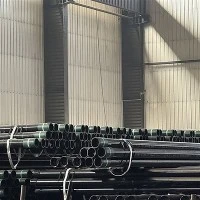
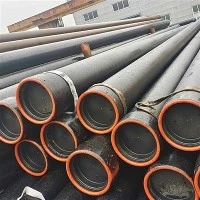
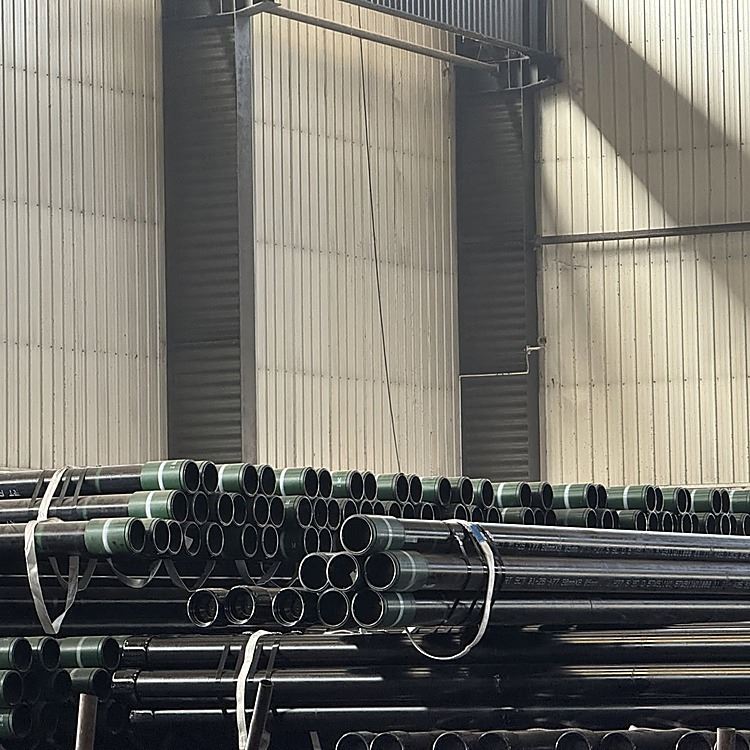
Oil Well Tubing
OD range: 1.050 - 4-1/2 in
Weight basis: Nominal lb/ft
Length ranges: R1 / R2 / R3
Common grades: J55 / N80 / L80 / P110
Thread standard: API Spec 5B
Oil well tubing is the retrievable steel flow string run inside the casing to move oil or gas from the completion interval to the wellhead. Supplied to API Spec 5CT / ISO 11960, it is made in nine standard outside diameters from 1.050 to 4-1/2 in, each with a nominal weight that fixes the wall and bore, and it is ordered as a complete designation - size, weight, grade, end finish and length range. Common grades are J55, N80, L80 and P110; ends are NUE, EUE or integral joint, and every joint is hydrostatically tested, drifted and thread-gauged before delivery.
Product Specification
| Item | Specified value |
|---|---|
| Product | Oil well tubing (retrievable flow string, run inside the casing) |
| Standard | API Spec 5CT / ISO 11960; threads to API Spec 5B |
| Outside diameter | Nine API sizes, 1.050 to 4-1/2 in (26.67 to 114.30 mm) |
| Nominal weight | About 1.20 to 18.90 lb/ft, fixed by size and wall (see Table 2) |
| Grades | J55, K55, N80, L80, C90, T95, P110 and sour/CRA variants |
| End finish | NUE, EUE, integral joint; plain end available |
| Length range | R1 6.10-7.32 m, R2 8.53-9.75 m, R3 11.58-12.80 m |
| Specification level | PSL1 or PSL2, stated on the order and certificate |
| Testing | Hydrostatic test, drift mandrel, API 5B thread gauging |
| Documents | MTC to EN 10204 3.1 (3.2 on request), API monogram where licensed |
Values are specification ranges, not a single ordered size. Confirm the exact size, weight, grade, end finish and edition of the standard against the purchase order and the mill certificate.
How to Read an Oil Well Tubing Designation
Buyers of api tubing quote a line such as 2-7/8 in 6.50# L80 EUE R2. Read it left to right: the first field is the nominal outside diameter, the second is nominal weight in pounds per foot, the third is the steel grade, the fourth is the end finish and the fifth is the length range. Api tubing specifications add the specification level and standard edition, because PSL1 and PSL2 differ in inspection and traceability even when the pipe dimensions are identical.
| Field | Example | What it fixes | Why it matters |
|---|---|---|---|
| Size | 2-7/8 in | Nominal outside diameter | Selects the row in the API 5CT size table |
| Weight | 6.50# | Nominal mass per foot, hence wall and ID | Sets pressure capacity and flow area |
| Grade | L80 | Yield range, hardness and chemistry | Governs strength and sour-service suitability |
| End finish | EUE | Upset, thread form and coupling | Decides joint strength and outside clearance |
| Length range | R2 | Joint length bracket | Sets joint count and make-up plan |
| Spec level | PSL2 | Inspection and documentation scope | Changes testing and certificate content |
Two api tubing specs that share size and grade are therefore not interchangeable if the end finish or specification level differs. A non-upset pipe in PSL1 and an external-upset pipe in PSL2 can carry the same grade name while differing in joint strength, bore clearance and the records supplied with the delivery. Read all six fields before comparing quotations.
Oil Well Tubing Sizes and Nominal Weights
Oil well tubing sizes are defined by outside diameter and nominal weight together. The table below lists the common nominal weight for each of the nine API diameters with its nominal wall, inside diameter and reference drift. Heavier weights exist within several diameters where higher collapse or tension capacity is required; these are reference values, not a substitute for the API 5CT table of the delivered edition.
| OD (in) | Nom. weight (lb/ft) | Wall (in) | Nom. ID (in) | Ref. drift (in) | Upset | Typical end |
|---|---|---|---|---|---|---|
| 1.050 | 1.20 | 0.113 | 0.824 | 0.730 | NU | NUE |
| 1.315 | 1.80 | 0.133 | 1.049 | 0.955 | NU | NUE |
| 1.660 | 2.40 | 0.140 | 1.380 | 1.286 | NU / EU | NUE / EUE |
| 1.900 | 2.90 | 0.145 | 1.610 | 1.516 | NU / EU | NUE / EUE |
| 2-3/8 | 4.70 | 0.190 | 1.995 | 1.901 | EU | EUE 8RD |
| 2-7/8 | 6.50 | 0.217 | 2.441 | 2.347 | EU | EUE 8RD |
| 3-1/2 | 9.30 | 0.254 | 2.992 | 2.867 | EU | EUE 8RD |
| 4 | 11.00 | 0.262 | 3.476 | 3.351 | EU | EUE 8RD |
| 4-1/2 | 12.75 | 0.271 | 3.958 | 3.833 | EU | EUE 8RD |
Drift values are reference mandrel sizes for the listed weight. For a different weight in the same outside diameter, or for a special drift, confirm the value against API 5CT and the order specification.
These oilfield tubing dimensions show why weight, not diameter alone, controls the order. Within 2-3/8 in, for example, walls from about 0.167 to 0.254 in give nominal weights from roughly 4.00 to 5.80 lb/ft, with a corresponding reduction in inside diameter and drift. The 2-3/8, 2-7/8 and 3-1/2 in sizes cover the greatest share of completions; the smaller diameters serve slim-hole and rod-pump strings.
Dimensional and Weight Tolerances
Tubing is manufactured to product tolerances, so the size printed on the specification is a nominal target rather than an exact delivered value. The tolerances below are the API 5CT limits most often checked at receiving inspection and are part of a complete api tubing specifications package.
| Item | Range | Permitted deviation |
|---|---|---|
| Pipe-body outside diameter | D ≤ 101.60 mm | ± 0.79 mm (± 0.031 in) |
| Pipe-body outside diameter | D ≥ 114.30 mm | +1.0% / -0.5% |
| Coupling outside diameter | All sizes | ± 1% of diameter |
| Wall thickness | All sizes | 0 / -12.5% of nominal wall |
| Weight, single joint | All sizes | +6.5% / -3.5% |
| Weight, carload | Order ≥ 18 t (40,000 lb) | 0 / -1.75% |
| Length | R1 / R2 / R3 | Within the ordered range |
| Thread form and gauging | API round thread | To API Spec 5B gauges |
Tolerance figures are reference API 5CT values. The governing limits are those of the standard edition and specification level stated on the purchase order.
Mechanical Properties of Common Grades
Grade selection starts with the load case, then the chemistry. The ranges below show minimum and maximum yield strength and minimum tensile strength for frequently ordered tubing grades; the exact limits and hardness requirements follow the delivered edition of API 5CT and any sour-service supplement.
| Grade | Yield min (MPa) | Yield max (MPa) | Tensile min (MPa) | Note |
|---|---|---|---|---|
| J55 | 379 | 552 | 517 | General, lighter-duty strings |
| K55 | 379 | 552 | 655 | Higher tensile than J55 |
| N80 | 552 | 758 | 689 | Widely used production grade |
| L80 Type 1 | 552 | 655 | 655 | Hardness controlled, sour service |
| L80-13Cr | 552 | 655 | 655 | Chromium for CO2 corrosion |
| C90 | 621 | 724 | 689 | Sour-service, controlled hardness |
| T95 | 724 | 828 | 758 | Sour-service, higher strength |
| P110 | 758 | 965 | 862 | Deep, high-pressure wells |
Chemical Composition of Common Grades
Chemistry is specified by grade and heat treatment rather than by a single universal limit. The indicative ranges below cover common tubing grades; phosphorus and sulfur are held low for toughness and, in sour service, for resistance to sulfide stress cracking. The mill certificate is the authoritative record for the heat delivered.
| Grade | C | Mn | P ≤ | S ≤ | Cr | Other |
|---|---|---|---|---|---|---|
| J55 / K55 | 0.34-0.39 | 1.25-1.50 | 0.020 | 0.015 | ≤ 0.15 | Si 0.20-0.35 |
| N80 | 0.34-0.38 | 1.45-1.70 | 0.020 | 0.015 | - | V 0.11-0.16 |
| L80-13Cr | 0.15-0.22 | 0.25-1.00 | 0.020 | 0.010 | 12.0-14.0 | Si ≤ 1.00 |
| P110 | 0.26-0.35 | 0.40-0.70 | 0.020 | 0.010 | 0.80-1.10 | Mo 0.15-0.25 |
These are reference ranges for widely used grades, not a substitute for the API 5CT chemistry table of the ordered grade and edition. Confirm the exact heat analysis on EN 10204 3.1 or 3.2 documentation.
Length Ranges and End-Finish Codes
A designation is incomplete without length range and end finish. Length range controls how many joints are made up in the string; end finish controls joint strength and outside clearance. Both appear on oil field tubing quotations and both change the delivered product even when size and grade are fixed.
| Range | Feet | Metres | Typical use |
|---|---|---|---|
| R1 | 20.0 - 24.0 | 6.10 - 7.32 | Short strings, handling constraints |
| R2 | 28.0 - 32.0 | 8.53 - 9.75 | Usual default for production tubing |
| R3 | 38.0 - 42.0 | 11.58 - 12.80 | Longer joints, fewer make-ups |
| Code | Full name | Construction | Effect |
|---|---|---|---|
| NU / N | Non-upset | Thread cut in plain body, smaller coupling | Lower joint strength, lower cost |
| EU / U | External upset | Ends forged outward, larger coupling | Higher joint strength at the thread |
| IJ | Integral joint | Box-and-pin, no separate coupling | Reduced outside clearance |
| P | Plain end | No thread, no coupling | For welding or further processing |
Inspection and Documentation
Every joint is hydrostatically tested and passed through a drift mandrel, and the threads are gauged to API Spec 5B. Specification level determines the extent of non-destructive examination, hardness verification and heat traceability. Sour-service grades add controlled-hardness checks against NACE MR0175 / ISO 15156, and the results are issued against the heat and size actually delivered.
Request the mill test certificate to EN 10204 3.1 as standard, with 3.2 available where the project requires third-party validation. Where the supplier holds the API monogram, state it on the quotation and certificate so the product can be traced to the heat and size actually delivered.
The size and grade tables above describe the product; the completion design decides which line is ordered. J55 tubing covers lighter duty, N80 is the common production grade, L80 serves sour or corrosive service, and higher-strength grades cover deep, high-pressure wells.
Packaging and shipping
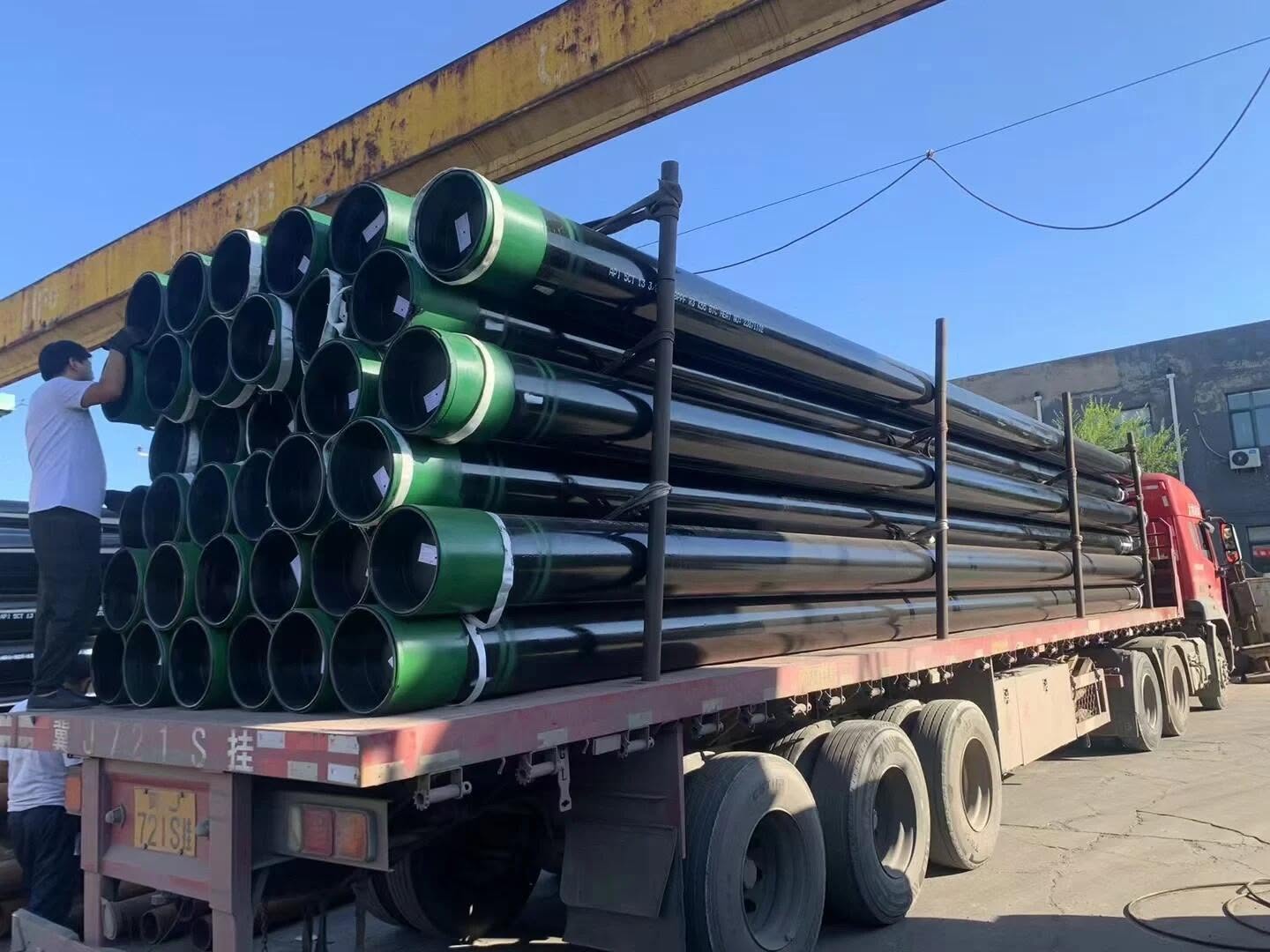
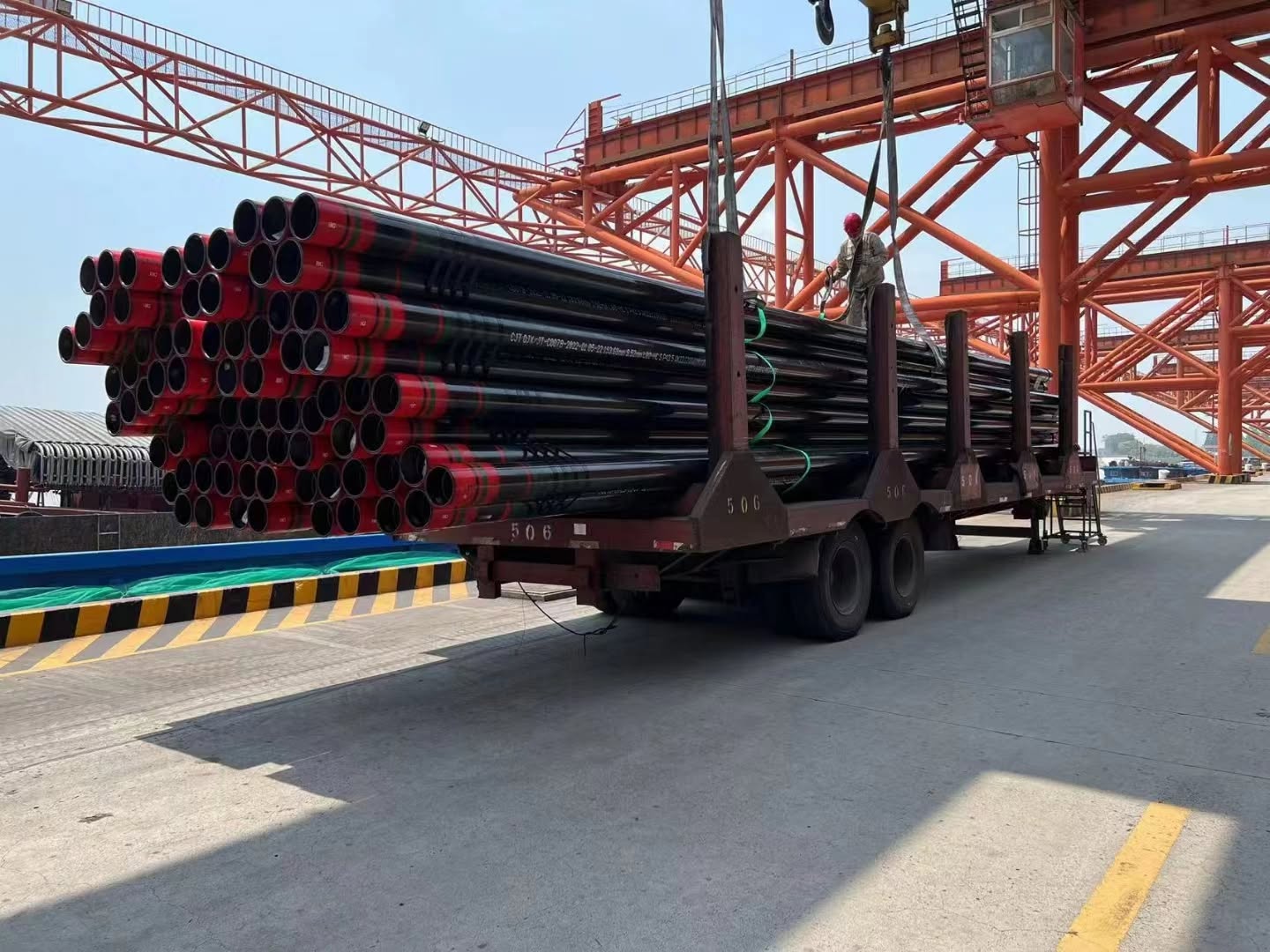
Send the complete designation - outside diameter, nominal weight, grade, end finish, length range and specification level - with quantity and destination. A quotation can then be built against the exact API 5CT / ISO 11960 line, with drift, thread and certificate scope confirmed, so the tubing matches the completion rather than being priced as general pipe.
Request an Oil Well Tubing Quotation
Related Product
FAQ
How do you read a tubing designation such as 2-7/8 in 6.50# L80 EUE R2?
Each field fixes one property. 2-7/8 in is the nominal outside diameter; 6.50# is the nominal weight in lb/ft, which sets the wall and inside diameter; L80 is the steel grade; EUE is an external-upset threaded-and-coupled end; and R2 is a length range of about 28 to 32 ft. A complete designation also carries the specification level (PSL) and the standard edition. Missing any field leaves the joint, bore or certificate scope undefined.
Why do two tubing pipes with the same OD have different nominal weights?
Nominal weight in lb/ft is the industry shorthand for wall thickness. A heavier pipe has a thicker wall, a smaller inside diameter and a smaller drift, which raises internal-pressure and tension capacity but reduces flow area. The API 5CT size table pairs each outside diameter with several nominal weights; the completion design selects one. Quoting by outside diameter alone is not enough to order tubing.
What is the difference between nominal ID and drift diameter in a size chart?
Nominal inside diameter is calculated from outside diameter minus twice the nominal wall. Drift diameter is smaller: it is the diameter of the mandrel that must pass through the finished tube, and API 5CT specifies it for each size and weight. Drift is the value that matters for tools and flow equipment, because it confirms the bore is clear after threading and coupling.
How many standard tubing outside diameters does API 5CT list?
Nine nominal outside diameters are recognized, from 1.050 in (26.67 mm) up to 4-1/2 in (114.30 mm): 1.050, 1.315, 1.660, 1.900, 2-3/8, 2-7/8, 3-1/2, 4 and 4-1/2 in. The four larger sizes cover most completions; the smaller ones serve slim-hole, rod-pump and velocity-string applications. Sizes outside this range are not standard API tubing.
What does an R2 length range mean on an oilfield tubing dimensions sheet?
API 5CT groups tubing lengths into ranges. R1 is about 20 to 24 ft (6.10 to 7.32 m), R2 is about 28 to 32 ft (8.53 to 9.75 m) and R3 is about 38 to 42 ft (11.58 to 12.80 m). R2 is the usual default. The range decides how many joints make up a string and how many connections are made up, so it changes both the delivered length and the installation plan.
Which dimensional tolerances apply to API tubing?
API 5CT allows a tolerance on pipe-body outside diameter of ±0.79 mm for sizes up to 4 in and +1.0% / -0.5% for larger sizes; wall thickness may fall 12.5% below nominal; single-joint weight varies +6.5% / -3.5% and carload weight may be 1.75% light. Thread dimensions and gauging follow API Spec 5B. These are product tolerances, so the ordered size and weight are confirmed against the delivered certificate.
What do the codes NU, EU and IJ mean in a tubing size table?
NU (non-upset) cuts the thread into the plain pipe body and uses a smaller coupling, giving lower joint strength at lower cost. EU (external upset) forges the ends to a larger outside diameter so more wall remains at the thread, giving a stronger joint with a larger coupling. IJ (integral joint) forms a box-and-pin connection without a separate coupling, used where outside clearance is restricted.
How is a sour-service grade shown in a tubing specification?
Sour-service tubing is ordered by a controlled-hardness grade such as L80 Type 1, C90 or T95, with conformity to NACE MR0175 / ISO 15156 stated on the specification and certificate. The grade suffix matters: L80-1 and L80-13Cr are different products, and the latter adds chromium for CO2 corrosion. Hardness limits and heat-treatment condition must be confirmed for the actual H2S partial pressure and temperature.
Hot Tags: oil well tubing, China oil well tubing manufacturers, suppliers, factory
Previous
API 5CT Casing PipeYou Might Also Like


Send Inquiry