





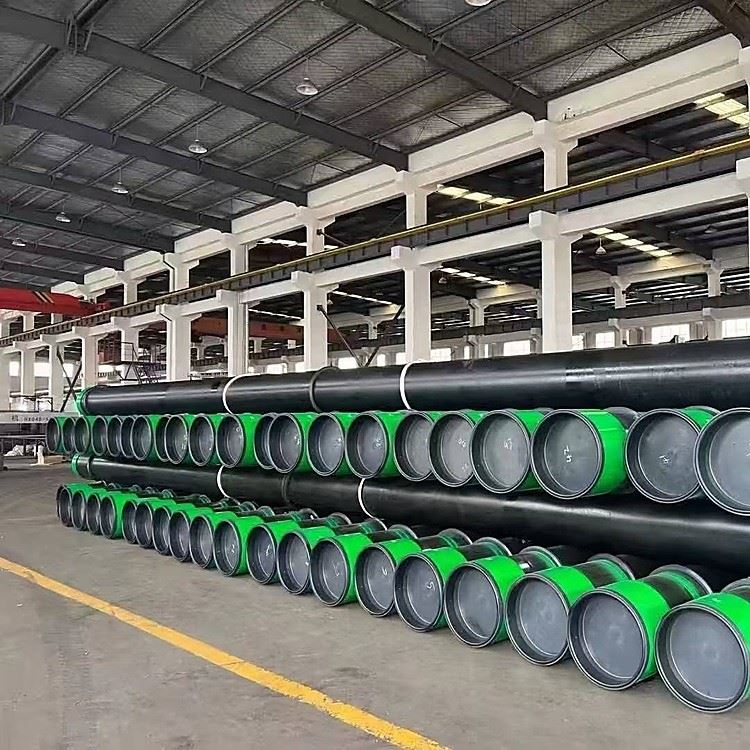
Well Conductor Casing
OD range: 16 - 30 in typical conductor
Common grades: H40 / J55 / K55
Set depth: Shallow, about 100 - 300 ft
Installation: Driven or drilled
End finish: Plain end / STC / LTC
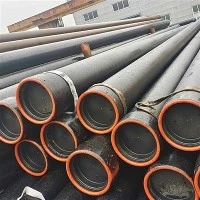
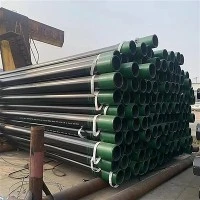
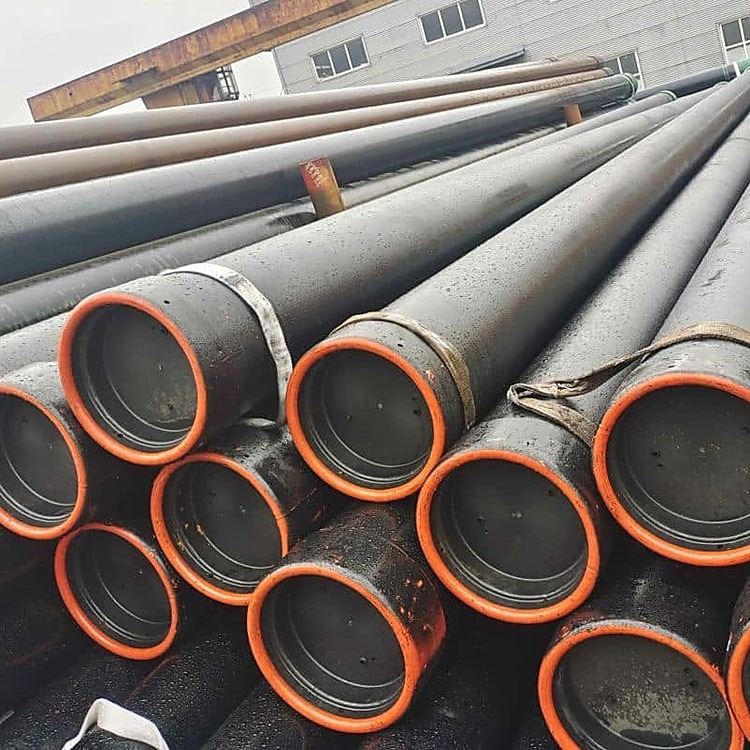
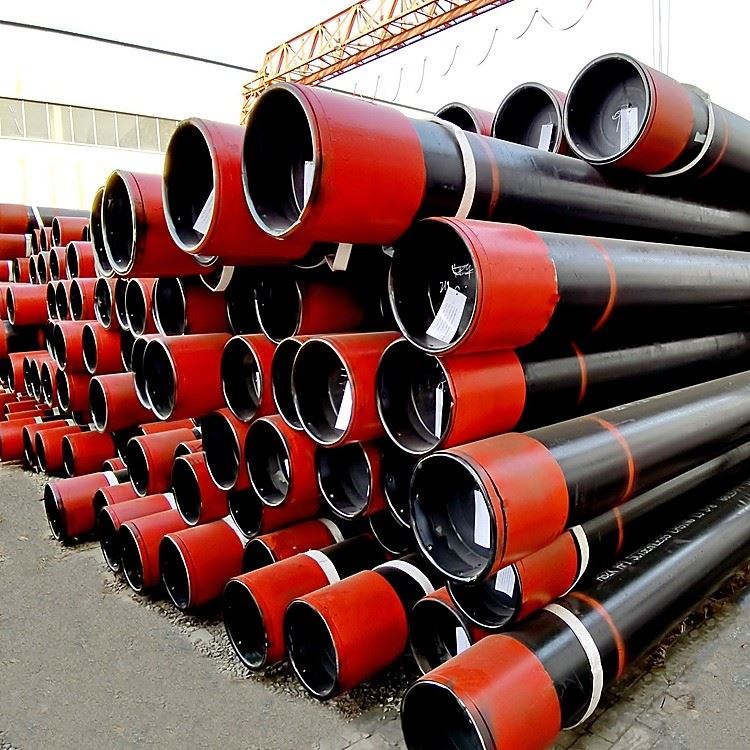
Well conductor casing is the largest-diameter, shallowest steel string in a well - the first metal well casing pipe set at surface to hold the unconsolidated top hole open and carry the wellhead. Supplied to API Spec 5CT / ISO 11960, it is normally a large-OD oil well casing pipe of 16 to 30 in driven or drilled to a shallow depth rather than cemented as a deep pressure string. Common grades are H40 and J55 because the loads are modest; a well casing pipe for conductor duty is chosen by outside diameter, wall and joint strength. Buyers of well casings for a conductor programme specify size, weight, grade and end finish.
Product Specification
| Item | Specification |
|---|---|
| Standard | API Spec 5CT / ISO 11960 (current edition as ordered) |
| Product | Conductor casing, plain end or threaded-and-coupled |
| Outside diameter | Commonly 16 to 30 in (406-762 mm); 20 in is a standard land conductor size |
| Nominal weight | Per API 5CT size-and-mass table, e.g. 20 in at 94, 106.5 or 133 lb/ft |
| Connections | Plain end with drive shoe; STC or LTC where threaded |
| Grades | H40, J55, K55; higher grades available but not usual for conductor duty |
| Length range | R1 / R2 / R3, selected for handling and rig height |
| Installation | Driven with a hammer or drilled and set at shallow depth |
| Function | Stabilize top hole, support wellhead, provide drilling-returns path |
| Documentation | EN 10204 3.1 / 3.2 mill certificate, API monogram evidence |
What This Casing Is Made To Do
As a product, a metal well casing pipe used for conductor duty is the outermost steel lining at the top of a borehole. It is set before any deeper string, through the loose soil and broken rock near surface, so that the hole does not collapse and the rig can continue drilling. The conductor also gives the wellhead a firm base and carries the returns of the drilling fluid back to surface. Those duties set the product priorities: a large outside diameter, enough wall to survive driving or running, and a joint that stays intact under handling.
A casing in well terms means any of the steel strings that line the borehole; the conductor is simply the first and shallowest of them. In an oil well casing programme it sits above the well surface casing and the deeper strings, and it is not the string that isolates the producing zone. That distinction matters because a conductor is chosen largely by size and installation method, while the deeper strings are chosen by pressure and zonal isolation.
| Position | String | Main duty of the pipe | Typical size example |
|---|---|---|---|
| First / outermost | Conductor casing | Hold top hole, carry wellhead, returns path | 20 in |
| Second | Surface casing | Isolate shallow water, base for pressure equipment | 13-3/8 in |
| Third | Intermediate casing | Isolate problem zones for deeper drilling | 9-5/8 in |
| Innermost | Production casing | Final barrier across the producing zone | 7 in |
Sizes are illustrative. The actual casing programme is fixed by the well design, hole size and field practice.
Steel Grades and Mechanical Properties
The grades used for conductor duty sit at the low end of the API 5CT strength ladder. H40 is the lightest, J55 is the usual choice, and K55 gives somewhat more tensile capacity. These grades are sufficient because the shallow conductor sees modest pressure; the governing load is often the drive or handling load rather than burst or collapse.
| Grade | Yield min | Yield max | Tensile min | Typical conductor duty |
|---|---|---|---|---|
| H40 | 276 MPa / 40 ksi | 552 MPa / 80 ksi | 414 MPa / 60 ksi | Lightest conductor surface strings |
| J55 | 379 MPa / 55 ksi | 552 MPa / 80 ksi | 517 MPa / 75 ksi | Standard conductor and shallow strings |
| K55 | 379 MPa / 55 ksi | 552 MPa / 80 ksi | 655 MPa / 95 ksi | Higher tensile handling or drive load |
| N80-1 / N80-Q | 552 MPa / 80 ksi | 758 MPa / 110 ksi | 689 MPa / 100 ksi | Available but not usual for conductor |
Values are common API 5CT minimums for guidance. The delivered edition, grade and specification level control the exact limits; higher-grade material does not automatically improve a shallow conductor order.
Chemical Composition
API 5CT defines conductor-suitable grades mainly by mechanical properties and heat treatment rather than one compulsory chemistry. The mill certificate for the delivered heat is the controlling document; the ranges below are guidance for the grades normally used at surface.
| Grade | C | Mn | P max | S max | Si | Others |
|---|---|---|---|---|---|---|
| H40 | 0.20-0.28 | 0.90-1.30 | 0.040 | 0.050 | 0.15-0.35 | Cu/Ni/Cr residual |
| J55 | 0.30-0.39 | 1.20-1.50 | 0.030 | 0.030 | 0.20-0.35 | Cu/Ni/Cr residual |
| K55 | 0.30-0.39 | 1.20-1.50 | 0.030 | 0.030 | 0.20-0.35 | Residuals as per grade |
Typical mill chemistry for guidance only. Always use the certificate for the actual heat when the order is for a specific project or specification level.
Well Casing Dimensions and Weights
The well casing size of a conductor is its outside diameter, and the weight per foot sets the wall and the inside diameter available for the next string. Published well casing dimensions for common conductor sizes are listed below; the question of which well casing materials suit the top hole is separate and is usually answered by H40 or J55 carbon steel. Verify every combination against the current API 5CT table for the ordered edition.
| OD (in) | OD (mm) | Nominal weight (lb/ft) | Wall (in) | Inside diameter (in) | Typical duty |
|---|---|---|---|---|---|
| 16 | 406.4 | 84 | 0.495 | 15.010 | Surface / structural conductor |
| 18-5/8 | 473.1 | 87.5 | 0.435 | 17.755 | Conductor string |
| 20 | 508.0 | 94 | 0.438 | 19.124 | Light conductor |
| 20 | 508.0 | 106.5 | 0.500 | 19.000 | Medium conductor |
| 20 | 508.0 | 133 | 0.635 | 18.730 | Standard land conductor |
Representative API 5CT values for guidance. Each OD has several weight options; confirm the exact weight, wall, inside and drift diameter against the delivered edition and order.
Dimensional Tolerances
API 5CT and the specification level set the dimensional limits applied to a delivered joint. The commonly applied bands below show the variation a conductor joint may have; the applicable edition controls the exact figures.
| Item | Permitted deviation |
|---|---|
| Outside diameter | Percentage band based on OD for large-diameter casing |
| Wall thickness | Not less than 87.5% of specified nominal wall unless otherwise agreed |
| Weight, single length | +6.5% / -3.5% |
| Threaded-and-coupled length | Per API 5CT end-finish table |
| Drift diameter | Mandrel per API 5CT for the ordered size and weight |
| Straightness | Within the limit defined by the applicable edition |
Values shown are common API 5CT tolerance bands for guidance. Confirm exact limits for the edition, size, end finish and specification level on the purchase order.
Driving, Drilling and End Finish
Conductor pipe is installed in one of two ways. In soft ground it is driven with a pile hammer through the unconsolidated surface layer; in harder or obstructed ground a hole is drilled and the string is set in it. The method changes the product specification: a driven string needs wall and an end that survive impact and axial load, often with a drive shoe fitted, while a drilled string may be cemented in the annulus and can use a conventional threaded connection.
An oil well casing pipe for conductor duty is supplied plain end or threaded-and-coupled. A plain-end string with a drive shoe suits driving; STC or LTC is used where joints must be made up or the string may be recovered. API Spec 5B governs the thread form and gauging. An ERW casing pipe route is common at these diameters because the pressure duty is low, while a seamless casing pipe is available where a buyer prefers it for a particular programme.
At the shallow surface the string can be handled with a rig or crawler rather than a full casing crew, and joint count matters more than pressure rating. An integral or threaded connection that makes up quickly reduces running time, and protective thread covers are fitted for transport. A gas well casing conductor is still a shallow structural string; the gas-tight requirement belongs to the deeper production string, not to this one.
Manufacture, Inspection and Documentation
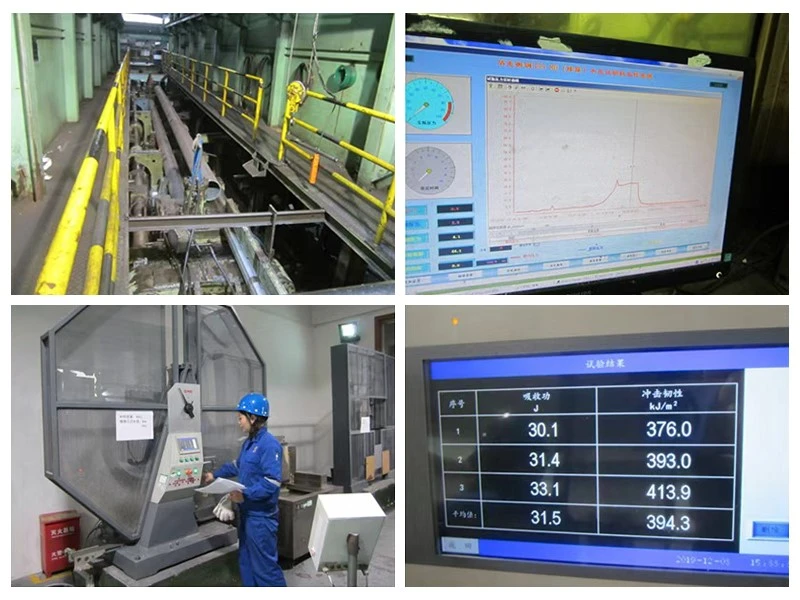
Conductor casing is made by the ERW route at the large diameters typical of surface strings, or as seamless casing pipe where the mill and size allow. A casing of well supplied for conductor duty is held to the same API 5CT product requirements as other casing sizes: controlled chemistry and mechanical properties, hydrostatic testing, drift and dimensional checks, and thread gauging to API Spec 5B where threaded.
The document set - a mill test certificate to EN 10204 3.1 or 3.2 when agreed, API monogram evidence, and test records tied to the delivered heat - is part of the product. Buyers comparing a well casing price should confirm that the same certificate scope, end finish and length range are included, because conductor is often quoted by length and a change in any of these changes what is delivered.
Specifying and Ordering Conductor Casing
A clear enquiry states outside diameter, nominal weight or wall, grade, length range, quantity and end finish, plus whether the string is to be driven or drilled. Add a drive shoe, external coating for aggressive shallow soil, or a specified certificate level if the project calls for it. Because the well casing price is often expressed per metre or foot for conductor, defining the full dimensional basis is what makes offers comparable.
Compare like for like on end finish and certificate scope. A quotation for plain-end pipe is not equal to one for threaded-and-coupled pipe with the same OD and weight, and a heavier wall changes both the driving behaviour and the cost. Confirm the API 5CT edition and that the stated monogram covers the size and connection supplied.
Test and inspection
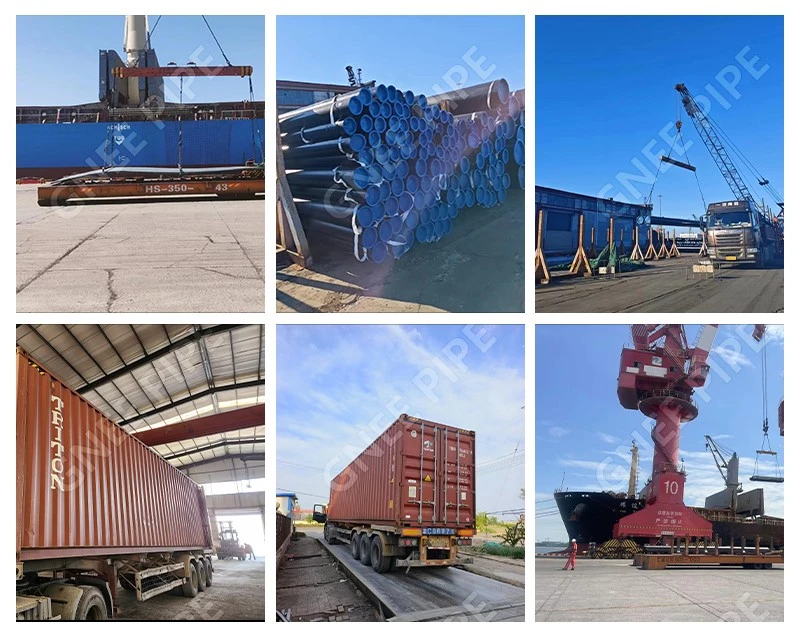
Packaging and shipping
Send the outside diameter, weight or wall, grade, length range and end finish for your conductor string, and state whether it will be driven or drilled. A quotation can then be built against the exact API 5CT / ISO 11960 line, with the same certificate and delivery scope in every offer.
Send Specification for Quotation
FAQ
What does conductor casing do at the top of a well?
It is the first and largest string, set near surface to stabilize loose, unconsolidated ground, keep the top hole from caving in and give the wellhead something solid to stand on. It also provides a circulation path for drilling returns. The conductor is short and lightly loaded compared with deeper strings, so it is normally specified by diameter and driving or drilling installation rather than by high burst or collapse ratings.
How deep is conductor casing usually set?
Conductor depths are shallow and field-dependent - commonly on the order of 100 to 300 ft, with many land wells setting around 100 to 150 ft. The exact depth follows the depth of unstable near-surface formation and local practice, not a fixed catalogue number. It is the shortest string in the casing programme and sits above the surface and intermediate strings.
Which grades are used for conductor casing?
H40 and J55 are the usual choices because the loads are low and the service is benign. K55 appears where a little more tensile capacity is helpful. Higher grades such as N80 are not normally economical for conductor duty. Grade selection is driven by handling and driving loads rather than by downhole burst or collapse, which are modest at shallow depth.
Can conductor casing be driven as well as drilled?
Yes. Conductor pipe is commonly either driven into place with a pile hammer or drilled and then set. Driving is favoured in soft, unconsolidated soils where the pipe can be advanced without a open hole; drilling is used where obstructions or harder strata make driving impractical. The end finish and wall must suit the installation method, because driving puts axial and impact load on the joint.
What sizes are typical for a conductor string?
Large outside diameters dominate - 16, 18-5/8 and 20 in are common, and 26, 30 or larger diameters are used on offshore and high-load wellheads. 20 in is the standard land conductor size in many fields. The chosen diameter must leave room for the surface casing to be run inside it, so conductor size is set by the rest of the casing programme, not chosen in isolation.
What is the difference between conductor and surface casing?
Conductor casing is the outermost, shallowest string that stabilizes the top hole and supports the wellhead, often driven or drilled and only lightly cemented. Surface casing is the next string, set deeper below freshwater zones and cemented to provide zonal isolation and a base for pressure-control equipment. They differ in depth, function and load, even though both are large-diameter API 5CT pipe.
Is conductor casing supplied threaded or plain end?
Both forms are supplied. Plain-end pipe with a welded or drive shoe is common where the conductor is driven, while threaded-and-coupled pipe with STC or LTC is used where joints must be made up and the string may be recovered or extended. The choice follows the installation method. A thread is cut and gauged to API Spec 5B, and the connection must be compatible with the driving or running load.
What should a conductor casing enquiry specify?
Give the outside diameter, nominal weight or wall, grade, length range, quantity and end finish, and state whether the string will be driven or drilled. Add any requirement for a drive shoe, special coating for shallow soil, or a certificate level. Because conductor is often priced by the metre or foot rather than by pressure rating, a complete dimensional description is what makes quotations comparable.
Hot Tags: well conductor casing, China well conductor casing manufacturers, suppliers, factory
Previous
API 5CT Casing PipeYou Might Also Like


Send Inquiry