




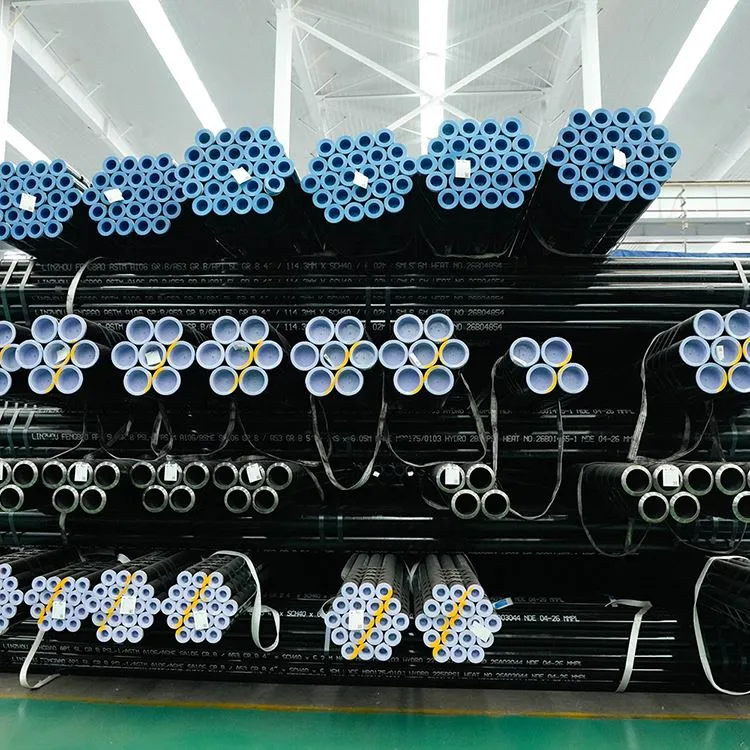

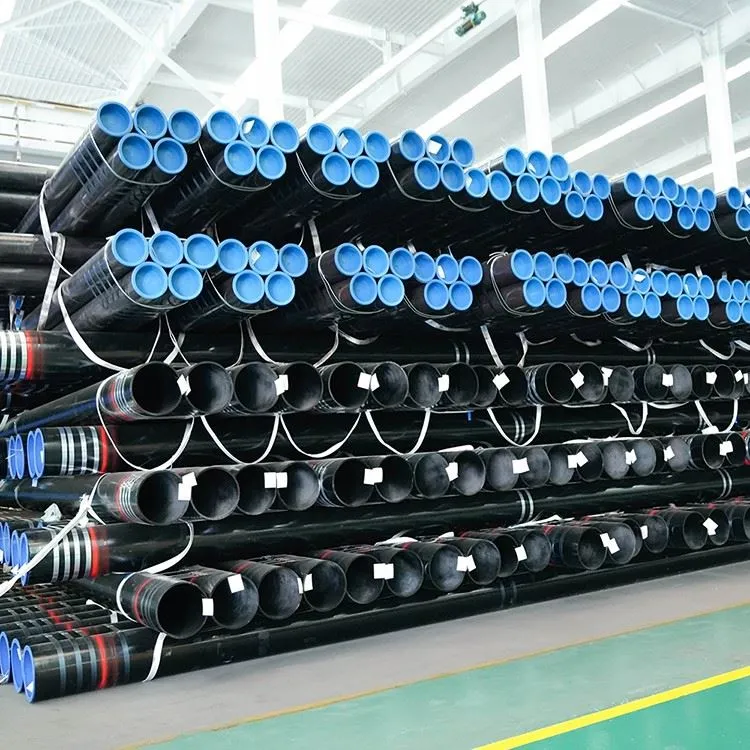
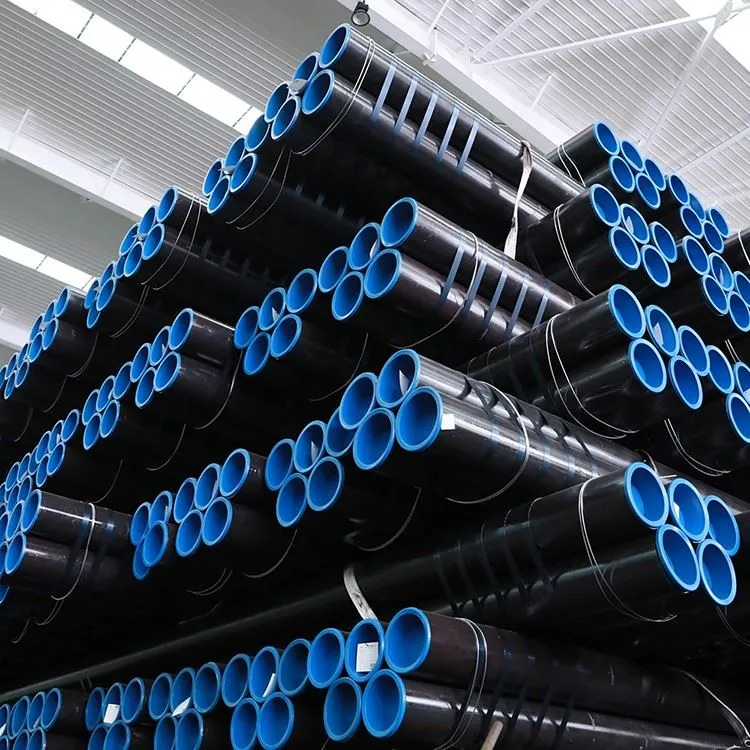
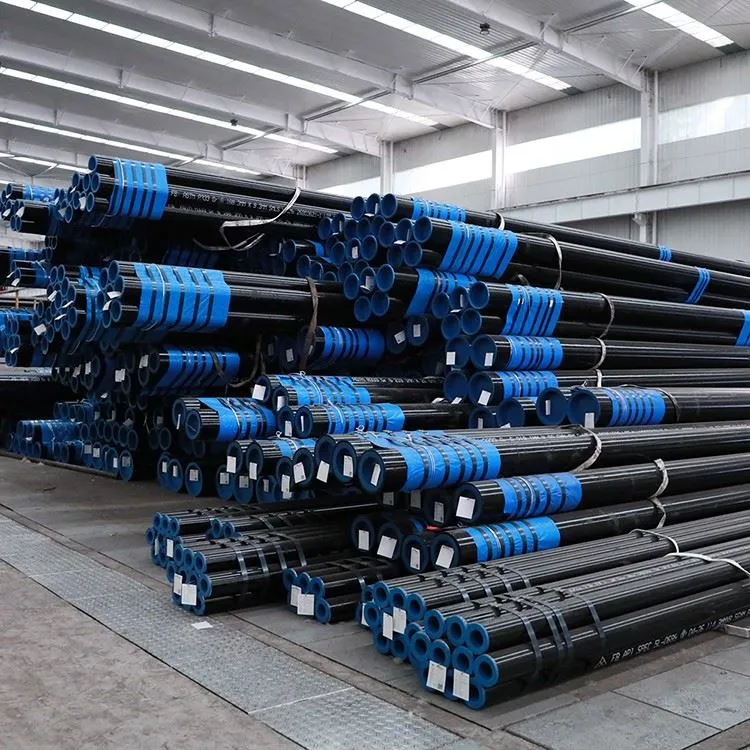
API 5CT T95 Oilfield Casing Pipes
API 5CT T95 is a high-strength, restricted-yield casing grade specifically engineered for Sour Service (H2S). It belongs to Group 2 of the API 5CT specification.
T95 is essentially a higher-strength version of C90. It provides a minimum yield strength of 95,000 psi while maintaining excellent resistance to Sulfide Stress Cracking (SSC). This is achieved through a fine-grained, fully tempered martensitic microstructure. Because it can handle higher tension and collapse loads than L80 but remains resistant to hydrogen embrittlement, T95 is the standard choice for deep, high-pressure wells containing H2S.
API 5CT Grade T95 Casing Steel pipe Color Code
API uses specific color bands to identify T95 in the field:
Pipe Body: One Silver Band + One White Band.
Couplings: The entire coupling is painted Silver with a White stripe.
API 5CT T95 Casing Specification Table
| Parameter | Specification |
| Standard | API Spec 5CT (Latest Edition) |
| Group / Grade | Group 2 / T95 |
| Manufacturing Type | Seamless (SML) Only |
| Heat Treatment | Quenched & Tempered (Q&T) |
| Service Environment | Sour Service ( H2S Environments) |
| Product Specification Level | PSL-1, PSL-2, PSL-3 |
API 5CT T95 Oil Well casing pipe Chemical Composition and Tensile & Hardness Requirement
To ensure SSC resistance, T95 utilizes a Chromium-Molybdenum (Cr-Mo) alloy with extremely low impurity levels.
Chemical Composition (Mass Fraction, %)
| Element | Symbol | Requirement |
| Carbon | C | 0.25% – 0.35% |
| Chromium | Cr | 0.40% – 1.50% |
| Molybdenum | Mo | 0.25% – 0.85% |
| Sulfur | S | ≤ 0.005% (Strictly controlled) |
| Phosphorus | P | ≤ 0.020% |
| Silicon | Si | ≤ 0.35% |
Mechanical Properties (Data-Driven)
| Property | Value (Imperial) | Value (Metric) |
| Yield Strength | 95,000 – 110,000 psi | 655 – 758 MPa |
| Tensile Strength (Min) | 105,000 psi | 724 MPa |
| Max Hardness | 25.4 HRC | 255 HBW |
| Yield/Tensile Ratio | ≤ 0.93 | ≤ 0.93 |
T95 Casing Dimensions Table (Common Sizes)
| OD (Inch) | Weight (lb/ft) | Wall Thickness (mm) | Inside Diameter (mm) | Drift Diameter (mm) |
| 5" | 18.00 | 9.19 | 108.62 | 105.45 |
| 5-1/2" | 20.00 | 9.17 | 121.36 | 118.19 |
| 7" | 29.00 | 10.59 | 156.62 | 152.65 |
| 7" | 32.00 | 11.51 | 154.78 | 150.81 |
| 9-5/8" | 47.00 | 11.99 | 220.50 | 216.53 |
| 9-5/8" | 53.50 | 13.84 | 216.80 | 212.83 |
API 5CT T95 casing pipe Tolerance Table
| Parameter | Tolerance |
| Outside Diameter (OD) | -0.75% to +1.00% |
| Wall Thickness | -12.5% (Minimum wall) |
| Weight | -3.5% to +6.5% (Single length) |
| Straightness | Max 0.2% of total length |
| Ovality | Max 1% of OD |
Connection and End Types of API 5CT T95 Casing
Ends: Typically Threaded and Coupled (T&C).
Standard API Threads:
BTC (Buttress Thread): Preferred for T95 due to high tension capacity in deep wells.
LTC (Long Round Thread): Common for standard production depths.
Premium Connections: Frequently used for T95 to ensure gas-tight sealing in high-pressure gas wells (e.g., VAM, TenarisHydril).
Couplings: Must be made of Grade T95 material and Quenched & Tempered.
API 5CT T95 Casing Features
High Strength Sour Service: Bridges the gap between L80 and C110; handles higher pressure than L80 while remaining safe from H2S.
Restricted Yield Window: A narrow 15,000 psi yield range ensures uniform material performance.
Hardenability: High Cr and Mo content ensures a 100% martensitic structure throughout the wall thickness.
Excellent Toughness: Mandatory impact testing ensures the pipe won't fail under shock loads.
inspection requirements for T95 OCTG pipes
Mechanical Property Requirements
Chemical Composition Control
SSC Resistance Test (NACE TM0177):
Must pass the hydrogen sulfide stress corrosion cracking test, simulating an acidic environment (H₂S partial pressure ≥ 0.05 psi).
The specimen is considered qualified if it shows no cracks after being exposed to a specified stress (typically 75% yield strength) for 720 hours.
NDT Requirements:
All T95 pipe bodies must undergo fully automated ultrasonic testing (UT) and magnetic particle testing (MT).
Couplings and accessories must also undergo 100% ultrasonic or radiographic testing to ensure internal defects are controllable.
Hydrostatic Test:
Each pipe must undergo a hydrostatic test. The test pressure must be no less than 90% of its rated internal pressure resistance, and the pressure holding time must be no less than 5 seconds, with no leakage.
Dimensional and Surface Accuracy:
Outer diameter and wall thickness tolerances must conform to API 5CT specifications (e.g., outer diameter deviation ±0.75%, wall thickness deviation -12.5% to +15%).
The surface must be free of defects that affect use, such as cracks, folds, and scale. If necessary, anti-corrosion markings can be applied by painting.
Re-inspection and Reprocessing Rules:
If the initial sample is unqualified, the entire batch of pipes may be inspected individually, and unqualified products may be discarded.
Unqualified batches may be re-heat-treated and re-inspected as a new batch, but re-sampling and testing are required.
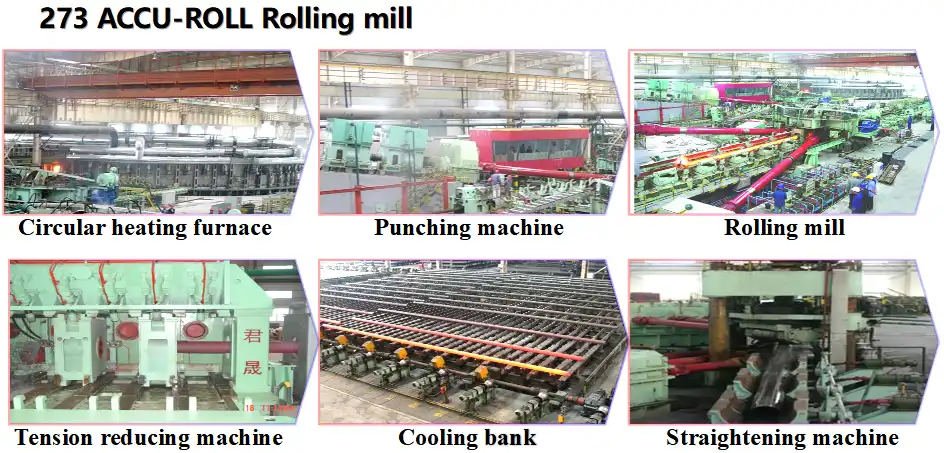
GNEE API 5CT T95 Casing pipe process line
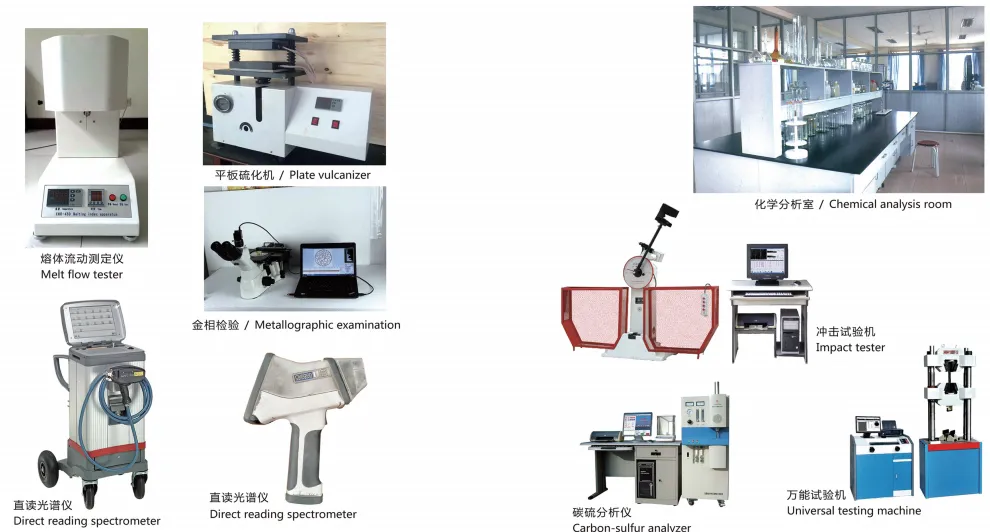
GNEE API 5CT T95 Oil Well Casing Pipe test Equipments
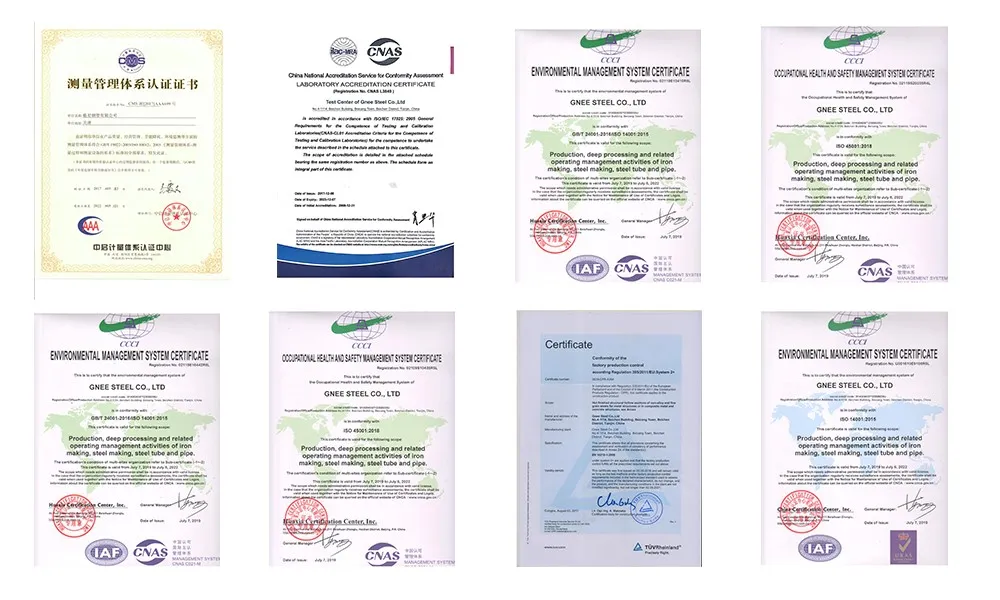
GNEE API 5CT T95 Casing Pipe Certificate
FAQ
What is the difference between API 5CT and API 5L?
The primary difference between API 5CT and API 5L is their application and the type of stress they are designed to handle:
Application (Downhole vs. Surface):
API 5CT: Used for Upstream operations. These are OCTG (Oil Country Tubular Goods) like Casing and Tubing that go inside the wellbore.
API 5L: Used for Midstream operations. These are Line Pipes used to transport oil, gas, or water from the wellhead to refineries or storage tanks.
Design Priority:
API 5CT: Focused on resisting external pressure (collapse), tensile stress (the weight of the hanging pipe string), and specialized corrosive environments ( H2S/CO2 ).
API 5L: Focused on internal pressure, flow capacity, and weldability for joining long distances of pipe.
End Connections:
API 5CT: Almost always Threaded and Coupled (STC, LTC, BTC, or Premium connections) because they must be screwed together on the rig floor.
API 5L: Almost always Beveled for Welding so they can be welded together in the field to form a continuous pipeline.
What does API 5CT mean?
API 5CT is the American Petroleum Institute's technical standard for Oil Country Tubular Goods (OCTG), specifically casing and tubing used in oil and gas wells. It regulates manufacturing, dimensions, mechanical properties, and testing requirements for various steel grades. This specification ensures that downhole pipes are durable enough to withstand extreme external pressures, heavy tensile loads, and corrosive conditions (H2S/CO2) encountered during drilling and production operations.
What is the difference between L80 and T95?
L80 (especially L80-13Cr) is primarily designed for resistance to CO₂ corrosion, with moderate strength.
T95 is primarily designed for high strength and resistance to H₂S stress corrosion (SSC), with even higher strength and stricter composition control.
Hot Tags: api 5ct t95 oilfield casing pipes, China api 5ct t95 oilfield casing pipes manufacturers, suppliers, factory, octg grades, octg for harsh environments, octg heavy weight drill pipes, octg e commerce, octg threading, octg certification
You Might Also Like


Send Inquiry