




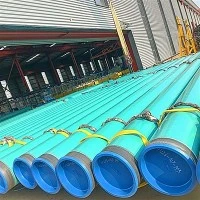
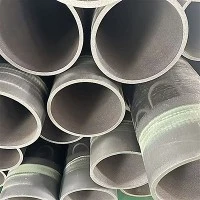


SA213 T92 Seamless Alloy Boiler Tube
SA-213 T92 is the 9Cr-2W grade of ASTM A213, the specification for seamless boiler, superheater and heat-exchanger tube, and it is ordered by outside diameter and wall rather than by NPS and schedule. This supply runs OD 31.8-127 mm with wall 4.0-12.7 mm, normalised at 1040-1080 °C and tempered at 730-780 °C. UNS number K92460.
Take Action Contact Us: sales@gneetube.com
Specifications
The size window is the specification's, not a mill preference: A213 runs from 3.2 mm inside diameter to 127 mm outside diameter with 0.4-12.7 mm wall, and this supply fills the upper part of that, where superheater tubes sit. Above OD 127 mm the same chemistry leaves A213 and is ordered as A335 P92 pipe.
| Parameter | Requirement |
|---|---|
| Standard | ASTM A213 / ASME SA-213, seamless ferritic and austenitic boiler, superheater and heat-exchanger tubes |
| Grade and UNS | T92, UNS K92460, 9Cr-2W-Mo-V-Nb with controlled B and N |
| Process | Seamless, hot finished or cold finished; no longitudinal weld |
| Outside diameter | 31.8-127 mm in this supply; 3.2 mm ID to 127 mm OD in the specification |
| Wall thickness | 4.0-12.7 mm in this supply; 0.4-12.7 mm in the specification |
| Length | 5.8-12 m random, or fixed lengths up to 13 m |
| Delivery condition | Normalised 1040-1080 °C, tempered 730-780 °C, air cooled |
| Ends | Plain ends as standard; bevelled to ASME B16.25 on request |
| Surface | As-rolled, pickled or shot-blasted; free of loose scale |
| Marking | Grade, heat number, size, minimum or average wall, hot or cold finished |
Chemical Compositions of ASTM A213 / ASME SA213 T92 Alloy Steel SMLS Tubes:
| C | Mn | P | S | S | Cr | Mo | V | N | Ni | Al | Nb | W | B |
| 0.07-0.13 | 0.3-0.6 | 0.02 max | 0.01 max | 0.5 max | 8.5-9.5 | 0.3-0.6 | 0.15-0.25 | 0.03-0.07 | 0.4 max | 0.04 max | 0.04-0.09 | 1.5-2.0 | 0.001-0.006 |
Mechanical Properties of ASTM A213 / ASME SA213 T92 Alloy Steel Seamless Tubes:
| Tensile Strength , MPa | Yield Strength, MPa | Elongation, % | Hardness, HB |
| 585 min | 415 min | 20 min | 250 max |
Allowable Stress and Wall Selection
The two grades separate only where it matters. At 500 °C T92 carries 7% more stress than T91, inside the noise of a design margin; at 600 °C it carries 35% more, and at 650 °C the ratio is 1.56 with both running on time-dependent properties. A project below about 580 °C that specifies T92 pays for capability it will not use.
| Metal temperature (°C) | SA-213 T92 | SA-213 T91 | T92 / T91 |
|---|---|---|---|
| 500 | 134.5 | 126.2 | 1.07 |
| 525 | 129.0 | 117.1 | 1.10 |
| 550 | 122.8 | 105.6 | 1.16 |
| 575 | 110.2 | 88.6 | 1.24 |
| 600 | 87.8 | 65.2 | 1.35 |
| 625 | 67.0 | 45.4 | 1.48 |
| 650 | 46.7 | 30.0 | 1.56 |
T92 values are the ASME Code Case 2179 tabulated stresses interpolated to the round temperatures shown; T91 values are ASME B31.1 Table A-1 interpolated on the same basis. Both columns are design values, not test results, and the edition named in the purchase order governs if it differs.
Feeding either column into the Section I tube formula, t = PD/(2S + P) + 0.005D + e, shows where the grade pays. At 25 MPa and 600 °C the required wall falls by 22% at every diameter, because the 0.005D term is common to both and only the stress term moves.
| Outside diameter (mm) | T91 wall (mm) | T92 wall (mm) | Wall saved (mm) |
|---|---|---|---|
| 38.1 | 6.32 | 4.94 | 1.38 |
| 44.5 | 7.38 | 5.77 | 1.61 |
| 50.8 | 8.43 | 6.59 | 1.84 |
| 57.0 | 9.45 | 7.39 | 2.06 |
Read it backwards and the hook falls out: 38.1 × 6.3 mm in T92 holds 33.5 MPa at 600 °C against 24.9 MPa in T91. Weight follows, from 4.94 to 4.08 kg/m at that size, and the weight table below carries kg/m for every size in the range.
Dimensions and Tolerances
Cold-finished tube holds OD to ±0.10 mm below 25.4 mm and ±0.30 mm across 63.5-76.2 mm, tighter than pipe of the same size. Hot-finished tube is allowed wider variation on both counts, so a drawing that quotes a cold-finished tolerance cannot be filled from hot-finished stock.
| Specified OD (mm) | Permissible variation (mm) |
|---|---|
| Under 25.4 | ±0.10 |
| 25.4 to under 38.1 | ±0.15 |
| 38.1 to under 50.8 | ±0.20 |
| 50.8 to under 63.5 | ±0.25 |
| 63.5 to under 76.2 | ±0.30 |
Wall thickness is where an order changes without anyone noticing, because A213 carries two tolerance systems and the default is not the same as pipe. On a minimum wall order no negative deviation is permitted at any point; on an average wall order the mean is held and the thin point is allowed to run below the nominal figure.
| Basis and condition | Tolerance | What it means at the thin point |
|---|---|---|
| Minimum wall, cold-finished, OD 38.1 mm and under | 0 / +20% | 6.3 mm nominal is 6.3 mm at the thinnest place |
| Minimum wall, cold-finished, OD over 38.1 mm | 0 / +22% | Same rule, wider allowance for the mill |
| Average wall, cold-finished | ±10% | 6.3 mm nominal means 5.7 mm is acceptable somewhere on the tube |
| Minimum wall, hot-finished, wall 4.6 mm and over | 0 / +28% | Thicker finished tube, wider spread |
| Minimum wall, hot-finished, wall 2.4 mm and under | 0 / +40% | Thin walls lose the most control |
Minimum Wall or Average Wall
Three words on the purchase order decide which tube arrives, and A213 requires the marking to state which one was supplied. The same 38.1 × 6.3 mm line gives 5.33 kg/m and 33.5 MPa on a minimum wall order, or 4.94 kg/m and 29.5 MPa on average wall, at 600 °C.
| Basis on the order | Thin point (mm) | Mean wall (mm) | Delivered weight (kg/m) | Pressure capability (MPa) |
|---|---|---|---|---|
| Minimum wall | 6.3 | 6.9 | 5.33 | 33.5 |
| Average wall | 5.7 | 6.3 | 4.94 | 29.5 |
An average wall order is 8% lighter and 12% weaker, and it is the correct order for a heat exchanger where the tube is supported along its length and wall thickness is a corrosion allowance. For a superheater tube designed on internal pressure, the thin point is the design point, so minimum wall is the honest basis and should be written on the order rather than assumed from the drawing.
Weight per Metre
kg/m is 0.02466 × t × (OD − t) on nominal dimensions, which is what a purchase order is priced against. On a minimum wall order the delivered weight runs above the table, because no mill rolls to the thin limit, and at 38.1 × 6.3 mm the difference is about 8% of the tonnage.
| OD (mm) | Wall (mm) | ID (mm) | Weight (kg/m) |
|---|---|---|---|
| 31.8 | 4.5 | 22.8 | 3.03 |
| 31.8 | 5.6 | 20.6 | 3.62 |
| 38.1 | 5.0 | 28.1 | 4.08 |
| 38.1 | 6.3 | 25.5 | 4.94 |
| 44.5 | 6.3 | 31.9 | 5.93 |
| 44.5 | 7.1 | 30.3 | 6.55 |
| 50.8 | 6.3 | 38.2 | 6.91 |
| 50.8 | 7.1 | 36.6 | 7.65 |
| 57.0 | 7.1 | 42.8 | 8.74 |
| 57.0 | 8.0 | 41.0 | 9.67 |
| 63.5 | 8.8 | 45.9 | 11.87 |
| 76.1 | 9.5 | 57.1 | 15.60 |
| 88.9 | 11.0 | 66.9 | 21.13 |
| 101.6 | 12.5 | 76.6 | 27.47 |
| 114.3 | 12.5 | 89.3 | 31.38 |
| 127.0 | 12.7 | 101.6 | 35.80 |
Tube or Pipe: Which Specification the Drawing Calls For
A requisition reading NPS 2 Sch 80 in T92 cannot be filled from A213: schedules belong to ASME B36.10, and A213 tube is ordered as OD × wall. The two forms carry different wall bases and design tables, so the substitution changes the pressure calculation as well as the product.
| Item | A213 T92 tube | A335 P92 pipe |
|---|---|---|
| Ordering basis | OD × wall thickness | NPS × schedule, or OD × wall |
| Wall tolerance basis | Minimum wall by default, 0 / +20% to +22% | Nominal wall, −12.5% permitted under A999 |
| Size ceiling in the standard | OD 127 mm | NPS 24 and larger |
| Typical location | Superheater, reheater, economiser, HRSG tube bundle | Superheater outlet header, main steam, hot reheat line |
| Design table in practice | Section I tube formula, PG-27.2.1 | Section I pipe formula and B31.1 stress tables |
Applications
T92 is chosen where steam sits at 600-620 °C and a T91 wall would be thicker than the tube spacing allows. The six duties below account for most enquiries, and each one fixes a different part of the specification.
| Duty | Section | Why T92 is chosen |
|---|---|---|
| Final superheater | Outlet panels, steam 600-620 °C | Wall that T91 cannot hold inside the panel pitch |
| Reheater outlet | Hot reheat tube bank | Creep strength at 620 °C with a ferritic tube |
| HRSG high-pressure superheater | Combined-cycle heat recovery | Thinner wall and faster start-up than an austenitic alternative |
| Superheater outlet header stubs | Tube-to-header joints in P92 headers | Matching chemistry avoids a dissimilar metal weld |
| Retrofit of T22 and T91 sections | Existing boiler at raised steam temperature | Higher stress at the same wall, or the same stress at less wall |
| High-temperature heat exchanger | Process gas and steam superheaters | Oxidation resistance of 9% chromium at 600 °C |
Why Source from GNEE
GNEE supplies ASTM A213 / ASME SA213 Grade T92 seamless alloy boiler tube by coordinating qualified mills and verifying the full documentation chain:
- Heat analysis and mechanical test reports checked against the cited A213 edition before shipment.
- Mill Test Certificate to EN 10204 3.1, with 3.2 and named third-party inspection (e.g., TÜV, BV, SGS) arranged on request.
- End finish, length and packaging prepared to the project specification and destination.
- Export experience across power, refining and petrochemical projects, with documentation assembled for customs and QA.
Test and inspection


Tell us your design metal temperature, outside diameter and wall thickness, heat-treatment condition, required tests and certificate type, and we will confirm whether SA213 T92 seamless alloy boiler tube matches your specification, and coordinate the qualified mill and third-party inspection your project requires.
FAQ
Is SA-213 T92 the same as A335 P92?
The chemistry and the UNS number K92460 are the same; the product form and the ordering basis are not. A213 T92 is tube, ordered as outside diameter by wall thickness up to OD 127 mm, normally on a minimum wall basis. A335 P92 is pipe, ordered as NPS by schedule on a nominal wall basis with −12.5% permitted, and it is what headers and main steam lines are made from.
What is the maximum temperature for SA-213 T92?
The ASME tabulated stresses for Grade 92 run to 649 °C, and the value at that temperature is 46.7 MPa against 87.8 MPa at 600 °C. Published ultra-supercritical practice stops at a metal temperature of 600-620 °C, and above about 630 °C the oxidation rate and the scatter in long-term creep data move the design to an austenitic tube.
Can T92 be substituted for T91?
Not without the design authority's approval. T92 halves the molybdenum and adds 1.50-2.00% tungsten and 0.001-0.006% boron, so the allowable stress, the welding consumable and the post-weld heat treatment window all differ. A T91 welding procedure does not cover T92, and a T92 tube designed on T91 allowable stress carries a wall thicker than it needs.
Should the purchase order say minimum wall or average wall?
Minimum wall for any tube designed on internal pressure, which is the A213 default and the only basis where 6.3 mm means 6.3 mm at the thin point. Average wall is legitimate for a heat-exchanger tube where corrosion allowance rather than pressure sets the wall, and it delivers about 8% less weight with about 12% less pressure capability at the same nominal size.
What should the mill certificate show for T92?
Heat treatment temperatures within normalising 1040-1080 °C and tempering 730-780 °C, hardness at or below 250 HBW, and a product analysis covering tungsten, boron, nitrogen and aluminium rather than chromium and molybdenum alone. Handheld XRF cannot measure boron, carbon or nitrogen, so the certificate is the only evidence that those three are in range.
What do you need to quote a T92 tube order?
Four figures: outside diameter and wall, design pressure, metal temperature and quantity. The reply gives the allowable stress at that temperature, the wall that follows from it, the weight per metre, and whether the size sits inside the A213 range or has to be ordered as P92 pipe.
Hot Tags: sa213 t92 seamless alloy boiler tube, China sa213 t92 seamless alloy boiler tube manufacturers, suppliers, factory, Alloy 20 Pipe
You Might Also Like


Send Inquiry