




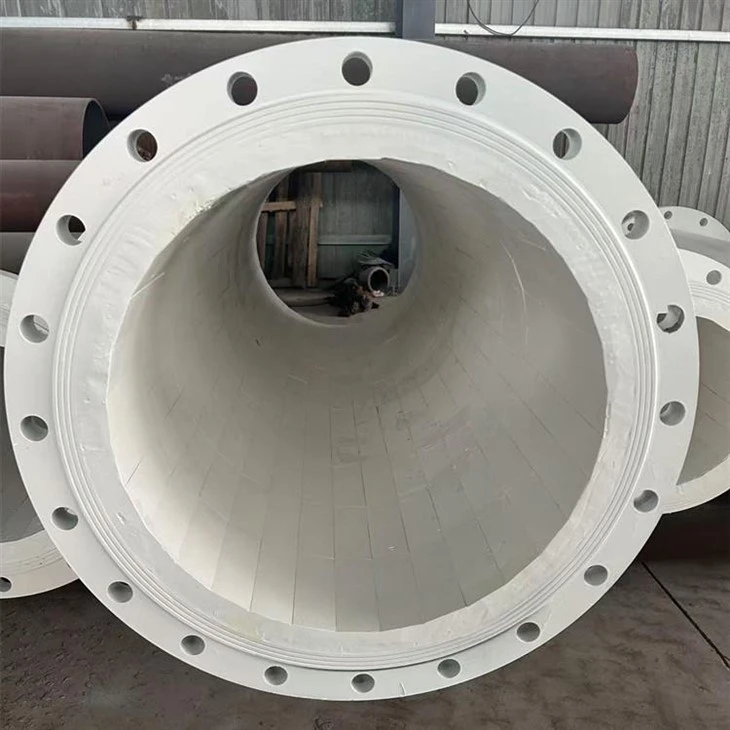
Ceramic Lined Pipe
Ceramic Lined Pipe: Manufacturing Process, Features, Specifications, Industrial Applications & FAQs
Ceramic lined pipe (also known as ceramic-lined composite steel pipe) is a high-performance wear-resistant piping solution engineered to combine the mechanical strength of carbon steel with the excellent wear resistance, corrosion resistance, and temperature resistance of advanced industrial ceramics. Designed for severe operating conditions involving abrasive particles, slurry, and corrosive media, ceramic lined pipes provide extended service life, stable operation, and reduced maintenance costs compared with conventional carbon steel, alloy steel, rubber-lined, and polymer pipes.
Under highly abrasive conditions, ordinary carbon steel pipes may experience rapid wall thinning and require frequent replacement, while properly selected ceramic lined pipe systems can significantly extend service life, in some applications achieving several times to dozens of times longer service performance depending on operating conditions.
Ceramic lined pipe Specification
Outer Diameter:25-800mm
Thickness:5 - 25 mm
Standard:ASTM, ASTM A106-2006
Grade:Q235, Q195-Q345
Special Pipe:carbon steel pipe
Processing Service:Bending, Welding, Decoiling, Punching, Cutting
Shape:30,60,90degree elbow
Connection:Flange or welded
Ceramic thickness:3-50mm
Alumina ceramic hardness:MOHS 9Application:Fluid Pipe
Paint:Anti corrosive paint
Alumina ceramic content:92%,95%
Ceramic density:3.6; 3.7 g/cm3
Use temperature:-50°C~1000°C;Paste: less than 300°C.Welding is not higher than 600°C .
Specification Available:
| Outside diameter | Internal diameter | Thickness |
| φ25 | φ10 | 7.5 |
| φ30 | φ15 | 7.5 |
| φ40 | φ20 | 10 |
| φ50 | φ37 | 6.5 |
| φ65 | φ52 | 6.5 |
| φ80 | φ67 | 6.5 |
| φ100 | φ84 | 8 |
| φ125 | φ109 | 8 |
| φ150 | φ134 | 8 |
| φ200 | φ184 | 8 |
| φ250 | φ230 | 10 |
NOTE: Above shows the common size. Other size can be customized according to customers' requirements.
Ceramic Material Physical Properties
Typical alumina ceramic properties:
| Property | Typical Value |
|---|---|
| Alumina Content | 92% / 95% |
| Density | ≥3.6 g/cm³ |
| Hardness | HRA 80–90 |
| Compressive Strength | 800–2000 MPa |
| Bending Strength | 200–400 MPa |
| Fracture Toughness | 3–5 MPa·m¹ᐟ² |
Send us your operating conditions and receive a professional recommendation with a competitive quotation within 24 hours.
Ceramic Steel Pipe
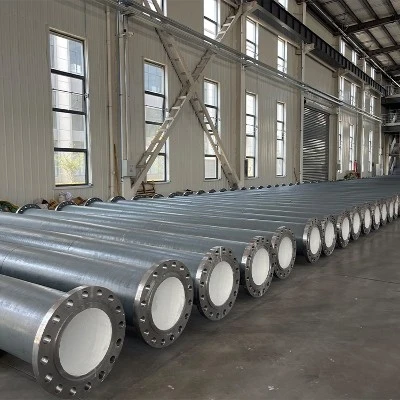
Core Structural Composition
High-quality ceramic lined steel pipes generally adopt a composite structure combining a ceramic wear-resistant layer and a steel supporting layer. Depending on the manufacturing process, the interface between ceramic and steel can be achieved through metallurgical bonding, adhesive bonding, or mechanical fixation.
For SHS (Self-Propagating High-Temperature Synthesis) ceramic lined pipes, the ceramic layer is formed through an in-situ reaction process under extremely high temperatures, creating a strong ceramic-metal composite structure with excellent bonding performance.
Inner Wear-Resistant Layer:
Dense alumina ceramic (mainly Alpha-Alumina, α-Al₂O₃), commonly available in 92% and 95% alumina grades, providing excellent hardness, abrasion resistance, and chemical stability.
Transition / Bonding Layer:
Depending on the manufacturing process, a metallurgical bonding zone or bonding interface is formed between ceramic and steel, improving structural integrity and resistance to impact and thermal stress.
Outer Steel Base Layer:
High-strength carbon steel pipe, commonly manufactured using materials such as Q235, Q345, ASTM A106, ASTM A53, or equivalent grades according to project requirements, providing mechanical strength, toughness, and weldability.
Professional Manufacturing Technologies
Modern ceramic lined pipes are manufactured through several industrial processes selected according to temperature, impact, abrasion level, and application requirements:
SHS Centrifugal Synthesis (Integral Ceramic Lining)
A high-performance manufacturing process where an aluminothermic reaction forms an integral alumina ceramic layer inside a rotating steel pipe.
Advantages include:
Strong ceramic-steel bonding
Smooth internal surface
Excellent wear resistance
Suitable for high-abrasion applications
Depending on design and materials, SHS ceramic lined pipes can be used for high-temperature industrial applications.
Direct Ceramic Sintering
Ceramic powder or ceramic material is sintered onto the inner surface of the steel pipe to create a dense wear-resistant lining with stable physical properties.
Ceramic Tile Lining With Adhesive or Stud Welding Fixation
Ceramic tiles are installed inside steel pipes using high-temperature resistant adhesives, stud welding, or mechanical fixing methods.
This solution is widely used for large-diameter pipelines and applications involving severe impact and abrasion.
Key Performance Features & Technical Advantages
Ceramic lined pipes combine the wear resistance of ceramics with the toughness and structural strength of steel, overcoming the limitations of traditional steel pipes and pure ceramic components.
Ultra-High Wear Resistance
The alumina ceramic lining typically reaches Mohs hardness of approximately 9 (HRA 80–90 depending on grade), significantly higher than carbon steel and many wear-resistant alloys.
In abrasive applications, ceramic lined pipes can provide several times to dozens of times longer service life than ordinary carbon steel pipes, depending on particle size, velocity, impact angle, and operating conditions.
Low Fluid Resistance & Energy Efficiency
The smooth ceramic inner surface reduces friction losses and minimizes scaling compared with conventional steel pipes.
The low roughness surface helps maintain stable flow efficiency and can reduce pumping energy consumption in long-term operation.
Excellent Corrosion Resistance & Anti-Scaling Performance
Alumina ceramic has excellent chemical stability and resistance to many acids, alkalis, and abrasive chemical media.
However, resistance performance depends on:
Chemical composition of the transported medium
Temperature
Concentration
Exposure time
Ceramic lined pipes are especially suitable for applications requiring combined wear and corrosion resistance.
Wide Temperature Resistance & Thermal Shock Stability
Alumina ceramic provides excellent high-temperature stability.
Depending on ceramic type, bonding method, and pipe design:
SHS ceramic lined pipes can be applied in high-temperature industrial environments.
Adhesive bonded ceramic linings generally have lower temperature limits due to adhesive properties.
Actual operating temperature should be selected according to the lining process and manufacturer recommendations.
Lightweight & Long-Term Cost Advantage
Compared with cast stone pipes and some heavy wear-resistant materials, ceramic lined pipes can provide weight advantages while maintaining excellent wear resistance.
Although the initial investment is usually higher than ordinary carbon steel pipes, the extended service life and reduced maintenance frequency can significantly lower total operating costs.
Actual economic benefits depend on working conditions, replacement frequency, installation cost, and maintenance requirements.
Flexible Installation & Strong Adaptability
The external steel pipe layer maintains good weldability and mechanical strength.
Common connection methods include:
Welding
Flange connection
Clamp connection
Expansion joint connection
The appropriate installation method depends on pipe structure and project requirements.
Industrial Applications
Ceramic lined pipes are widely used in industries involving abrasive or corrosive material transportation, especially in high-wear locations such as elbows, reducers, and transfer pipelines.
Power Generation Industry:
Coal powder conveying
Fly ash transportation
Desulfurization slurry pipelines
Mining & Mineral Processing:
Tailings transportation
Concentrate slurry conveying
Mine backfilling pipelines
Metallurgy Industry:
Ore transportation
Slag conveying
Abrasive material pipelines
Coal Industry:
Coal slurry transportation
Coal washing wastewater pipelines
Chemical & Environmental Protection:
Abrasive chemical slurry
Industrial wastewater
Solid-liquid mixture transportation
Dredging & Building Materials:
Sand and gravel transportation
Cement powder conveying
Share your application requirements, and we'll provide technical support, drawings, and pricing.
Comparison With Traditional Piping Materials
vs Ordinary Carbon Steel Pipe:
Higher abrasion resistance and significantly longer service life under abrasive conditions, reducing frequent replacement requirements.
vs Rubber-Lined Pipe:
Better resistance to high temperature and abrasive particles, with less risk of aging or deformation.
vs Plastic / Polymer Pipe:
Higher temperature resistance and mechanical impact resistance, suitable for heavy-duty industrial applications.
vs Glass / Basalt Lined Pipe:
Better impact resistance and structural toughness in demanding operating environments.
Ceramic lined pipe Process Line

FAQ
Q1: What Is The Maximum Working Temperature Of Ceramic Lined Pipe?
A:The maximum operating temperature depends on the ceramic type, bonding method, and pipe design.
SHS ceramic lined pipes can withstand high-temperature industrial environments, while adhesive bonded ceramic linings generally have lower temperature limitations.
The recommended operating temperature should always be confirmed based on the manufacturer's technical data.
Q2: What Are The Main Differences Between 92% And 95% Alumina Ceramic Lining?
A:95% alumina ceramic provides higher hardness, density, and wear resistance compared with 92% alumina ceramic.
92% alumina ceramic offers a more economical solution for general abrasion applications, while 95% alumina is preferred for severe wear environments requiring longer service life.
Q3: Can Ceramic Lined Pipes Be Welded And Installed On Site?
A:Yes. The steel outer layer allows welding and conventional installation methods.
However, welding should be performed carefully according to the pipe structure to avoid damaging the ceramic lining.
Q4: Why Is Ceramic Lined Pipe More Cost-Effective Than Ordinary Steel Pipe?
A:Although ceramic lined pipes usually have a higher initial purchase cost, their superior wear resistance can reduce replacement frequency, maintenance requirements, and downtime losses.
The actual cost advantage depends on operating conditions and pipeline service requirements.
Q5: What Working Conditions Are Ceramic Lined Pipes Suitable For?
A:Ceramic lined pipes are mainly designed for severe wear applications, including:
Mining slurry transportation
Fly ash conveying
Coal powder pipelines
Metallurgical material handling
Abrasive chemical media transportation
Q6: What Manufacturing Processes Are Available For Ceramic Lined Pipes?
A:Common manufacturing processes include:
SHS centrifugal synthesis
Ceramic sintering
Ceramic tile lining with adhesive or stud welding fixation
The appropriate process depends on temperature, impact level, pipe diameter, and operating environment.
Hot Tags: ceramic lined pipe, China ceramic lined pipe manufacturers, suppliers, factory, coated pipe exporter, coated pipe for pipeline projects, heat resistant coated steel pipe, painted steel pipe, coated pipe for high pressure applications, corrosion resistant coated steel pipe
You Might Also Like




Send Inquiry