




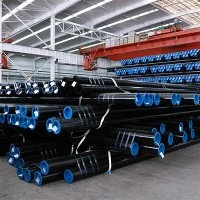
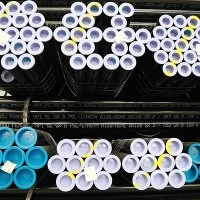


Rubber Lined Pipes
Rubber Lined Pipes: Definition, Types, Manufacturing, Applications & FAQs
Rubber lined pipes are durable composite piping solutions consisting of a carbon steel pipe substrate bonded with a high-performance rubber inner lining. Engineered to resist severe abrasion, chemical corrosion, vibration, and thermal cycling, these industrial pipes serve as a cost-effective alternative to expensive alloy and fluoropolymer-lined piping across mining, chemical processing, power generation, and wastewater treatment industries. Rubber compounds are classified according to ASTM D1418 nomenclature, while the steel pipe substrate can be manufactured in accordance with ASTM, API, ISO, EN or ASME specifications.
Whether new construction or re-production, GNEE uses the same rigorous processes to provide you with the highest quality rubber lined pipe in the industry. From fabricating the pipe to your specifications to surface preparation and selecting the appropriate elastomers to custom painting, these industrial grade lined pipes can withstand abrasive and corrosive slurries in suction or discharge service.
For fluid streams with high solids content or corrosive chemistries, rubber-lined steel pipe has traditionally been a very effective solution. Rubber-lined pipe is highly resistant to corrosion because the lining creates a barrier between the surface and the water.
Due to its smooth surface, which can be easily cleaned and maintained, rubber hoses are widely used in mine tailings conveying systems, coal mine backfill and related piping systems. In particular, enamel pipes are very suitable for conveying media with temperatures between -50°C and +150°C and are not prone to wear and corrosion.
Take ActionContact Us: sales@gneetube.com
Product information
Rubber lined Pipe Introduction
Outer Diameter:10.3 - 610 mm
Thickness:1.24 - 60 mm
Length:1-12m
Standard:ASTM, bs, DIN, GB, JIS, ANSI A210-1996, ASTM A106-2006, ASTM A179-1990, ASTM A53-2007, BS 1139, BS 6323, DIN 1626, DIN 1629/4, DIN 17175, DIN 2391, GB/T8162, Gb/t8163, JIS G3456-2004, JIS G3459-2004
Grade:10#, 20#, 45#, A106(B,C), A179-C, A53(A,B), 15Mo3, Q195, Q345, ST35.4, St37-2, ST45, ST52, St52.4, ST54, 10#-45#, A53-A369, MO, Q195-Q345, ST35-ST52
Application:structure/fluid/boiler/water and gas etc
Section Shape:Round
Special Pipe:Thick Wall Pipe
Surface Treatment:rubber lined
Technique:Cold Rolled
Package:in bundles or in wooden case
OEM/ODM service with fast production and worldwide delivery.
Rubber Lined Pipe

Common Rubber Lining Materials (ASTM D1418 Standard)
Multiple rubber and elastomer compounds are standardized under ASTM D1418 for pipe lining, each tailored to specific temperature, chemical, and abrasive working environments. The most widely used industrial grades are categorized below:
1. Soft Natural Rubber (NR)
Core advantages: Lowest cost, exceptional abrasion resistance and tear strength, stable performance under cold temperatures and rapid temperature fluctuations
Chemical performance: Reliable general chemical resistance to most inorganic chemicals, alcohols, esters, and hydrochloric acid
Hardness grade: 40–60 Shore A
Best applications: Mining tailings slurry, coal mine backfilling, general abrasive fluid transportation
2. Hard Natural Rubber (Ebonite)
Core advantages: Superior chemical permeation resistance, excellent physical toughness, high thermal stability
Temperature tolerance: Continuous operating temperature is typically up to 90–95°C (194–203°F), depending on formulation.
Hardness grade: 60–90 Shore D
Best applications: High-concentration chemical media, static corrosive environments requiring strong anti-penetration performance
3. Synthetic Rubber Blends (CR, IIR, CSM)
Chloroprene Rubber (CR): Balanced chemical resistance, excellent structural stability under temperature changes
Butyl Rubber (IIR/BIIR/CIIR): Outstanding resistance to high-concentration acids, gas tightness, and thermal stability
Hypalon (CSM/Chlorosulphonated Polyethylene): Excellent weathering, ozone resistance, moderate oil resistance, and continuous service temperatures up to approximately 120°C (248°F).
Hardness grade: 40–60 Shore A
Best applications: Oil-containing media, high-temperature chemical workshops, severe temperature fluctuation working conditions
4. High-Performance Specialty Elastomers
Professional-grade linings including Nitrile Rubber (NBR), EPDM, and Fluoroelastomer (FKM) are customized for extreme working conditions, providing enhanced oil resistance, aging resistance, and ultra-strong corrosion resistance for special chemical industrial scenarios.
Complete Rubber Lined Pipe Manufacturing Process
High-quality rubber lined pipes follow a standardized 13-step production workflow to ensure perfect bonding, zero defects, and stable performance. All processes comply with international industrial quality inspection standards:
Steel pipe fabrication and dimensional calibration
Weldment inspection to eliminate structural defects
Substrate surface blasting treatment for maximum adhesive adhesion
Professional multi-layer adhesive system application
Custom rubber tube manufacturing based on pipe diameter and working conditions
Precise stitching of rubber tube seams
Rubber tube insertion and positioning inside the steel pipe
Flange face rubber lining treatment for full sealing performance
Autoclave vulcanization (curing) for integrated bonding
Lining inspection and spark testing to detect pinholes and bubbles
External unlined surface blasting cleaning
Anti-corrosion painting for outer steel surfaces
Final comprehensive quality inspection and performance testing
Autoclave Vulcanization: Core Production Advantage
Industrial rubber lined pipes prioritize autoclave vulcanization over traditional atmospheric curing or internal steam curing. This professional process delivers superior rubber-steel adhesion, uniform lining density, and zero internal defects. Autoclave-cured linings achieve 30%–50% longer service life and stable physical properties under long-term pressure and vibration.
Standard production diameter range covers 1.5 inches to 144 inches; flange-type pipes up to 88 inches can be fully vulcanized in professional autoclave equipment.
Features of Rubber Lined Pipes
Excellent Abrasion & Impact Resistance: Rubber lining absorbs impact from solid particles, resisting slurry erosion far better than bare steel pipes
Stable Anti-Corrosion Performance: Isolates steel substrate from acids, alkalis, salts, and oxidizing chemicals to prevent chemical corrosion
Wide Temperature Adaptability: Service temperature depends on the rubber compound, typically ranging from -50°C to 120°C, while specialty elastomers can withstand higher temperatures.
Strong Structural Flexibility: Soft rubber linings tolerate thermal expansion, contraction, and equipment vibration without cracking or peeling
Long Service Life: General service life reaches 10–30 years; steel substrates can be re-lined 3–4 times to reduce long-term replacement costs
Low Maintenance Cost: Requires minimal routine maintenance compared with unlined steel pipes.
Customizable Structure: Wall thickness can be reinforced at pipe elbows and wear-prone positions to extend service life further
Industrial Applications
Rubber lined pipes are widely adopted in industries with abrasive, corrosive, and high-solid-content media transportation:
Mining Industry: Mine tailings conveying, coal mine backfilling, mineral slurry transportation
Chemical Industry: Transportation of inorganic acids, dilute corrosive solutions, and general chemical media
Power & Steel Plants: Industrial wastewater, desulfurization slurry, and process fluid delivery
Wastewater Treatment: Corrosive domestic and industrial sewage transportation
Get a customized rubber lined pipe solution for your project.
Rubber Lined Pipe vs PTFE Lined Pipe: Core Differences
The two mainstream lined pipes apply to completely differentiated working conditions, with clear selection criteria:
Rubber Lined Pipe
Applicable for medium-low temperature working conditions (-50°C to 150°C)
Superior abrasion resistance for high-solid abrasive slurries
Excellent flexibility to adapt to vibration and pressure fluctuations
Lower manufacturing and maintenance costs
Ideal for mining, metallurgy, and conventional chemical industries
PTFE Lined Pipe
Suitable for highly corrosive chemicals and continuous service temperatures up to approximately 260°C.
Non-flammable, ultra-low friction coefficient, anti-aging performance
Typically manufactured with carbon steel or stainless steel pipe as the structural substrate.
High cost, more suitable for high-end fine chemical scenarios
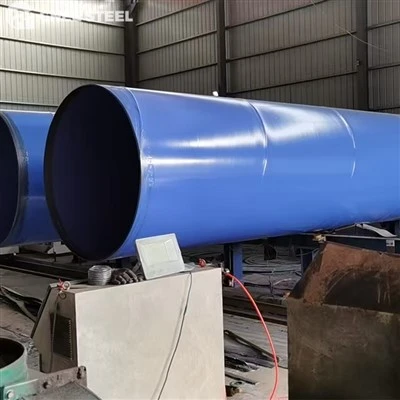
Coated Steel Pipe process line

Coated Steel Pipe Customer

FAQ
1. What is the main purpose of rubber lined pipes?
Rubber lined pipes protect steel pipe substrates from abrasion, chemical corrosion, and medium contamination. They prevent fluid leakage, reduce maintenance frequency, and stabilize pipeline operation under harsh industrial slurry and corrosive media conditions.
2. What is the service life of rubber lined steel pipes?
Under standard working conditions, the overall service life ranges from 15 to 40 years. The pipe can be rotated 90 degrees after 6–8 years of operation to balance wear, and the steel substrate can be re-lined 3–4 times for repeated use, greatly lowering long-term operational costs.
3. What is the temperature range for rubber lined pipe operation?
Standard rubber lined pipes work stably in media temperatures from -50°C to 150°C. Hard rubber and synthetic rubber grades support continuous operation above 200°F (93°C).
4. What is the difference between soft rubber and hard rubber lining?
Soft rubber (40–60 Shore A) features high elasticity, adapts to vibration and temperature changes, and supports on-site construction for large equipment. Hard rubber (60–90 Shore D) has excellent chemical permeation resistance but is rigid, only suitable for small components via factory autoclave vulcanization, and sensitive to drastic temperature fluctuations.
5. Why is autoclave vulcanization better than other curing methods?
Autoclave vulcanization achieves tighter bonding between rubber and steel, uniform lining density, no internal bubbles or defects, and far better pressure and abrasion resistance. It effectively maximizes the long-term service life of rubber lining compared to atmospheric or internal steam curing.
6. When to choose rubber lined pipe instead of PTFE lined pipe?
Select rubber lined pipes for medium-low temperature environments, high-abrasion slurry transportation, frequent system pressure fluctuations, and cost-sensitive industrial projects. Choose PTFE lined pipes only for ultra-high temperature and super strong corrosive chemical working conditions.
7. Can rubber lined pipes resist acidic and alkaline media?
Yes. Natural rubber resists most inorganic acids, alcohols, and hydrochloric acid. Butyl, CR, and CSM synthetic rubbers provide enhanced resistance to high-concentration acids and alkaline media, covering most conventional industrial corrosive media.
Hot Tags: rubber lined pipes, China rubber lined pipes manufacturers, suppliers, factory, coated pipe in different sizes, coated pipe with fire resistant coating, coated pipe with smooth surface, coated pipe with abrasion resistant coating, coated pipe for gas transportation, coated pipe for pipeline projects
Previous
3PE Coating PipeYou Might Also Like



Send Inquiry