


In the world of Oil Country Tubular Goods (OCTG), the connection is often the most critical part of the string. While the pipe body provides the strength, the threads ensure the integrity of the entire well.
Choosing between API Standard Threads and Premium Threads is a decision that balances safety, technical requirements, and project economics. Below is a professional technical comparison to help you determine which is right for your application.
Confused Between BTC and Premium Connections? Let Our Engineers Help You Choose the Right Seal for Your Well.
API Threads: The Industry Standard
API connections are standardized by the American Petroleum Institute under Spec 5B. These are the "workhorse" connections of the oilfield.
Common Types:
STC (Short Round Thread): Common for casing; provides good strength but limited sealing.
LTC (Long Round Thread): An elongated version of STC, offering better tension resistance.
BTC (Buttress Thread): A trapezoidal thread form designed to handle high tensile loads and better compression.
EUE (External Upset End): Standard for tubing; features a "thickened" end to maintain strength at the connection.
Advantages:
Cost-Effective: Significantly cheaper than premium alternatives.
Global Availability: Any machine shop with API certification can repair or cut these threads.
Interchangeability: You can mix pipes from different manufacturers as long as they meet API standards.
Limitations:
Sealing Mechanism: API threads rely on thread compound (dope) to fill the gaps between the threads. They are generally considered "liquid-tight" but not "gas-tight."
Torque Limits: Low resistance to high torque, making them unsuitable for long horizontal or highly deviated wells.
Premium Threads: High-Performance Solutions
Premium threads are proprietary designs (like VAM®, TenarisHydril, or Hunting) developed to exceed API specifications. They are engineered for the most demanding environments.
Key Design Features:
Metal-to-Metal Seal: A tapered metal surface that creates a gas-tight seal without relying solely on thread dope.
Torque Shoulder: A positive stop that allows for high torque during make-up without damaging the threads.
Flush or Semi-Flush Profile: Smooth internal or external diameters that improve hydraulic flow and clearance in tight boreholes.
Advantages:
100% Gas-Tight Integrity: Essential for high-pressure gas wells (HPHT).
Superior Torque Resistance: Perfect for horizontal drilling where the string must be rotated into place.
Fatigue Resistance: Better performance in offshore or cyclic loading environments.
Limitations:
High Cost: Can be 2 to 5 times more expensive than API threads.
Proprietary: You cannot mix different brands of premium threads. If you buy "Brand A" casing, you must use "Brand A" accessories.
Specialized Inspection: Requires certified third-party inspectors to oversee the "running" of the pipe to prevent galling (thread damage).
Comparison Table: API vs. Premium
| Feature | API Standard Threads (BTC/LTC) | Premium Connections |
| Sealing Type | Interference fit + Thread Dope | Metal-to-Metal Seal |
| Integrity | Liquid-Tight | Gas-Tight |
| Tension Capacity | 60% - 80% of Pipe Body | Up to 100% of Pipe Body |
| Torque Resistance | Low to Moderate | High to Extra-High |
| Well Geometry | Vertical Wells | Deviated, Horizontal, or ERD |
| Environment | Standard (Onshore) | HPHT, Deepwater, Sour Service |
| Cost | Budget-Friendly | Premium Investment |
Technical Decision Guide: Which to Choose?
Choose API Threads If:
You are drilling a vertical onshore well with standard pressures.
The medium being transported is liquid (oil/water) rather than gas.
You are working on a tight budget and the well depth is shallow to medium.
The environment is non-corrosive.
Choose Premium Threads If:
You are drilling a gas well (Gas molecules are smaller and will leak through API threads).
The well is horizontal or highly deviated, requiring the pipe to be rotated during installation.
You are operating in HPHT (High Pressure High Temperature) conditions.
The project is offshore or subsea, where the cost of a leak-related failure is catastrophic.
The environment is Sour (H2S), requiring restricted-yield materials and high-integrity seals to prevent Stress Corrosion Cracking (SCC).
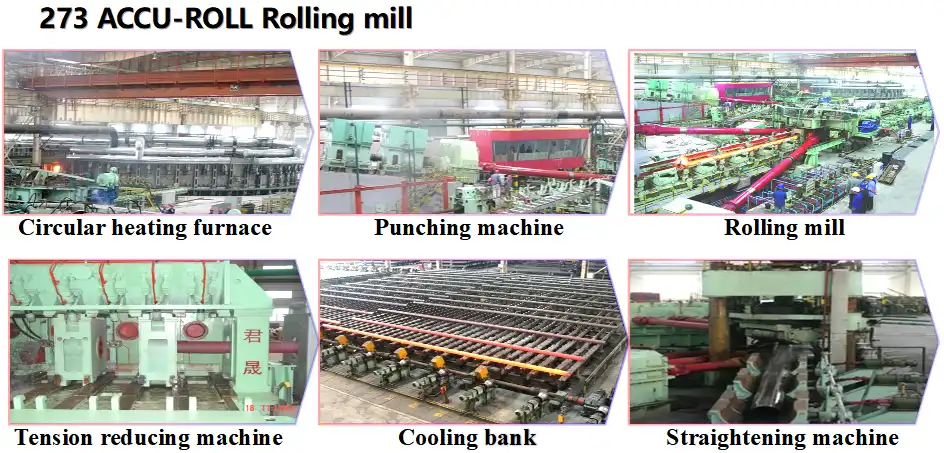
GNEE API Threads and Premium Threads process line
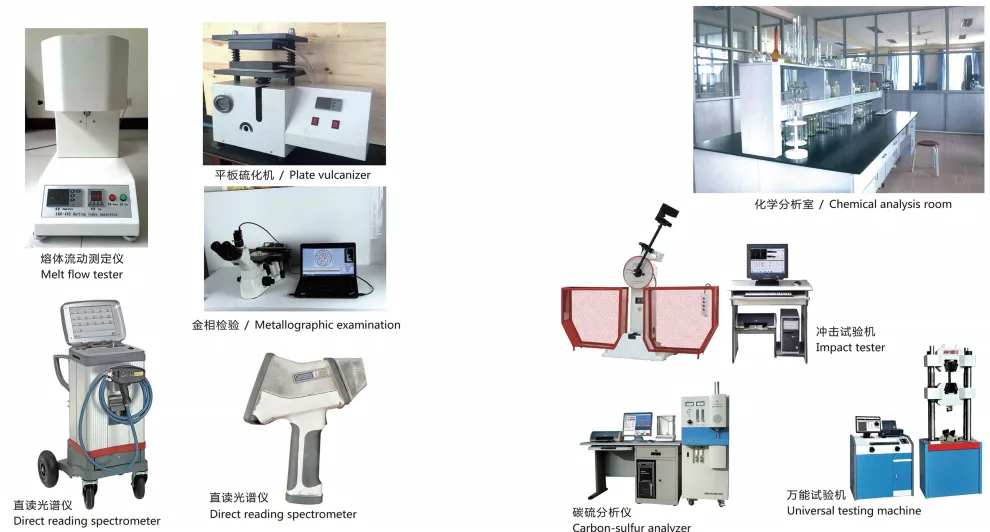
GNEE API Threads and Premium Threads Test Equipments
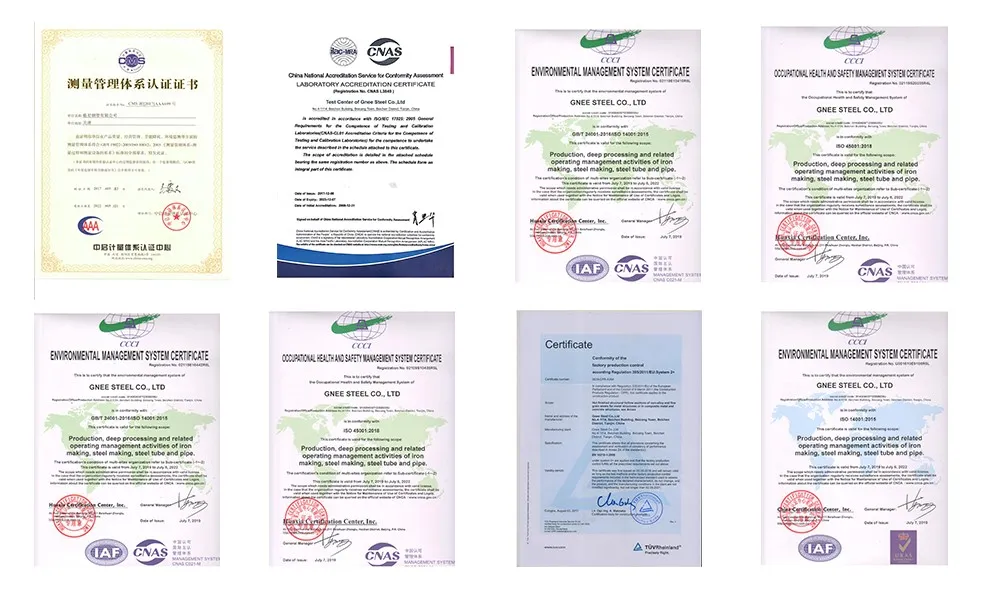
GNEE API Threads and Premium Threads Certificate
FAQ
Q1: Will my gas well leak if I use standard API BTC threads?
A: There is a significant risk. API threads (like BTC or LTC) rely on thread compound (dope) to fill the gaps between the threads to create a seal. While this is usually sufficient for liquid transport (oil or water), gas molecules are much smaller and can easily penetrate the dope under high pressure, leading to leaks.
Our Solution:
If your project involves natural gas or high-pressure environments, we recommend upgrading to Premium Connections. These feature a "metal-to-metal" seal design that ensures 100% gas-tight integrity without relying on thread dope, preventing sustained casing pressure (SCP) throughout the well's lifespan.
Q2: Can I connect different brands of Premium Threads together?
A: Generally, no. API threads are a globally recognized universal standard, but Premium Connections are proprietary designs (like Tenaris, VAM, or our own specialized series). The thread profiles, tapers, and sealing surfaces differ from brand to brand.
Our Solution:
To address this, we offer highly compatible proprietary connections and guarantee long-term supply availability. Additionally, we provide detailed geometric parameters and can supply Crossover Subs to adapt our connections to other brands, ensuring your project doesn't stall due to compatibility issues.
Q3: Will BTC threads fail or "jump out" in horizontal or highly deviated wells?
A: In horizontal wells, the casing string must endure massive torque and alternating stresses. While BTC has good tensile strength, it performs poorly under high rotation torque and high collapse pressure, making it prone to over-make-up or "thread jump-out."
Our Solution:
Our proprietary Premium Connections feature a Torque Shoulder design. This acts as a "limit stop" that not only absorbs higher rotational force but also protects the sealing surface from over-stress. In horizontal sections, this design drastically reduces the probability of downhole connection failure.


