There is no single "magic number" for the H2S limit in NACE MR0175/ISO 15156. Instead, the standard uses a sliding scale based on the Severity of the Environment.
The Critical Threshold: 0.05 psi (0.3 kPa)
For most oil and gas production environments, NACE MR0175 defines the environment as "Sour" if the partial pressure of H2S ( pH2S ) is equal to or greater than 0.05 psi (0.3 kPa).
Below 0.05 psi: The environment is generally considered "non-sour," and standard API 5CT grades (like J55/K55) may be used without specific anti-corrosion testing.
Above 0.05 psi: You must use materials compliant with NACE MR0175 (such as L80-1, C90, T95, or C110) that have restricted hardness and specific heat treatments.
How the H2S Limit Changes (The 4 Severity Regions)
The standard recognizes that H2S is more dangerous at certain acidity (pH) levels. It divides the risk into 4 Severity Regions for carbon and low-alloy steels:
Region 0 (Low Risk):
pH2S<0.05 psi. No specific SSC (Sulfide Stress Cracking) requirements.
Region 1 (Mild Sour): Higher pH or lower H2S levels. Standard L80-1 often suffices.
Region 2 (Intermediate): Increasing H2S and lower pH. Hardness control becomes critical.
Region 3 (Highly Sour): High H2S partial pressure and low pH (high acidity). This is where high-tier grades like T95 or C110 are mandatory.
How to Calculate Your H2S Partial Pressure
As a buyer or engineer, you don't just look at the percentage of H2S ; you must consider the Total System Pressure.
Formula:
pH2S=Total Absolute Pressure×Mole Fraction of H2S (ppm/1,000,000)pH2S=Total Absolute Pressure×Mole Fraction of H2S (ppm/1,000,000)
Example: If your well has a total pressure of 1,000 psi and contains 100 ppm of H2S : 1,000×0.0001=0.1 psi
Result: This exceeds the 0.05 psi limit. You must use NACE-compliant "Sour Service" pipe.
Important Exceptions (Temperature)
NACE MR0175 notes that the risk of Sulfide Stress Cracking (SSC) is actually highest at room temperature (approx. 25∘C or 77∘F ).
As the temperature increases (deeper in the well), the material's susceptibility to SSC often decreases.
However, high temperatures introduce other risks like weight-loss corrosion, meaning H2S limits are only part of the material selection puzzle.
Expert Procurement Tip:
When requesting a quote for Sour Service pipes (like API 5CT L80-1 or T95), always provide the following three parameters to your supplier:
H2SH2S
Partial Pressure
In-situ pH of the produced water
Bottom-hole Temperature
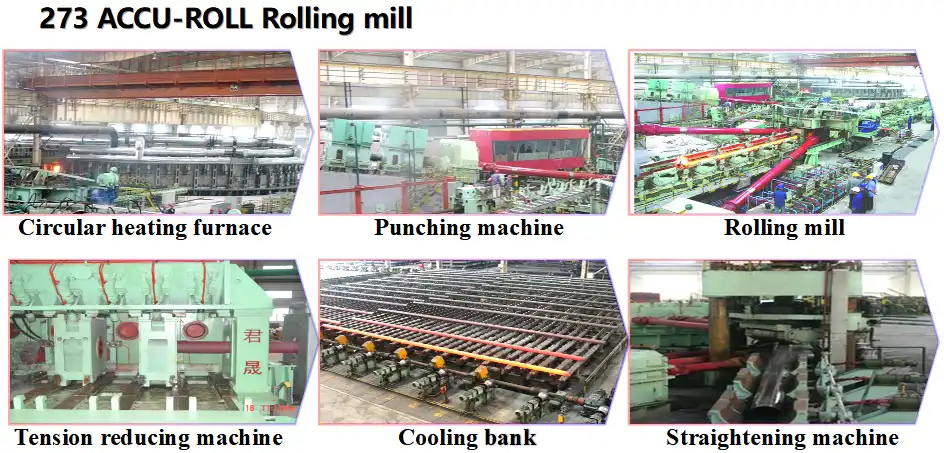
GNEE NACE MR0175 API OCTG Process Line
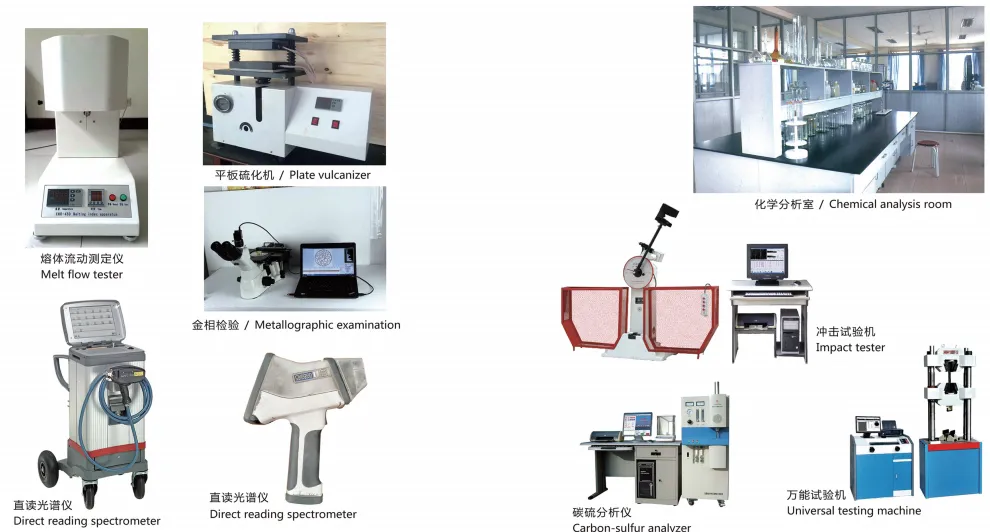
GNEE NACE MR0175 API OCTG Test Equipments
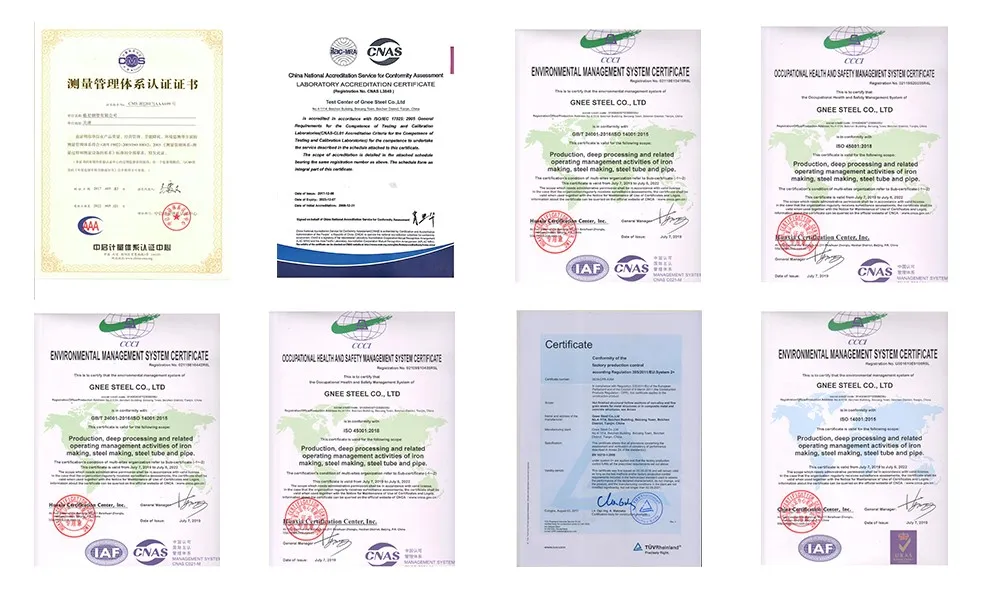
GNEE NACE MR0175 API OCTG Certificate
FAQ
Q1: I have already purchased API 5CT L80 casing. Why do I need to specifically request "Sour Service (L80-1)"?
A: This is a critical safety distinction. While standard L80 meets the minimum strength requirements, its hardness distribution and microstructure are not optimized for hydrogen sulfide ( H2S ) environments. Standard L80 is highly susceptible to hydrogen embrittlement and sudden cracking in sour wells.
Professional Solution:
Our L80-1 (Sour Service) strictly follows NACE MR0175. We don't just guarantee yield strength; we utilize a full-body Quenched & Tempered (Q+T) process to strictly control hardness below 22 HRC. This ensures the material has the necessary toughness to absorb hydrogen atoms rather than allowing them to cause brittle fractures.
Q2: My H2S concentration is very low (e.g., 100 ppm). Do I really need to comply with NACE MR0175?
A:Determining the need for sour service pipe depends on the H2S
Partial Pressure ( pH2S ), not just the concentration (ppm).
Professional Solution:
According to NACE standards, an environment is defined as "Sour" if the partial pressure exceeds 0.05 psi (0.3 kPa). For example, in a high-pressure well, even a low ppm count can result in a partial pressure that exceeds safety limits. We can calculate this for you for free based on your bottom-hole pressure, pH, and temperature to recommend the most economical yet safe grade (e.g., L80-1, C90, or T95).
Q3: How can I be 100% sure that the pipes I receive have passed Sour Service testing? What should I look for on the MTC?
A:A valid Sour Service Mill Test Certificate (MTC) must contain four key elements:
Chemical Purity: Ultra-low Sulfur (S) content (typically ≤0.003%).
Hardness Report: Recorded values from multiple test points, none exceeding 22 HRC.
Heat Treatment: Clearly stated as Quenched & Tempered (Q+T).
Specific Test Codes: Reference to NACE TM0177 (SSC) or TM0284 (HIC) testing.
Professional Solution:
Beyond providing detailed MTCs, we welcome third-party inspection agencies (such as SGS or BV) to perform random laboratory re-testing before loading, ensuring every joint is a true "Sour Service Guardian."