The difference between API 5L X60 and API 5L X65 is primarily their strength. Both are high-strength line pipe grades used for transporting oil and gas, but X65 is designed to handle higher pressures with potentially thinner walls than X60.
At this level of strength (X60 and above), most pipes are manufactured to PSL 2 (Product Specification Level 2) standards because they are used in critical, high-pressure infrastructure.
Mechanical Properties (The Core Difference)
The numbers "60" and "65" refer to the Minimum Yield Strength in kilopounds per square inch (ksi).
| Property | API 5L X60 | API 5L X65 | Difference |
| Min Yield Strength | 60,200 psi (415 MPa) | 65,300 psi (450 MPa) | X65 is ~8.5% stronger |
| Min Tensile Strength | 75,400 psi (520 MPa) | 77,600 psi (535 MPa) | X65 is ~3% stronger |
| Max Yield/Tensile Ratio | 0.93 (for PSL 2) | 0.93 (for PSL 2) | Same ratio limit |
The Engineering Impact: Because X65 is stronger, an engineer can design a pipeline with a thinner wall to hold the same internal pressure. In a 500-mile pipeline, reducing the wall thickness by even 1mm can save thousands of tons of steel, significantly reducing material and transportation costs.
Chemical Composition
To increase the strength from X60 to X65 without making the steel brittle or hard to weld, manufacturers use "Micro-alloying."
X60: Uses standard levels of Manganese and Carbon, with small amounts of Niobium (Nb) or Vanadium (V).
X65: Requires even more precise control of the Carbon Equivalent (CE). It typically uses a combination of Niobium, Vanadium, and Titanium (Nb+V+Ti) to refine the grain structure. This grain refinement allows the steel to be stronger while maintaining high toughness (resistance to cracking).
Weldability and Hardness
Weldability: As strength increases, welding becomes slightly more sensitive. X65 requires more disciplined welding procedures and tighter control over "heat input" to ensure the Heat Affected Zone (HAZ) does not become too hard or brittle.
Hardness: For PSL 2 pipes (especially for Sour Service), the hardness is typically capped at 248 HV10 (22 HRC). X65 is closer to this limit than X60, meaning the manufacturing process must be more strictly controlled to prevent the steel from becoming too hard.
Application Environments
X60: Often considered the "standard" for large-diameter onshore natural gas transmission lines. It offers a great balance of high strength and easy field weldability.
X65: Frequently chosen for Offshore (Subsea) pipelines and extremely high-pressure onshore trunklines. In offshore environments, the weight of the pipe is a critical factor for the lay-barge; thinner, stronger X65 pipe is easier to handle and install in deep water.
Comparison Table
| Feature | API 5L X60 | API 5L X65 |
| Strength Level | High Strength | Higher Strength |
| Primary Advantage | Standard high-pressure use | Maximum weight savings |
| Wall Thickness | Standard | Thinner (for same pressure) |
| Micro-alloying | Nb / V | Nb + V + Ti (Grain refined) |
| Common Use | Onshore Gas Mainlines | Offshore & HPHT Pipelines |
API 5L High Yield Carbon Steel Pipes Factory
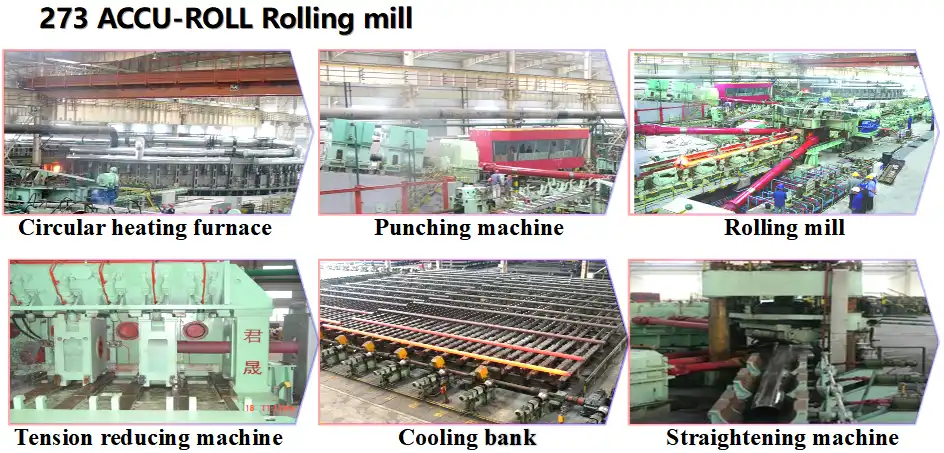
API 5L pipeline for oil and gas Test equipments

API 5L oil and gas pipelines Certificate

FAQ
What is API 5L X60 equivalent to ASTM?
API 5L X60 has no direct ASTM equivalent; however, in certain engineering scenarios, its mechanical properties exhibit functional overlap with ASTM A106 Grade B. X60 features a minimum yield strength of 415 MPa and a tensile strength of ≥520 MPa, having been specifically designed for high-pressure, long-distance pipeline applications. In contrast, A106 Grade B possesses a yield strength of only 240 MPa and a tensile strength of ≥415 MPa, focusing primarily on high-temperature, high-pressure boiler and refining systems. The two standards serve distinct objectives: X60 prioritizes toughness and weldability, while A106 emphasizes high-temperature stability. Consequently, they are not interchangeable; however, under small-diameter, low-pressure operating conditions, one may serve as a non-standard substitute for the other.
What is the wall thickness of API 5L X65 pipe?
API 5L X65 has no fixed wall thickness; it is determined by the pipe size and schedule (e.g., Sch 40/80) or custom engineering for specific pressures. Its high strength allows for thinner walls than lower grades, significantly reducing steel weight and welding costs. Standard tolerances are typically ±10% for welded and -12.5% to +15% for seamless pipes.