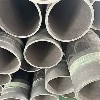
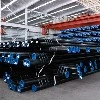
Why Oil Casing and Drill Pipe Are Often Confused
Oil casing and drill pipe are both tubular products used in oil and gas wells and both sit inside the same family of API specifications, so buyers sometimes treat them as interchangeable items. They are not. Casing is a permanent, cemented pressure barrier that protects the wellbore for the life of the well, while drill pipe is a reusable rotating string that carries the drill bit and the drilling fluid. The difference drives grade selection, connection type, handling rules and the inspection interval that has to be applied in the field.
What Is Oil Casing?
Casing is the steel pipe that lines the wellbore to stop the formation from caving in, to isolate pressure zones and to keep the well under control during drilling and production. Several strings are run in one well: conductor, surface, intermediate and production casing. Each string is cemented in place before drilling continues, so casing works as a structural and hydraulic barrier rather than as a moving part. Casing is produced to API Specification 5CT with outside diameters generally between 4 1/2 in (114.3 mm) and 20 in (508 mm). Standard grades are H40, J55, K55, N80, L80, C90, T95, P110 and Q125, and the grade number equals the specified minimum yield strength in ksi, so P110 casing has a minimum yield strength of 110 000 psi, roughly 758 MPa.
Casing is supplied in range 1, range 2 and range 3 lengths with plain end, short round thread, long round thread, buttress thread or premium connections. Because it stays in the well, the design check is made against burst, collapse and axial tension, and the API 5CT internal pressure and collapse tables govern the wall thickness that may be used at a given setting depth.
What Is Drill Pipe?
Drill pipe joins the surface equipment of the rig to the bottom hole assembly. It transmits rotation and torque to the bit, circulates drilling fluid down the bore to clean the hole and cool the bit, and is tripped in and out of the hole as the well deepens. It is manufactured to API Specification 5DP and inspected in service in accordance with API RP 7G. Grades E-75, X-95, G-105 and S-135 correspond to specified minimum yield strengths of 75, 95, 105 and 135 ksi. The pipe body is fitted with tool joints welded at both ends, and the ends are internally upset, externally upset or internal-external upset so that sufficient wall thickness is available for threading.
Unlike casing, drill pipe is a fatigue loaded component. Every rotation puts the string through a stress cycle, so it is designed for tension, torsion, internal pressure and fatigue rather than for collapse, and it is inspected at fixed intervals and repaired or downgraded once the rejection limits are reached.
Casing and Drill Pipe Compared
| Item | Oil casing | Drill pipe |
|---|---|---|
| Main standard | API Specification 5CT | API Specification 5DP |
| Duty | Lines the wellbore, isolates zones, contains pressure | Transmits torque, carries drilling fluid, feeds the bit |
| Typical grades | H40, J55, K55, N80, L80, P110, Q125 | E-75, X-95, G-105, S-135 |
| Ends | Coupled threads, round, buttress or premium | Welded tool joints with rotary shouldered connections |
| Installation | Cemented in place, permanent | Made up as a string, retrieved after use |
| Reuse | Not reused | Reused and re-inspected |
| Governing loads | Burst, collapse, tension | Tension, torsion, fatigue, internal pressure |
Applications and Selection Guidance
Conductor and surface casing: large diameter, moderate grade such as J55 or K55, chosen for driving and cementing loads rather than for pressure.
Intermediate and production casing: grade rises with depth and reservoir pressure, so N80 and P110 are common, while L80 or C90 are selected where a controlled hardness is needed.
Drill pipe: grade is set by the tensile and torsional load of the deepest well in the programme, with heavier wall or a higher grade for deep and extended reach wells.
Workover and slim hole work: smaller diameter strings that are handled frequently, where inspection scheduling matters more than grade level.
Selection should start from the load case rather than from the grade name. A grade that passes the tension check may still fail the collapse check for casing, or the fatigue check for drill pipe.
Handling, Inspection and Common Pitfalls
Both products share the same field rules: keep thread protectors fitted, lift with slings or hooks that do not bruise the pipe body, and store clear of the ground in a dry area. Casing is normally verified by drifting, thread inspection and a hydrostatic test as required by API 5CT. Drill pipe needs a periodic inspection programme under API RP 7G that covers tool joint dimensions, thread gauging, wall thickness and crack detection on the connections, because internal fatigue cracks are not visible from the outside. The most common mistakes are treating used drill pipe as new, mixing grades in one string, and selecting casing on outside diameter alone without checking the collapse rating at setting depth.
FAQ
Q: Can drill pipe be used as casing?
No. Drill pipe is not designed against collapse and carries welded tool joints rather than a coupled sealing thread, so it does not meet the API 5CT requirements for a cemented well barrier.
Q: Is casing always cemented?
Casing strings are cemented to support the pipe, isolate formations and seal the annulus. The cement job is part of the well design, not an optional extra.
Q: What does the number in P110 mean?
It is the specified minimum yield strength in ksi, so P110 has a minimum yield strength of 110 000 psi, equal to about 758 MPa.
Q: Why does drill pipe need regular inspection?
API RP 7G defines the inspection and rejection criteria for used drill pipe. Without that programme, fatigue damage accumulates unseen until the string fails downhole.
Q: Which product costs more per tonne?
Drill pipe, because of the tool joints, the upset ends and the tighter process control. Cost per metre drilled, not cost per tonne, is the figure that matters to an operator.
Q: Are casing and drill pipe ever interchangeable?
Some grades have similar chemistry, but the product form, heat treatment, wall thickness and end preparation differ, so finished items are not interchangeable.