


J55 is a grade of carbon steel.
Specifically, J55 is a low-to-medium carbon steel grade regulated by the API 5CT (American Petroleum Institute) specification. It is one of the most common and economical materials used for oil and gas well casing and tubing.
Quality you can verify. Request a Sample Mill Test Report (MTR) to see the chemical and mechanical properties of our J55 steel.
J55 Chemical Composition Table
According to the API 5CT standard, J55 belongs to Group 1. The chemical requirements focus primarily on limiting harmful impurities (Phosphorus and Sulfur). The specific content of Carbon and Manganese is determined by the manufacturer to achieve the required mechanical properties.
| Element Name | Symbol | Requirement (Mass Fraction %) |
| Phosphorus | P | ≤ 0.030 |
| Sulfur | S | ≤ 0.030 |
| Carbon | C | Manufacturer's discretion (typically 0.20% - 0.35%) |
| Manganese | Mn | Manufacturer's discretion (typically 1.00% - 1.50%) |
| Other Alloys | - | No mandatory requirement |
J55 Mechanical Properties Table
J55 is the entry-level grade for OCTG (Oil Country Tubular Goods). The "55" stands for a minimum yield strength of 55,000 psi.
| Property | Imperial Unit (psi) | Metric Unit (MPa) |
| Yield Strength | 55,000 - 80,000 | 379 - 552 |
| Tensile Strength | ≥ 75,000 | ≥ 517 |
| Min. Elongation | Based on specimen cross-section | Based on specimen cross-section |
| Hardness | No maximum limit specified | No maximum limit specified |
| Impact Energy | Per SR16 (if requested by buyer) | Per SR16 (if requested by buyer) |
International equivalent grade
J55 is equivalent to the national standard 37Mn5 (GB/T 20659) and the American standard AISI 1035 (ASTM A519), but the actual composition is slightly different. For example, the manganese content of 37Mn5 is higher (1.3% -1.6%), while the phosphorus content of J55 needs to be strictly controlled below 0.03% (as specified in API SPEC 5CT 2023 edition).
Technical Characteristics of J55
Low Strength Grade: J55 is one of the lowest strength grades in the API standard, offering excellent ductility and workability.
Economical Choice: Due to the low alloy content and the fact that heat treatment (like quenching and tempering) is not mandatory (often delivered in as-rolled condition), it is the most affordable casing option.
Superior Weldability: As a low-to-medium carbon steel, J55 is very easy to weld compared to high-strength grades.
Applications
Shallow Well Development: Ideal for oil and gas wells with low formation pressure and shallow depths.
Surface Casing: Frequently used for the top-most layer of the wellbore to support the hole and protect freshwater zones.
Water Well Construction: Widely used in agricultural and industrial water wells due to its low cost.
Coalbed Methane (CBM): A mainstream choice for CBM extraction where formation pressures are typically moderate.
When should you AVOID J55?
If your project involves any of the following conditions, J55 is likely the wrong choice:
High-Pressure Wells: Where high collapse resistance is required.
Sour Wells: Containing H2S (You must choose sour-service grades like L80-1, C90, or T95).
Deep Wells: Where the pipe string weight exceeds the tensile limit of J55.
Critical Production Wells: For high-value wells, operators usually upgrade to K55 or N80 to ensure a higher safety margin.
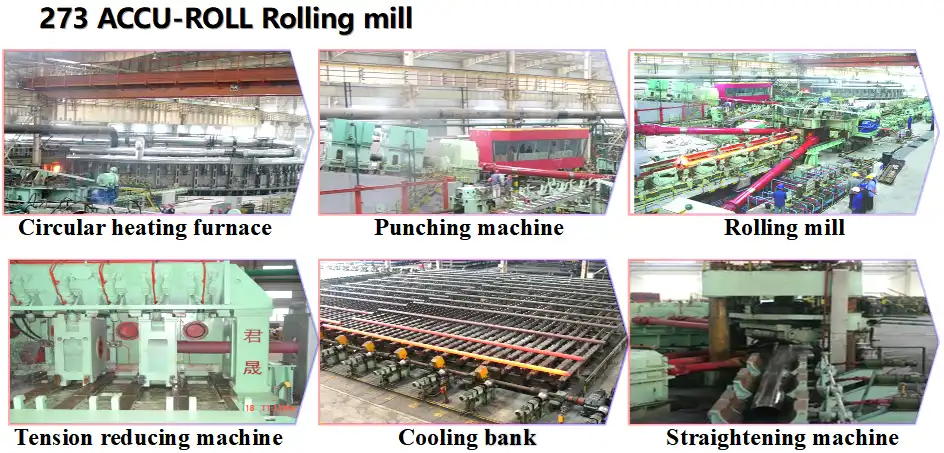
GNEE API 5CT J55 Casing Pipe process Line
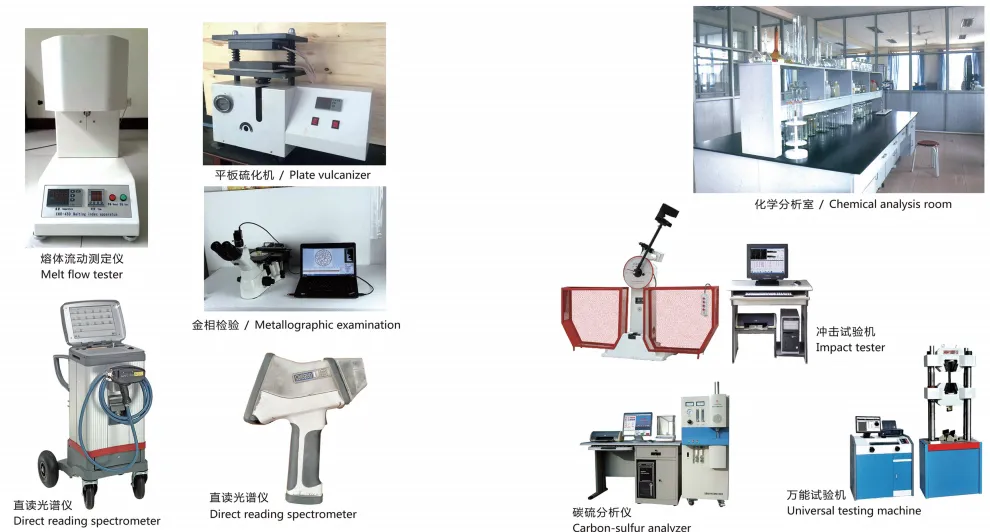
GNEE API 5CT J55 OCTG Pipe test equipments
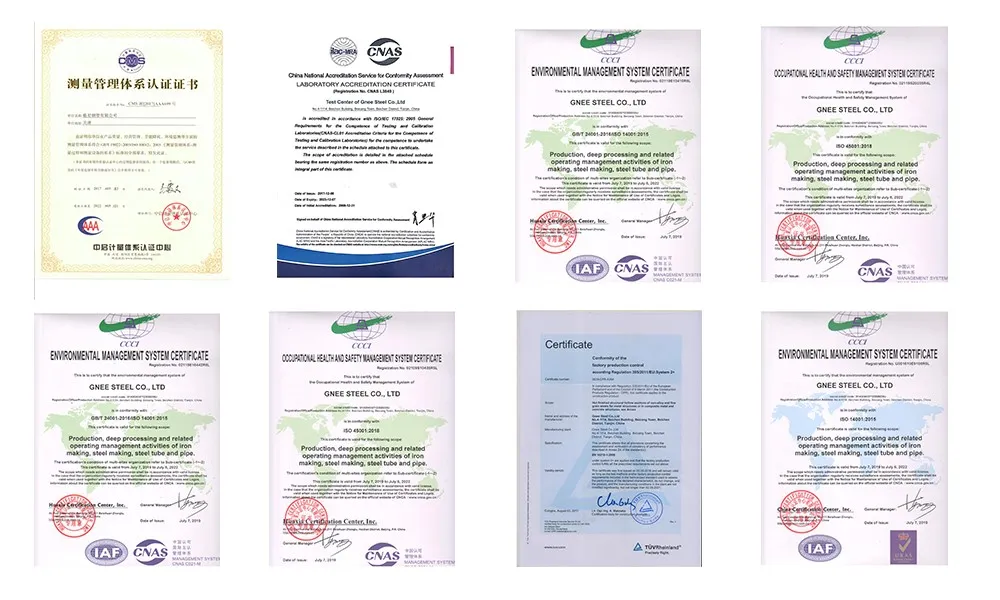
GNEE API 5CT J55 Oil Well Casing Pipe certificate
FAQ
What is J55 material?
J55 oil casing is usually made of carbon steel and can withstand high pressure, high temperature, and erosion from formation fluids during drilling. According to different usage requirements, J55 casing can be divided into various types, such as flat end casing (LC), thickened casing (such as STC, BTC, etc.), and special threaded casing (such as VAM, REG, etc.). Thickening treatment can significantly improve the anti extrusion strength and tensile strength of the casing, ensuring safe operation under complex geological conditions.
What is the yield strength of API 5CT J55?
J55 is a petroleum casing steel grade defined by the American Petroleum Institute (API), belonging to high-quality carbon structural steel with a yield strength of 379-552MPa and a tensile strength of ≥ 517MPa. Its strength is about 30% higher than that of ordinary steel bars


